Agoda’s plan to make everything possible for its partners in 2026

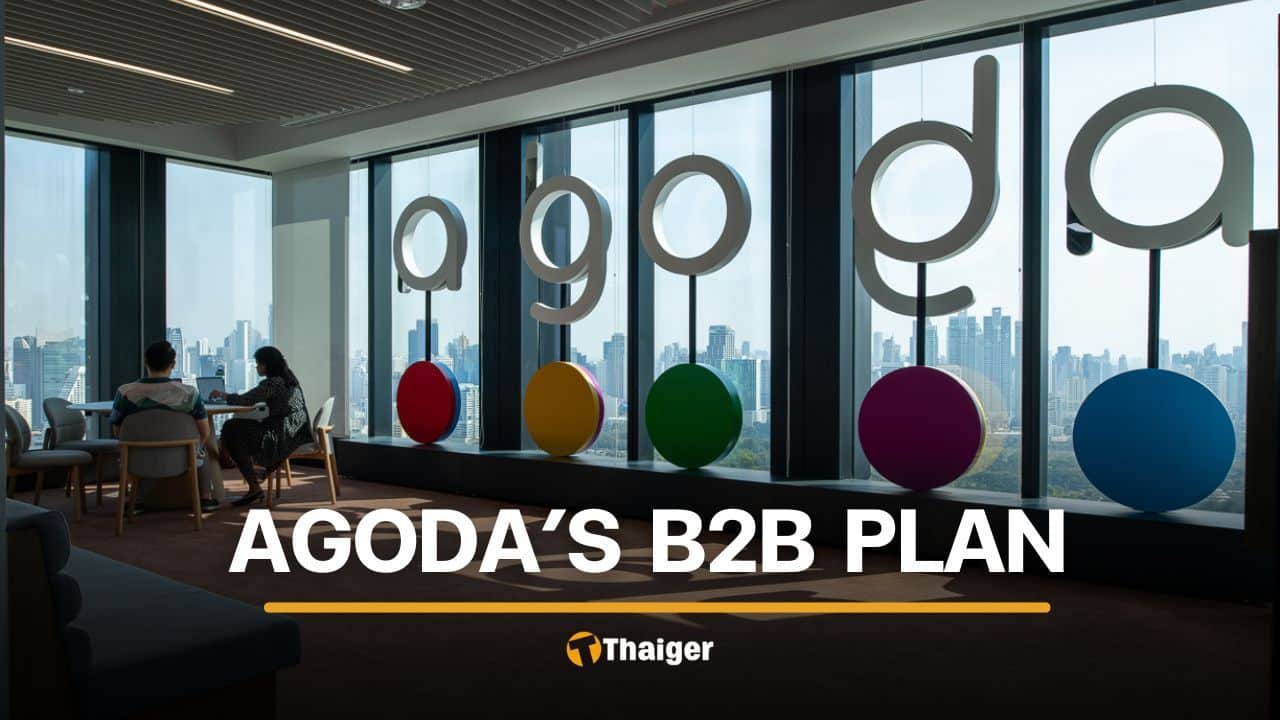
Most people know Agoda as the app they use to book a hotel. What is less visible is the scale of what the company is building behind the scenes, a B2B partner ecosystem that powers travel for banks, airlines, retail platforms, and loyalty programmes across the globe.
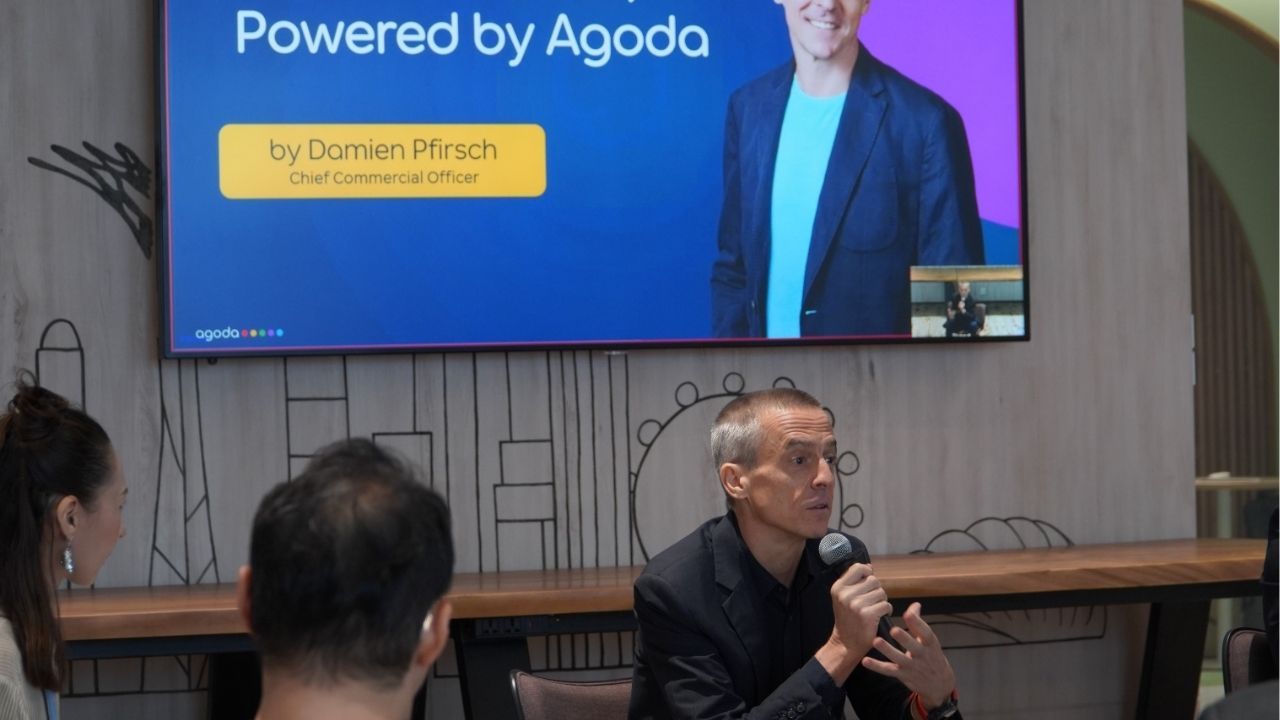
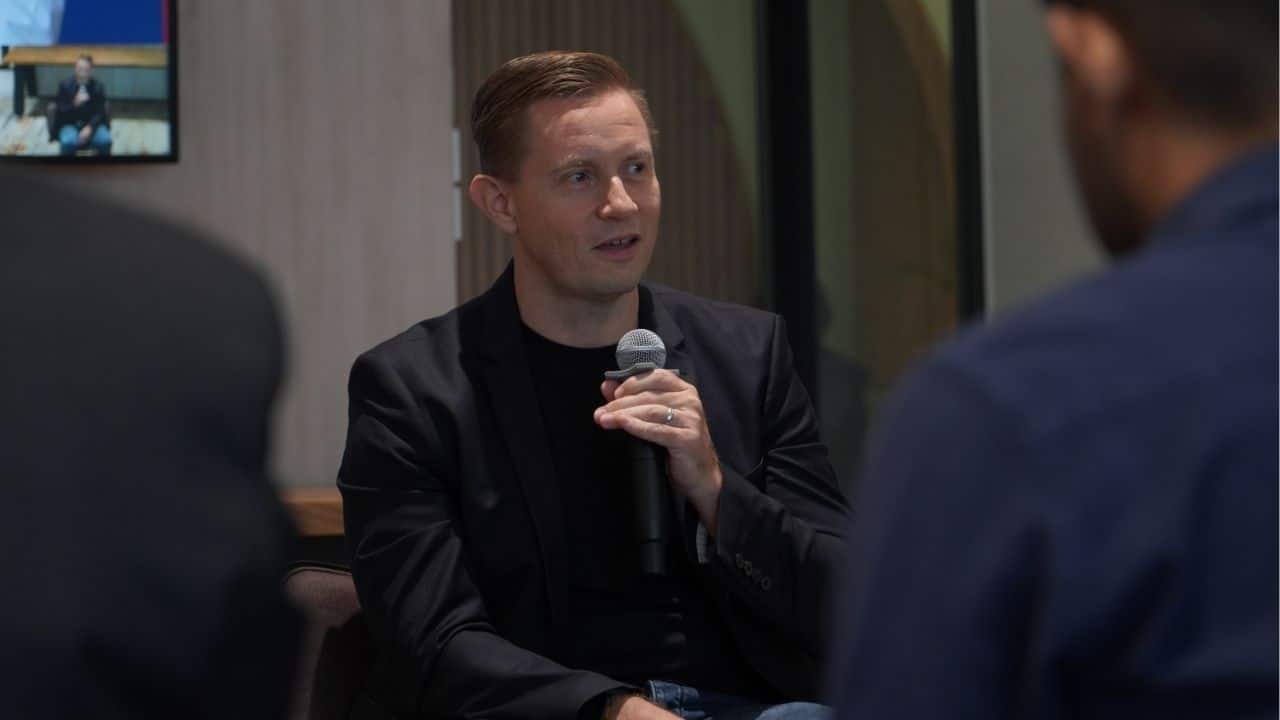
At a media roundtable held at Agoda’s new office in One Bangkok, two of the company’s most senior executives laid out exactly how that side of the business works, and where it is heading.
Agoda moved its Thailand operations to One Bangkok earlier this year, its first office move in two decades. The new campus spans seven floors and employs nearly 4,000 people. It was the backdrop for a frank conversation with Damien Pfirsch, Chief Commercial Officer, and Andrew Smith, Senior Vice President of Supply, both of whom have been with the company for 14 years.
On this page
| Section (Click to jump) | Short summary |
|---|---|
| The B2B business most people have never heard of | Agoda’s B2B arm powers travel services for banks, airlines, retail platforms, and loyalty programmes through white-label and partner tools. |
| A structural change is coming for Booking Holdings | Booking Holdings is bringing together the B2B partnership arms of Agoda, Booking.com, and Priceline into one organisation. |
| What actually makes Agoda different as a B2B partner | Agoda’s edge comes from its large accommodation supply, strong Asian localisation, and growing in-house AI capabilities. |
| Asia travel trends shaping the B2B opportunity | Intra-Asian travel, secondary destinations, wellness, and sustainable travel are all shaping where B2B demand is growing. |
| What Agoda wants partners to know | Agoda’s message to partners is that it can build flexible, tailored travel solutions rather than only offering fixed products. |
The B2B business most people have never heard of
Agoda’s B2B arm operates under the name Rocket Travel by Agoda, structured as a “mini company inside Agoda” with its own products and teams, as Pfirsch described. The goal is not to sell hotel rooms directly but to help partners build travel into whatever they are already doing, whether that is a bank loyalty programme, an airline’s ancillary revenue strategy, or a retail super app looking to add a new category.
The partner types break down into five broad groups. Financial institutions are one of the biggest. Pfirsch used Citi’s ThankYou points platform as an example, a white-label travel portal powered by Rocket Travel by Agoda, where cardholders can earn and burn points on hotel bookings.


The logic is straightforward: people who redeem loyalty points on travel form a deeper connection to the programme than those who use points to buy appliances or fuel. Travel, as Pfirsch put it, is something people remember.
Airlines are another core partner category, with American Airlines and China Airlines among the names mentioned. Here, the relationship covers both loyalty redemptions and ancillary revenue, hotels booked through an airline’s own platform, powered by Agoda’s inventory in the background.
Retail and super app platforms are a third category. Agoda was one of the first partners to bring international hotel booking to Meituan in China, and Shopee’s hotel booking feature in Southeast Asia runs on Agoda’s infrastructure.

Other travel operators, including JTB, one of Japan’s largest travel companies, use Agoda’s white-label solution as a full end-to-end booking solution for their customers. The fifth category is destination marketing, where tourism organisations and government bodies use Agoda’s advertising tools to reach high-intent travellers at the point of search.
When asked about the breakdown of his business by model, Pfirsch estimated it is roughly split into thirds: direct referrals to Agoda’s consumer platform, API inventory exchanges with partners, and white-label solutions. The biggest white-label partners tend to be US-based, where the credit card points market is significantly larger than in Asia.
A structural change is coming for Booking Holdings

One of the more significant announcements at the roundtable was a strategic consolidation that Pfirsch confirmed is underway. Booking Holdings, Agoda’s parent company, has made the decision to merge the strategic partnership arms of Agoda, Booking.com, and Priceline into a single B2B organisation.
The aim is to make it easier for global partners who currently work with multiple Booking Holdings brands to deal with one team, access the best technology and supply from across the group, and benefit from greater collective innovation capacity.
Pfirsch was careful to note that details are limited, there is no name yet for the new entity, and the process of bringing together teams from the US, Europe, and Asia is a substantial undertaking. But the direction is clear: Booking Holdings is consolidating its B2B offering, and Agoda’s decade-long experience in Asia will be a core part of what that new organisation brings to the table.
What actually makes Agoda different as a B2B partner
The answer Pfirsch kept returning to was supply and Asia depth. As part of Booking Holdings, Agoda has access to the largest accommodation network in the world, over 6 million properties, which it can pass through to partners via API or white label. But the differentiator in Asia specifically is localisation at a level that goes well beyond language.
In South Korea, users log in via Kakao rather than Google. In India, UPI and Paytm are fully supported payment methods. The platform experience in each market is built to feel native, which Pfirsch and Smith both argued is what builds trust with first-time international travellers.
The third differentiator is technology. Agoda has developed around 200 internal tools built on large language models, covering everything from customer service to financial reconciliation. On the consumer-facing side, the property chatbot, which handles around 30,000 questions per day, draws on millions of proprietary reviews and customer interactions to answer questions that no generic AI model could handle accurately.

Smith gave the example of a guest asking the AI whether a baby cot will fit in a specific room, or what the clearance height is in a hotel car park. These are the type of questions that are answered by years of accumulated customer data, which Agoda is now able to surface instantly.
Asia travel trends shaping the B2B opportunity
Smith’s portion of the roundtable focused on where the demand is actually coming from. Intra-Asian travel is the dominant story; travellers from South Korea, India, and increasingly Japan are the biggest source markets across the region.
Secondary destinations are a fast-growing segment, with Agoda’s data showing stronger demand growth for non-capital cities in Japan, Indonesia, and Thailand compared to the traditional hubs. Smith attributed this partly to repeat travellers who have already done Tokyo or Bangkok and are now exploring further.
Two universal trends stood out from the Q&A. The first is wellness travel, a clear and growing preference for trips oriented around rest, retreats, clean eating, and mindfulness rather than sightseeing at a pace. The second is sustainable travel, driven heavily by East Asian travellers, particularly from Japan and South Korea, who are actively seeking out properties with recognised sustainability credentials. Both trends, Smith noted, are shaping what supply partners need to offer to stay competitive.

In Thailand specifically, Smith acknowledged that inbound numbers are slightly down year on year, with Chinese arrivals notably lower. Indian and Japanese visitors are up, the latter benefiting from a stronger yen, driving more outbound travel from Japan.
Domestic travel within Thailand is also up, partly offsetting the inbound gap. The broader point, as both executives made clear, is that regional diversification is Agoda’s structural advantage; when one origin market softens, others compensate.
What Agoda wants partners to know
When asked what he would most want hotel and travel partners to take away, Pfirsch’s answer was direct. “Everything is possible.”
The JTB relationship was held up as the model, a partnership that started with a blank page, identified the partner’s specific needs, and built a bespoke product from scratch. The message to anyone considering a B2B conversation with Agoda was not to look at what already exists, but to come up with an idea and build something new together.
For 2026, the roadmap points toward more front-end AI integration across the platform, connecting hotels, flights, and activities into a more coherent planning and booking experience, with AI guiding customers through the process rather than leaving them to navigate it alone. The tools are already being built.
The question now is how quickly partners can move to take advantage of them.
Latest Thailand News























Follow The Thaiger on Google News: