Thailand confirms end to 60-day visa-free stays to attract quality tourists

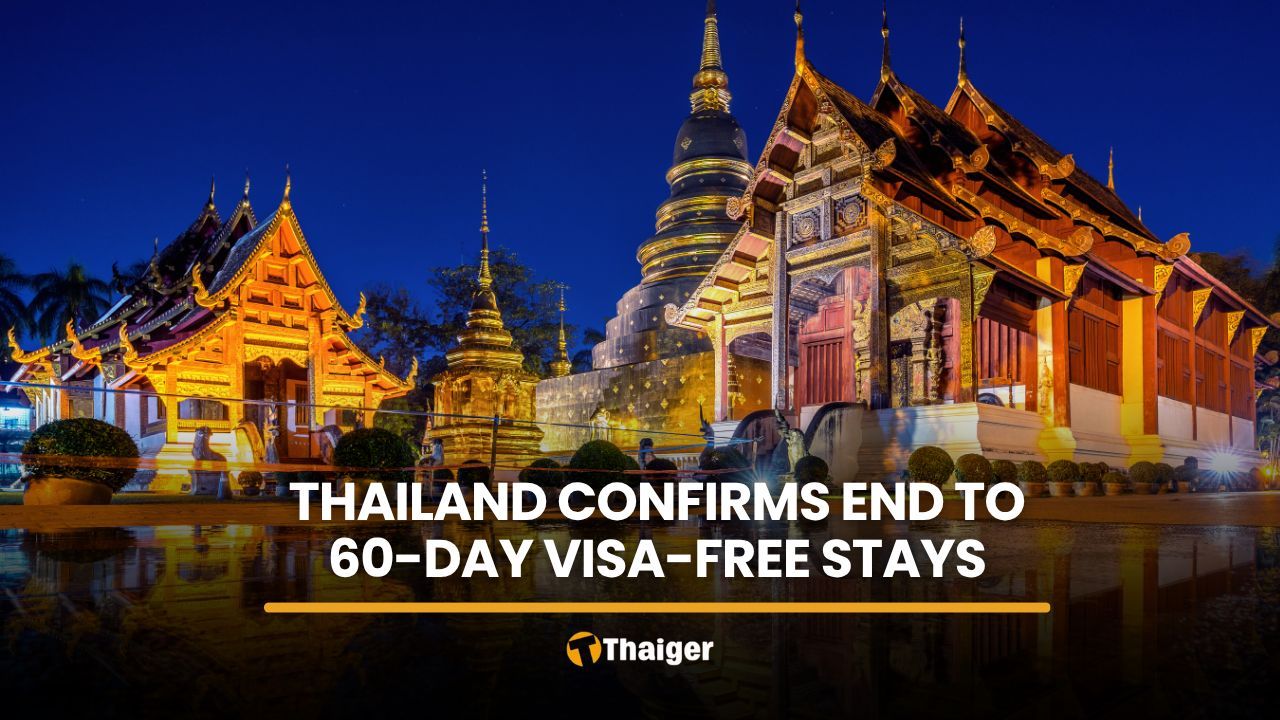
Thailand’s visa-free entry for nationals of 93 countries is set to be cut from 60 days to 30 days after government officials confirmed plans to end the policy introduced in July 2024.
The proposal, confirmed by the Ministry of Tourism and Sports and the Foreign Ministry, is expected to go to Cabinet next week, and an official start date will be announced after approval.
The 60-day exemption was launched to support Thailand’s post-pandemic economic recovery. It applied to travellers from 93 countries, but officials said the scheme has been misused by some foreigners for illegal work, overstays, and criminal activity.

Tourism and Sports Minister Surasak Phancharoenworakul said more than 90% of foreign visitors to Thailand stay for 30 days or less, while only 10% use the full 60 days. Officials said this shows the extended period mainly benefits visitors who may not be entering Thailand for tourism.
Some long-stay visitors are accused of taking jobs from Thai workers, operating businesses illegally through Thai nominees, or using Thailand as a base for criminal activity.
Foreign Minister Sihasak Phuangketkaew said the review is based on behaviour rather than nationality.
“Sixty days is probably too long for a tourist visa. We are not targeting any specific country. We are looking at behaviour that causes problems for Thailand. A tourist’s stay should not exceed 30 days.”



The plan would restore the previous 30-day visa-free policy, which already covers nationals from 57 countries. Countries outside that original list will be reviewed individually based on Thailand’s current tourism priorities.
On top of that, countries with high records of visa violations may face shorter exemptions of 15 days. Travellers from those countries who want to stay longer would need to apply for a visa, which includes background checks and financial verification.
“We will look at each country individually to find the right arrangement. The goal is to attract quality tourists, not to single out any one nation.”
Travellers who need longer stays, including remote workers and long-stay tourists, are being directed to the Destination Thailand Visa, or DTV. Unlike the visa-free entry, the DTV requires proof of income.
Latest Thailand News






















Follow The Thaiger on Google News: