Concerns raised over election accessibility for disabled voters in Thailand
Smart Vote app criticised for limited accessibility features

Local disability organisations have raised concerns that the upcoming general election may not provide an equal voting experience for people with disabilities.
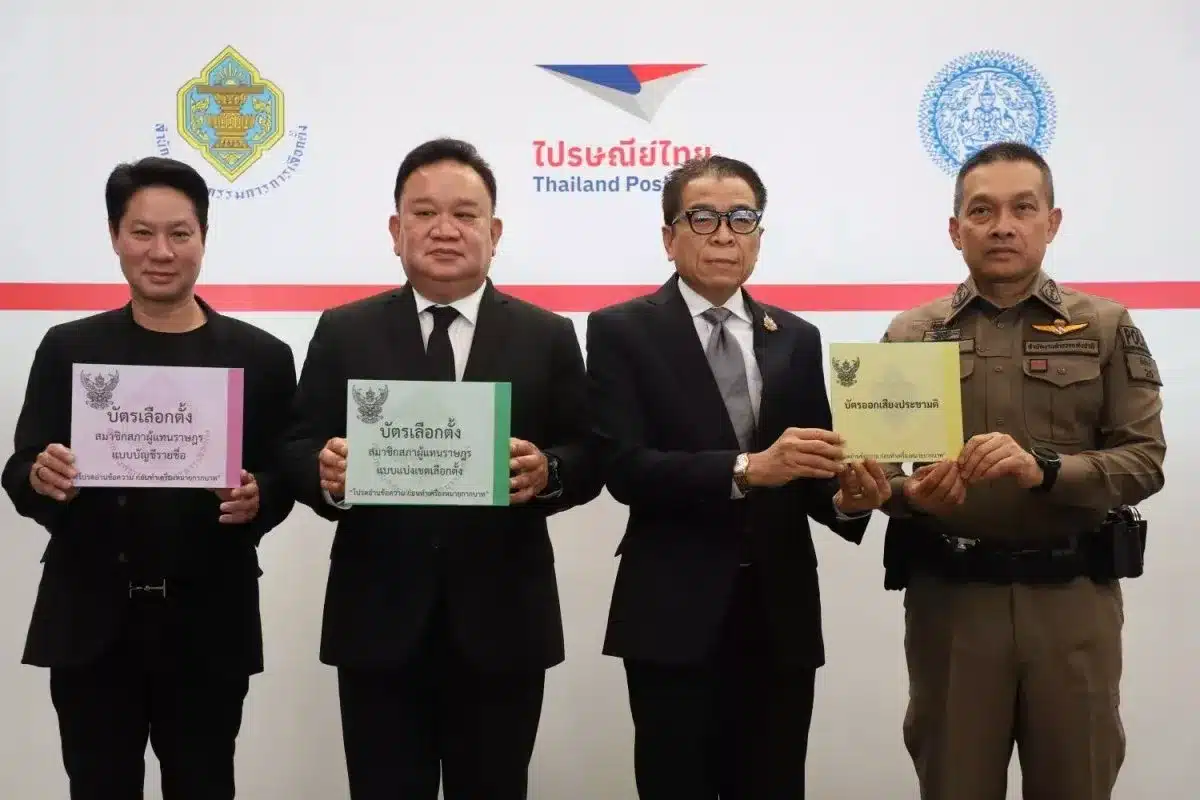
They cite issues such as inadequate access to policy information, insufficient voting aids, and potential confusion over the proposed use of colour-coded ballot papers.
Representatives highlighted the added challenge posed by the February 8 elections coinciding with a referendum on constitutional amendments. This could lead to misunderstandings and compromise the privacy and independence of disabled voters, according to Thai PBS online.
Sunthorn Sucha, a board member of the Thailand Association of the Blind, noted that the Election Commission’s Smart Vote app is not fully accessible to blind voters as it does not support screen-reading software.
He further stated that voting aids for the visually impaired are either unavailable or substandard, forcing blind voters to depend on others, which undermines the principle of a secret ballot and personal privacy.
‘These problems make people with disabilities feel excluded from the democratic process,’ he commented.
Supawat Samerpark, a board member of the Thailand Council for Independent Living, pointed out that many polling stations remain inaccessible to voters with mobility impairments. Issues such as staircases blocking entrances, inadequate ramps, and voting booths out of reach for wheelchair users were noted.


Additionally, some officials lack the training needed to properly assist disabled voters, potentially infringing on their rights. Samerpark called for improved infrastructure and better training for election staff to ensure equal access.

Wittayut Boonnak, president of the National Association of the Deaf, highlighted the serious barriers hearing-impaired voters face in accessing pre-election information.
He mentioned that political debates and campaign events frequently lack sign-language interpreters, hindering deaf voters from fully understanding party policies and making informed decisions.
He urged organisers to ensure sign-language interpretation is available at all campaign activities and public forums.
Disability groups also expressed concern that using three different coloured ballot papers for constituency, party-list, and referendum voting could confuse blind voters if the design, candidate numbering, and assistive devices are not standardised. They advocate for a simpler system and clearer communication.
The Election Commission stated it has prepared Braille guides and plans to test election procedures for disabled voters.
Advocacy groups intend to closely monitor the implementation to ensure the election remains inclusive and respects the democratic rights of all citizens, according to Bangkok Post.
Latest Thailand News

























Follow The Thaiger on Google News: