An entire overview of the US-Israel war with Iran – How does it affect Thailand?


The US-Israel-Iran conflict, now in its 11th day, is set to hammer Thailand’s economy despite being fought 7,000 kilometres away. With the Strait of Hormuz closed and oil above US$120 per barrel, Thailand faces its sharpest energy and trade disruption in decades.
With the Strait of Hormuz effectively closed and global oil prices rising above US$120 a barrel, Thailand faces its sharpest energy and trade disruption in decades.
The current phase began on February 28, 2026, when the United States and Israel launched a military campaign against Iran. The confrontation escalated from tit-for-tat exchanges in 2024 into a brief but intense “Twelve-Day War” in June 2025, before widening again in early 2026.
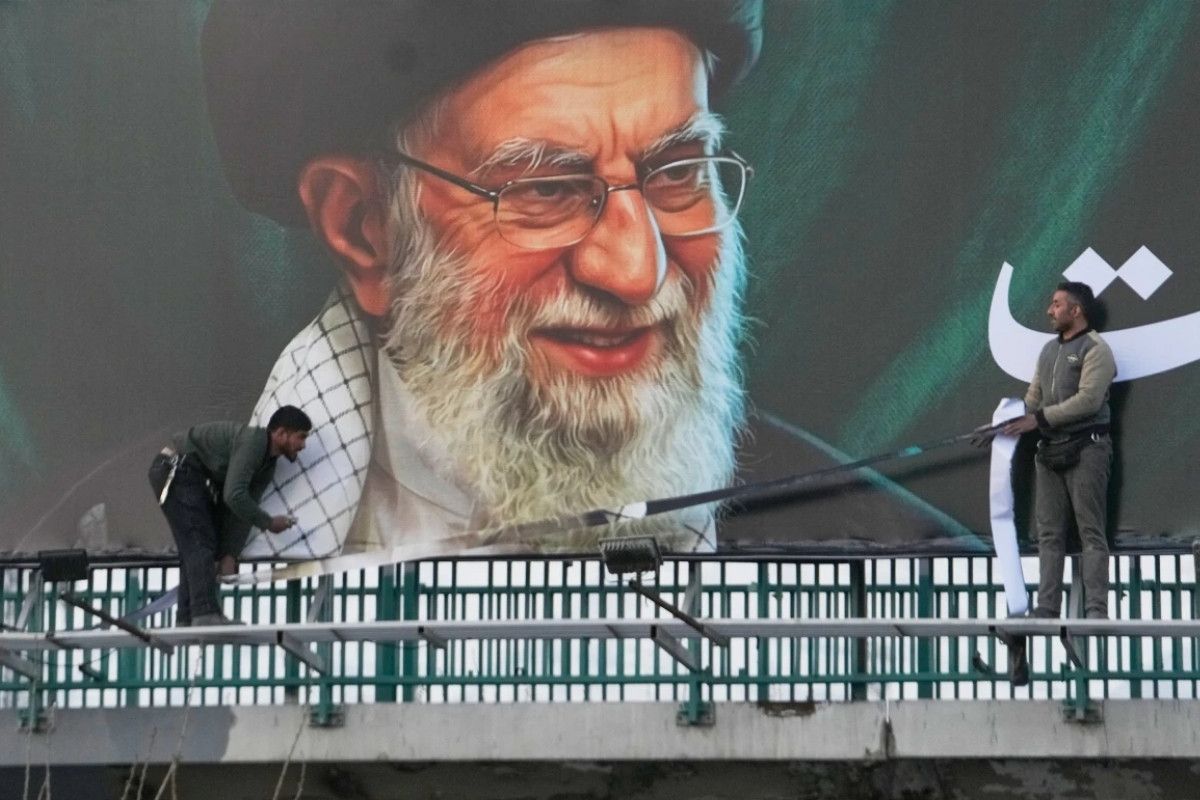
The assassination of Supreme Leader Ayatollah Ali Khamenei has effectively vanquished any hopes of near-term hopes of negotiated de-escalation, while Iran has rejected ceasefire overtures.
Thailand is especially exposed because it imports 85 to 90% of its crude oil, and about half of those imports typically transit the Strait of Hormuz. Around 28 to 30% of Thailand’s liquefied natural gas (LNG) also normally passes through the same chokepoint, turning the closure into an immediate supply-chain risk.
From 2023 escalation to open conflict
The current escalation traces back to October 7, 2023, when Hamas attacked Israel, killing 1,195 and taking 251 hostages. The hostages included 31 Thai agricultural workers, the largest group of foreign hostages.
Iran, Hamas’s primary state sponsor, denied foreknowledge but praised the operation, and the conflict broadened across multiple fronts involving Hezbollah, the Houthis and Iraqi militias, eventually drawing in the United States.

In 2024, Iran and Israel carried out their first direct military exchanges. After Israel killed senior IRGC commanders at Iran’s Damascus consulate on April 1, 2024, Iran launched “Operation True Promise” on April 13, firing 170 drones, 30 cruise missiles and 120 ballistic missiles.
The barrage totalled approximately 350 projectiles carrying around 60 tonnes of explosive material, and a US-UK-French-Jordanian coalition intercepted 99% of them.
Israel responded on April 19, 2024, with a targeted strike near Isfahan that destroyed air defence radars guarding the Natanz nuclear facility. Although tensions eased temporarily, analysts described the long-running “shadow war” as shifting into open confrontation.
The escalation intensified again in September 2024, when Israel targeted Hezbollah’s leadership, including detonating thousands of rigged pagers and walkie-talkies across Lebanon. Hezbollah Secretary-General Hassan Nasrallah was assassinated on September 27 in a bunker-buster strike.
Iran responded on October 1, 2024, with “Operation True Promise II”, launching about 200 ballistic missiles, including the Fattah hypersonic system. Israel retaliated on October 26 using more than 100 aircraft, including F-35s. The strikes destroyed nearly all of Iran’s S-300 air defence systems and crippling missile production capacity for an estimated year.
The strikes marked the first sustained foreign aerial assault on Iran since the Iran-Iraq War.
Twelve-Day War and US entry
In 2025, the conflict escalated further after Donald Trump’s January 20 return to office. In March, Trump sent Khamenei a letter demanding complete nuclear dismantlement within two months, backed by the threat of force. US strikes under “Operation Rough Rider” began targeting Houthi positions across Yemen from March 15.
After the deadline expired on June 12, 2025, Israel launched “Operation Rising Lion” the next morning, sending over 200 fighter jets to strike more than 100 targets across Iran, including nuclear facilities and senior commanders.
Iran retaliated with more than 550 ballistic missiles and more than 1,000 drones, killing nine in Israel.
The United States entered the war on June 22, 2025, with “Operation Midnight Hammer”, dropping 12 Massive Ordnance Penetrator bunker-busters on Fordow, Natanz and Isfahan. The Twelve-Day War ended with a ceasefire on June 24, analysts assessed the damage to Iran’s nuclear programme as a brief setback.
Hormuz closure and renewed strikes
In late 2025, Iran faced widespread domestic unrest amid sanctions, currency collapse and military losses. Protests described as the largest since 1979 began on December 28, 2025, and the regime responded with lethal force, killing hundreds to thousands (exact figures unconfirmed).
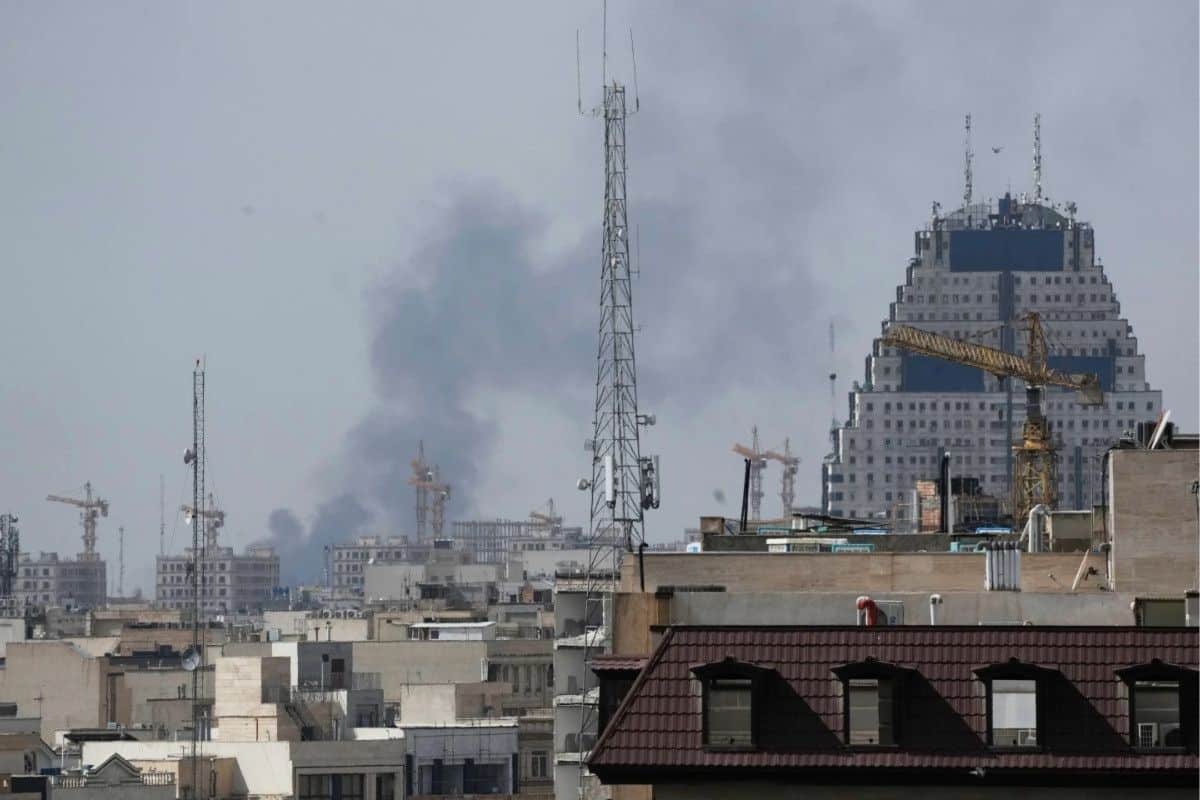
On February 28, 2026, the US and Israel launched joint strikes on Tehran, Isfahan, Qom, Karaj and Kermanshah. Ali Khamenei was assassinated in a strike on his compound, and Iran retaliated with “Operation True Promise IV”, firing missiles at Israel and US bases across nine countries in the Middle East and Gulf.
On March 2, 2026, the IRGC declared the Strait of Hormuz closed, and Hezbollah intensified operations. By March 10, the Pentagon reported striking more than 5,000 targets, destroying Iran’s navy and air force and eliminating 80 to 90% of remaining missile capability.
Mojtaba Khamenei, the late Supreme Leader’s son, was named successor on March 8.
Thailand’s energy crunch and emergency measures
Thailand produces about 30 to 35% of its crude domestically and imports the rest, spending roughly US$29 billion a year. More than US$17 billion of that spending is linked to the Middle East, while about half of Thailand’s crude and 28 to 30% of LNG normally transit the Strait of Hormuz.
Brent crude was about US$60 to 65 a barrel in early February 2026, climbed above US$70 as strikes became imminent, passed US$92 by March 6, and reached US$117.58 on March 9 – an 80% increase in five weeks.
The March 9 move was described as the largest single-day oil price gain since at least 1988.
Asian LNG spot prices more than doubled to US$25.40 per MMBtu (Million Metric British Thermal Units), a three-year high. Every US$10 a barrel rise in crude adds approximately 2 baht per litre to Thai retail fuel prices and 0.4 to 0.5 percentage points to headline inflation.
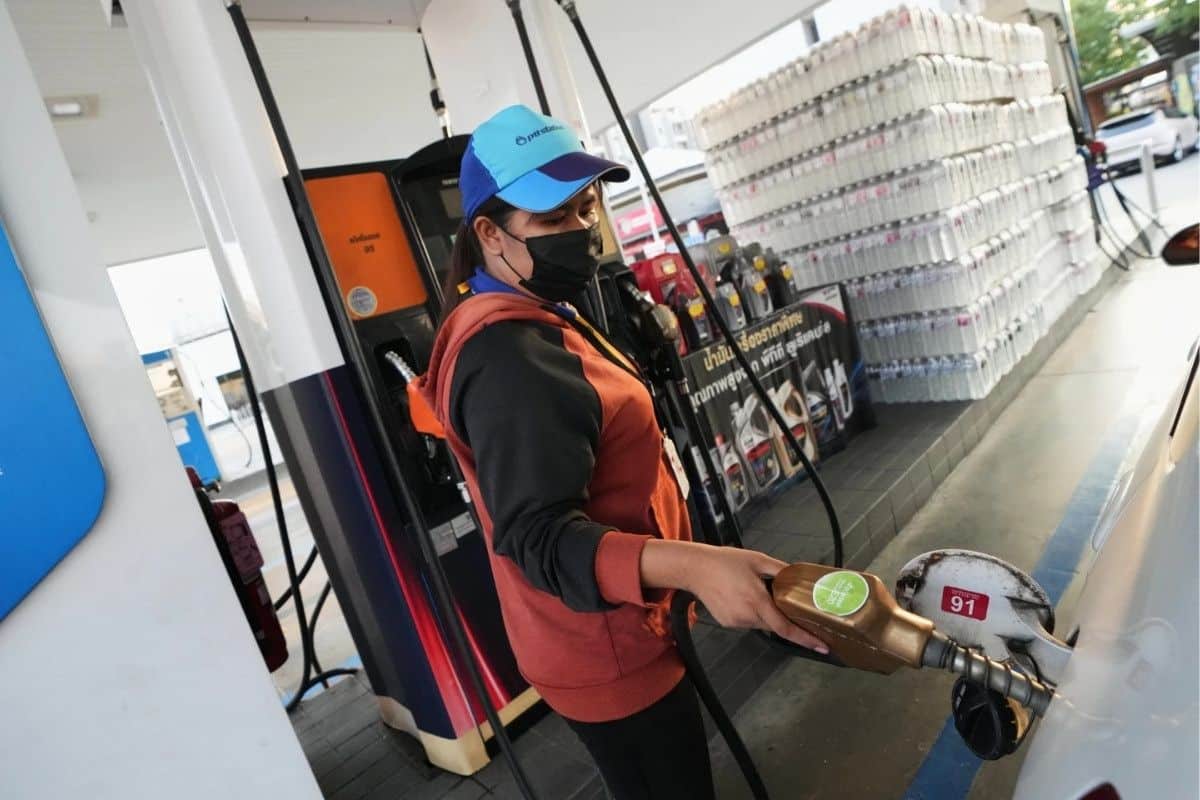
The Thai government rolled out emergency measures within 72 hours of the Strait of Hormuz closure.
It suspended all crude and petroleum exports except to Laos, froze diesel at 30 baht per litre, ordered coal-fired power plants to run at full capacity, and directed the Ministry of Energy to secure alternative crude from West Africa, the United States and Malaysia within one week.
The Oil Fuel Fund was reported to be spending 1.2 billion baht per day on subsidies in early March. Its balance was 2,459 million baht on March 1, enough for roughly one month at the capped diesel price.
Thailand reported 60 to 61 days of oil reserves without Middle Eastern imports, compared with Japan’s 254 days. LNG purchasing was accelerated, with three emergency shipments approved for March–April delivery.
Bank of Thailand analysts cut GDP growth forecasts from 2.0% before the conflict to 1.3-1.6%, depending on duration.
After six policy rate cuts to 1.0% since October 2024, the central bank faces pressure from rising energy costs against an already weak growth backdrop. If Brent averages US$107 a barrel through 2026, analysts project GDP growth would be 0.8 percentage points below baseline.
Shipping paralysis and trade disruption
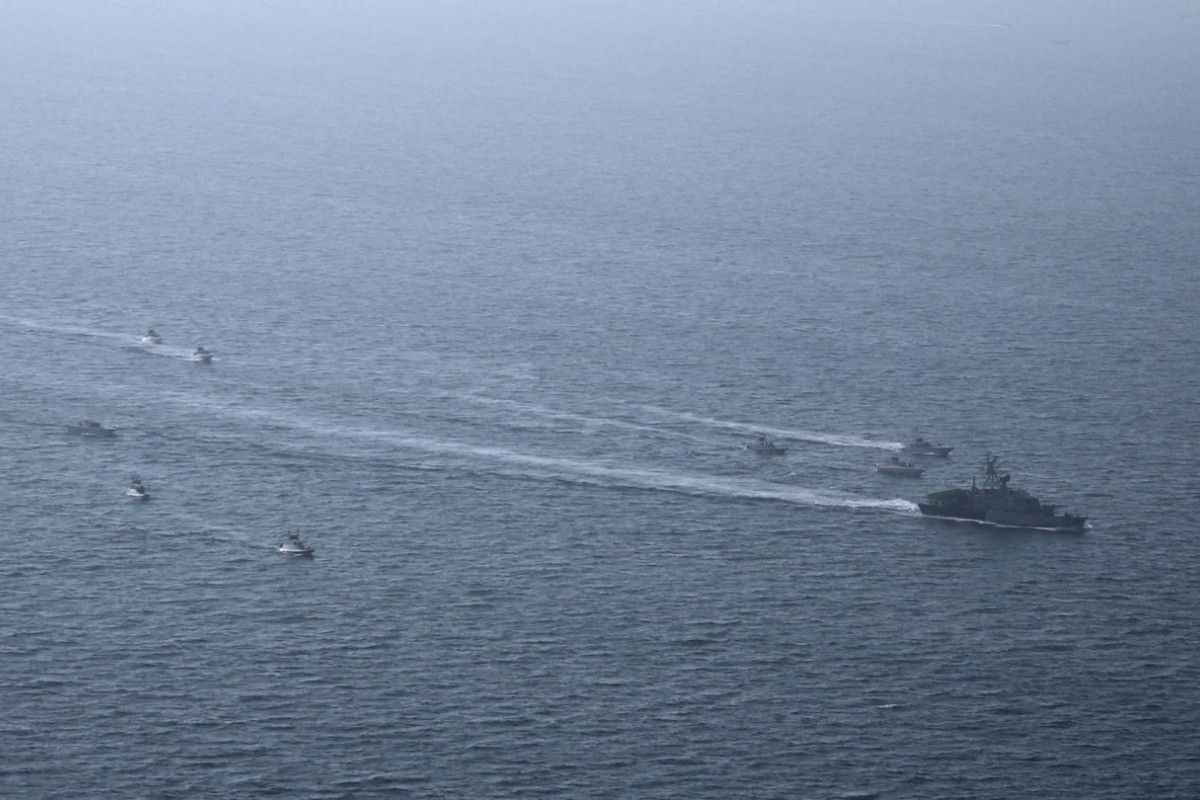
After the Hormuz closure, shipping through the strait fell 95% in the first week of March. Maersk, CMA CGM, Hapag-Lloyd and MSC suspended transits, and protection and indemnity insurance was withdrawn for vessels attempting passage.
War-risk premiums rose 400 to 500%, with surcharges of US$2,000 to 4,000 per container on top of freight rates that had already doubled from US$3,500 to US$7,000 for a 40-foot container.
Thai maritime exports to the Middle East have effectively fallen to zero. An estimated 32 billion baht in Thai goods are stranded in transit (Thai Exporters Association estimate), forcing exporters to choose between repatriation or storage at hub ports such as Singapore.
The Thai Joint Standing Committee on Commerce, Industry, and Banking put the disruption cost at about 33.3 billion baht per month, or 8.3 billion baht per week. Thailand exported US$12.5 billion to the Middle East in 2025, about 3.7% of total exports, while Europe-bound and Africa-bound shipments are also affected due to route disruptions.
Earlier supply chain strain from Houthi attacks on Red Sea shipping from November 2023 to October 2025 had already pushed carriers to reroute around the Cape of Good Hope, adding 10 to 14 days and US$200 to 400 per TEU to Asia-Europe costs.
Processed food exporters who secured orders at Gulfood 2026 in January are unable to deliver under current conditions. SMEs are facing the sharpest squeeze as shipping lines prioritise larger clients able to absorb surcharges.
Markets, inflation risks and domestic controls
The baht, which had strengthened to 30.84 per US dollar in January 2026, weakened 3% in a single week to 32.15 by March 9, the steepest depreciation among Asian currencies.
SCB Financial Markets linked the move to Thailand’s exposure to oil imports, describing Thailand as having the largest negative energy trade balance in Asia as a share of GDP, with net oil imports equal to about 4.7% of GDP.
The Stock Exchange of Thailand recorded its worst single session since March 2020 on March 4, falling 8% and triggering a 30-minute trading halt. It closed 5.6% lower after recovering part of the loss, and by March 9 stood at 1,383 points, down about 10% in under two weeks.
Inflation, negative for 10 consecutive months through early 2026, is expected to turn positive. If the conflict is contained within one month with oil averaging US$95 to 105 a barrel, inflation may reach 1.5%. A prolonged war with oil above US$115 could push headline inflation above 4%.
The government set up an “Economic War Room” under Prime Minister Anutin Charnvirakul, ordered civil servants to work from home, and suspended overseas travel to conserve fuel.
Thai nationals, evacuations and regional exposure
Before October 7, 2023, about 30,000 Thai agricultural workers were in Israel, drawn by wages 5-10 times higher than domestic farm work. Hamas killed 46 Thai nationals and took 31 hostage, more than any other foreign nationality.
Twenty-three Thai hostages were released during the November 2023 ceasefire, five more in January 2025, and three were confirmed dead. Thailand deployed its foreign minister to Qatar and Egypt and engaged Iran as an intermediary, which strengthened diplomatic channels between Bangkok and Tehran.
Thai worker numbers in Israel later rose above pre-attack levels to more than 38,000 by January 2025, driven by wages many times higher than domestic alternatives and Israeli incentives offering US$500 a month bonuses. As of February 2026, about 110,000 Thai nationals were in the broader Middle East, including 65,000 in Israel and 250 in Iran.
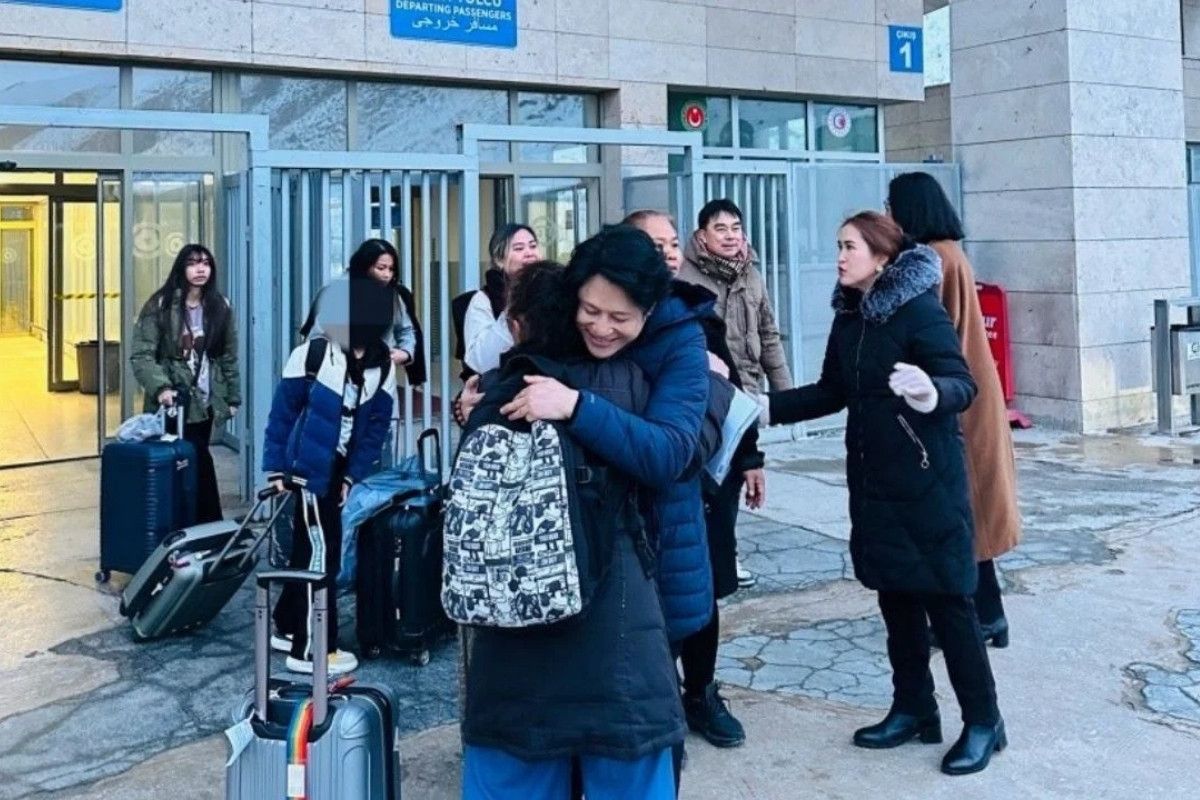
After the war broke out on February 28, 2026, the Royal Thai Embassy in Tehran organised land evacuations to Van, Turkey. Sixty-two Thais departed on March 7 and 69 more on March 10, while 14 Thai nationals were evacuated from Iraq.
By March 10, 351 Thai nationals had been assisted and returned safely, with no casualties or injuries reported from the 2026 war. The embassy temporarily relocated operations to Van on March 10, and 77,000 Thai nationals across the Middle East were advised to consider evacuation as a task force prepared for a potential large-scale extraction from Israel if the conflict widens.
Tourism surge for Israelis, but flights collapse
Israeli tourist arrivals to Thailand increased from about 209,000 in 2023 to approximately 275,000 in 2024 and an estimated 350,000 in 2025. Thai tourism officials noted many visitors were reported to be discharged soldiers travelling for rest and rehabilitation.
Israeli tourists stay an average of 18.5 days and spend about 83,000 baht per trip, placing them among Thailand’s higher-value visitor segments. However, broader tourism logistics have been disrupted by airspace closures across Iran, Israel, the UAE, Qatar, Kuwait, Bahrain and Iraq.
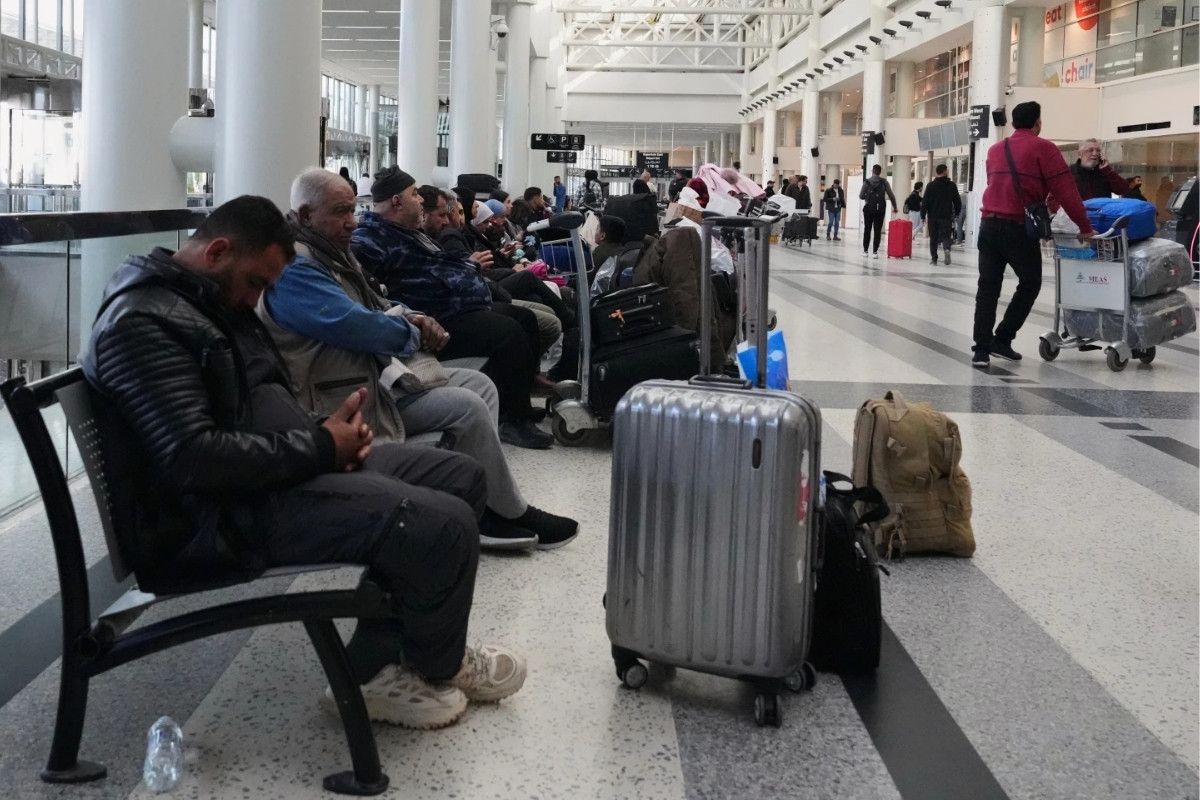
Between February 28 and March 8, 620 flights were cancelled, stranding more than 50,000 passengers at Thai airports. Emirates, Qatar Airways, Etihad and Gulf Air suspended services, affecting Gulf hub routes that carry roughly half of Thailand’s long-haul visitors from Europe and the Middle East.
The Tourism Authority of Thailand projected losses of 14.1 billion baht if the conflict lasts three weeks, rising to more than 40 billion baht if it extends to eight weeks, with 600,000 fewer visitors.
The Middle East market totalled 956,000 visitors, generating 86 billion baht in 2024. Iranian arrivals, which reached 65,000 in 2024 via Mahan Air’s six weekly direct flights, have effectively collapsed after services were suspended.
GCC travellers account for 80% of the Middle East market and spend an average of 104,000 baht per trip, and bookings are shifting towards more flexible terms. TAT has pivoted towards short-haul markets including India, Malaysia, Singapore and Japan.
Thailand’s diplomatic balancing and ASEAN response
Thailand has maintained diplomatic neutrality, avoiding explicit condemnation of either side while calling on all parties to exercise restraint and pursue a peaceful resolution. The stance reflects Thailand’s relationship with the United States as a treaty ally and major trade partner, alongside the diplomatic value of maintaining channels with Iran.
At the United Nations, Thailand has voted with the majority on Palestine-related resolutions, supporting Palestinian statehood, calling for an end to Israeli occupation, and backing Gaza ceasefires.
Thailand also abstained on human rights resolutions concerning Iran, reportedly under pressure from the US and EU, while seeking to protect relations linked to hostage negotiations.
Bilateral ties with Iran were reinforced by a February 2025 economic agreement that increased trade by 25% and by 70th anniversary diplomatic celebrations that year. In March 2026, Thailand’s official messaging focused on citizen safety, stating the “foremost priority” was protecting Thai nationals and saying Thailand would act “in accordance with international law”.
A Brookings analysis grouped Thailand with the Philippines in a “careful calibration” camp, contrasting with Malaysia and Brunei’s “strong condemnation” of US-Israeli strikes and Indonesia’s offer to mediate.
ASEAN issued a joint five-paragraph statement on March 4, 2026, calling for an immediate ceasefire and describing the escalation as “particularly regrettable” given ongoing Omani mediation. The statement stopped short of naming aggressors but noted the conflict was “initiated by Israel and the United States”.
The US redeployment of military assets towards Iran has reduced reconnaissance sorties over the South China Sea by about 30%, raising questions about Washington’s ability to manage Middle East and Indo-Pacific commitments simultaneously.
Thailand’s position
Thailand entered this crisis already running thin with six rate cuts, sluggish growth, and an Oil Fuel Fund that was burning through reserves before the first missile struck. In this light, the war has not created Thailand’s vulnerabilities so much as it has exposed them all at once.
How quickly the Strait of Hormuz reopens, and whether emergency fuel diversification holds, will determine whether the country weathers a rough quarter or slides into a more prolonged economic reckoning.
Latest Thailand News























Follow The Thaiger on Google News: