Ruangkrai challenges Mongkolkit’s four husbands policy

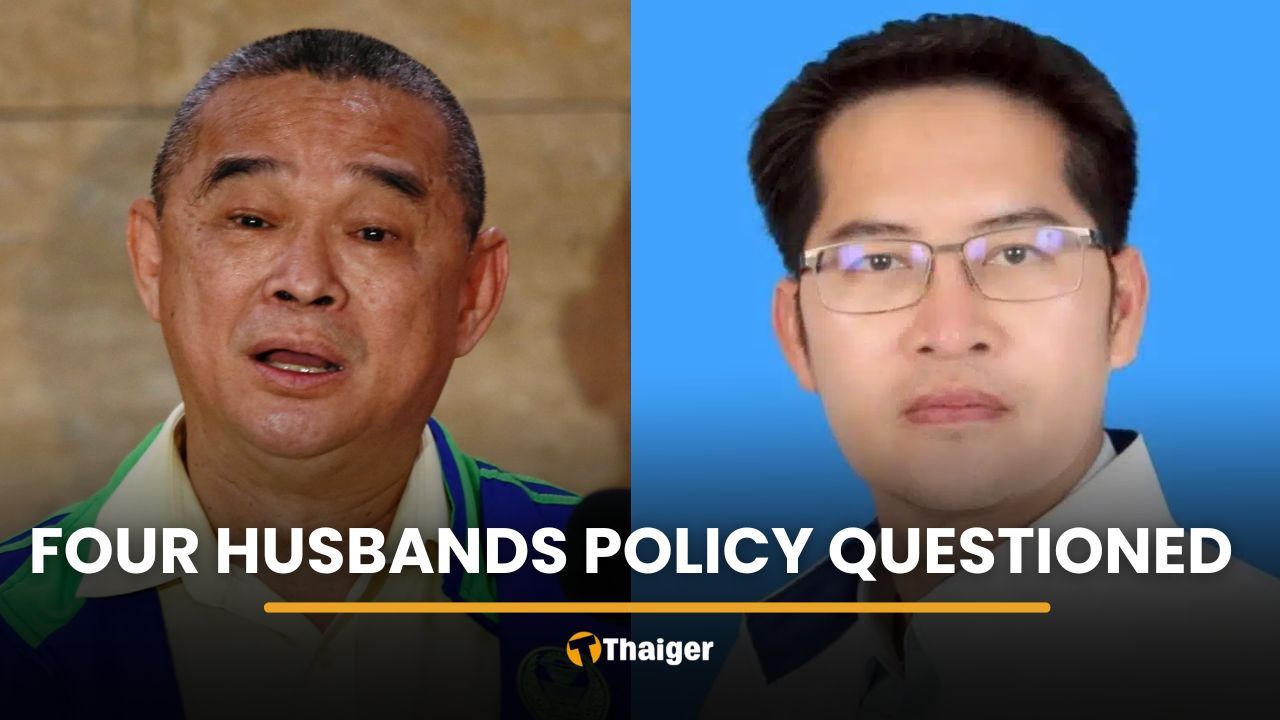
Today, January 22, Thai political activist Ruangkrai Leekitwattana has asked the Election Commission of Thailand (ECT) to investigate whether a campaign policy proposed by Mongkolkit Suksintharanon, suggesting women be allowed to have up to four husbands, violates Thailand’s election laws.
Ruangkrai, a parliamentary candidate running in Bangkok’s Constituency 4 with the Palang Pracharath Party, revealed that he had sent a letter to the ECT requesting a review into Mongkolkit’s public proposal.
Mongkolkit, listed third on the party list of the New Alternative Party and second in the party’s prime ministerial candidate ranking, recently shared a policy statement on social media that caused a lot of stir.
According to Ruangkrai, on January 13, Mongkolkit posted on Facebook a proposed gender equality policy stating that women should be able to have up to four husbands, if accepted, similar to Islamic law. The post went viral, prompting online confusion over whether the idea was serious or satirical.
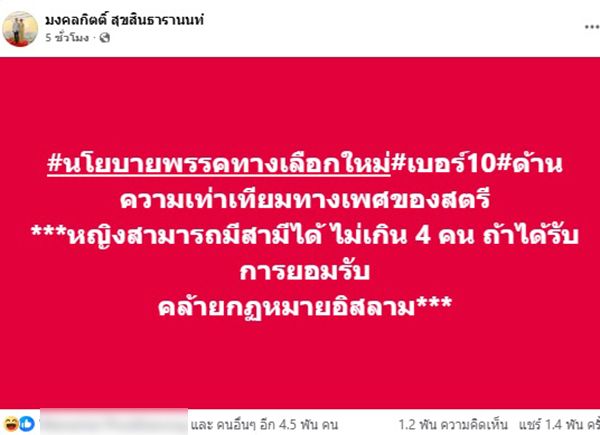
In one response, a social media user directly asked whether he was joking or serious, to which Mongkolkit replied, “Serious.”
Ruangkrai stated that a search on Google AI for “Islamic law women four husbands” returned summaries explaining that Islamic law allows men to marry up to four wives under strict conditions, but does not permit women to have multiple husbands due to concerns over lineage and family structure.
Ruangkrai argued that Mongkolkit’s policy contradicts these widely accepted facts, reported Naewna.


He added that under Section 73(5) of the Organic Act, candidates are prohibited from misleading or deceiving voters in ways that could influence public perception or voting decisions. The provision explicitly prohibits acts such as coercion, intimidation, or misleading statements about candidates or political parties.
Ruangkrai also cited past ECT rulings, specifically decisions 91/2562, 107/2562, and 127/2562, as precedents for how similar cases had been handled. He concluded that Mongkolkit’s proposal could potentially be interpreted as deceptive or factually false, and therefore may violate Section 73(5) of the Act.
In similar news, Mongkolkit Suksintharanon, a PM candidate from the New Alternative Party, proposed acquiring up to 10 nuclear warheads to strengthen Thailand’s security against global powers, claiming a cost of around 640 million baht per warhead.
Latest Thailand News
























Follow The Thaiger on Google News: