Election ballot barcode prompts debate over traceability

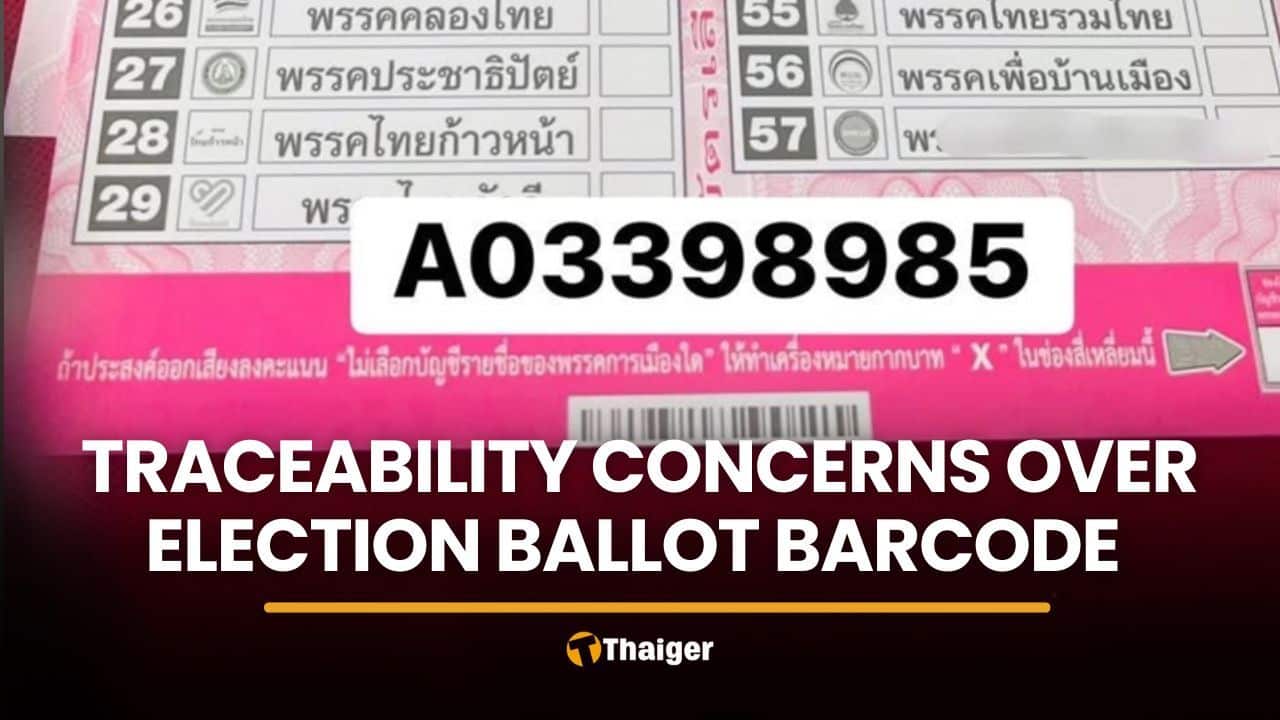
Questions have been raised about an election ballot barcode after an Election Commission of Thailand (ECT) official said it is used as a security control measure, while separate comments raised concerns that ballots could be traceable.
Yesterday, February 12, at the ECT Office, Acting Sub Lieutenant Phasakorn Siriphokyaporn, deputy secretary-general of the ECT, responded to public grievances about barcodes on ballot papers and claims that scanning could reveal voter information.

Phasakorn said the barcode is a security measure used to identify which batch and which polling unit a ballot belongs to. He said it helps confirm a ballot’s origin and is not linked to any political party.
Today, February 13, Somchai Srisuthiyakorn, a former ECT commissioner responsible for election administration, posted on his Facebook page, explaining about ballot paper specifications.
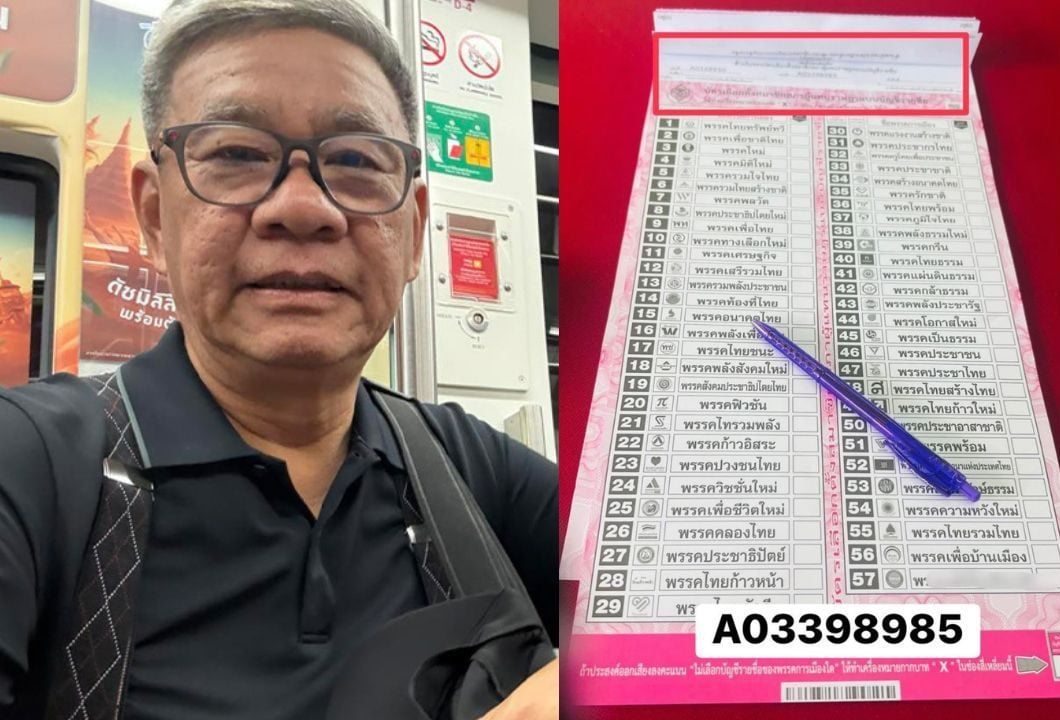
He clarified that printing requirements are strict and can include patterned designs, a special watermark visible only under ultraviolet light, and hidden microtext that can be read only with a magnifying glass.
Somchai said such features are “secret codes” intended to prevent ballot counterfeiting, citing Clause 129 of the MP election regulations, which allows the ECT to add special codes, symbols or other text to ballots without prior notice.
He stressed that the extra security features are meant to prevent counterfeit ballots and not for retroactive tracking. He said they are not intended to identify which booklet and serial number a ballot came from, or which voter sequence number it relates to.


He further added that a marked ballot is not linkable to a person by matching it to the ballot stub signature and then comparing that with the signature on the Sor Sor 1/3 voters’ list, which records the same voting order.
In the case that a marked ballot could be traced back to a specific booklet and number, this would reveal who voted for whom, he said.
Somchai also pointed to the pink ballot’s visible barcode, saying a scan shows the ballot number. He claimed the number is generated in a way that can be reversed to identify the booklet number.
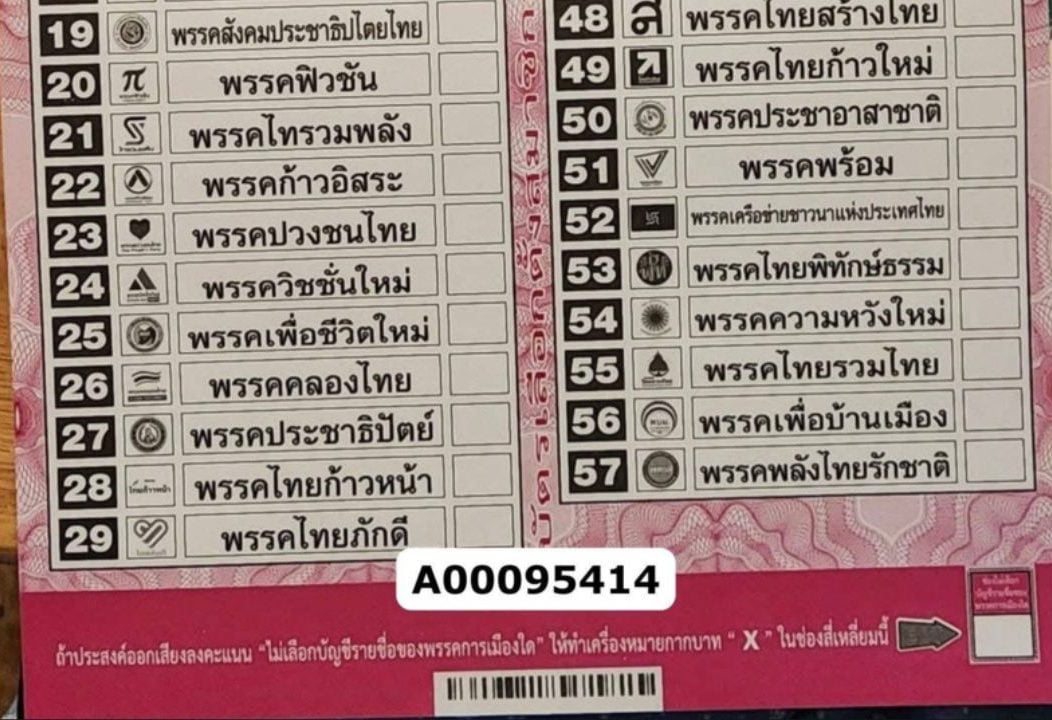
He also said that booklet allocation is controlled by the polling unit, and that cross-checking the ballot number with the Sor Sor 1/3 voters’ list could identify the voter.
Latest Thailand News
























Follow The Thaiger on Google News: