6 reasons you can be denied entry into Thailand
Key entry rules and common mistakes that can get travellers turned away at the border

Thailand has significantly tightened its border controls since 2024, and what used to be casual entry procedures have become strict enforcement checkpoints. While most travellers enter without issues, understanding what can get you denied entry into Thailand and detained at the airport is essential for anyone planning a trip to the kingdom.
The legal framework comes from the Immigration Act B.E. 2522 (1979), specifically Section 12, which lists 11 grounds for refusing entry. Immigration officers have broad discretion to deny entry if they believe you fall under any prohibited category. Here are the six most common reasons travellers face denial, detention, and deportation.
6 reasons that can get you denied entry into Thailand
1. Your passport isn’t up to standard
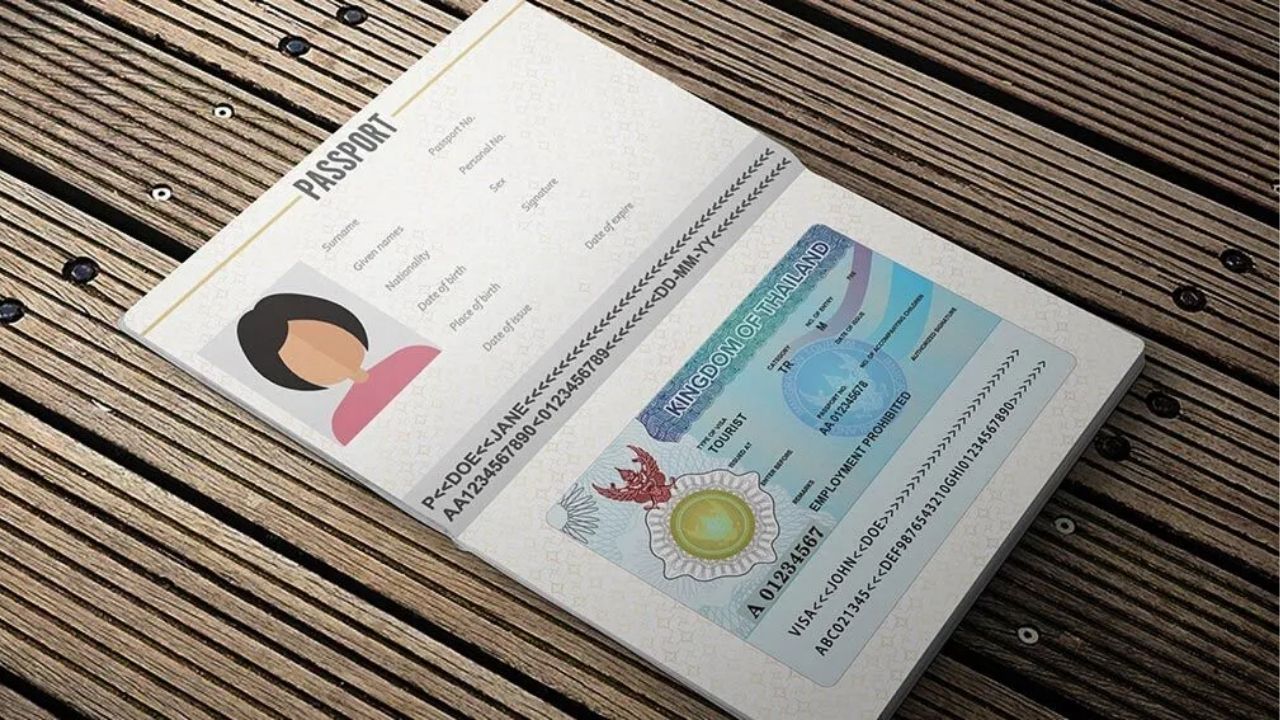
Thailand requires your passport to be valid for at least six months beyond your entry date. This is non-negotiable as airlines will deny boarding before you even reach Thailand if your passport expires within six months.
Beyond validity, physical condition matters enormously. Water damage is the single most common passport-related denial. A wet passport can warp the security laminate, blur entry stamps, and destroy the embedded RFID chip. Because soaking passports was historically used to remove or alter visa stamps, Thai immigration officers categorically reject water-damaged passports, regardless of your explanation.
Other disqualifiers include torn or missing pages, peeling spine binding, severe staining near the bio-data page, and even “souvenir stamps” from tourist sites like Machu Picchu or Checkpoint Charlie. You also need at least one completely blank page for entry stamps.
If your passport shows any of these issues, you’ll be denied entry into Thailand and sent back on the next flight at your expense.
To get around this, replace damaged passports before travelling, keep your passport in a waterproof case, and keep it neatly organised to avoid tearing it. You can have tourist stamps if you know you have space and won’t be travelling too frequently, but make sure there is always an empty page.


2. You don’t have physical cash on hand

Thailand’s Immigration Act Section 12(2) prohibits entry to anyone without what they call “appropriate means of living” in the kingdom. Immigration officers interpret this as requiring 20,000 baht per person or 40,000 baht per family in physical currency.
This catches modern travellers completely off guard. Even if you have substantial savings, high-limit credit cards, or valid bank statements on your phone, immigration officers generally will not accept digital proof of funds during secondary inspection. The bureaucratic logic is that screenshots can be faked, borrowed temporarily, or frozen by banks. Physical cash guarantees immediate solvency.
While not every arriving passenger is checked, this requirement is aggressively enforced against travellers whose passport stamps suggest suspicious travel patterns. These patterns include frequent entries, long stays, or multiple visa runs. Officers use Section 12(2) as an unassailable mechanism to deny entry into Thailand to suspected illegal workers without needing to prove employment.
If you can’t produce the cash when asked, you will be denied entry to Thailand immediately. Carry the equivalent of 20,000+ baht in Thai currency, US dollars, euros, or British pounds. It would be best not to rely solely on cards or apps.
3. You’re doing too many visa runs
For years, expats and digital nomads used visa runs, exiting Thailand briefly to neighbouring countries and immediately returning for a fresh entry stamp, to live in Thailand indefinitely without proper long-term visas. That era ended decisively in 2024 to 2025.
Thailand now strictly limits visa-exempt entries by land or sea to two per calendar year (January 1 to December 31). Attempting a third land border crossing triggers automatic denial. While air entries at Suvarnabhumi or Don Mueang don’t have a hard numerical cap, immigration officers apply intense scrutiny to anyone with more than two consecutive visa-exempt entries.
Algorithms at all checkpoints now track your cumulative days in Thailand over a rolling 12-month period. While no formal law states an exact maximum, travellers approaching 150 to 180 days per calendar year via back-to-back tourist entries are systematically flagged for mandatory secondary interrogation.
The government’s position is clear: genuine tourists don’t spend six to nine months per year vacationing in Thailand. Repeated entries signal hidden employment or illegal residency. If you’re working remotely or planning extended stays, obtain a valid long-term visa, such as the Destination Thailand Visa (DTV), which allows 180 days per entry over five years. Otherwise, you risk being denied entry into Thailand permanently.
Anecdotal reports suggest Don Mueang Airport (DMK) officers occasionally exercise greater scrutiny during visa runs than at Suvarnabhumi (BKK), although both airports enforce the same national directives.
4. You don’t have proof of onward travel

Visa-exempt travellers and those on 60-day tourist visas must possess a confirmed outbound ticket departing Thailand within their permitted stay. This isn’t optional as it’s enforced at two critical points.
First, airline check-in staff at your departure airport are legally required to verify onward travel. Airlines that transport passengers who are subsequently denied entry into Thailand face heavy government fines and must repatriate the rejected passenger at the airline’s expense. Consequently, trying to fly to Thailand on a one-way ticket without a valid long-term visa will get you denied boarding before you leave home.
Second, if you somehow bypass airline screening and arrive at Thai immigration without an onward ticket, officers will immediately use this as grounds for denial under Section 12(2) (insufficient means of living) or Section 12(3) (suspected illegal labour).
To bypass this, you can book a refundable return flight, a cheap onward ticket to a neighbouring country, or use services that provide temporary proof of onward travel for visa purposes. Print or save digital copies of your tickets and hotel reservations.
Essentially, you need to show any sort of proof of your travel.
5. You’re carrying banned items
An obvious one for many airports around the world, but Thailand maintains absolute prohibitions on certain items that routinely surprise foreign travellers. Getting caught with these at customs doesn’t just mean confiscation; it often means immediate denial, arrest, and deportation.
E-cigarettes and vaping devices are completely illegal in Thailand. The importation ban carries fines calculated at four times the device’s customs value, typically 20,000 to 50,000 baht payable immediately in cash. Refusal to pay leads to criminal smuggling charges carrying up to 10 years imprisonment. An overlooked vape pen in your carry-on is one of the fastest routes to being denied entry into Thailand and facing criminal detention.
Cannabis underwent a dramatic reversal. After a brief period of decriminalisation in 2022, Thailand re-criminalised recreational cannabis in 2025-2026. It’s now classified as a controlled herb limited to strict medical use onl and because of that, over 7,000 dispensaries closed. Foreign medical marijuana prescriptions are invalid under Thai law. Arriving with cannabis products, even legally obtained in your home country, results in immediate arrest for drug possession or trafficking, lengthy imprisonment, and permanent exclusion.
Other commonly seized items include certain prescription medications that are controlled substances in Thailand (always carry doctor’s prescriptions), and large amounts of pornographic material.
Review Thailand’s prohibited items list before packing. Declare anything questionable. Never bring contraband, hoping it won’t be detected, as customs uses advanced scanning technology specifically designed to catch these violations.
6. Your travel history raises red flags

Beyond the formal visa run limits, immigration officers scrutinise your overall travel patterns and behaviour at the checkpoint. Several factors trigger secondary inspection and potential denial:
Previous immigration violations: Any history of Thai overstays, even if fines were paid, creates a permanent record. A “Not To Land” (NTL) stamp from a previous denial guarantees you’ll be pulled into secondary inspection on any future attempt. While not technically a multi-year blacklist, an NTL stamp functions as an indelible warning.
Penalties for overstaying in Thailand are severe and escalating. Overstays under 90 days when voluntarily leaving incur 500 baht per day fines (maximum 20,000 baht) with no ban. If apprehended by authorities with an overstay under one year, you face a 5-year entry ban. A one-year trigger imposes a 10-year ban. Serious criminal behaviour can result in 100-year (lifetime) bans.
Inconsistent stories or suspicious behaviour: Officers routinely ask arriving passengers questions about their trip purpose, length, accommodation, and contacts. Inability to answer basic itinerary questions, vague explanations, or stories that don’t match your visa type raises immediate suspicion under Section 12(7) and (8) (danger to public order, suspected illegal activity).
Digital evidence of work: In 2026, there are widespread reports of immigration officials demanding to inspect travellers’ phones and laptops if they suspect illegal employment. Discovery of active Slack or Microsoft Teams communication, recent client invoices, employment emails, or work schedules can be legally construed as violating the Alien Working Act and Section 12(3). This results in immediate denial.
Criminal history or Interpol alerts: Thailand cross-references passport data against internal watchlists and Interpol databases. Major felony convictions—even served entirely in foreign jurisdictions decades ago—trigger exclusion under Section 12(6). Interpol Red Notices result in provisional arrest and denial under Section 12(7).
The best mitigation is simple: maintain a clean immigration record, prepare a clear and credible itinerary with supporting documents (hotel bookings, conference registrations, invitation letters), answer questions politely and honestly, and if you’re working remotely, obtain the proper DTV visa rather than trying to enter on tourist stamps.
What happens if you’re denied entry

Being denied entry into Thailand at an airport initiates a harsh detention protocol. Your passport is immediately confiscated, and you’re escorted to an Immigration Detention Center (IDC) holding room within the terminal. Conditions are notoriously austere: overcrowded cells, restricted access to phones and electronics, and often sleeping on floors for days while your case is processed.
You must arrange an outbound flight at your own expense to a country where you hold citizenship or residency. Because you’re in state custody, unable to leave the airport, you’re at the mercy of walk-up airline counter prices, which can be astronomically high for last-minute international departures.
At land borders, the process is simpler but equally final; you’re just turned around and told to walk back into the neighbouring country.
Thailand does offer an appeal mechanism: the TM11 form must be filed within 48 hours of receiving the exclusion order, thereby elevating the case to the Minister of the Interior. However, successful appeals are exceptionally rare without strong legal ties to Thailand (e.g., a Thai spouse, dependent Thai children, or significant corporate investments).
A checklist to avoid being denied entry
To avoid being denied entry into Thailand, ensure you have:
- Passport valid for 6+ months with at least one blank page, in pristine condition
- Correct visa for your purpose (or confirmed visa-exempt eligibility)
- Confirmed return/onward ticket within your permitted stay
- Minimum 20,000 baht per person in physical cash (40,000 baht per family)
- Hotel reservations or an invitation letter with a Thai address
- No banned items (e-cigarettes, cannabis, unauthorised medications)
- Clean immigration history with no recent visa runs
- Ability to explain your itinerary clearly and credibly
- Yellow Fever vaccination certificate (if arriving from endemic countries)
- Notarised parental consent letter (if travelling with children and only one parent)
Thailand’s immigration enforcement has fundamentally shifted from discretionary leniency to algorithmic precision. The era of casual border crossings and perpetual visa runs is over, replaced by a system that requires strict legal compliance, verifiable financial liquidity, and impeccable documentation.
Most travellers who prepare properly will never face issues. But relying on historical leniency, using damaged passports, arriving without cash or onward tickets, or attempting to circumvent long-term visa requirements through sequential tourist exemptions are now routinely resulting in detention and exclusion.
Understanding that every entry into Thailand is a conditional privilege, subject to rigorous real-time auditing and not an automatic right, is a fundamental prerequisite for seamless travel and a great holiday to the kingdom in 2026.
Latest Thailand News
























Follow The Thaiger on Google News: