6 ways your transit route can affect entry into Thailand
The route you take to Thailand can shape everything from boarding checks to immigration outcomes

Most travellers spend time making sure their visa is in order, their passport is valid, and they have enough cash before flying to Thailand. What far fewer people think about is the route they take to get there. The hub you connect through, how your tickets are booked, and even where you stopped two weeks ago can all determine whether you clear immigration smoothly or get turned away before you ever reach Bangkok.
Thailand’s border enforcement does not begin at Suvarnabhumi or Don Mueang. In 2026, screening starts at your boarding gate, and sometimes before that. Here are the six ways your transit route can change the outcome of your entry.
6 of the ways that your transit route can affect your entry into Thailand
1. Single ticket vs. self-transfer: the most critical variable
The single most important decision in any transit route to Thailand is not which hub you fly through. It is how your flights are booked.
A single-ticket itinerary, issued on one Passenger Name Record (PNR) by a carrier such as Singapore Airlines or Thai Airways, keeps you in a protected airside transit state the entire journey. Your baggage is checked through to Bangkok, you follow a sealed international route, and you never clear immigration at the connecting airport. Changi Airport is the clearest example of this working well: passengers on a protected single-ticket transit route to Thailand pass through a defined sealed corridor without touching Thai or Singaporean immigration at all. This also means you bypass Thai entry requirements at the transit stage entirely.
A self-transfer, where you book separate tickets not connected by an interline agreement, removes that protection. You are legally required to collect your bags and re-check them for the next flight, which means entering the transit country. If you do not have permission to enter that country, a transit visa, an ETA, or a standard entry visa, you can be denied boarding for your onward flight to Thailand before you ever leave the hub.
Travel experts recommend building at least two to three hours into any self-transfer connection to account for the additional immigration and re-check process.
2. The 12-hour rule and Transit Visa requirements
If your transit route involves a layover in Thailand itself, a specific rule applies.


Travellers transiting through Thai international airports for under 12 hours are generally exempt from visa requirements, as long as they remain within the designated airside transit area. Once a layover exceeds 12 hours, a Transit Visa, Category TS, becomes mandatory, regardless of whether you plan to leave the airport.
The Category TS Visa requires proof of onward travel within 30 days and evidence of financial stability: 10,000 baht per person or 20,000 baht per family. Unlike a Tourist Visa, it cannot be extended. This creates a real risk for travellers whose transit route is disrupted by events such as airspace closures.
If your permitted stay expires due to circumstances outside your control, the Immigration Bureau can, in some cases, issue emergency extensions upon presentation of an embassy letter or recorded statement.
3. Hub-specific entry traps

Not every major transit hub carries the same risk. The table below gives a quick breakdown of the most common connecting airports for Thailand-bound travellers.
| Hub | Airside transit viable? | Main trap | Critical documents |
|---|---|---|---|
| Singapore | Usually yes | Separate tickets require entering Singapore to re-check bags | Onward boarding pass; entry permission if landside |
| Kuala Lumpur | Yes on protected connections | Must leave airport premises to re-check bags | Proof of onward ticket; Malaysia visa if landside |
| Hong Kong | Usually yes | Overnight layovers convert transit into entry | Entry permit if going landside; boarding pass |
| Dubai | Usually, yes on one ticket | Separate tickets trigger baggage reclaim via UAE immigration | UAE entry/transit visa if exiting; Yellow Fever cert if applicable |
| Seoul/Incheon | Usually yes | Boarding pass not issued at origin forces landside | Korea entry permission; boarding pass plan |
| Doha | Typically yes | Exiting the airport converts transit into an entry event | Qatar entry permission if leaving; onward boarding pass |
| London/Frankfurt | Yes on protected tickets; high risk on self-transfer | Separate tickets require baggage reclaim through border control | UK transit visa/ETA or Schengen airport transit visa, depending on nationality |
Singapore is the lowest-risk transit route to Thailand for most travellers. Since January 30, 2026, Singapore’s Immigration and Checkpoints Authority (ICA) has been issuing No-Boarding Directive (NBD) notices to airlines at Changi and Seletar Airports. This allows Thai and Singaporean authorities to flag ineligible passengers before they board a Bangkok-bound flight.
For travellers spending time in Singapore before continuing to Thailand, the city’s food culture is also part of the appeal, especially for those curious about the roots and regional variations of Hainanese chicken rice in Thailand and Singapore.
Airlines that fail to comply face fines of up to 10,000 SGD. Changi also claimed the top spot in Skytrax’s World’s Best Airport Immigration rankings for 2026, which reflects the efficiency that makes this corridor the preferred choice for frequent Thailand travellers.
London and Frankfurt carry the highest self-transfer risk. Heathrow states clearly that separately booked flights almost always require passengers to collect their baggage and re-check, which means passing through UK immigration. Frankfurt operates the same way. Travellers who cannot legally enter the UK or the Schengen Zone may be blocked from their onward flight to Thailand before they leave Europe.
4. Health requirements triggered by your route

Your transit route to Thailand determines which health checks you face on arrival. These are not standard checks that apply to everyone, and they depend entirely on where you have been.
Travellers whose route passes through or originates from West Bengal, India, currently face Nipah virus screening on arrival, including temperature checks and health declaration forms completed at the jet bridge. This check is specific to that routing and does not apply to travellers arriving via other hubs.
Travellers who have transited through a Yellow Fever-infected area for more than 12 hours must present a valid International Health Certificate for Yellow Fever Vaccination at a health control counter located before Thai immigration.
This applies to routes through much of Sub-Saharan Africa and South America. A traveller flying from London to Bangkok via Johannesburg, for example, would be subject to this requirement, whilst someone on the same London to Bangkok route via Singapore would not.
The Thailand Digital Arrival Card (TDAC) platform also applies additional health prompts based on your country of embarkation, countries visited within the last two weeks, and nationality. Your transit route feeds directly into these prompts.
5. The TDAC and when it applies
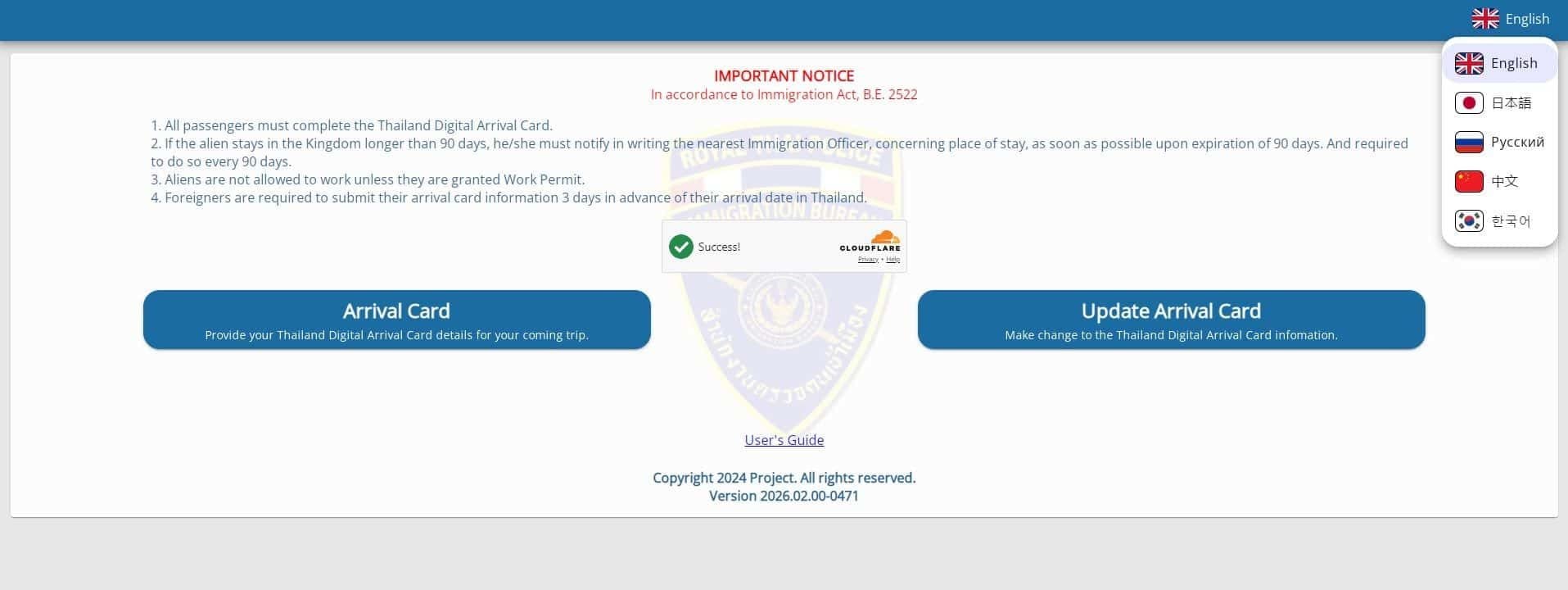
The TDAC has replaced the paper TM6 form and is mandatory for almost all non-Thai nationals entering the country. It must be submitted within 72 hours of arrival. The QR code it generates is checked at immigration.
There is one important exception: the TDAC is not required if you are transiting through Thailand without clearing immigration. The requirement only applies the moment you go landside.
This matters for connecting passengers who arrive at Suvarnabhumi and need to change terminals or collect checked baggage. The act of stepping outside the international transit zone turns you from a transit passenger into an entering traveller, with full entry requirements applying immediately. Travellers on self-transfer routes who arrive without a completed TDAC face significant delays at the immigration queue.
Separately, the Electronic Travel Authorization (ETA), fully operational since June 2025, applies to nationals from 93 visa-exempt countries. It allows pre-departure screening and provides access to automated e-gates at major Thai airports. Singaporean citizens and Hong Kong SAR passport holders are among those eligible for e-gate access at both Suvarnabhumi and Don Mueang.
6. The 2026 customs changes and transit shopping
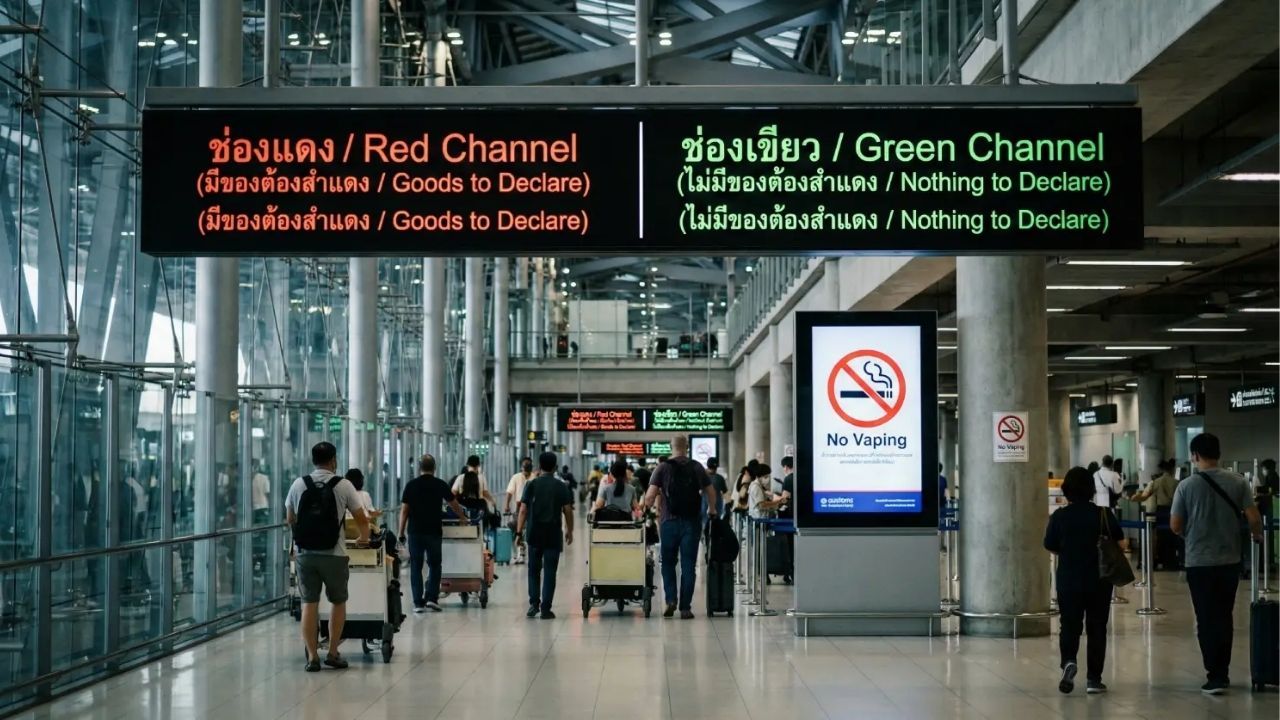
Effective January 1, 2026, Thailand abolished its 1,500 baht duty-free threshold for imported goods. Any foreign item valued above one baht is now subject to import duty and VAT if it is new and brought into the country. This is worth knowing before you plan your transit route to Thailand, particularly if you intend to shop at connecting airports along the way.
This directly affects travellers who use layovers in Singapore, Dubai, or Doha to purchase electronics, fashion, or luxury goods. Singapore’s Changi Airport is particularly popular for electronics and duty-free shopping, and items bought there and carried into Thailand in original packaging are now subject to customs scrutiny on arrival. Thai Customs has signed data-sharing agreements with major e-commerce platforms, and random baggage inspections at the Green Channel have increased as authorities enforce the new rules.
The total cost of any transit purchase is calculated as: CIF Value + duty + 7 per cent VAT. Duty rates for electronics run from 0 to 10 per cent; fashion and footwear can reach 30 per cent. New, unboxed merchandise in your bags is now the most likely trigger for a customs inspection, regardless of which transit hub it was purchased at.
What happens if you are denied at a transit hub
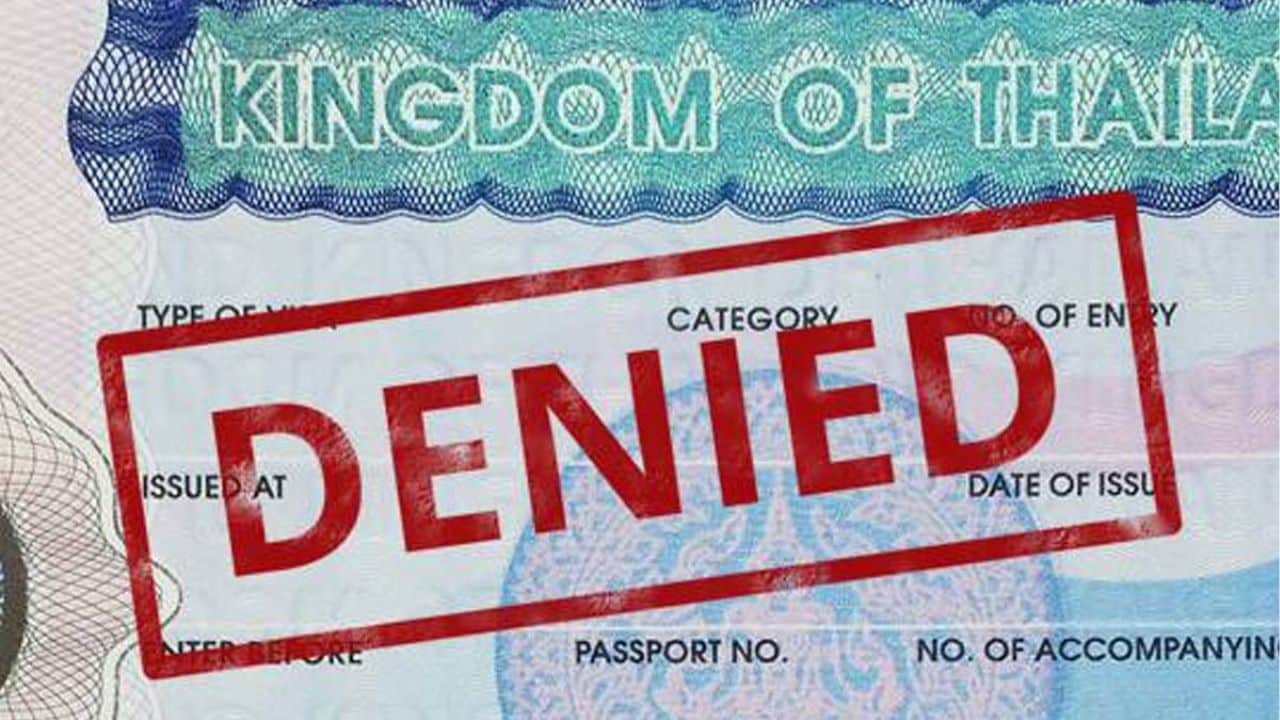
If you are denied boarding at a transit airport due to missing documentation or entry requirements, you will not reach Thailand. The airline is required to return you to your origin airport; this will generally not cost you extra, as airlines face fines and bear the return transport cost for transporting inadmissible passengers. However, pre-booked hotels, tours, and non-refundable onward flights are generally not recoverable from the airline.
If you reach Thailand and are denied entry at immigration, you will be detained at the Immigration Detention Centre (IDC) near Suvarnabhumi Airport until a deportation flight is arranged. You are responsible for the cost of that flight. A “Not to Land” (NTL) stamp will be placed in your passport, which may affect future Thai entry attempts.
Thai immigration officers retain full discretion to deny entry even to travellers holding valid visas, if the officer determines the traveller falls into a prohibited category under the Immigration Act B.E. 2522.
Transit route to Thailand checklist
Before booking any connecting itinerary to Thailand:
- Book on a single ticket with through-checked baggage wherever possible
- If flying via Singapore, confirm your itinerary is on a single PNR to benefit from Changi’s sealed transit corridor
- Confirm whether your chosen transit hub requires a visa or an entry permit for your nationality
- Check whether your layover in Thailand itself exceeds 12 hours — if it does, obtain a Category TS Transit Visa
- Submit the TDAC within 72 hours before arrival if you will clear Thai immigration
- Apply for an ETA before departure if you are a national of one of the 93 eligible countries
- Carry proof of onward travel and 10,000 to 20,000 baht in accessible funds
- If your transit route passes through a Yellow Fever-infected area for more than 12 hours, carry your International Health Certificate
- If routing via West Bengal, expect Nipah virus screening at the jet bridge on arrival
- Declare all new, packaged goods purchased during transit; the 1,500 baht duty-free exemption no longer exists
- Avoid separate tickets via London or Frankfurt unless you can legally enter the UK or the Schengen Zone
- Use only the official Thai immigration portal to submit your TDAC; fee-charging clone sites are active in 2026
For most travellers, the safest transit route to Thailand is a single-ticket itinerary through a major hub with robust airside transfer facilities. The Singapore corridor stands out as the most integrated option in 2026, combining upstream No-Boarding Directive screening at Changi with e-gate access at Bangkok’s two main airports and the fastest immigration processing in the region.
But no transit route to Thailand, however well-chosen, removes the need for correct documentation. The immigration officer at the Thai border has the final say, regardless of how smoothly the journey went beforehand.
Latest Thailand News























Follow The Thaiger on Google News: