Thailand’s 3 million baht property visa: How to secure long-term residency through real estate
Having property purchase, leasehold, or high-value rent can support long-term residency in Thailand

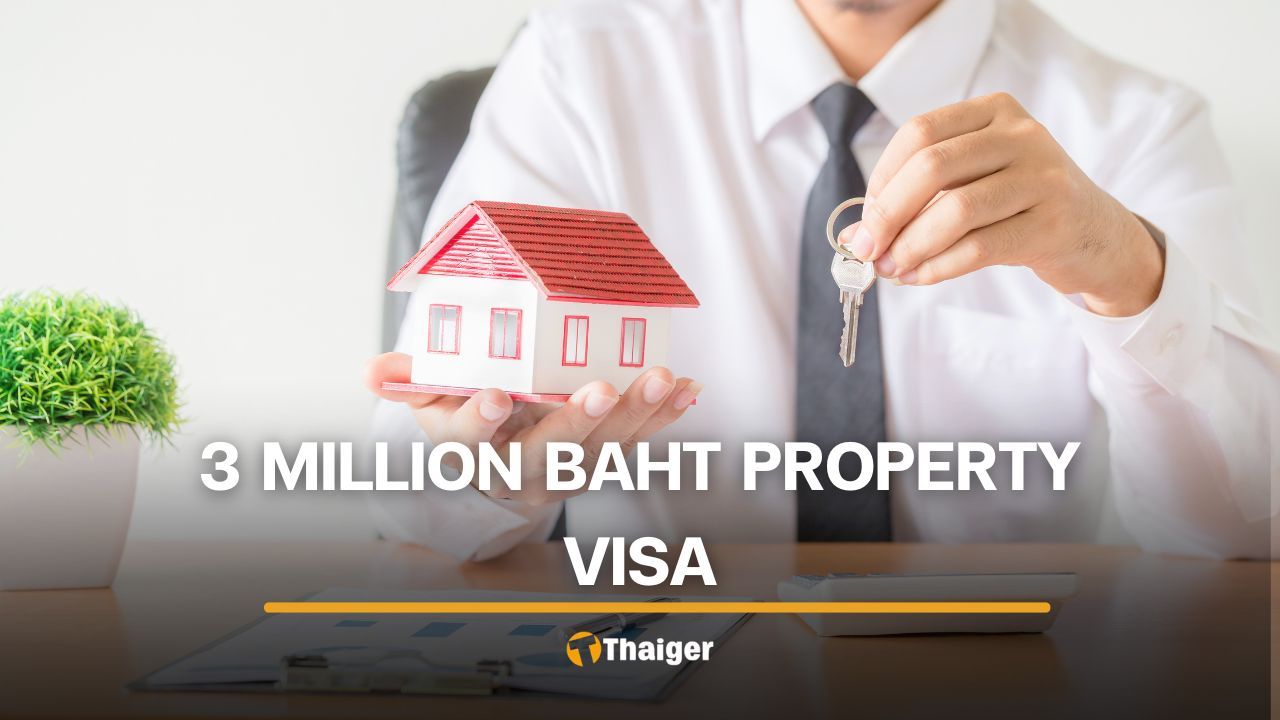
For years, expats and digital nomads in Thailand juggled short-term visas, exhausting border runs, and complicated financial requirements just to stay in the country. The new property investment pathway changes all that. By investing 3 million baht in Thai real estate, or committing to high-value long-term rental, foreigners can now secure renewable one-year extensions of stay without age limits, bank statement headaches, or work permit requirements.
This isn’t technically a visa in the traditional sense. It’s an investment-based extension of stay governed by Orders 237/2568 and 238/2568, introduced in October 2025. But in practice, it functions as a straightforward residency pathway that’s open to anyone with the financial means to qualify, regardless of age.
On this page
| Section (Click to jump) | Summary |
|---|---|
| Three ways to qualify | Applicants can qualify through a condo purchase, a registered long-term lease, or a high-value rental arrangement. |
| The critical landlord eligibility rule | The seller or landlord must be a Thai individual or a Thai-majority company, or the application will fail. |
| Who can apply and what you get | This pathway has no age limit, avoids income and deposit rules, and can also cover eligible family members. |
| The Ministry of Tourism certification requirement | Applicants must obtain Ministry certification through an authorised operator, or they default to the 10 million baht threshold. |
| The two-phase application process | The process starts with an initial status adjustment and then moves to a renewable 12-month extension. |
| Costs and fees | Applicants face programme fees, annual service charges, and often additional legal costs for document and filing support. |
| Required documentation | The application requires proof of identity, investment details, payment records, and supporting legal documents. |
| How does this compare to the Thai Elite Visa? | Unlike the Thai Elite Visa, this route puts money into property rather than a membership fee with no assets attached. |
| Foreign property ownership limitations of the property visa | Foreigners can own certain condominiums, but cannot directly own land in Thailand. |
| Is this the right pathway for you? | This option suits people ready to make a real property or rental commitment, but it requires careful legal compliance. |
Three ways to qualify

The regulations offer three distinct routes to meet the 3 million baht threshold, each suited to different investor profiles.
Property purchase (freehold condominium)
Buy a completed condominium unit with a minimum value of 3,000,000 baht. The unit must be registered at the Department of Lands in your name as foreign freehold ownership, and the transfer must have occurred on or after October 1, 2020. Off-plan or under-construction units don’t qualify; you need a finished property with completed Land Office registration.
This route appeals to buyers who want a tangible asset they can live in, rent out, or eventually sell. Your investment isn’t a sunk cost; it’s real property that can appreciate or generate rental income while securing your residency.
Registered long-term lease (leasehold)
Hold a registered lease with a total contract value of at least 3,060,000 baht. The lease term must exceed three years, and you must be registered as the primary tenant at the Land Office. This route works for those interested in houses or premium properties where foreign freehold ownership isn’t available.
Leasehold arrangements require proper legal registration; informal lease agreements won’t qualify.
High-value residential rental
Commit to a rental apartment or property with a monthly rent of at least 85,000 baht. For the initial application stage, you’ll need to show evidence of three months’ advance rent payment. For the subsequent 12-month extension, you’ll need proof of 12 months paid in advance.
This is the most flexible route for those not ready to purchase but willing to commit to premium accommodation. However, it hinges entirely on landlord compliance with eligibility requirements.
The critical landlord eligibility rule

All three routes share one non-negotiable requirement that catches many applicants off guard: the seller or landlord must be either a Thai individual or a Thai-majority company (foreign shareholding not exceeding 49%).
If you buy from a foreign seller or rent from a foreign landlord, even if you meet the financial threshold, your application will be denied. This rule applies equally to purchases, long-term leases, and rental agreements. Before committing funds, verify the seller or landlord’s status. For corporate sellers or landlords, you’ll need shareholder documentation to prove Thai majority ownership.
Who can apply and what you get
Unlike Thailand’s retirement visa, which requires applicants to be 50 or older, this pathway has no age restrictions. A 25-year-old digital nomad and a 75-year-old retiree have equal eligibility, provided they meet the investment threshold.
You also don’t need to show bank statements, prove monthly income, or maintain large deposits in Thai bank accounts. The property investment itself serves as your financial qualification. There’s no requirement to obtain a Thai work permit, and you won’t automatically face local income tax obligations on foreign-sourced income.
Family members can join you as dependents. Your spouse (legally married and living together), children under 20 (unmarried and living with you), and even your biological parents (if 50 or older) can obtain dependent extensions tied to your main application. Each dependent pays separate program fees but doesn’t need to make an individual investment.
The Ministry of Tourism certification requirement
What distinguishes this 3 million baht pathway from Thailand’s standard 10 million baht investment extension is the mandatory Ministry of Tourism and Sports certification. You must obtain a letter from the Ministry verifying you as a long-stay tourism supporter. Without this certification, immigration officers are legally required to default to the 10 million baht threshold.
This certification process is handled through authorised long-stay operators who verify your qualifying investment and coordinate with the Ministry. It’s not something you can skip or DIY as it’s built into the legal structure of the program.
The two-phase application process

The process unfolds in two distinct stages, each governed by separate legal orders.
Phase 1: Initial status alignment (Order 237/2568)
After your investment is verified and you receive Ministry certification, you attend an immigration appointment for the initial visa-status adjustment. This typically results in a 90-day permission to stay stamp in your passport.
Phase 2: 12-month extension (Order 238/2568)
Before the initial 90-day permission expires, you apply for the full 12-month investment-based extension. This extension is renewable annually as long as you continue to meet the qualifying criteria.
Timing matters significantly. If you’re already in Thailand on a tourist visa or visa exemption, you’ll need at least 20 days remaining on your current permission when you attend the immigration appointment. The verification process typically takes 7 to 10 business days, so starting at least four weeks before your permission expires provides a safe buffer.
Costs and fees

The official program fees consist of a one-time membership fee of 4,000 baht plus an annual visa service fee of 27,000 baht for each 12-month extension cycle. These fees go to the authorised long-stay operator managing the certification and coordination process.
Professional legal fees for structuring your purchase, verifying landlord eligibility, preparing documentation, and coordinating the immigration filing process start around 12,000 baht plus VAT. More complex cases, particularly those requiring due diligence on corporate sellers or remediation of documentation issues, may cost more depending on scope.
Required documentation
This pathway is document-intensive. You’ll need to prove your identity, demonstrate the qualifying investment structure, show the payment trail, and verify seller or landlord eligibility.
Core documents include completed application forms, full passport copies, and recent photos. For property purchases, you’ll need the sale and purchase agreement, Department of Lands transfer evidence showing registration in your name dated October 1, 2020 or later, and payment proof matching the qualifying amount. For leases, you’ll need the registered lease agreement showing term and tenant name, plus payment evidence. For rentals, you’ll need the lease agreement and proof of advance rent payments covering the required periods.
If you’re including family dependents, you’ll need passports and relationship documents (marriage certificates, birth certificates) translated into Thai and certified by a translation agency accredited by the Department of Consular Affairs.
How does this compare to the Thai Elite Visa?
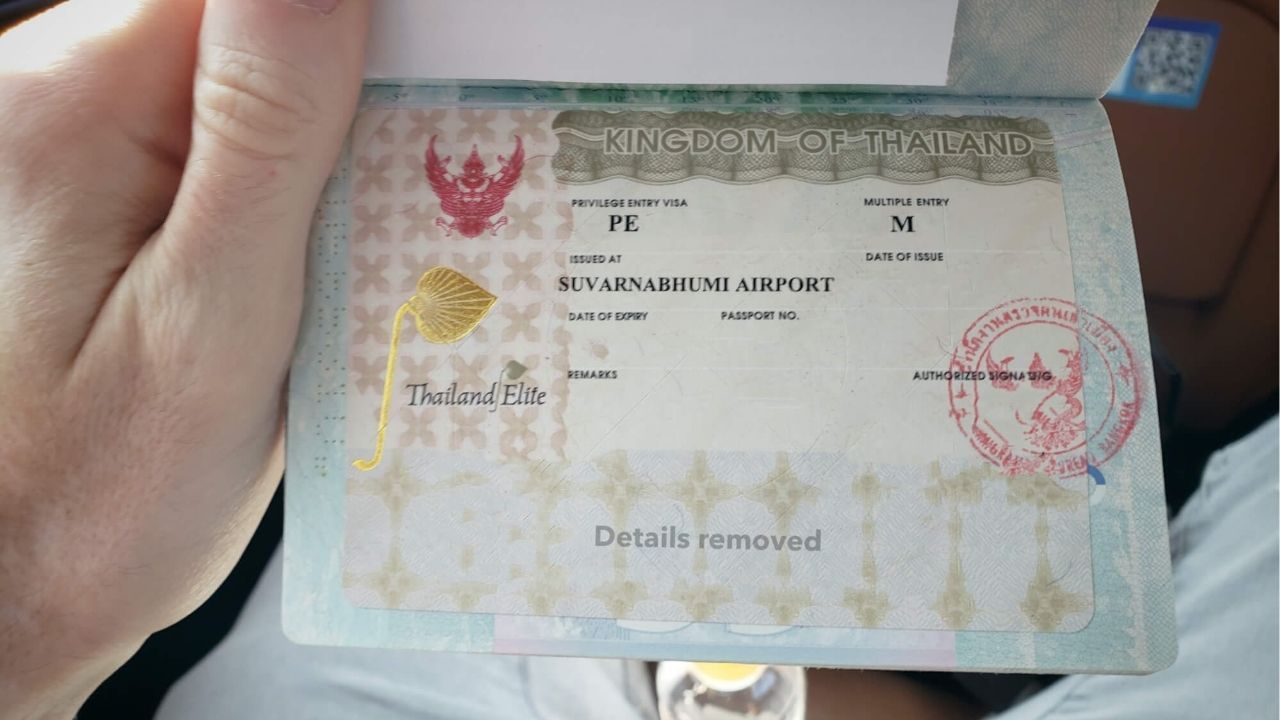
The Thai Elite Visa has long been the go-to option for foreigners seeking a hassle-free long-term stay without age or financial documentation requirements. Elite membership fees range from hundreds of thousands to millions of baht, depending on the tier and duration, but the payment is entirely a sunk cost, and you pay for the privilege of the visa and get nothing tangible in return.
The property investment route fundamentally differs. Your 3 million baht goes into an asset you own. You can live in it, generate rental income from it, or sell it when you’re ready to leave Thailand. The residency benefit comes alongside actual property ownership, not instead of it. For investors who were planning to buy Thai property anyway, this pathway essentially makes the visa a bonus rather than a separate expense.
Foreign property ownership limitations of the property visa
Foreigners cannot own land outright in Thailand. However, foreign freehold condominium ownership is permitted as long as the total foreign ownership in the building doesn’t exceed 49% of the total floor area. This quota is tracked at the building level, so popular developments in high-demand areas may have exhausted their foreign quota.
For houses or landed property, foreigners can hold registered long-term leaseholds (typically 30 years, renewable) but cannot hold direct freehold title. Some investors structure ownership through Thai-majority companies, but this requires careful legal compliance and doesn’t eliminate the need to verify seller eligibility for visa purposes.
Is this the right pathway for you?

This investment-based extension works best for foreigners who were already planning to buy property in Thailand or who are comfortable committing to premium long-term rental. If you’re under 50 and don’t qualify for a retirement visa, if you’re tired of annual visa renewals and border runs, or if you want your family to join you without separate complicated applications, this pathway offers a legitimate solution.
However, it requires genuine investment, either capital tied up in property or committed to high-value rent. It’s not a budget option, and the legal compliance requirements are strict. Getting the seller or landlord eligibility wrong, missing the October 2020 transfer date cutoff for purchased condos, or failing to properly register a leasehold can derail your entire application.
The pathway is still relatively new for the property visa, having launched in October 2025. Some eligibility details and document-handling practices continue to be clarified through real-world cases. Working with legal professionals experienced in both Thai property law and immigration requirements isn’t just recommended, it’s practically essential for avoiding costly mistakes.
Sources:
• Thailand Visa Real Estate – Sukhothai Interlaw
• Thailand Golden Visa Property – Sukhothai Interlaw
• Thailand Visa for Property Owners – Sukhothai Interlaw
• Investment Residency Thailand 3 Million Baht – AIM Bangkok
Latest Thailand News























Follow The Thaiger on Google News: