Can immigration check your phone when you arrive in Thailand?
Here is what officers can ask for and when privacy limits apply

Deep forensic searches of phones at Thai immigration are extremely rare. Most travellers pass through without anyone touching their devices. However, your phone will likely be required for border crossing, as Thailand now requires digital documentation for entry.
The chances that phone immigration will search your phone when you enter Thailand will be slim, but here is what that process is like. As long as you are not doing anything sketchy or criminal, you should have no concern, but here is what goes down.
On this page
| Section (Click to jump) | Summary |
|---|---|
| Yes, but not how you think | Thai officers can ask to see information on your phone, but deep forensic access requires a court warrant. |
| What officers might actually look for | Immigration usually checks digital proof such as your TDAC, accommodation, onward travel, and available funds. |
| When things escalate: Secondary inspection | Travellers flagged for suspicious entry patterns may face more detailed questioning and be asked to show extra phone-based evidence. |
| What about forensic searches? | Deep phone searches are linked to criminal investigations and are not part of normal immigration screening. |
| How to protect your privacy | Printed documents, organised files, and a password-protected device can help limit unnecessary phone exposure at the border. |
| The reality | Thailand’s border system is becoming more digital and biometric, but most prepared travellers still pass through without problems. |
Yes, but not how you think

>Immigration officers in Thailand can ask to see information on your phone, and you’ll likely show it voluntarily. What they cannot do is forcibly unlock your device and conduct deep forensic data extraction without a court-issued warrant.
The legal framework operates on three levels. Under the Immigration Act B.E. 2522, officers have broad authority to inspect travellers and question them during secondary screening. The Customs Act B.E. 2560 allows physical baggage searches. But accessing the internal digital data on your phone, messages, photos, emails, and social media requires a court warrant under Thailand’s Computer Crime Act B.E. 2550 and constitutional privacy protections.
Officers won’t plug your phone into forensic equipment at passport control, but they will ask you to show them digital documents to prove you meet entry requirements.


What officers might actually look for
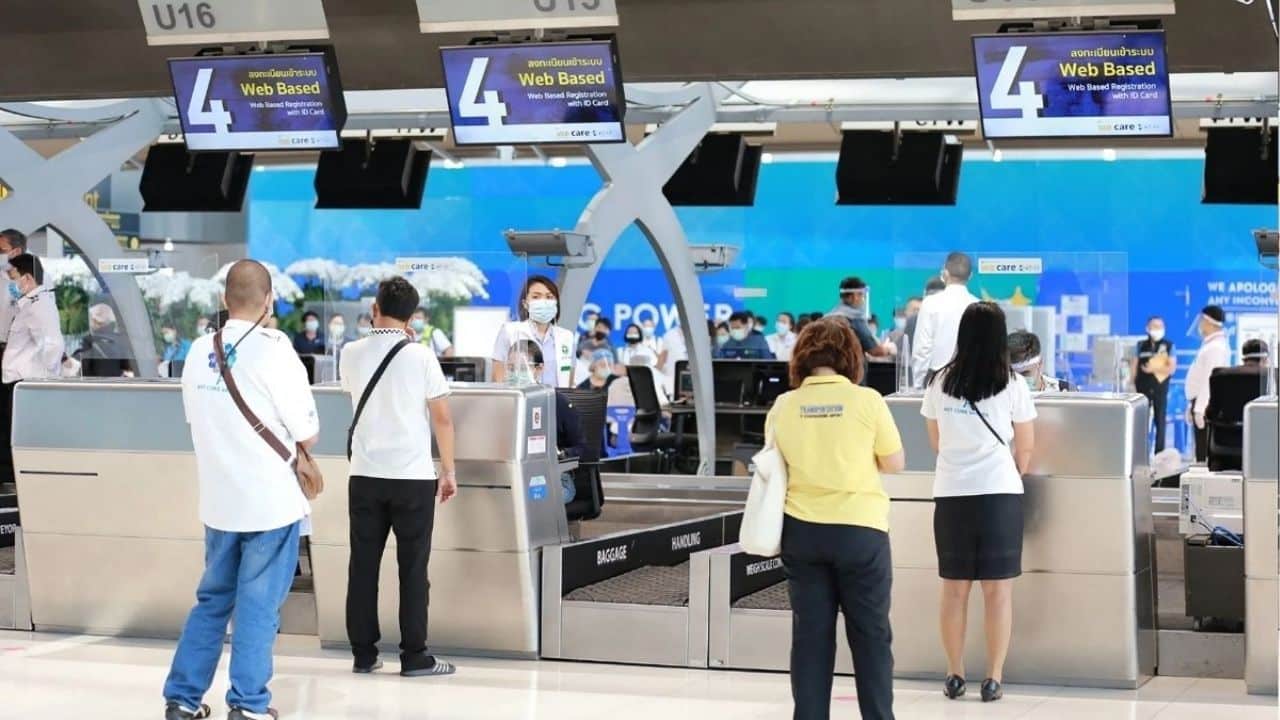
Thailand mandates the Thailand Digital Arrival Card (TDAC) for all arrivals. Complete it within 72 hours at tdac.immigration.go.th, and the QR code can be scanned from your phone screen. Beware of scam sites charging fees; the official service is free.
Officers also verify you have 20,000 baht per person, confirmed accommodation, and onward travel. They routinely ask to see digital bank balances, hotel bookings, and flight tickets on your phone.
You unlock your phone and show the specific document, either holding it to the glass or handing it briefly to the officer.
When things escalate: Secondary inspection
If Thailand’s PIBICS biometric system flags your passport for suspicious patterns, frequent entries, stays approaching 180 days yearly, or visa runs, you’ll face secondary inspection. Officers may ask to see WhatsApp or LINE contacts, work emails, or your digital itinerary.
Officers can’t legally force you to unlock your phone at Thai immigration, but they can deny entry if you refuse to prove tourist intent. Most travellers unlock rather than face deportation.
What about forensic searches?
Deep device cloning occurs only during criminal investigations, not routine checks at the Thailand immigration. If arrested for serious offences, police seize your phone and must petition a court for a warrant to access data.
The Computer Crime Act requires court orders for accessing computer data, decryption, and confiscation. Unlike the USA, where Customs conducted 55,000+ warrantless phone searches in 2023, Thailand has no such blanket authority.
How to protect your privacy

Print critical documents: Carry paper copies of your TDAC QR code, hotel booking, flight confirmation, and bank statement. Officers must accept printed proof.
Organise digital files: Create one folder with only TDAC, bookings, and bank balance. Display what’s needed without opening messaging apps.
Use encryption: Keep your device password-protected. This requires court warrants for deeper access.
Avoid triggers: PIBICS flags extensive entry stamps or 180-day yearly stays. Get a proper long-term visa instead of chaining tourist exemptions.
The reality
Thailand collected biometric data from 17 million arrivals in 2024 through PIBICS, cross-referencing entries against Interpol notices and visa violations. Combined with mandatory TDAC and the upcoming Electronic Travel Authorisation system, border control is shifting to algorithmic cloud screening.
Can officers check your phone at immigration when you arrive in Thailand? Legally, deep forensic searches require court warrants. Practically, you’ll almost certainly show immigration officers information on your phone to satisfy entry requirements.
Most travellers who prepare properly never face issues. You should carry printed documentation, answer questions politely, and if you meet Thailand’s entry requirements, you’ll pass through smoothly. Thailand’s system is less invasive than the USA’s current warrantless search, but it operates with significant discretionary power.
Latest Thailand News

























Follow The Thaiger on Google News: