Why the Japanese people love Thais so much, though there are still a few ‘what on earth?’ moments

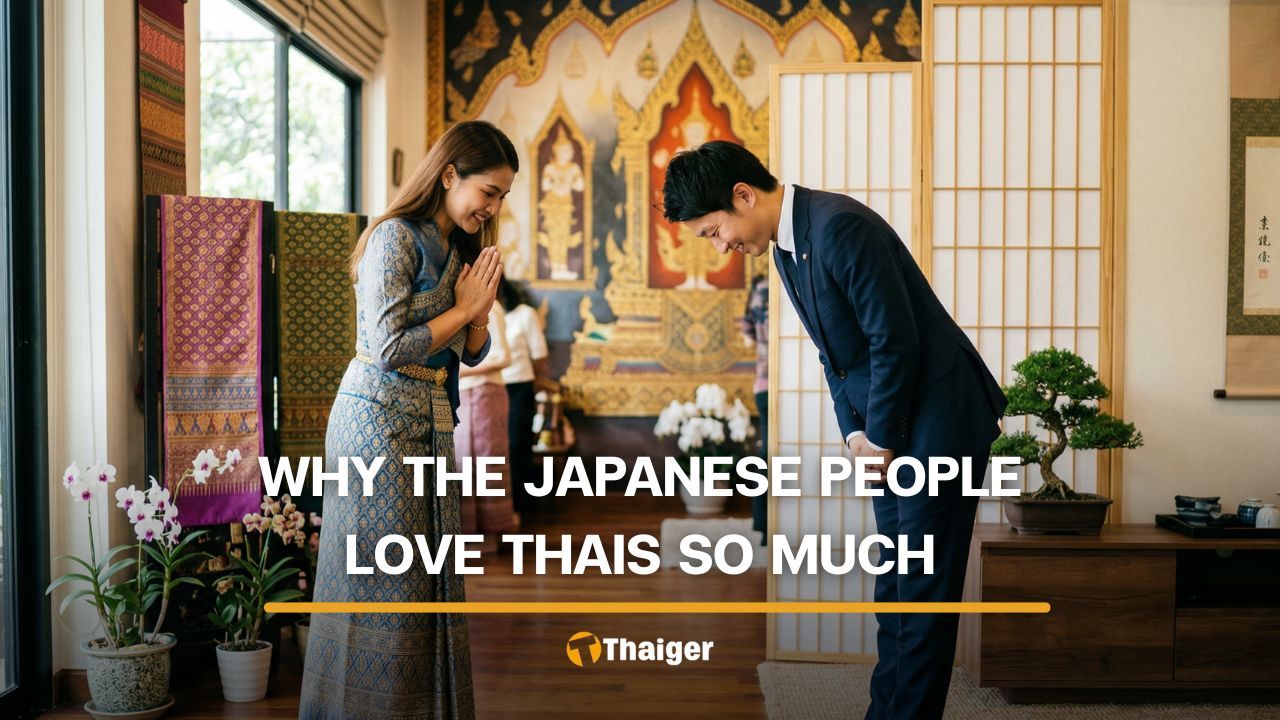
According to a regular annual survey by the Japanese Cabinet Office, Thailand consistently ranks among the countries Japanese people feel most warmly towards, usually second only to Taiwan.
Japanese tourists in Thailand often seem especially relaxed. They appear more cheerful, open and at ease than they do back home. They smile more easily, speak to Thai people more freely, and some return year after year. Some even decide to settle here for good.
Thailand has the second-largest Japanese population in Asia, with 70,421 residents. Bangkok is home to the second-largest Japanese population of any city in the world, after Los Angeles. At the same time, 65,398 Thai people live in Japan.
Because Thailand has what Japan does not
Japanese society has a phrase that captures the pressure many people feel: kuuki wo yomu, or “reading the air.” It refers to the need to constantly sense the mood of the room and the feelings of others, making sure not to say or do the wrong thing.
Japanese people often have to remain careful and self-aware at all times. So when they arrive in Thailand and meet people who smile without conditions, do not judge them, do not pressure them, and do not expect them to follow unspoken cultural rules, it can feel like taking a full breath for the first time.
Many Japanese people who visit Thailand say this is the first thing they notice from the moment they leave the airport. No one seems to be watching whether they are behaving correctly or incorrectly.
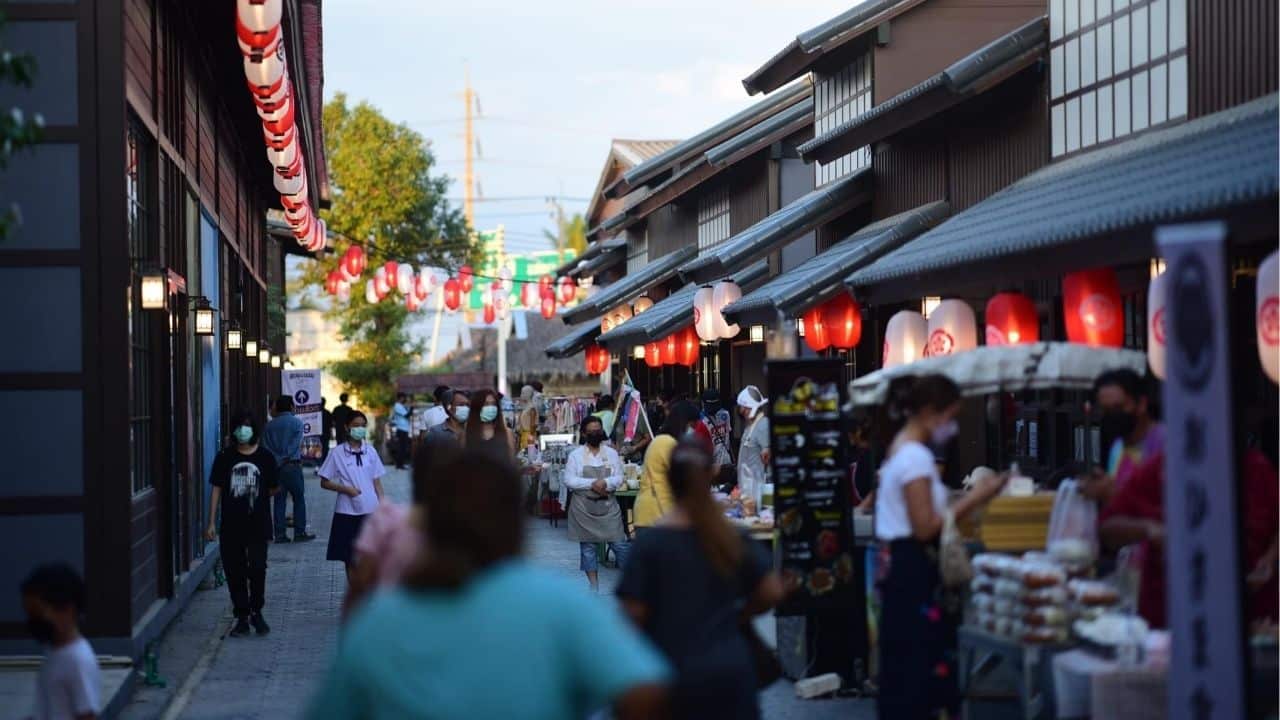
Looking more closely, Thailand and Japan actually share a surprising number of core values. Both cultures place importance on manners, consideration for others, respect for elders and avoiding causing embarrassment. The difference lies in how those values are expressed.


In Japan, they are often shown through precision, quietness and strict adherence to rules. In Thailand, they are expressed through smiles, flexibility and compromise, finding a way forward that everyone can live with. As Bird Thongchai once sang, sabai sabai.
For Japanese people who spend much of the year living within rigid rules and expectations, Thai softness does not just feel pleasant. It feels balanced.
Japanese people who live in Thailand for longer periods often speak of a “feeling of freedom.” That does not mean Japan is a bad society. It means Thailand does not impose the same kind of social pressure. Here, no one seems overly concerned with what rank someone holds, how well they follow company rules, or whether they married later than expected.
For people raised in a society where the opinions of others carry great weight, living in a place where nobody knows them and nobody judges them is not just a holiday. It is a chance to be themselves again. That is something Thailand gives Japanese people in a way many other countries cannot.
Thailand and Japan share no wounds of war
Japan’s relationships with many neighbouring countries in Asia still carry the shadow of the Second World War. In some cases, those memories remain a source of tension both at the government level and in wider society to this day.
But Japan and Thailand do not share that kind of wound.
The two countries never went to war with each other. There is no deeply painful shared national memory between them, and when a relationship is not burdened by unresolved history, it is easier to meet each other openly in the present.
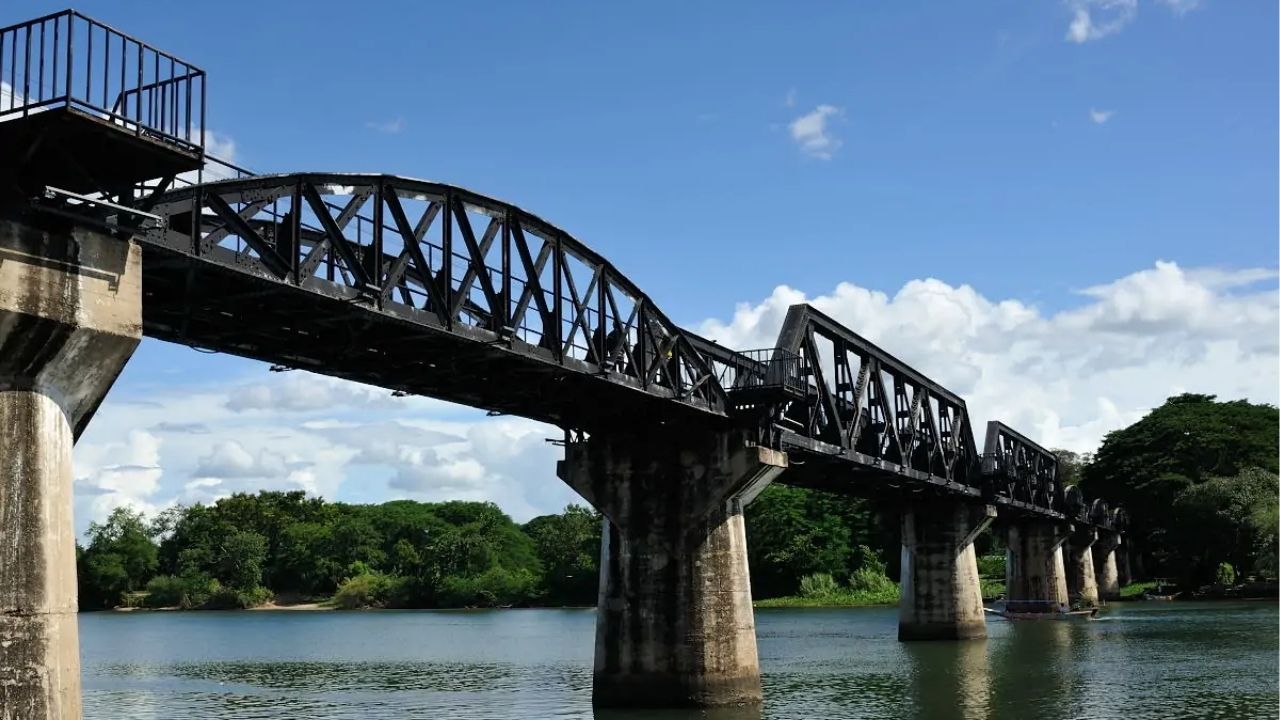
That said, Thailand’s wartime position was complicated. In the early stages of the Second World War, the Thai government under Field Marshal Plaek Phibunsongkhram allowed Japanese troops to land along Thailand’s southern and eastern coasts on December 8, 1941. Japan wanted to use Thailand as a route to attack British positions in Burma and Malaya. Thailand’s military was far smaller and could only resist briefly before the government agreed to let Japanese troops pass through the country.
The Thai government later shifted further, signing a military alliance with Japan and declaring war on the United States and Britain on January 25, 1942. In return, Japan handed over control of parts of Malaya and Shan State to Thailand. Japanese forces set up bases, built rail routes and used Thai resources to support the war effort.
Thailand was therefore spared the worst brutality suffered under Japanese occupation in places such as Korea and China.
Even so, not all Thai people agreed with the government’s decision. Seni Pramoj, Thailand’s ambassador to Washington, refused to deliver the declaration of war to the United States. He later helped form the Free Thai Movement with Thais overseas, secretly working with the Allies. Members of the movement passed intelligence, helped Allied pilots whose aircraft had crashed in Thailand and took part in underground resistance against Japanese forces.
When the war ended with Japan’s defeat in August 1945, Thailand’s new government declared the earlier declaration of war invalid. The United States accepted Thailand’s peace declaration because of the work of the Free Thai Movement. As a result, Thailand avoided being treated as a defeated nation. The Thai government also agreed to return all territory acquired during the war to its original owners to repair ties with Britain.
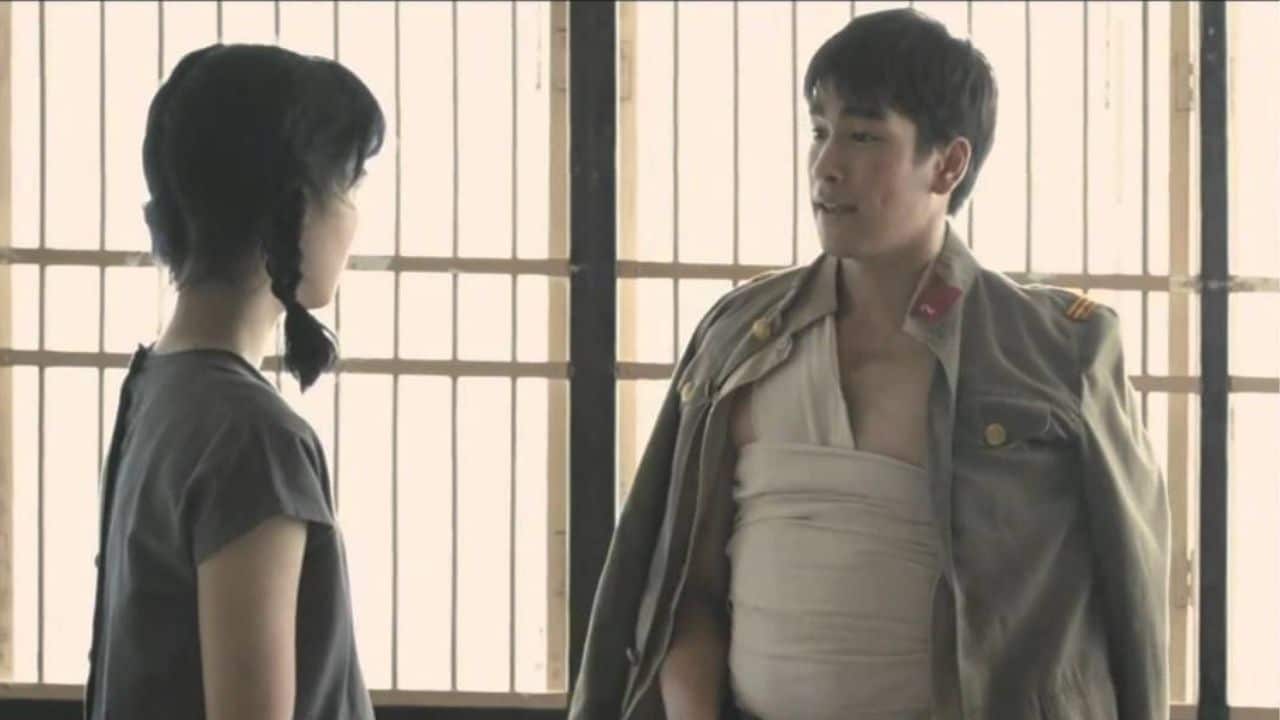
In that sense, Thailand emerged from the war without becoming a lasting enemy of any side. It may help explain why an unusual literary work, such as Khu Kam by Thommayanti, could later exist. The novel did not romanticise war, but it did portray a Japanese soldier, Kobori, as a man of honour and sincere love.
Thailand and Japan are great friends who do not abandon each other in hard times
Another event many Japanese people mention when asked about their feelings towards Thailand is the major earthquake and tsunami that struck Japan in 2011, as well as the flooding crisis in 2018.
During that crisis, Thailand was among the first countries to respond, offering both practical support and genuine kindness quickly and sincerely.
The Thai government immediately approved 5 million baht in initial aid after the disaster. The Cabinet later approved an additional 200 million baht. That money was used to purchase consumer goods, clothing and medical supplies for victims. Thailand also sent 10,000 tonnes of jasmine rice and 5,000 tonnes of white glutinous rice to help relieve hardship.
Government agencies delivered ready-to-eat food, blankets, raincoats and survival equipment. The Royal Thai Air Force and Royal Thai Navy, together with Thai Airways, supported the delivery of those supplies to Japan.
The Ministry of Foreign Affairs sent a 22-member search team and six sniffer dogs to the disaster area. The government also prepared medical teams to care for Thai nationals in affected areas. The ministry opened a bank account for public donations, while Channel 3 also launched a donation drive. Thai private sector donors contributed through the Thai Red Cross Society.
Large numbers of Thai people rushed to donate blood at the Thai Red Cross, hoping it could help the injured in Japan. Blood donations rose by 7% during that period. There were also public support campaigns by artists and members of the public, including the song Thai For Japan and the message “Our Hearts are with you… Japan.”
What many Japanese people remember is that it did not feel like formal or symbolic assistance. It felt like true friendship. Later that same year, when Thailand faced severe flooding, the Japanese government sent experts and large water pumps to help in return, reinforcing the idea of friendship in difficult times.
Memories like this do not disappear. They stay with people and continue shaping how Japanese people feel about Thai people long after the event itself.
How Japanese people see Thai people, from ‘what on earth?’ moments to genuine admiration
If you really want to know how people see Thais, it helps to look at what they say among themselves in their own language, not just what they say to our faces. When Japanese people talk about Thai people in Japanese online spaces, the comments include both genuine admiration and some baffled “what on earth?” moments.
Things that make Japanese people go “what on earth?” about Thai people

A lime in the fridge
Japanese people living in Thailand or married to Thai partners often mention being surprised to find half a lime left uncovered in the fridge, with no cling film, no container, nothing at all.
For Japanese people, who tend to take food storage and packaging seriously, this can be genuinely shocking. For Thai people, it is completely normal. It is going to be used tomorrow, so why wrap it?
It is this difference in day-to-day levels of detail that often quietly leaves Thai and Japanese people puzzled by each other.
“Did you get your eyes done? You look so cute”
Many Japanese people with Thai friends say they are surprised by how directly Thai people ask about cosmetic surgery, even in a positive way. It is not meant as a joke or insult, but as genuine praise that the result looks good.
In Japan, directly mentioning someone else’s cosmetic surgery is generally avoided, no matter the intention. It is seen as a private matter, even if everyone suspects it.
Thai directness on the subject can create mixed reactions. Some people are surprised but appreciate the honesty. Others are simply left wondering whether it is really normal to ask that so openly.
Relaxed in a way that can seem indifferent
Some Japanese people say what confused them at first was how calm Thai people seemed in the face of problems, whether traffic jams, flooding or unfinished work. Thai people often smile and say mai pen rai, while Japanese people might be deeply stressed by the same situation.
For people used to solving every issue in advance and avoiding mistakes at all costs, that attitude can at first look like irresponsibility. But many say that after spending more time in Thailand, they start to see it differently. It reflects an ability to adapt to uncertainty in life, something not everyone finds easy.
What genuinely impresses Japanese people about Thai people
Not judging people from the outside
One of the qualities Japanese people mention most often is that Thai people do not seem to judge others based on the “box” they belong to, whether that means their job, university or social status. That feels very different from Japanese society, where people are often assessed first by the company they work for or the name on their business card.
The sincerity of the smile
Many people may assume the “Land of Smiles” image is little more than politeness or tourism branding, but Japanese people who have lived in Thailand for a long time often say they can tell the difference between a smile given out of obligation and one that feels genuine. They say Thai people offer the second kind more often than many expect.
Warmth in close relationships
Once Japanese people get to know Thai people beyond the level of a tourist encounter, many say what stands out most is the real warmth in close relationships. Checking in on each other, caring for one another and making time to be together can mean a great deal in a society where people often feel busy and emotionally distant.
A historical note: Okya Senaphimuk, a Japanese noble in the Thai royal court during the Ayutthaya period

Relations between Thailand and Japan can be traced back to the Ayutthaya period in the 16th and 17th centuries, when a Japanese community had already settled in the old capital. One real figure worth knowing is Yamada Nagamasa, a Japanese man who rose to prominence in the Siamese royal court and became a favourite of King Songtham.
Nagamasa lived in the Japanese settlement at a time when many Japanese men came to Siam to serve in military roles. He proved himself and was eventually promoted to lead the Japanese volunteer corps. King Songtham later granted him the noble title of Okya Senaphimuk, giving him considerable political power within the royal court.
After King Songtham died, Yamada supported Prince Chetthathirat in ascending the throne. Later, Okya Siworawong, who would go on to become King Prasat Thong, sought to seize power and saw Yamada as a major obstacle. He therefore looked for a way to remove the Japanese military leader.
The Ayutthaya court later sent Yamada to lead a campaign in Nakhon Si Thammarat, while also appointing him governor of the city. He was injured in battle while fighting rebels. According to the account, poison was then applied to his wound instead of medicine. Yamada Nagamasa died in 1630.
The fact that Japanese people were able to settle in Siam and rise to important positions at that time shows just how open Thailand was to foreigners. The relationship was not only based on trade. There was also trust.
Latest Thailand News
























Follow The Thaiger on Google News: