History of the National Labour Day in Thailand and why civil servants don’t get the day off

Every May 1, Thailand’s private factories pause, banks close, and a few thousand unionists march to Government House carrying a petition the government has received, and largely ignored, for the better part of 30 years. For most people in Bangkok, it’s simply a long weekend. But Thailand’s National Labour Day, known in Thai as วันแรงงานแห่งชาติ (Wan Raeng-ngan Haeng Chat), has a harder history behind it than the merit-making and job fairs suggest.
It didn’t start in 1932, but the foundation was laid
A persistent myth ties the origins of Thailand’s National Labour Day to 1932, the year a bloodless revolution ended absolute monarchy and opened the door to constitutional rule. Some popular accounts go further, incorrectly crediting Field Marshal Phibunsongkhram as the founder and King Rama VIII as the reigning monarch. Both details are wrong: Phibun didn’t become prime minister until late 1938, and Rama VIII only ascended the throne in 1935.
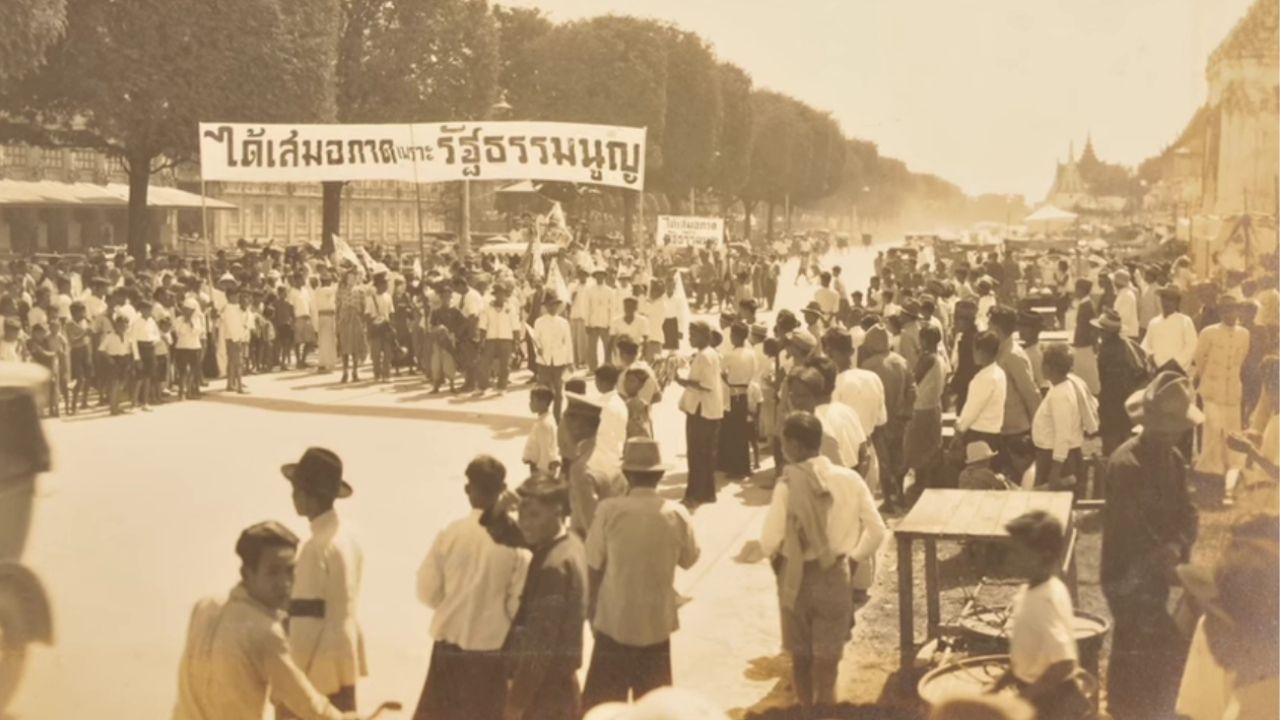
What 1932 marked was the start of formal labour administration in Thailand, with employment offices, a Labour Division, and the first legal recognition of unions. Thawat Ritthidet, an activist-journalist allied with civilian leader Pridi Banomyong, registered the Siam Tramway Workers’ Association that year.
It was the first legally recognised union in Thai history. Strikes broke out at the Makkasan railway depot, along the Chao Phraya docks, and at cement plants. The labour movement was alive. A dedicated holiday was still 24 years away.
The day was born in 1956, and was renamed within a year
On April 20, 1956, a Labour Commemoration Committee voted unanimously to ask the cabinet to designate May 1 as a day for workers. Phibun, then in his second premiership, agreed. The first official observance on May 1, 1956 drew tens of thousands into Bangkok’s streets, demanding land reform, social security, and a return to full parliamentary rule.
The day was originally called วันกรรมกรแห่งชาติ (Wan Kammakon Haeng Chat, or “National Workers’ Day”), a Pali-rooted term with Marxist resonance. By 1957, at the height of Cold War anxiety, the name was quietly changed to the more neutral วันแรงงานแห่งชาติ.
The accompanying Labour Act, effective January 1957, was Thailand’s first comprehensive labour statute: it capped working hours, mandated rest days, and legalised trade unions. However, it survived less than two years.

Sarit killed it and had a man executed
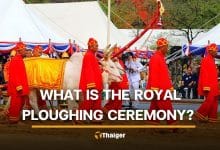
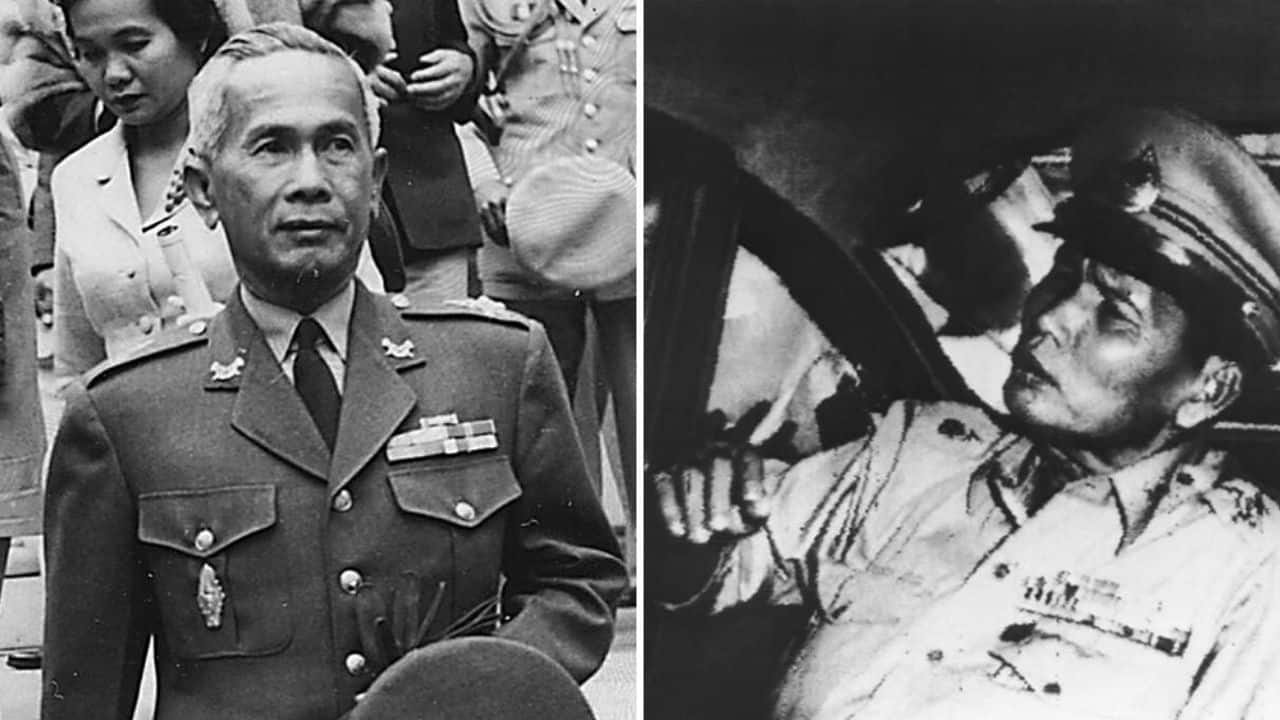
On October 20, 1958, Field Marshal Sarit Thanarat’s coup changed everything. Revolutionary Council Announcement No. 19 repealed the Labour Act outright and banned all unions.
Suphachai Srisati, secretary of the federation known as the “16 Labour Units,” was executed without trial under the Anti-Communist Act. Between 1958 and 1965, only 45 strikes were recorded under martial law. Labour Day effectively vanished from the calendar.
It came back after blood was spilt twice
The National Labour Day holiday was reinstated in Thailand after the October 14, 1973, student-led uprising, in which workers played a central role. Under Prime Minister Sanya Thammasak, May 1 became a paid holiday for private-sector workers in 1974, with official ceremonies held at Lumphini Park. The Labour Relations Act of 1975 followed, creating a formal union framework and setting the structure still in place today.
Then came the October 6, 1976 Thammasat massacre and another coup. Then, the 1991 National Peace Keeping Council dissolved every state-enterprise union and stripped roughly 270,000 workers of bargaining rights overnight.
Three weeks after that coup, Thanong Pho-an, president of the Labour Congress of Thailand and an ICFTU vice-president, disappeared on June 19, 1991. He was on his way to Geneva to brief the ILO conference about the military’s crackdown on labour rights.
His car was found abandoned in Bangkok’s Rat Burana district. He was never seen again, and his case remains unsolved. At Labour Day rallies today, workers still wear shirts printed with his face.
Two years later, on May 10, 1993, fire tore through the Kader Toy Factory in Nakhon Pathom, killing 188 workers. 174 of them were women. It remains the deadliest industrial fire in modern history.
This pushed forward the Labour Protection Act of 1998, which is still the law that governs the holiday today: at least 13 paid public holidays per year, double pay for daily-wage workers required to work on May 1, and triple pay for overtime.
Why government offices stay open

Under the 1975 Labour Relations Act, government employees are not legally classified as luk-jang (“labourers”), so the private-sector holiday protections simply don’t apply to them. In Thailand, government ministries, public schools, and most state offices stay open while banks and factories close during the National Labour Day.
The legal distinction matters more than it might appear. Thailand effectively runs two separate holiday calendars. Private-sector workers and state-enterprise employees get May 1 as a paid day off, with double pay if required to work and triple pay for overtime.
Instead, they observe the Royal Ploughing Ceremony in mid-May, a royal ritual presided over at Sanam Luang that the private sector does not observe. The state celebrates monarchy and tradition; the market celebrates labour. The two rarely overlap.
When the 1975 Labour Relations Act was drafted, excluding civil servants was a deliberate call. The bureaucracy was considered the backbone of state stability, and the governments of the time had no interest in folding it into a movement they had spent decades trying to manage and contain.
Keeping civil servants legally separate meant keeping them politically separate too. That calculation has never been revisited, and in 2026, it remains unchanged: roughly 2 million civil servants report to work on a day that nominally honours the people who keep the country running.
How it looks in 2026
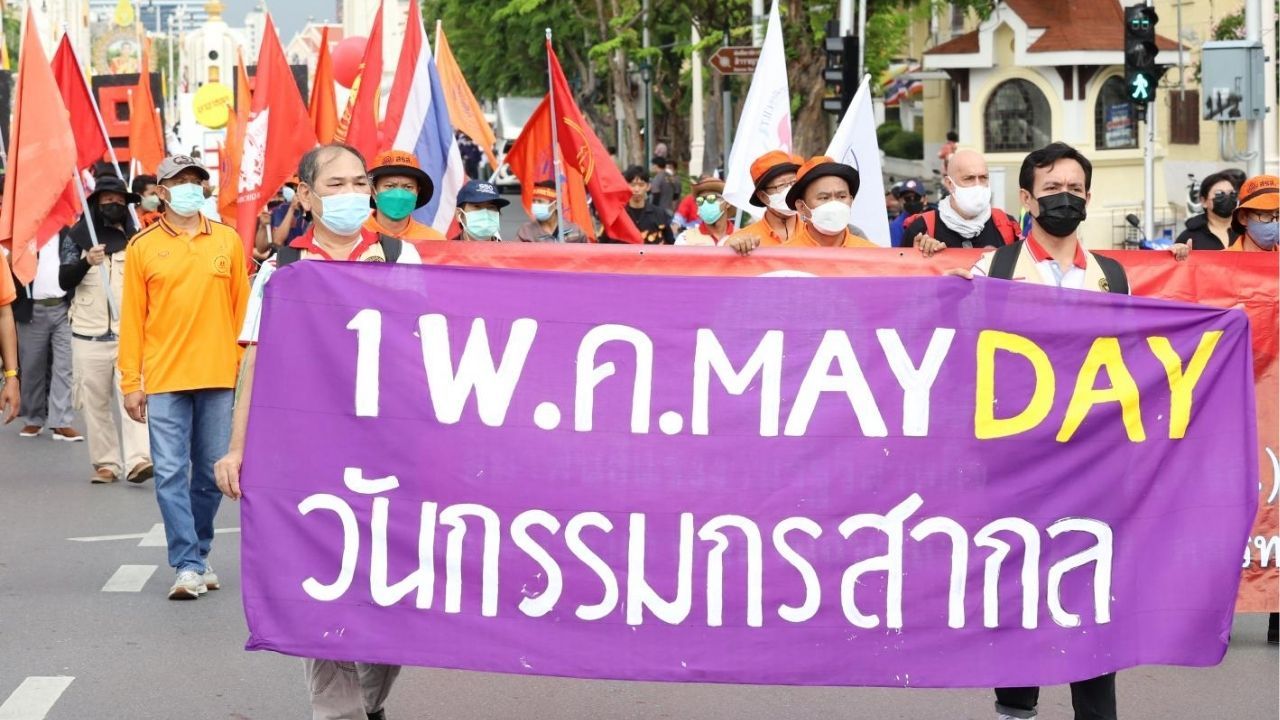
This year, May 1 falls on a Friday, giving most workers a three-day weekend. The Ministry of Labour will stage its usual Bangkok event, with merit-making, an employee awards ceremony, free health check-ups, flu shots, and a job fair. The symbolic centrepiece remains the moment when the Labour Minister formally receives the annual petition from union leaders at Lan Khon Muang plaza.
Although nothing is perfect. The demands are the same ones raised for decades: ratify ILO Conventions 87 and 98 on freedom of association and collective bargaining, raise Social Security pensions to 5,000 baht a month, and extend paid maternity leave to 180 days.
Thailand is far from alone in observing its National Labour Day. Eight of ten ASEAN nations mark May 1, with Indonesia now staging some of the region’s largest rallies. Union membership sits at around 1.3 to 1.5% of the workforce, one of the lowest rates in Southeast Asia, and the ITUC has rated Thailand “5: no guarantee of rights” every year since 2014.
The holiday exists because workers demanded it in 1956, lost it under Sarit, won it back in 1974, and had it written into law in 1998. The names of those who paid for it, Suphachai Srisati, the 188 dead at Kader, and Thanong Pho-an, don’t appear in school textbooks. They’re kept alive at the Thai Labour Museum in Makkasan and at the annual march that, every May 1, makes the same demands to a government that has not yet answered them.
Latest Thailand News





















Follow The Thaiger on Google News: