Illegal online coral trade leads to arrest in Bangkok

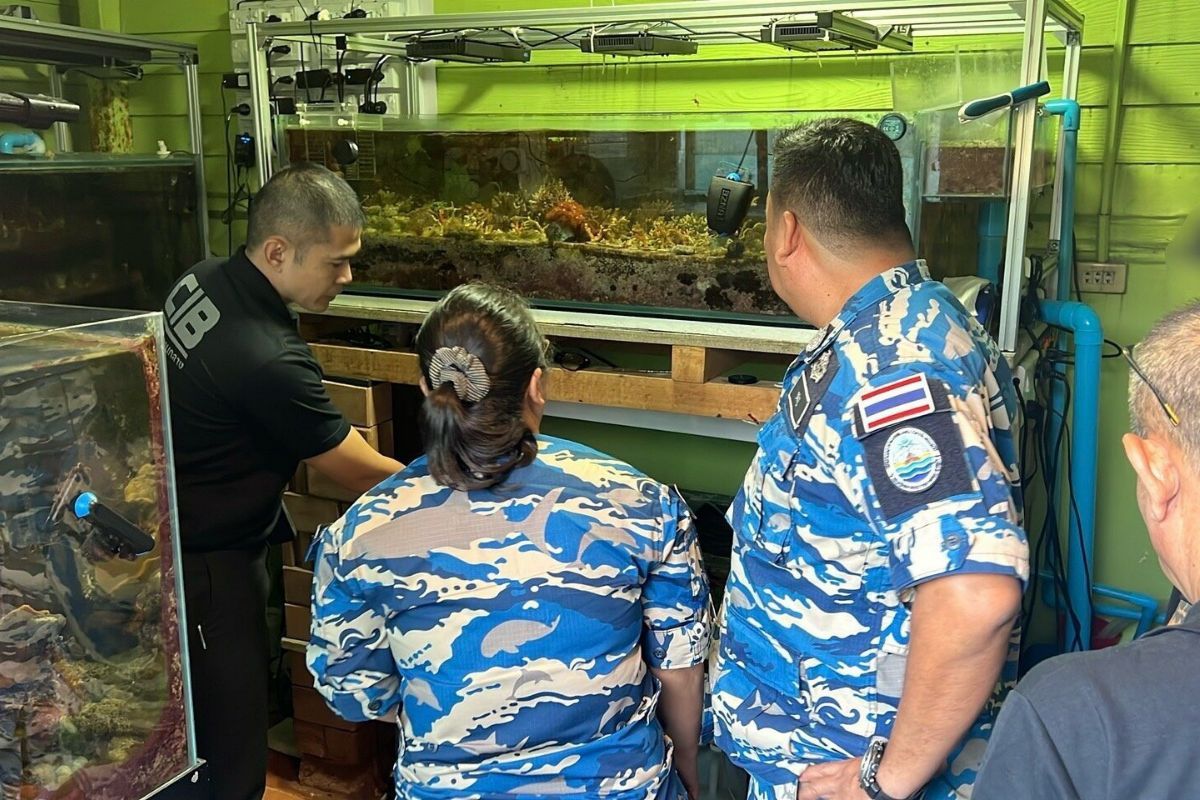
Thai environmental police arrested a Bangkok man today, December 24, for allegedly selling protected coral and sea anemones online, after officers uncovered more than 200 marine specimens at a residential property in the capital.
The arrest took place after officers from the Natural Resources and Environmental Crime Suppression Division, working alongside officials from the Department of Marine and Coastal Resources (DMCR), enforced an arrest and search warrant at a house in Soi Phetkasem 77 in Bangkok’s Nong Khaem district.
The suspect, 33 year old Chitipat, was taken into custody on charges of trading and possessing protected wildlife without permission under Thai law.
Police said the investigation began after officers discovered online advertisements openly offering coral for sale in public social media groups. Coral is classified as a protected marine animal under Thai legislation, as it is an invertebrate species whose population has been steadily declining and is therefore prohibited from private possession or commercial trade.
Following surveillance and evidence gathering, investigators identified the seller, Chitipat, as the suspect and obtained court approval to proceed with the arrest. A search of the property revealed live coral, sea anemones and coral remains being kept inside the house, with a total of 245 items seized.
Investigators said the financial damage caused by the illegal possession could not be assessed, given the ecological significance of the specimens, reported Thairath.
During questioning, Chitipat reportedly confessed to the offences and was handed over to investigators for further legal proceedings, while all seized coral and marine specimens were transferred to the Department of Marine and Coastal Resources for appropriate care and conservation measures.


In related news, efforts are underway to refloat a Myanmar-flagged cargo ship that ran aground on a coral reef in Mu Koh Surin National Park, Phang Nga. An environmental team has evaluated the coral damage through photo quadrat surveys along a 42-metre section marked by coral scraping. Staghorn coral (Acropora spp) has been identified as the most affected, followed by Porites rus, blue coral (Heliopora sp), and boulder coral (Porites lutea).
Latest Thailand News






















Follow The Thaiger on Google News: