Looking for walkable cities in Thailand to move to? Here’s 5


Thailand’s reputation for traffic gridlock and motorbike chaos is well-earned in most places. But five cities buck that trend with pedestrian-friendly neighbourhoods where expats and retirees can walk to markets, healthcare, restaurants, and parks without needing a car or motorbike.
Of course, these are just five of many walkable cities in Thailand. Each city in this list offers pedestrian-friendly neighbourhoods, quality healthcare within walking or short transit distance, and infrastructure that supports staying active. Here’s where you can realistically park the car for good and live well on foot.
On this page
| Section | Short summary |
|---|---|
| Bangkok: Sukhumvit corridor | Walkable pockets like Ari, Phrom Phong, and Thong Lo offer strong healthcare access and transit links, though costs and heat are higher. |
| Chiang Mai: Old City and Nimmanhaemin | A compact city with cafés, temples, and parks within walking distance, supported by good hospitals but affected by seasonal air pollution. |
| Phuket Town: Historic quarter | The historic Old Town provides a compact grid of cafés, markets, and services within walking distance, though beaches require travel. |
| Hua Hin: Beachfront retirement hub | A relaxed coastal town where the central area connects beaches, malls, hospitals, and markets within an easy walking radius. |
| Chiang Rai: Quieter northern alternative | A smaller and quieter city with a walkable centre, low living costs, and surprisingly strong healthcare infrastructure. |
| Cigna coverage for walkable city living | International health insurance is positioned as key for retirees because it offers lifetime renewability and direct hospital billing. |
| Choosing your walkable city | The best choice depends on lifestyle priorities, but neighbourhood selection, health coverage, and adapting to Thailand’s climate matter everywhere. |
Bangkok: Sukhumvit corridor
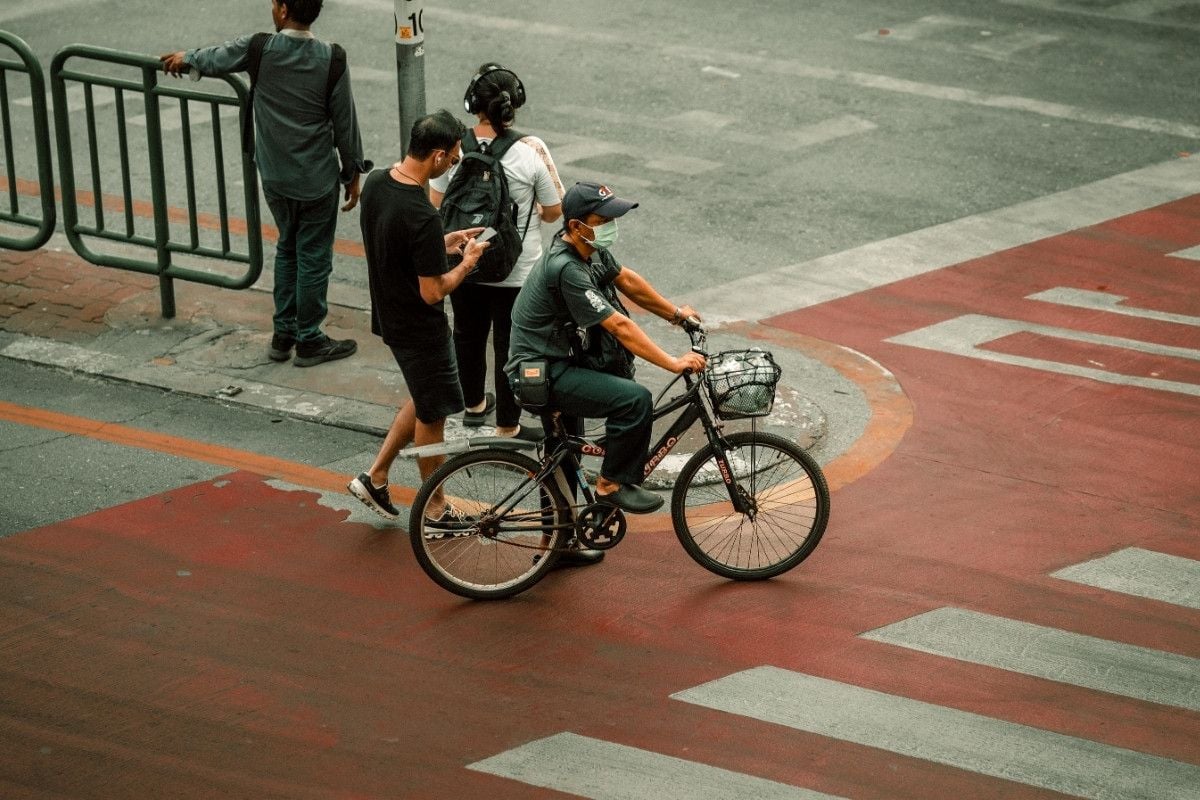
Bangkok seems like an odd choice for walkability, but two specific neighbourhoods actually deliver proper pedestrian living that works for retirees.
Ari sits along the main BTS Sukhumvit Line, and the neighbourhood is quite walkable despite being in central Bangkok. Everything fits within a compact radius you can cover in an afternoon. For example, independent cafés, traditional Thai markets near the BTS station, and family-run restaurants.
Pavements here are wider, cleaner, and tree-shaded, a notable advantage in Bangkok’s heat. One-bedroom condos run 10,000 to 15,000 baht per month (US$285 to 430).
Phrom Phong and Thong Lo, further down the Sukhumvit Line, are alternatives with a more international feel with higher expat concentration, Western restaurants, and international grocery stores. Phrom Phong anchors centres on major shopping centres and Benjasiri Park, where you’ll see joggers every morning.


Thong Lo concentrates Bangkok’s best restaurant and bar scene into a walkable strip. Both sit directly on the BTS with MRT interchange available at Asok. One-bedroom rents start around 15,000 to 25,000 baht per month (US$430 to 715).
For staying active, the Green Mile elevated walkway now connects Lumphini Park to Benjakitti Forest Park, creating a continuous green corridor for running and cycling in central Bangkok. Lumphini Park’s running track fills every evening with office workers and retirees alike.
Bangkok offers Thailand’s highest concentration of JCI-accredited hospitals. The Sukhumvit corridor hosts multiple JCI-accredited hospitals, including Bumrungrad International and Samitivej Sukhumvit, both with multilingual staff and direct international insurance billing.
The downside is that Bangkok has only one setting, that being hot, in addition to the year-round humidity. Crossing roads remains dangerous as drivers routinely ignore zebra crossings. PM2.5 spikes affect air quality periodically.
The cost of living is the highest on this list. Cheaper accommodations exist in outer districts, but finding affordable options in walkable neighbourhoods requires a little more time and effort.
Chiang Mai: Old City and Nimmanhaemin
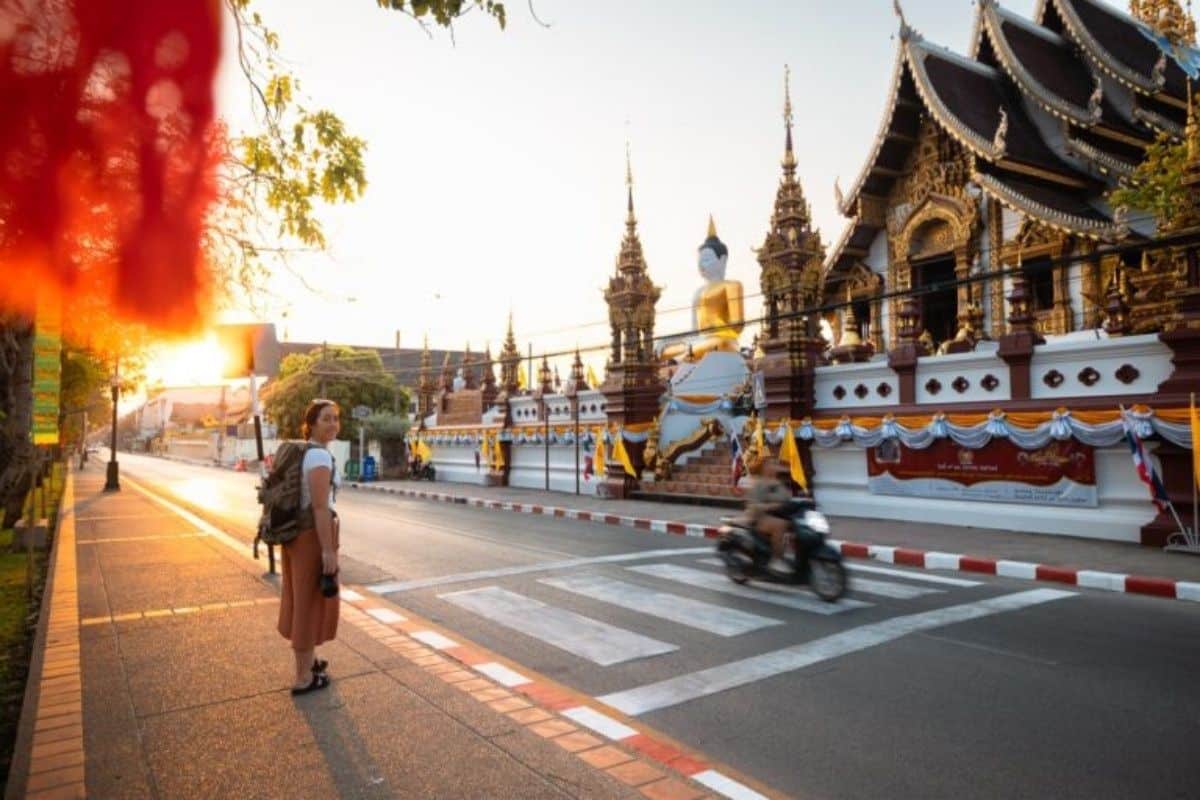
Chiang Mai’s walkability depends entirely on picking the right neighbourhood. Two areas actually deliver pedestrian-friendly retirement living.
The Old City is approximately 1.5 square kilometres, bounded by ancient walls and a moat. Everything sits within a 15-minute walk: over 30 temples, the famous Sunday Walking Street Market, cafés, and street food on every corner.
In the afternoons, Nong Buak Hard Public Park fills at sunset with yoga sessions, jogging loops, and local sports. Accommodation runs 8,000 to 15,000 baht per month ($230 to $430).
Nimmanhaemin (Nimman), between the Old City’s western moat and Chiang Mai University, is the polished version. The main road packs in artisan coffee shops, boutique stores, shopping malls, and restaurants. Condos here run 12,000 to 30,000 baht per month (US$340 to 850).
If you like to stay active, Chiang Mai offers strong cycling and running infrastructure. The Canal Road features a dedicated 5-kilometre running and cycling lane separated from traffic. Chiang Mai University’s Ang Kaew Reservoir offers a scenic, vehicle-free running loop.
Healthcare is solid with multiple JCI-accredited hospitals, including Bangkok Hospital Chiang Mai and Chiang Mai Ram Hospital on the moat edge, both with English-speaking doctors and international patient departments. Multiple JCI-accredited hospitals provide specialist access, often available same-day.
The burning season is the major drawback. From February to April, agricultural burning fills Chiang Mai’s valley with smoke trapped by surrounding mountains.
Air Quality Index (AQI) during this period averages 150 (unhealthy for all groups) with regular spikes to 200-300 (very unhealthy) and peaks exceeding 500 (hazardous). In March 2024, Chiang Mai ranked as the world’s most polluted city for over a week, according to IQAir monitoring data.
A comfortable retirement budget runs 30,000 to 50,000 baht per month (US$850 to 1,430), according to Remitly data.
Phuket Town: Historic quarter
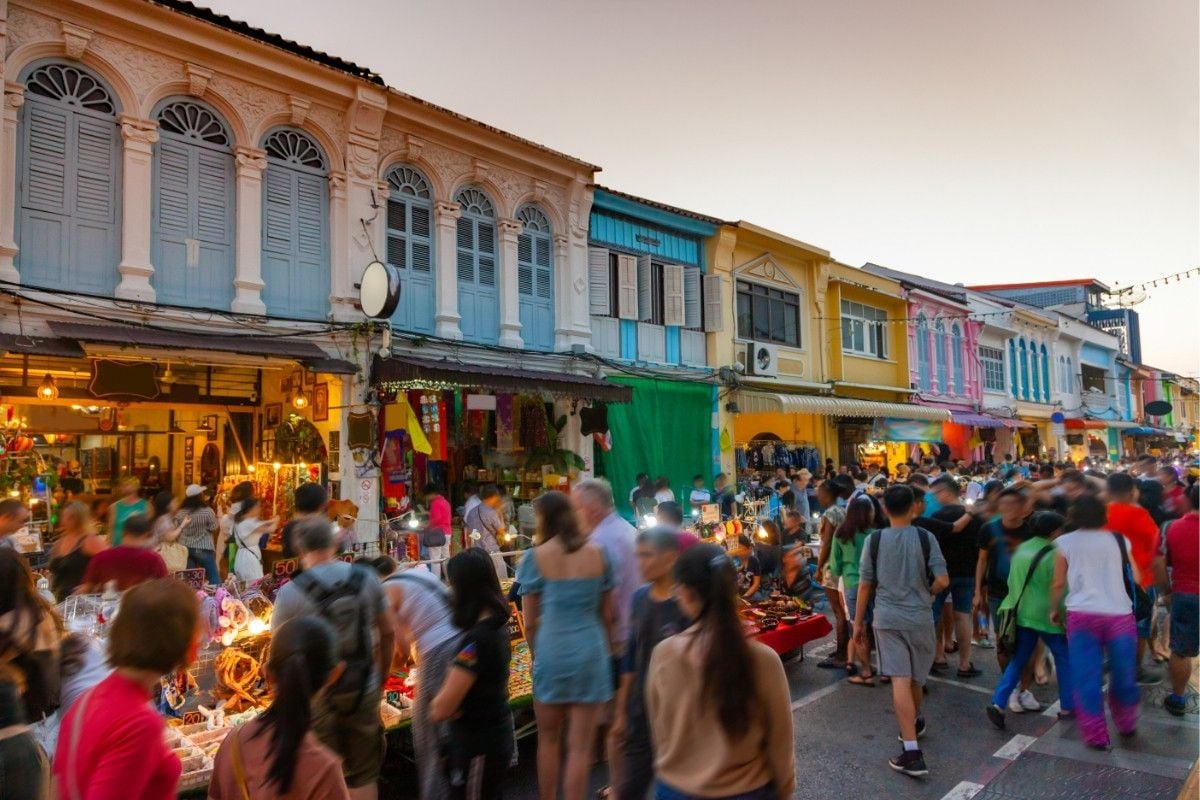
Most expats in Phuket head straight for the west coast beaches and accept needing a car, but Phuket Town offers a compact, historic quarter with pedestrian-friendly streets and daily amenities within walking distance.
The Old Town covers a tight grid centred on Thalang Road, Dibuk Road, and Phang Nga Road. Colourful Sino-Portuguese shophouses are now house into cafés, galleries, restaurants, and hotels.
Thalang Road has restored covered walkways between shophouses, giving you all-weather shade. The entire Old Town takes about half a day to explore on foot. Every Sunday, Thalang Road closes to traffic for the famous Walking Street Market.
Public transport has improved. Three new electric bus routes (15 baht flat fare) now connect key points through Old Town, according to Phuket 101. The Phuket Smart Bus (100 baht) runs from the airport through beach towns.
For staying active, Saphan Hin Park offers 3 kilometres of jogging and cycling paths, outdoor gym equipment, and a public swimming pool (1 baht entry). Rang Hill gives you a 4-kilometre round-trip running route with stunning views. Bangwad Dam in nearby Kathu offers a car-free 6.4-kilometre reservoir loop.
Bangkok Hospital Phuket, located in Phuket Town, is JCI-accredited with over 160 physicians and a dedicated International Patient Centre offering interpreters in 10-plus languages. It handles direct billing with major international insurers. Vachira Phuket Hospital is the main government facility at much lower costs.
But living in Phuket Town means beaches are 20 to 40 minutes away by road. You gain walkability and affordability in exchange for daily beach access. One-bedroom apartments run 15,000 to 20,000 baht per month (US$420 to 560), roughly half what you’d pay in beach areas. A comfortable monthly budget sits around 40,000 to 70,000 baht (US$1,140 to 2,000).
Hua Hin: Beachfront retirement hub
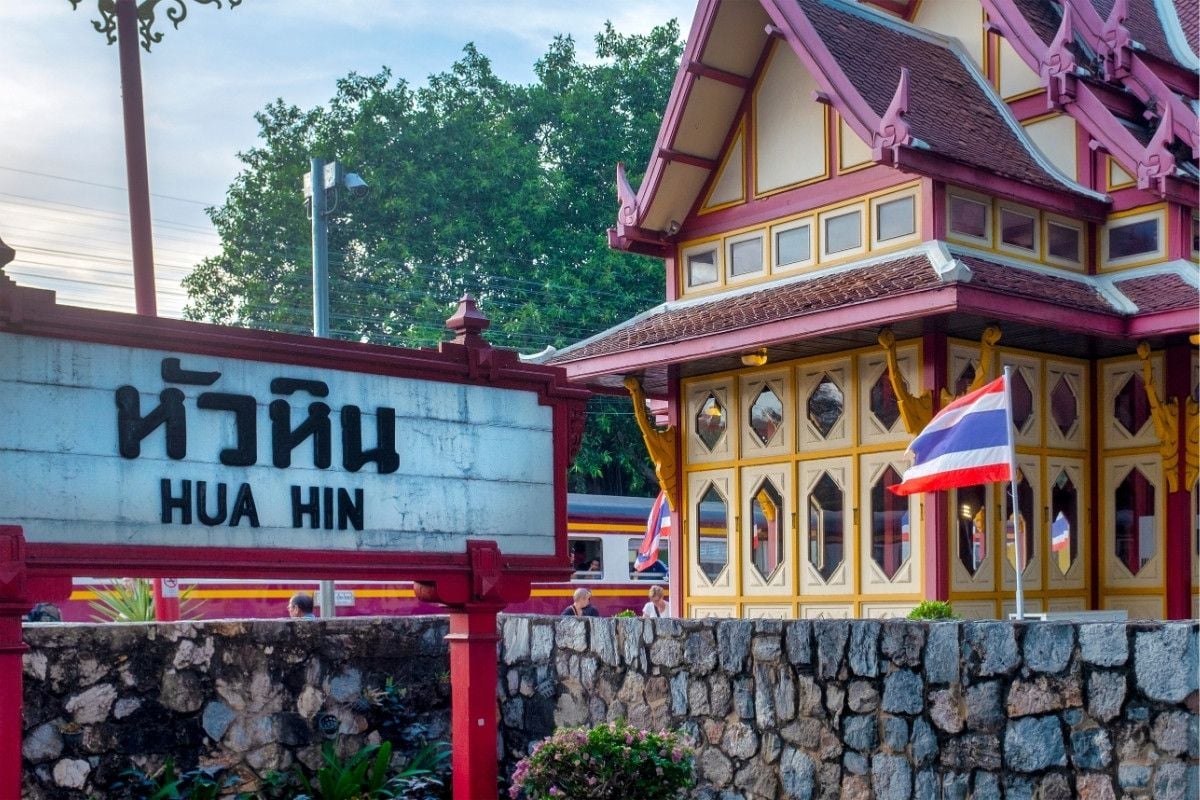
Hua Hin occupies its own niche as a beachfront retirement town with a walkable centre, established healthcare, and Thailand’s largest concentration of retirement-age expats.
The walkable core clusters around Phetkasem Road and the beachfront. The town centre is compact enough that daily errands, malls, restaurants, hospitals, and the night market are all within walking distance.
Hua Hin Beach stretches approximately 8 kilometres south from the town centre, offering uncrowded morning runs or evening strolls.
The most walkable area is Hua Hin’s Old Town/city centre, where condos, restaurants, the beach, and hospitals are all within a 15-minute walk. Living near BluPort or Market Village malls puts supermarkets and cinemas within walking distance. Beyond this core, though, walkability drops sharply.
Beyond beach walks, Hua Hin offers varied outdoor activities. Khao Hin Lek Fai, 3 kilometres west of town, offers a steep 1.5-kilometre climb to viewing platforms 162 metres above sea level, popular with cyclists and runners. Hua Hin is Thailand’s premier golfing destination, with Royal Hua Hin Golf Course (established 1924, Thailand’s oldest) just five minutes from the centre.
Bangkok Hospital Hua Hin is JCI-accredited, opened in 2006 specifically to serve the growing expat and retiree community, and offers an International Patient Services Department with direct insurance billing. San Paulo Hua Hin Hospital has strong cardiac and orthopaedic departments with English, German, and Filipino language support.
The expat community leans heavily toward retirees from the United Kingdom, Germany, and Scandinavia, with the social scene to match: golf societies, expat communities, walking groups, wine tastings, and the weekend Cicada Market. A central one-bedroom condo with pool and gym runs 18,000 to 25,000 baht per month (US$500 to 695).
The downsides here can be more heavy-hitting compared to other entries on this list. The hottest months (March to May) regularly exceed 35°C, making midday walking uncomfortable, though sea breezes help. Weekend traffic spikes when Bangkok residents pour in.
See how Cigna Global covers retirees across Thailand’s walkable cities. Access to quality healthcare matters everywhere, but particularly in smaller cities where medical infrastructure varies.
Chiang Rai: Quieter northern alternative
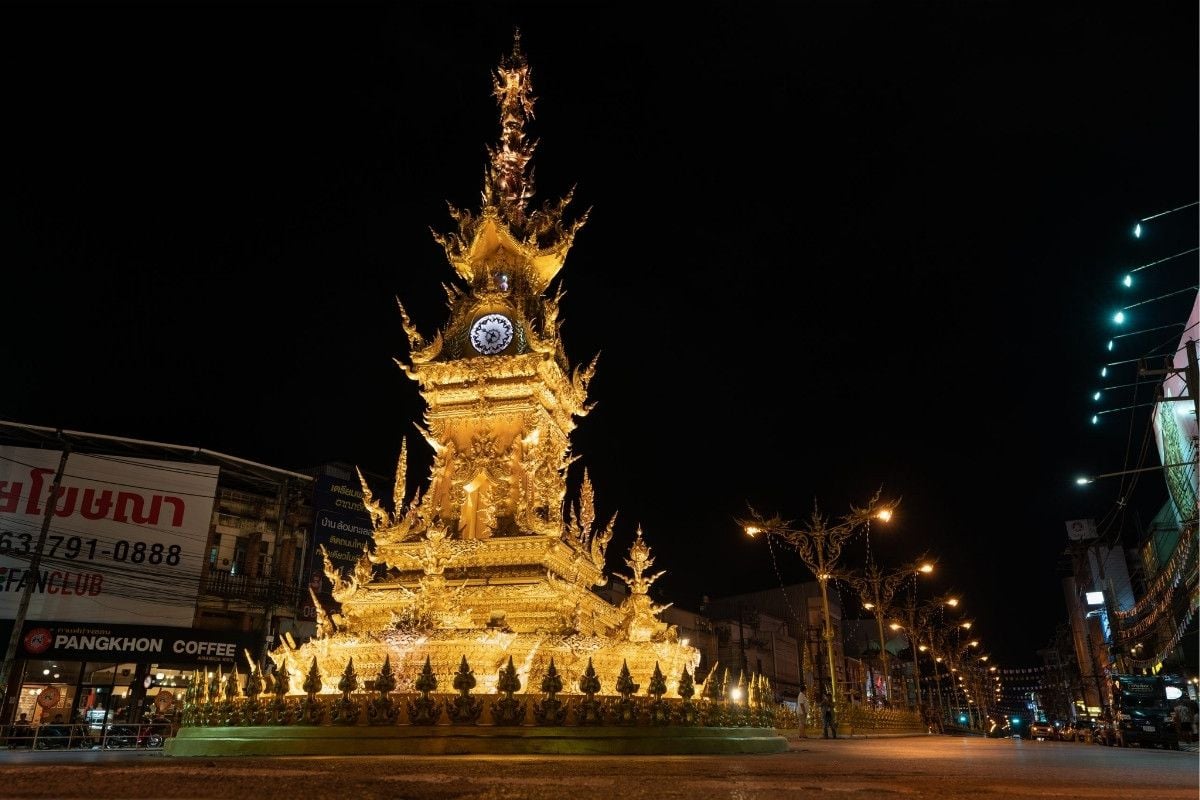
The city offers a walkable centre, JCI-accredited healthcare, and a cost of living roughly 13% cheaper than Chiang Mai.
The walkable area covers approximately a 1 to 2-kilometre radius around the Clock Tower and Night Bazaar. The golden Clock Tower sits at the intersection of main roads, roughly 600 metres from the Night Bazaar.
Within this zone, streets are flat and well-maintained, with temples, cafés, restaurants, and markets all within walking distance. The Saturday Walking Street on Thanalai Street (4pm to midnight) offers street food and hill tribe goods.
The Jetyod Road corridor has become a speciality coffee district. Northern Thailand is a major Arabica-growing region. Chiang Rai, particularly the nearby Doi Chang area, has become a hub for third-wave coffee roasters, many within walking distance of the city centre.
A fully furnished one-bedroom condo runs approximately 8,000 baht per month (US$237), often including pool, gym, and security. Local restaurant meals cost 50 to 65 baht. A comfortable retirement budget runs 35,000 to 42,000 baht per month (US$1,000 to 1,200), among the lowest for any city on this list with comparable healthcare.
Healthcare infrastructure is unusually strong for an urban area of 600,000 people. Overbrook Hospital, founded in 1903, was the first hospital in Chiang Rai to achieve JCI accreditation. Bangkok Hospital Chiang Rai has an international patient department with direct insurance billing.
The public Chiang Rai Prachanukroh Hospital handles complex emergencies; it served as a key facility during the 2018 Tham Luang cave rescue.
For staying active, Singha Park (10 kilometres south of town) features dedicated walking and cycling paths through tea plantations and flower fields. The surrounding province offers hiking trails on Doi Tung and Doi Mae Salong, hot springs, and waterfalls, though most require a car or organised tour to access. The cool season (November to February) drops temperatures to around 13°C at night, perfect for outdoor exercise.
The same burning season caveats that hit Chiang Mai apply here (February to April), though at different levels depending on the year. Another downside is that public transport can be limited. The walkable core is pleasant but compact; step outside the 1 to 2 kilometre radius, and you’ll need transportation for most errands.
Cigna coverage for walkable city living
Explore Cigna Global’s plans for retirement living in Thailand. International health insurance offers lifetime renewability and coverage that local Thai plans typically can’t match.
Plan structure:
- Close Care℠: US$500,000 per year for Thailand, plus your home country
- Silver: US$1,000,000 annual maximum, essential hospital and emergency cover
- Gold: US$2,000,000 maximum, adds cancer screenings and specialised treatments
- Platinum: US$2,000,000-plus with comprehensive coverage
International plans matter for retirees because local plans often drop coverage at 70 to 75, whilst international plans continue for life. Direct billing at JCI-accredited hospitals means cashless treatment rather than upfront payment and claim submission. Getting coverage locked in earlier means better rates that continue throughout retirement.
Also: A practical way to think about healthcare when living in Thailand
Choosing your walkable city

The right city depends on what matters most to you. Bangkok gives you world-class healthcare and transit connectivity, albeit at a higher cost. Chiang Mai works for active retirees who can leave during the burning season.
Phuket Town appeals to those who want walkable character without needing the beach every day. Hua Hin caters to expat retirees with beachfront, golf, and a well-established English-speaking community. Chiang Rai offers the quietest, cheapest option with surprisingly strong healthcare.
All five cities share one reality in that Thailand’s heat makes midday walking uncomfortable from March to May. The rhythm everywhere is the same: early morning activity, air-conditioned midday retreats, and sunset walks when the city comes alive.
The difference between expats who thrive and those who leave within a few years comes down to three decisions: picking a neighbourhood you’ll actually walk daily, securing international health coverage before age prices you out, and accepting that Thailand won’t adapt to you.
Get a quote from Cigna Global for Thailand retirement living. A single emergency without coverage can wipe out years of cost-of-living savings. The healthcare reality across all five cities: having lifetime-renewable coverage matters more than location when you need it most.
Thailand’s walkable cities deliver what they promise, but only for expats or retirees who choose the right neighbourhood, lock in health coverage early, and commit to tropical living rather than fight it.
Latest Thailand News

























Follow The Thaiger on Google News: