Ancient skeletons found near bronze drums site in Phetchaburi

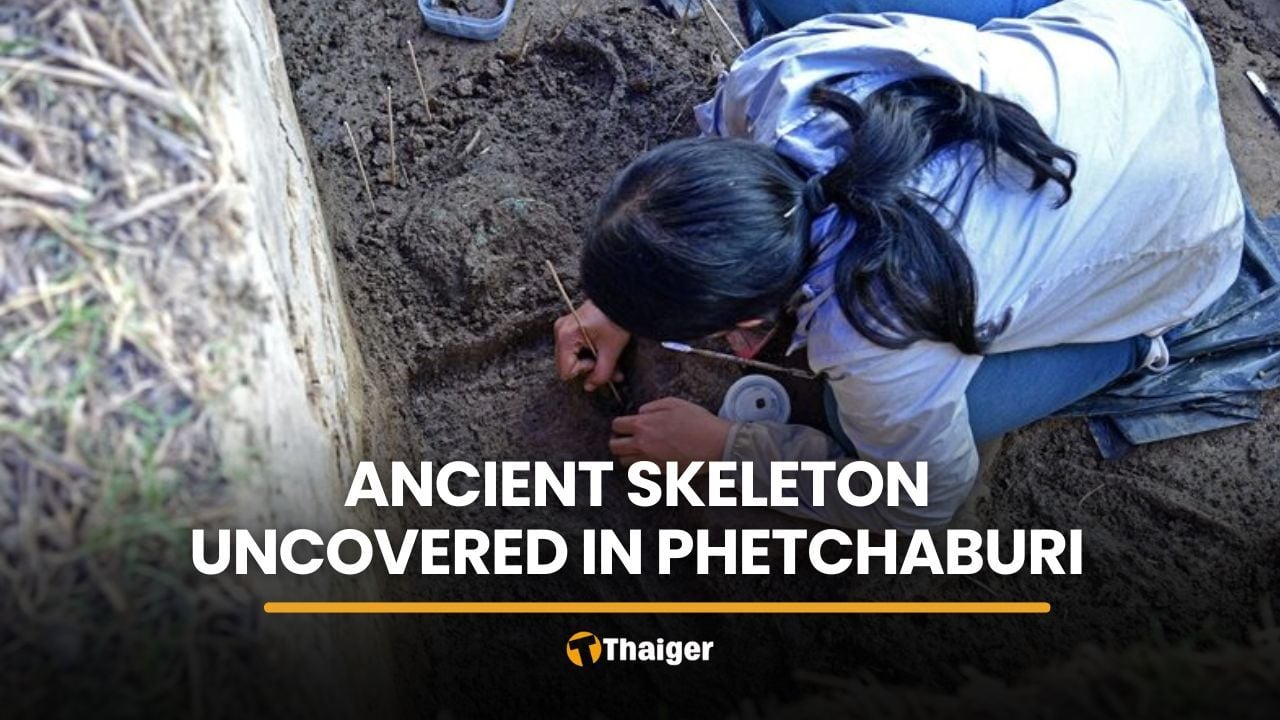
Archaeologists at a Phetchaburi bronze drum excavation site said on February 26 that they had uncovered ancient skeletons near bronze drums, dated to about 1,500 to 2,000 years ago, prompting closer study of what may be a burial site.
The excavation site, a rice field area of Don Phlap village, Samo Phlue subdistrict, Ban Lat district, was inspected at a pit where the drums, known in Thai as klong mohorathuek, are being recovered.
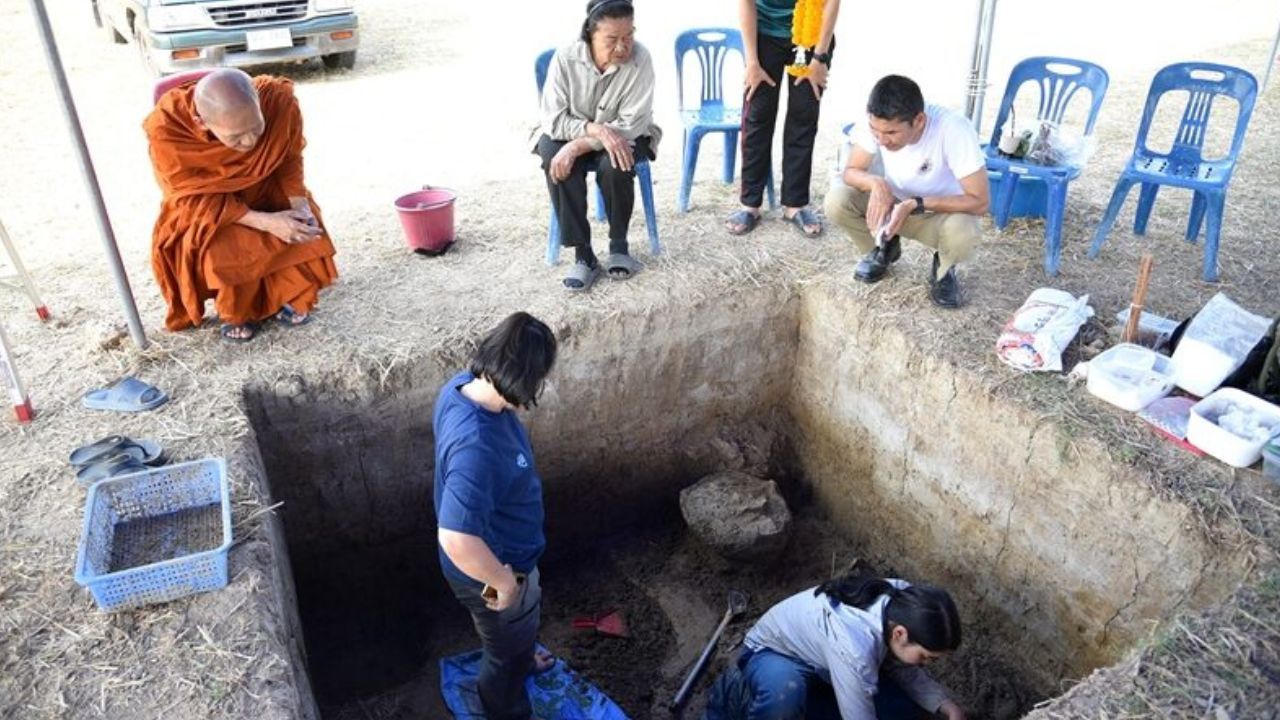
The operation involves the Fine Arts Department, led by the Office of Fine Arts 1 in Ratchaburi, working with Phetchaburi Rajabhat University, the Samo Phlue Subdistrict Administrative Organisation, local community members and the landowner.
Excavation began on February 9 under archaeologist Kannika Premjai, with an archaeology team and volunteers supporting the operation.
The team has been carefully recovering parts of two bronze drums buried in the soil, while surveying for other artefacts believed to be connected to the same context.
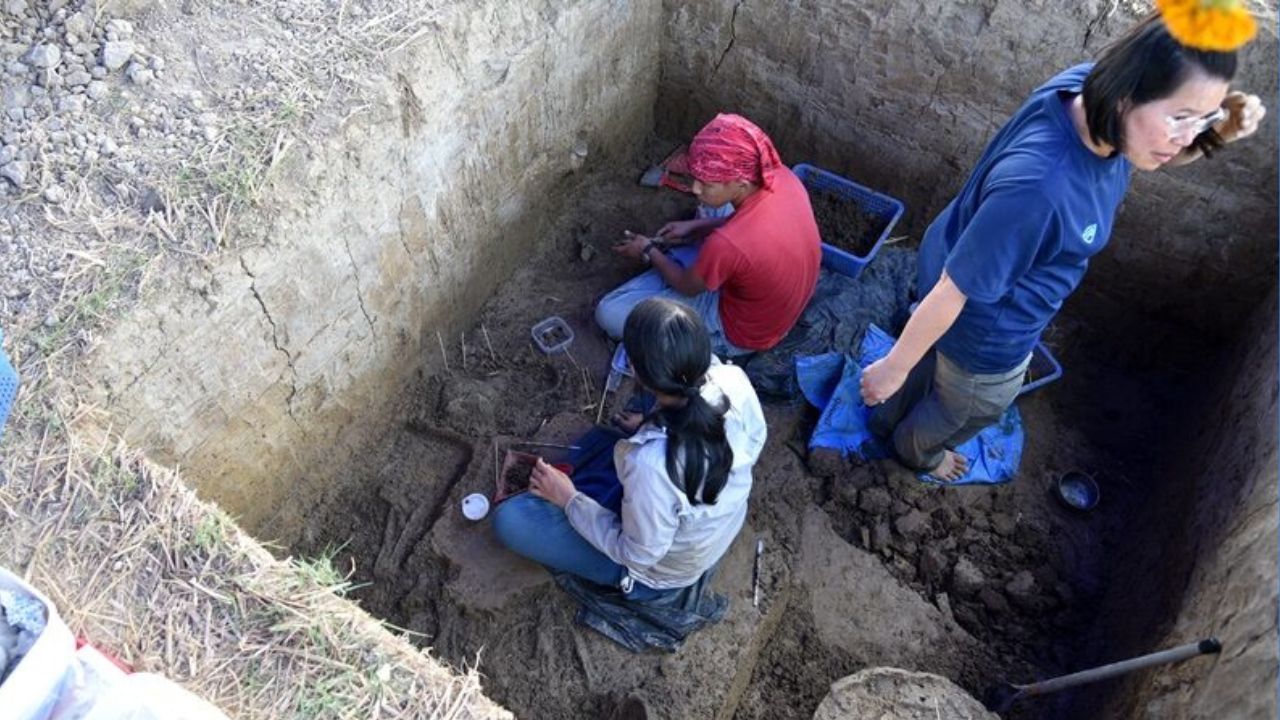
Archaeologists reportedly found bone fragments suspected to be human remains at a depth of about 120 centimetres below the surface.
The remains were buried together with bronze vessels near the point where the drums were found, in an area also surrounded by pottery vessels that had been uncovered earlier.


Kannika said the presence of human remains close to the bronze drums, together with pottery and other ornaments found in the area, points to a burial ritual.
She said archaeologists are still working from a hypothesis on whether the burial belongs to the late prehistoric period or the Dvaravati period. At the moment, they are placing it broadly in the transition between the two, around 1,500 to 2,000 years ago.
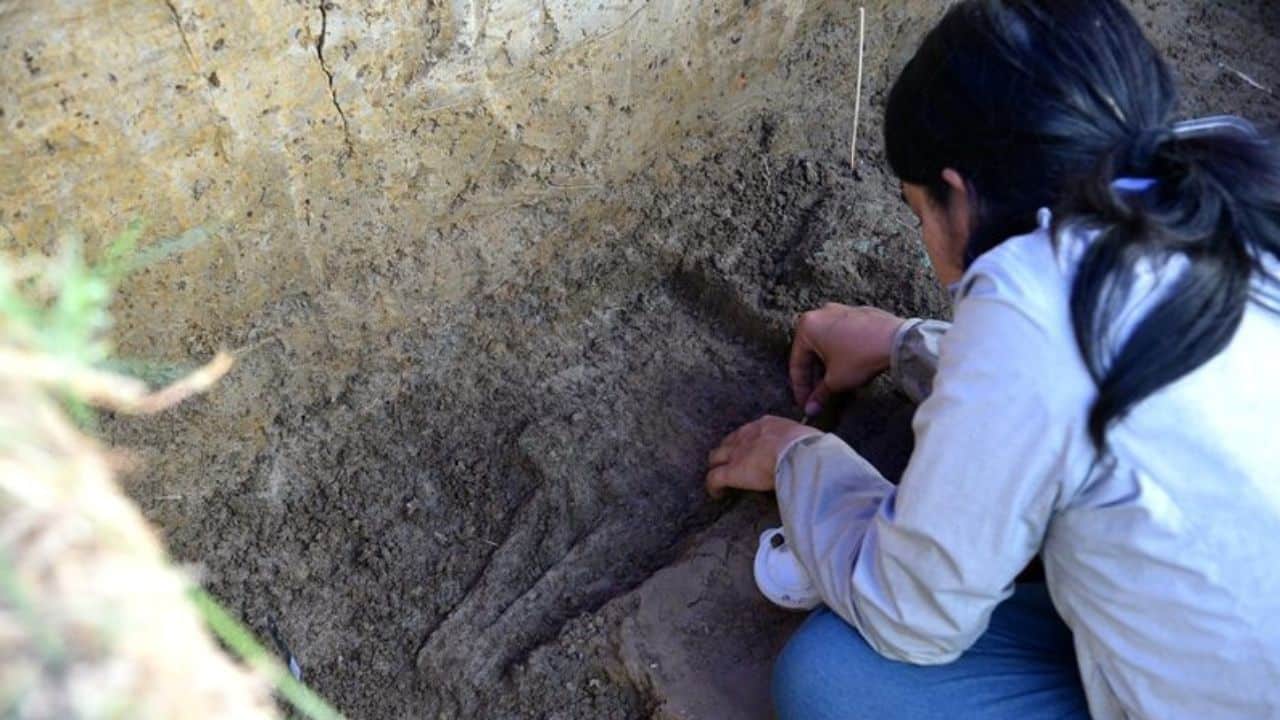
She added that in ancient times, people entitled to use bronze drums were typically community leaders or prominent figures, and that the burial context supports the view that the individual interred at the site held a significant role.
Archaeologists also reported that bronze vessels were found positioned around the remains in a way suggesting some items had been placed over the body and others worn.
This leads them to interpret the burial as a primary burial, meaning the body was buried soon after death, with ornaments and bronze items included in the same ceremony.
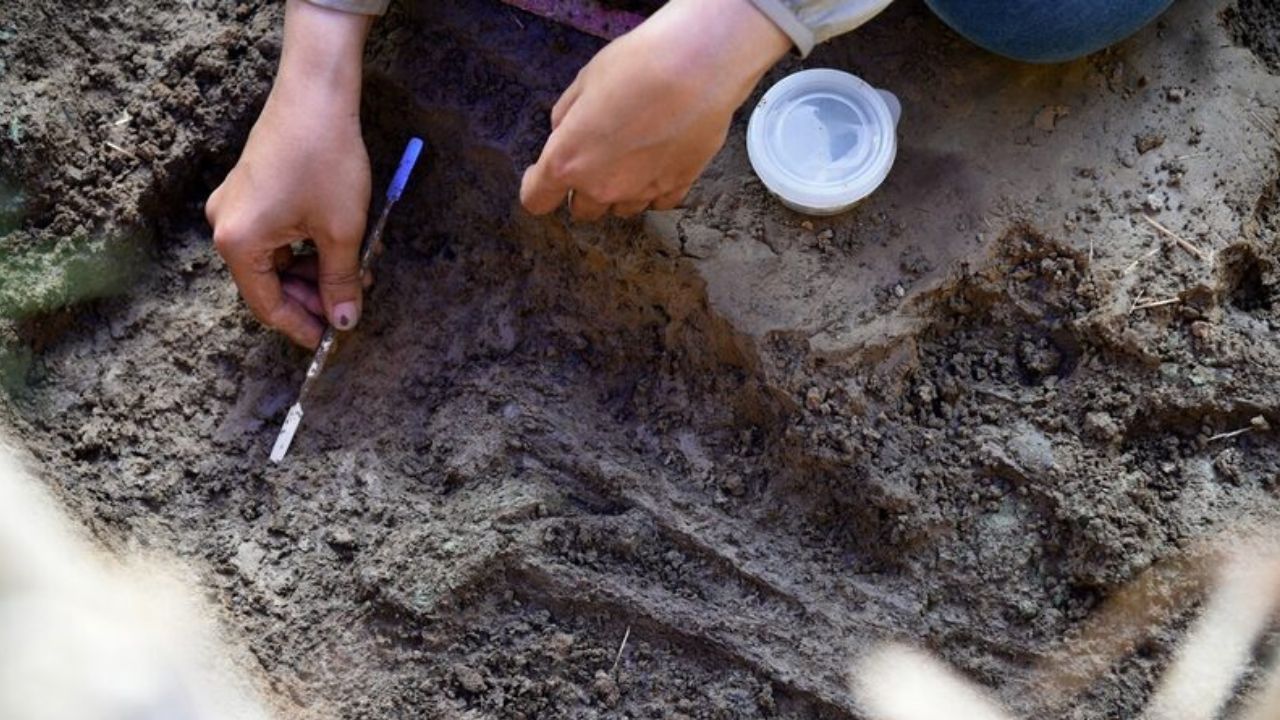
At least seven pottery vessels were also reported, which archaeologists said indicates the person had high status and wealth in the past.
Elsewhere, last year, officials from Fine Arts Office 1 in Ratchaburi found what may be Thailand’s oldest human skeleton, estimated to be at least 29,000 years old, during work in a cave in Sam Roi Yot National Park, Prachuap Khiri Khan.
Latest Thailand News

























Follow The Thaiger on Google News: