Bhumjaithai Party gains momentum as key player in Thai elections
Border tensions with Cambodia boost Anutin’s strongman image


The Bhumjaithai Party (BJT) is currently gaining significant traction in Thai politics, emerging as a pivotal force amid a tide of politicians joining its ranks from other parties.
With substantial financial backing and strategic advantages following a key reshuffle before the House dissolution, the party’s long-standing relationships with influential local political families, known as ‘baan yai’, have strengthened its position as the election campaign kicks off.
Political analysts have been evaluating whether these advantages will secure an election victory for the BJT or if other developments might affect the outcome. Suvicha Pouaree, director of the Nida Poll centre, identified the People’s Party (PP) as BJT’s main competitor.
He suggested that BJT’s best chances lie in the constituency system rather than the party-list vote, which explains the party’s recent efforts to consolidate influential political families.
The BJT has strategically aimed to unify votes among local factions, drawing on a model used successfully in a recent by-election in Phitsanulok.
In areas where the PP previously failed to achieve over 50% of the vote, the BJT plans to persuade second- and third-ranked political groups, whose combined votes surpass those of the PP, to collaborate rather than compete.
Regarding the party-list vote, Suvicha noted that its success would depend on candidate campaigning strategies. Previously, the BJT garnered only about 3% of the party-list vote. However, if candidates promote both themselves and the party, this could increase to 12–13%.


Suvicha acknowledged that while the BJT might possibly emerge victorious, it is not guaranteed. The party could secure 120–130 House seats if their approach succeeds, with Pheu Thai potentially winning fewer than 100 seats.
The Democrats, if successful in the South, may secure approximately 40 seats. He mentioned that the race for the top position is primarily between the BJT and the PP.
Suvicha also highlighted the potential impact of the Thai-Cambodian border situation on voter sentiment. Prime Minister and BJT leader Anutin Charnvirakul’s firm stance on the issue has resonated with voters, though the government’s ability to maintain its position amid diplomatic pressure remains uncertain.
Additionally, the BJT has the opportunity to campaign on policy initiatives, such as the Khon La Khrueng Plus co-payment scheme, to attract undecided voters, who account for an estimated 20%.
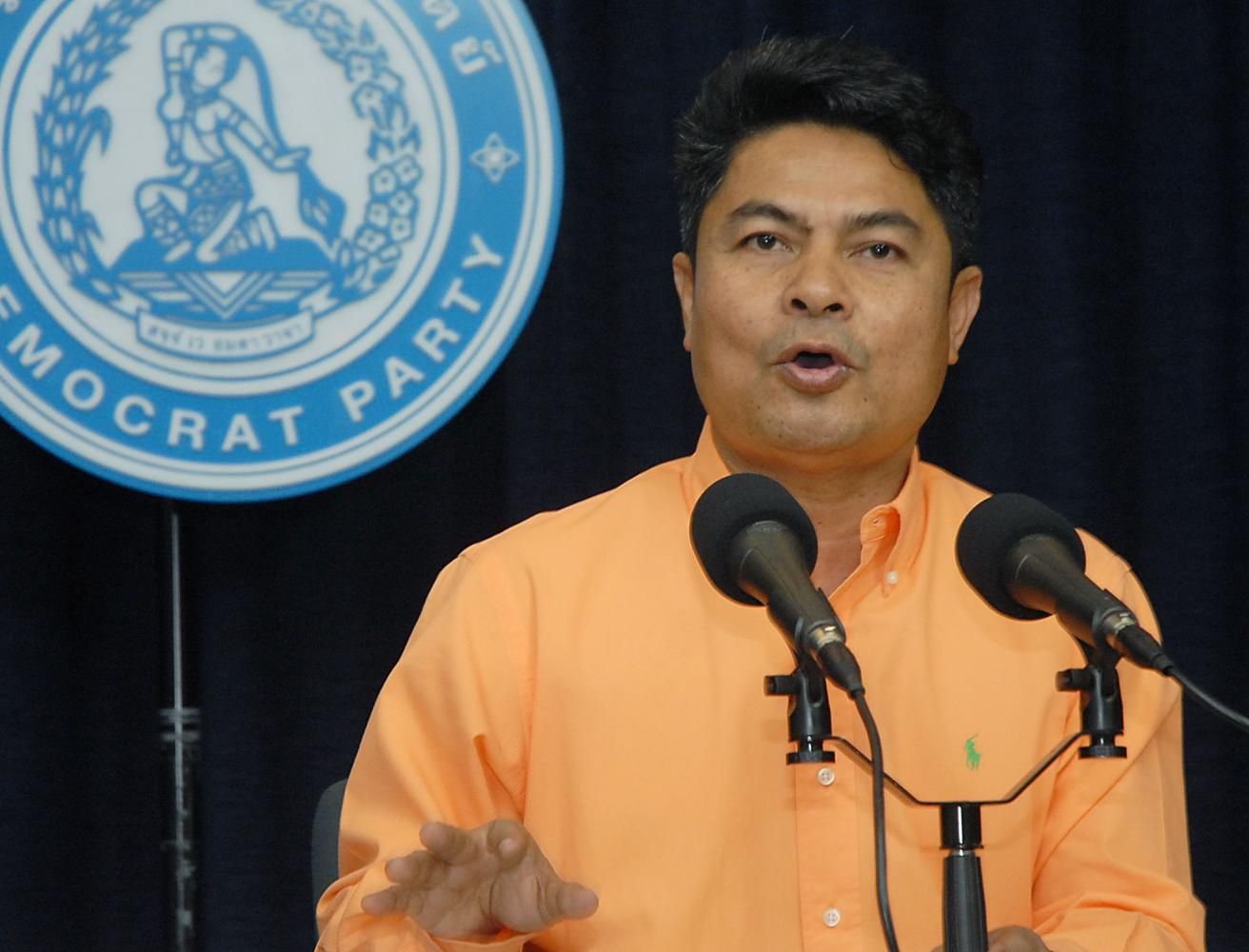
Stithorn Thananithichot, a political scientist at Chulalongkorn University, noted that BJT’s prospects have improved with the recruitment of veteran politicians and networks.
In contrast, the PP is grappling with internal challenges, including candidate changes and lingering doubts among supporters, which hinder momentum.
Stithorn believes the BJT has a high chance of finishing first but considers it premature to make definitive predictions. He foresees the BJT potentially exceeding 150 seats, especially in the Northeast, where former Pheu Thai figures have joined the party.
However, nationalist sentiment could influence voter preferences, possibly benefiting other parties.
Stithorn also commented on the party-list system, predicting the BJT could secure around 9–10%, with a potential rise to 15% under favourable conditions. Undecided voters remain a key variable, and party policy platforms will likely play a significant role in swaying these voters.
Former Democrat MP Thepthai Senapong suggested the BJT might win around 120 seats but still views the PP as a likely winner. He noted that the BJT’s strategy resembles past patterns where parties expanded by absorbing politicians from various groups to gain legitimacy for forming a government.
Thepthai cautioned that this approach could lead to internal tensions post-election, particularly over cabinet positions, leading to factional splits. He also highlighted the BJT’s limited appeal among urban and middle-class voters, especially in Bangkok, despite having high-profile figures within its ranks.
Thepthai observed that the BJT’s reliance on influential local political families and financial resources could backfire if opponents portray BJT patriarch Newin Chidchob as attempting to dominate the political system.
He further commented on the Democrats, mentioning that the return of former prime minister Abhisit Vejjajiva might help regain some party-list support, although the party faces challenges in constituencies due to intense competition, according to Bangkok Post.
Latest Thailand News

























Follow The Thaiger on Google News: