How Italian-Thai Development became Thailand’s most controversial construction company

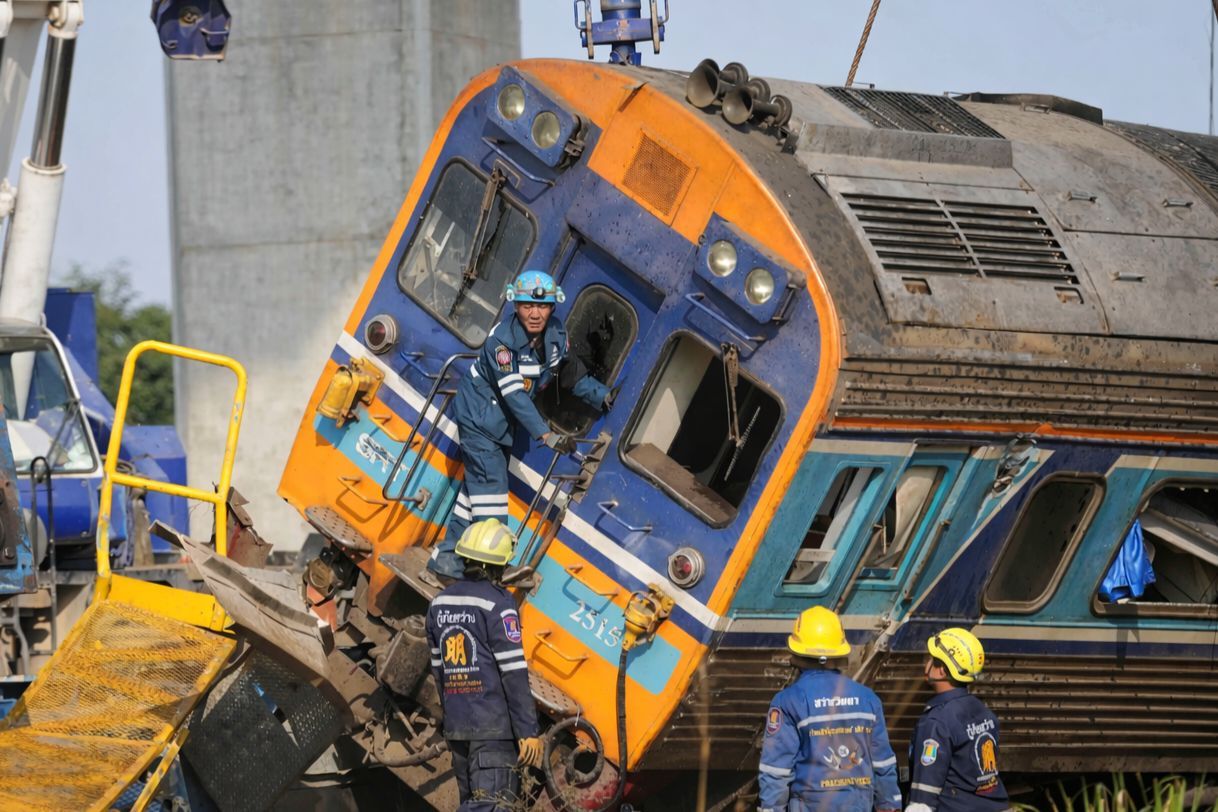
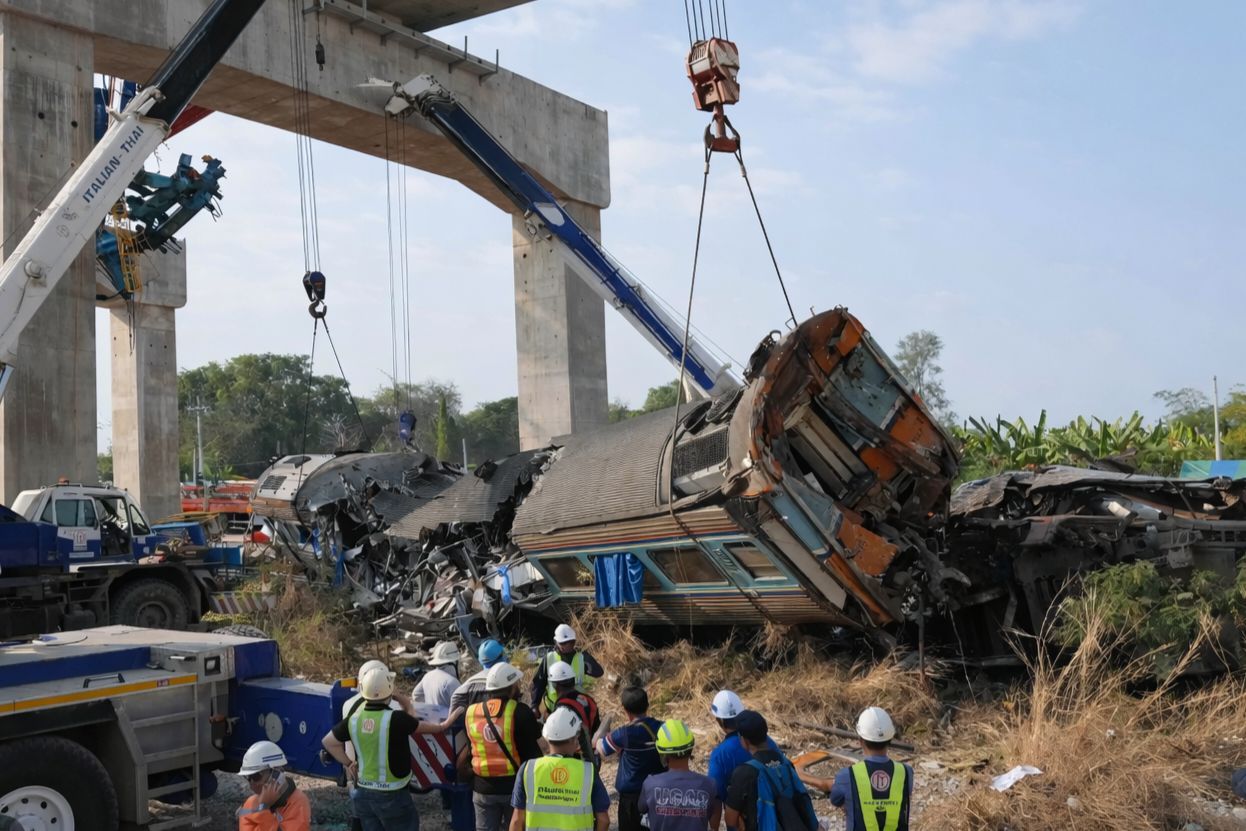
At 9.13 on the morning of 14 January, passengers on a north-eastern-bound train in Nakhon Ratchasima province heard a sound like tearing metal. Above them, a massive steel crane used to lift concrete spans for an elevated high-speed rail line had begun to fall.
The launching gantry, weighing several tonnes, crashed onto the last two carriages, derailing them and igniting a brief fire. When the dust settled, 32 people were dead, and 66 were injured. “I heard people shouting save the children first!” one witness said to a reporter with APNews.
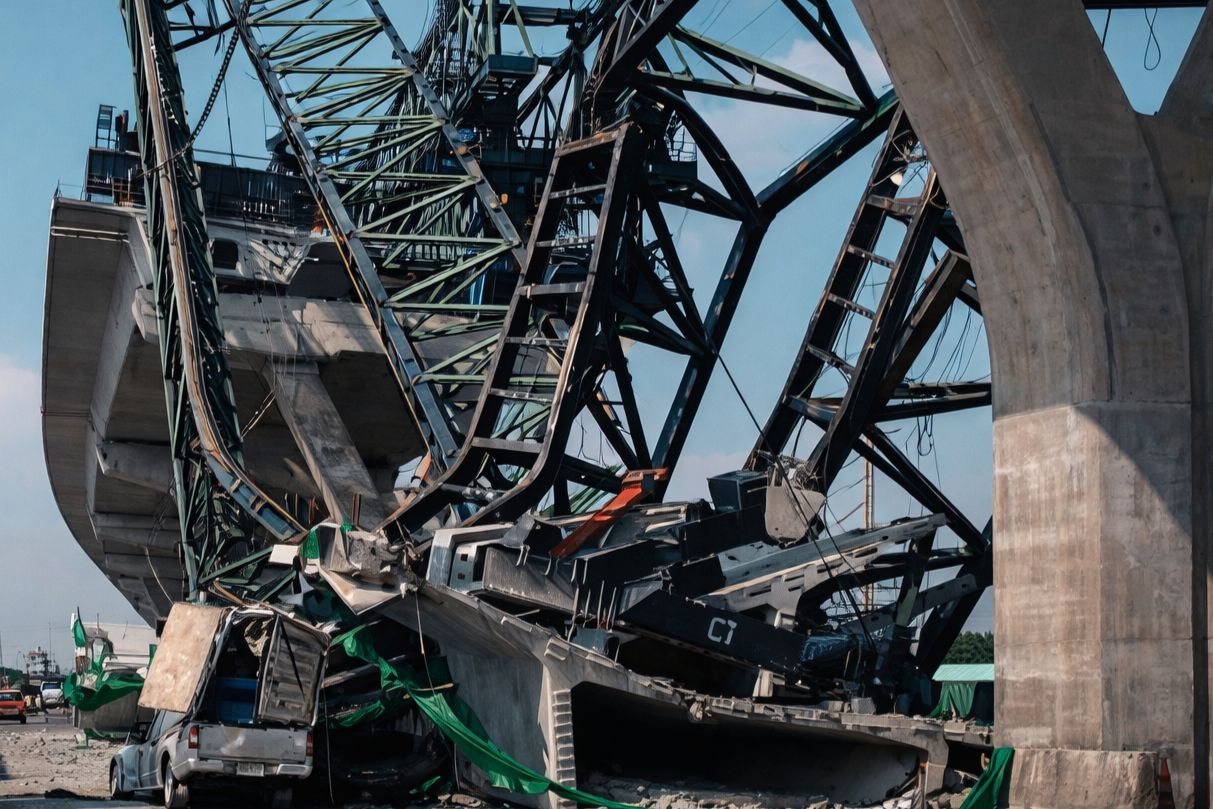
The crane belonged to Italian-Thai Development (ITD), one of Thailand’s largest construction firms. The next day, another ITD crane collapsed onto the Rama II motorway in Samut Sakhon province, crushing two vehicles and killing both drivers.
Dashcam footage showed the green steel arm crashing down, sending nearby cars scrambling. Two crane failures in two days, both linked to the same contractor. Within hours, the government moved to terminate ITD’s contracts and place the company on an industry blacklist.
For Italian-Thai Development, the collapses marked a spectacular unravelling. But the story of how Thailand’s infrastructure giant reached this point stretches back decades, through corruption scandals, financial crises, and a series of construction disasters that authorities seemed unable or unwilling to prevent.
On this page
| Section (Click to jump) | Short summary |
|---|---|
| Rise and dominance | How Italian-Thai Development grew from a small contractor into one of Thailand’s most powerful infrastructure giants. |
| The scandals | The personal, financial, and labour controversies began to erode ITD’s reputation and stability. |
| The pattern of failures | A series of deadly construction incidents revealed systemic safety and oversight problems. |
| Two days in January | The back-to-back disasters that finally pushed public anger and political pressure past breaking point. |
| The reckoning | Investigations, contract terminations, blacklisting, and the uncertain future facing one of Thailand’s largest builders. |
Rise and dominance
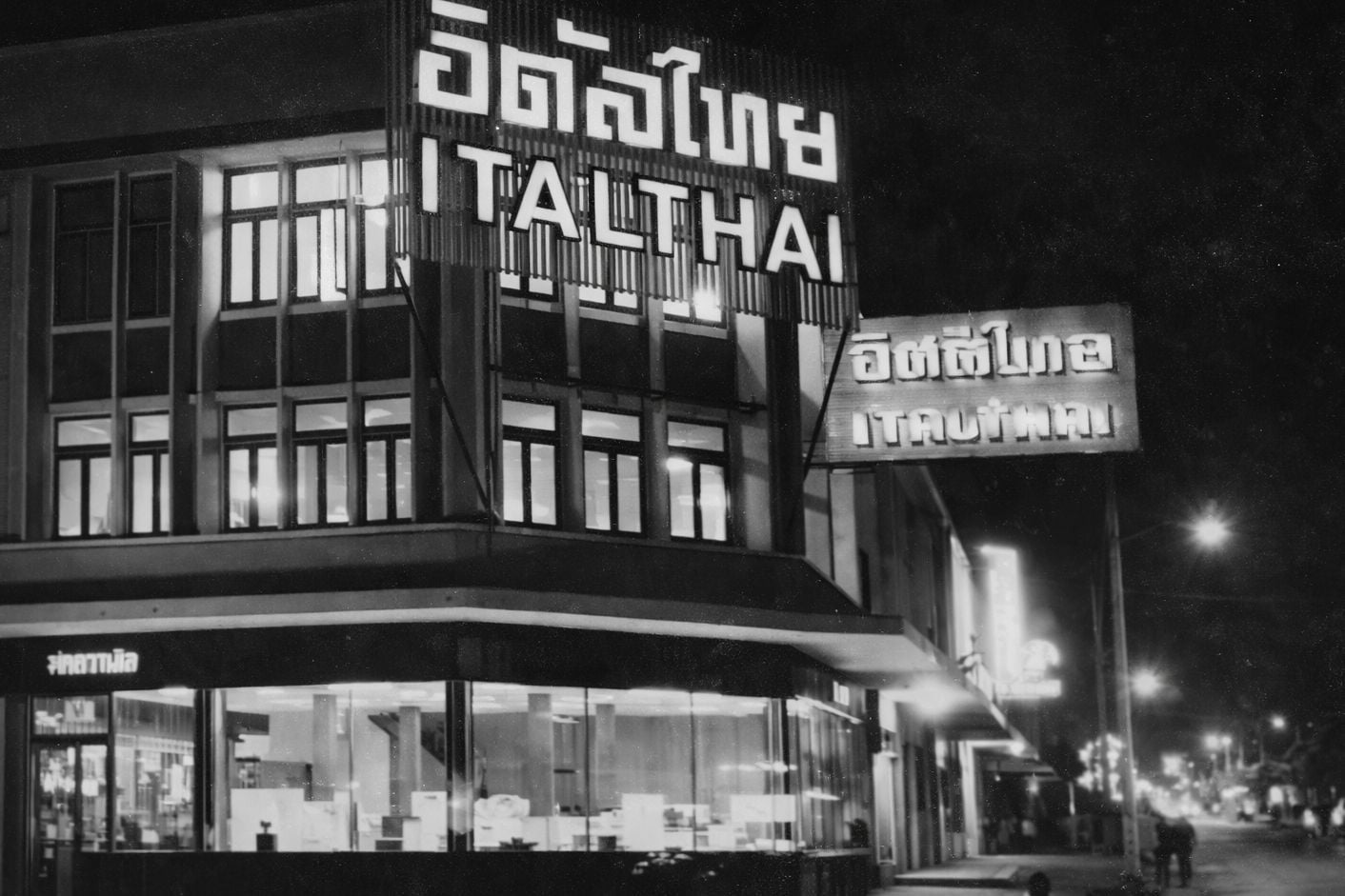
Founded in 1958 by Thai entrepreneur Chaijudh Karnasuta and Italian engineer Giorgio Berlingieri with just 2 million baht in capital, ITD grew through Thailand’s infrastructure boom. It went public in 1994 and built much of modern Bangkok: the BTS Skytrain, portions of the MRT underground, the Rama VI Bridge, and Suvarnabhumi International Airport.

Regional expansion followed, including a 2010 concession for Myanmar’s Dawei Special Economic Zone later suspended amid accusations of land confiscations and inadequate compensation.
From 2015 to 2025, ITD secured 213 state construction contracts worth a combined 134.7 billion baht, making it one of the government’s top contractors. That dominance raised questions about collusion in public tenders, particularly as ITD’s partnerships with Chinese firms drew scrutiny from opposition politicians. Prime Minister Anutin Charnvirakul recently denied accusations that his government’s infrastructure deals unfairly benefited ITD, insisting all contracts followed proper procedures.
The scandals
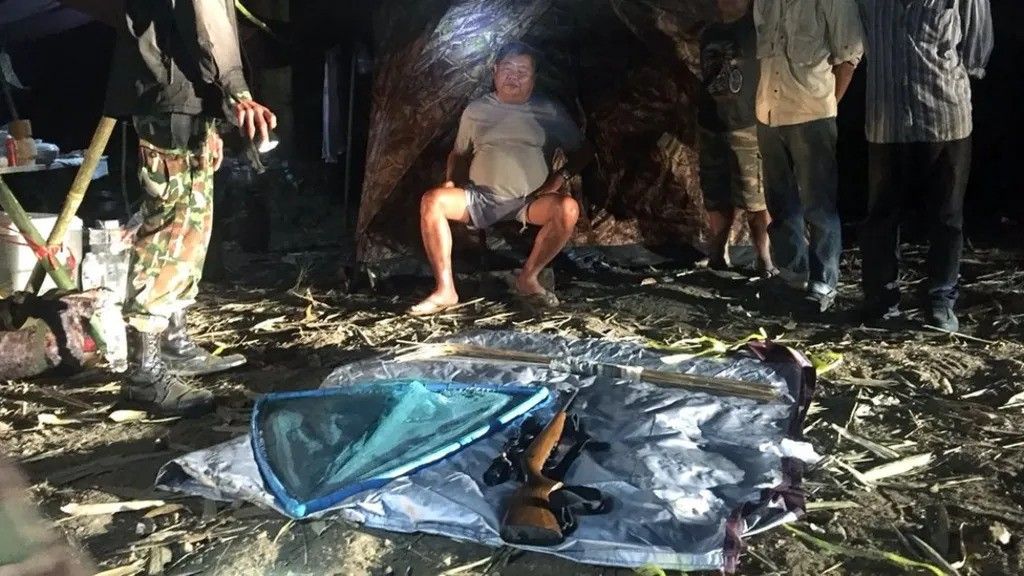
ITD’s president, Premchai Karnasuta, who took control in the 1980′,s became notorious in 2018 for wildlife poaching. He was arrested at a sanctuary with carcasses of protected animals, including a rare black leopard. In December 2021, Thailand’s Supreme Court upheld his conviction, ordering him to serve over three years in prison. The case became a test of whether Thai justice could hold powerful elites accountable. Premchai also faced separate bribery charges.
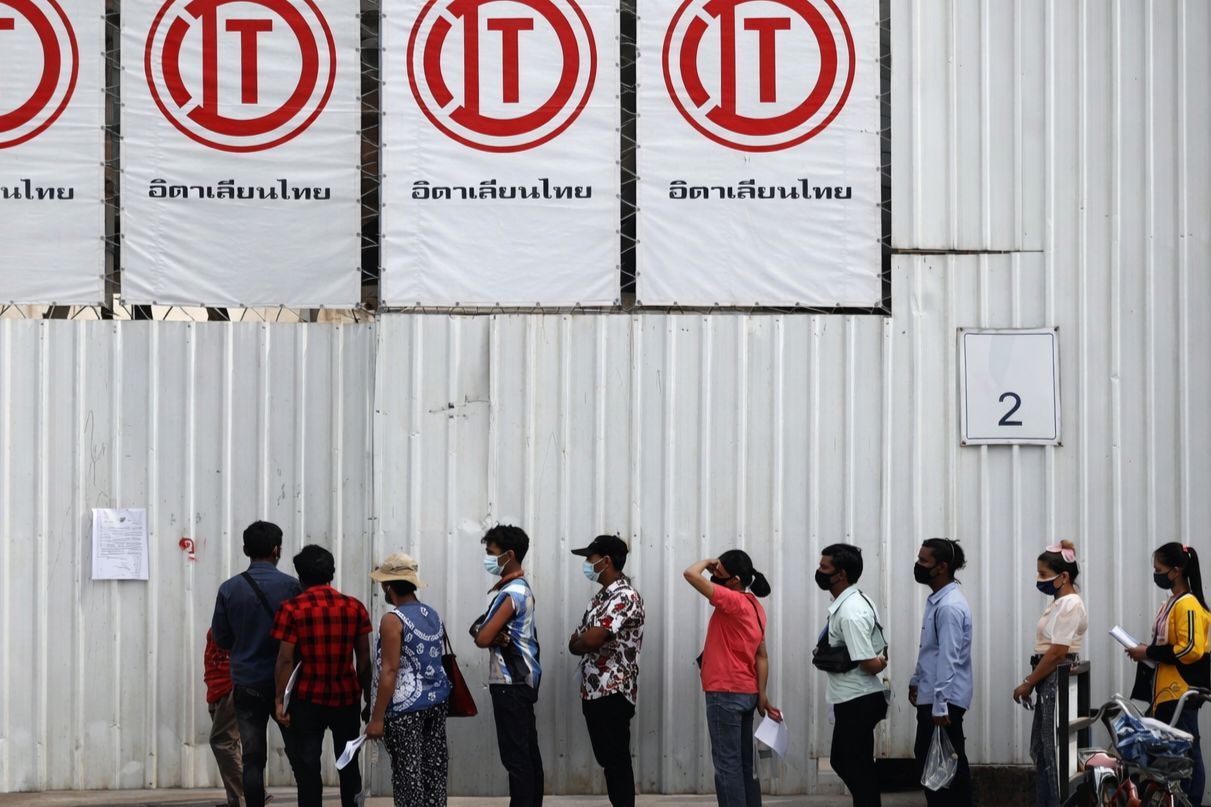
By early 2024, ITD revealed acute financial troubles: debt exceeding 100 billion baht and severe liquidity problems. Thousands of workers filed complaints about unpaid wages. In March 2024, labour officials intervened after 6,626 employees reported salary arrears. Dozens of subcontractors came forward with similar grievances. ITD’s management entered talks with creditors to restructure debt whilst narrowly avoiding legal action in labour courts.
The pattern of failures
Safety lapses had already marked ITD’s recent record. In November 2024, a crane accident at an elevated motorway site in Samut Sakhon killed six workers. In March 2025, a 30-storey government office tower under an ITD-led joint venture collapsed during construction in Bangkok’s Chatuchak district when a 7.7-magnitude earthquake struck Myanmar.
The State Audit Office building was the only high-rise in Bangkok to suffer catastrophic failure. At least 89 people died, most of whom were construction workers.
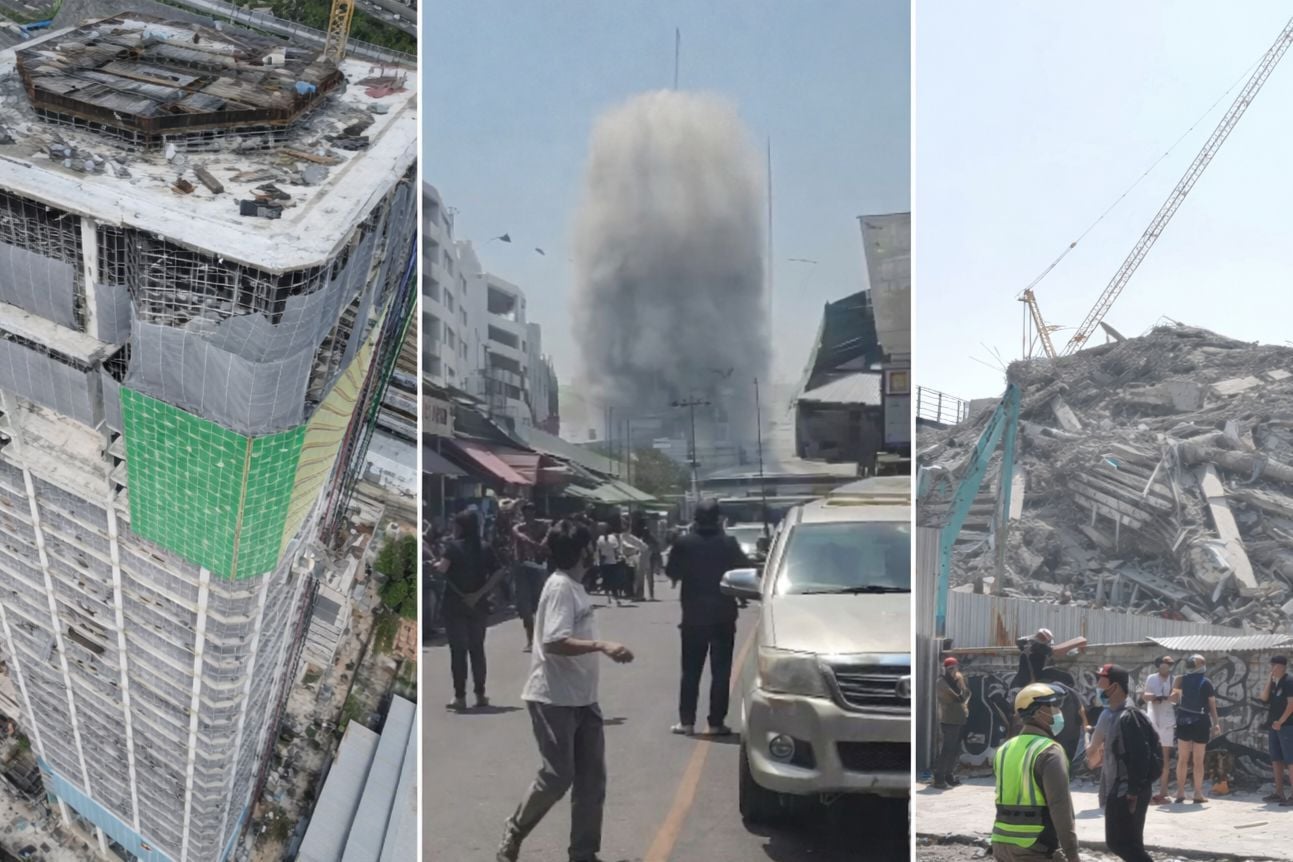
Investigations alleged shoddy design and substandard materials. Thailand’s Department of Special Investigation probed whether corruption, including bid rigging and the use of opaque nominee companies, contributed to the disaster.
By mid-2025, authorities arrested 23 individuals, including Premchai Karnasuta and engineers from both ITD and its Chinese partner firm, on charges of criminal negligence causing deaths. The defendants denied wrongdoing. The case remains pending.
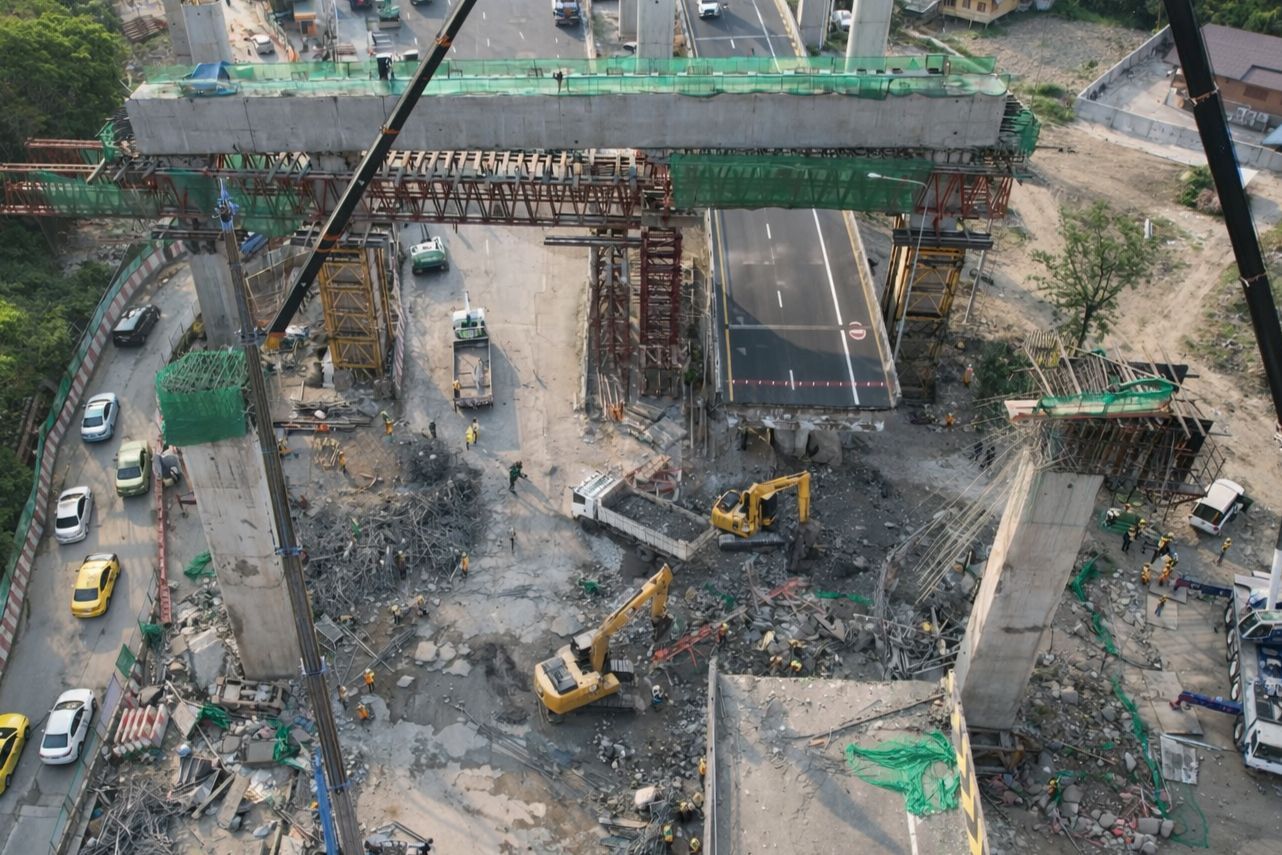
Two weeks earlier, an under-construction elevated motorway section on Bangkok’s Rama III–Dao Khanong Expressway, another ITD project, collapsed, killing five workers and injuring 27. Authorities launched a safety review and introduced a contractor report card system. Critics noted that such tragedies exposed persistent gaps: inadequate risk controls, lax enforcement.
Two days in January
The twin crane collapse in January 2026 turned frustration into outrage. At the Sikhio crash site, rescue teams found train coaches torn open, debris and twisted crane pieces strewn across the rails. Firefighters battled flames whilst smoke billowed.
The State Railway of Thailand said roughly 195 passengers and crew had been aboard. Transport Minister Phiphat Ratchakitprakarn ordered a probe, noting that the crane should not have posed da anger to an active train line below.
ITD expressed deep regret and pledged compensation. A day later came the Rama II motorway collapse. Yes, it is Italian-Thai. I still do not understand what happened, Transport Minister Phiphat admitted, noting the coincidence of the same contractor being linked to two failures in two days.
Prime Minister Anutin, facing mounting criticism weeks before a general election, moved quickly. On 15 January, he announced the Transport Ministry would terminate ITD’s contracts on both projects and blacklist the firm.
The Ministry has been instructed to terminate the contracts, pursue all legal action available, and place them on a blacklist, he told reporters. The government also paused around a dozen other ITD construction projects whilst emergency safety inspections were carried out.
Wichian Rungrujirath, a senior ITD executive, acknowledged the company’s responsibility, admitting the train accident resulted from both human error and systemic issues. Workers had been repositioning the heavy gantry crane when the collapse occurred.
An initial examination indicated a problem with the crane’s support structure, a failure of the supporting leg, causing it to tip during the move.
Dr Suchatvee Suwansawat, a civil engineer and former Bangkok gubernatorial candidate, called the twin collapses a national embarrassment. He questioned why construction of elevated railway segments was allowed whilst trains ran on the active line below, calling for a review to prevent any work over live tracks without full closures.
The reckoning
Multiple investigations are now underway. Police, the Ministry of Transport, and independent engineering committees are examining whether criminal charges of negligence or manslaughter will be filed over the 32 train deaths and motorway fatalities.
The Prime Minister has convened a task force to evaluate stricter oversight measures for all major contractors and to revisit building codes if necessary. Regulators indicated they may impose new requirements for third-party safety audits and harsher penalties for safety breaches.
For Italian-Thai Development, the fallout has been severe. The termination of two high-profile contracts means a significant loss of revenue and reputation. New bids will be invited for replacement contractors. If re-tendering causes delays or higher costs, the state may seek compensation from ITD. The company faces formal blacklisting from future government projects, a ban rarely imposed on a firm of ITD’s size.
ITD’s leadership has appealed not to be permanently blacklisted, arguing the firm employs thousands and possesses the technical expertise needed to complete existing projects. The lack of work would be detrimental… impacting the livelihoods of employees and their families, Wichian cautioned.
Financially, the crises have battered the company. As of mid-January 2026, ITD’s market capitalisation stood at only 1.37 billion baht, a stark indicator of diminished investor confidence. The company reported total assets of about 91 billion baht and liabilities of 82 billion baht.
Despite troubles, ITD had remained profitable through late 2025, posting a net profit of 7.39 billion baht in the first nine months. But the loss of major contracts and potential legal damages now cast doubt on its outlook. Credit analysts are watching to see if ITD can restructure its debt and avoid default if new work dries up.
Public trust in Thailand’s construction oversight is at a low ebb. ITD’s name has become a focal point for anger. Protest banners have appeared at construction sites. Social media buzzed with calls for executives to be held accountable.
At least 4 killed after crane collapses onto train in Nakhon Ratchasima
In parliament, lawmakers grilled officials on why past warnings were ignored, and why the March 2025 tower collapse did not immediately result in stricter enforcement or blacklisting. Some see the government’s delayed reaction as symptomatic of the old boys’ network in Thai infrastructure deals, where large contractors have historically been given second chances after infractions.
Anutin, who took office in mid-2025, pointed out that legal hurdles had prevented faster action against ITD’s earlier contracts, but insisted this time the response would be uncompromising. Italian-Thai Development is now undertaking an internal shake-up, setting up its own investigative panel to review safety protocols on every active site and indicating willingness to submit to new government audits.
The company’s fate will likely be determined by a combination of legal outcomes and its response to government demands. On one hand, Italian-Thai Development still possesses the technical capacity that Thailand’s development agenda relies on. It has several ongoing projects, ranging from rail lines to water infrastructure, that authorities may need to complete, albeit under stricter supervision.
On the other hand, the trust that underpinned its government partnerships has been deeply eroded. With an election looming and public sentiment running high, officials are under pressure to demonstrate that no company is above accountability.
For now, ITD’s leadership says it will focus on meeting obligations to victims and improving safety culture internally. As Thailand mourns the lives lost in these construction disasters, the case serves as a reminder that even industry titans must answer to the public for their failures.
Related articles:
• The deadly Rama 2 road and why it keeps claiming lives
• What to do in case of a future earthquake
• Crane collapses into train in Nakhon Ratchasima
Latest Thailand News

























Follow The Thaiger on Google News: