Inside Thailand’s underground motorcycle racing culture

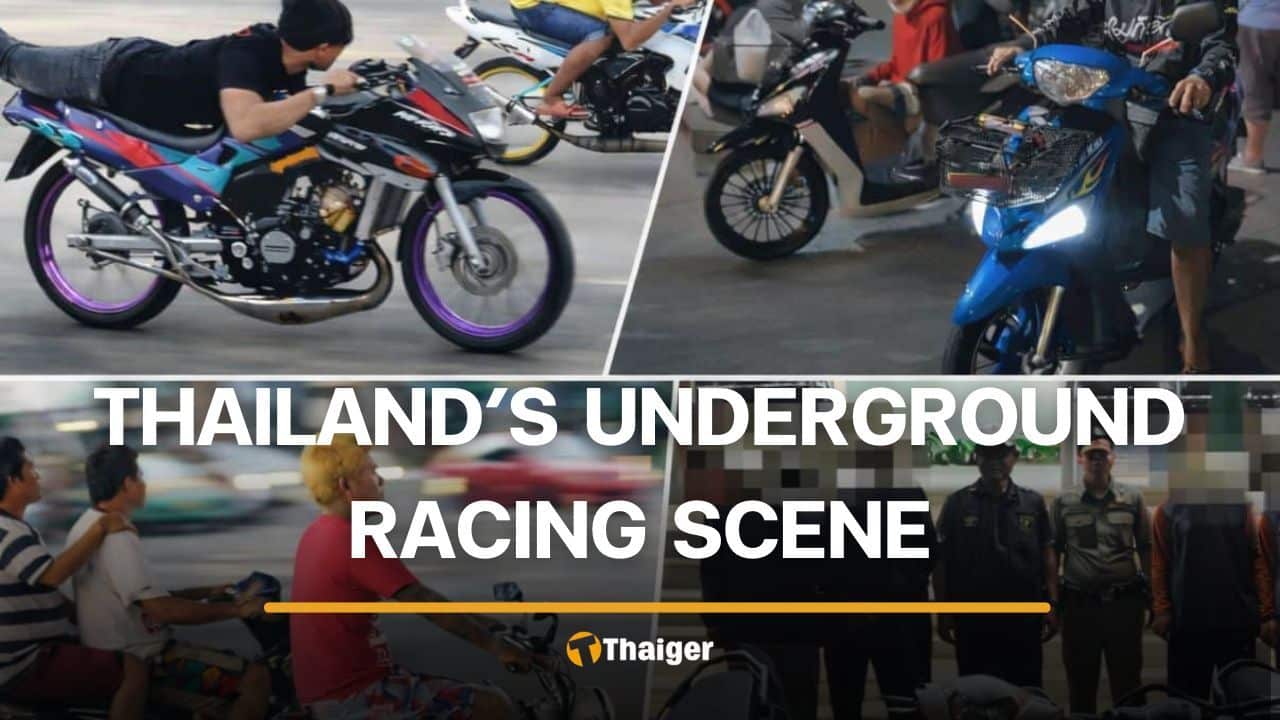
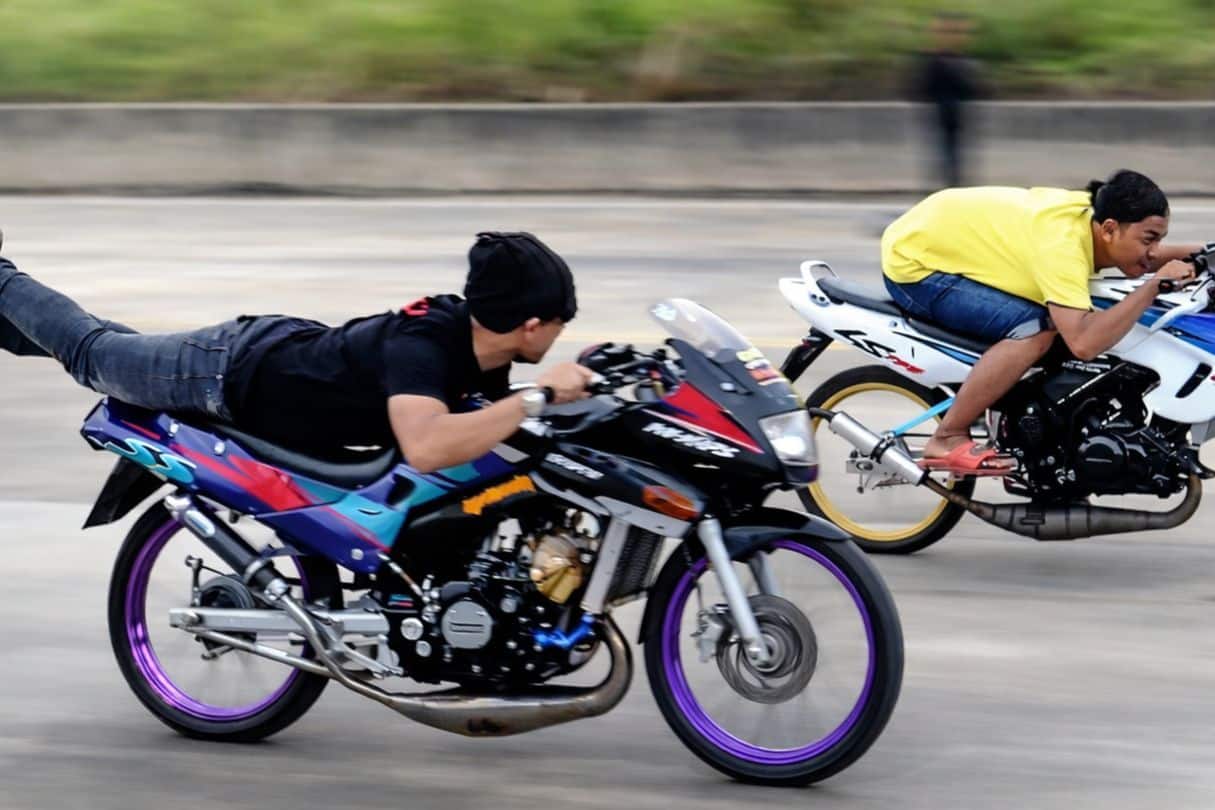
On certain stretches of Bangkok’s Sukhumvit Road, after midnight, you can hear them before you see them. The sound starts as a distant whine, rising in pitch, then suddenly a cluster of motorcycles appears, weaving through sparse traffic at speeds that make the riders look almost horizontal.
They lean into turns, engines screaming, exhausts popping. In seconds, they’re gone, leaving behind only the smell of burnt fuel and the fading echo of engines pushed past their factory limits.
This is motorcycle street racing, Thai style. The riders are mostly young, mostly male, and mostly riding machines never designed for what they’re doing. These are small-displacement scooters and motorcycles modified far beyond their original specifications, and on some nights, the police show up.
Some nights they don’t. The pattern has repeated itself for decades across Thailand’s cities, a nocturnal ritual that sits uneasily between tolerated youth culture and public safety crisis.
On this page
| Section (Click to jump) | Short summary |
|---|---|
| A nation on two wheels | Motorcycles as daily transport, social identity, and a gateway into Thailand’s youth riding subculture. |
| The racing tradition | How formal motorsport evolved alongside an underground street racing scene that rarely overlaps with the legal track world. |
| Crackdowns and consequences | Police sweeps, arrests, and seizures that disrupt racing temporarily but fail to dismantle the culture. |
| The sanctioned alternative | Organised bike events and rallies that channel the same passion into legal, highly visible spaces. |
| A culture in motion | Why commuter riders, street racers, and organised clubs continue to coexist on the same roads. |
A nation on two wheels
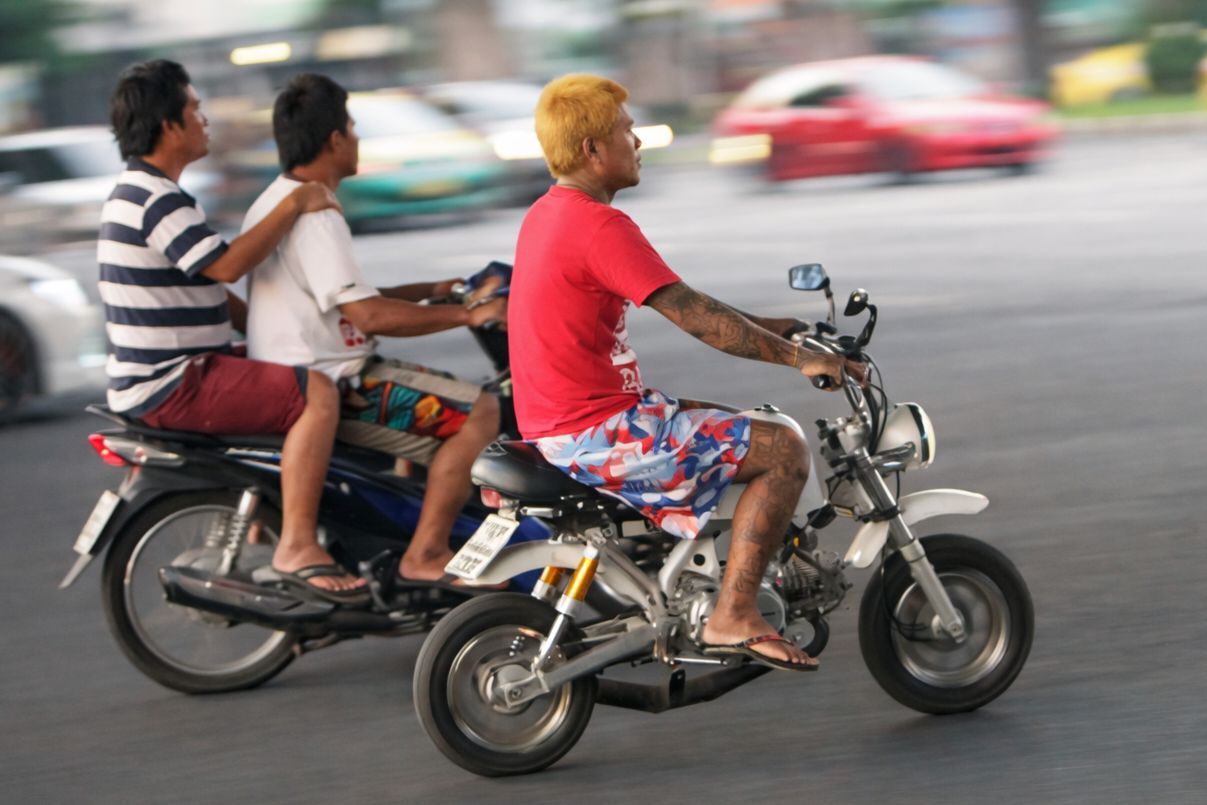
Thailand runs on motorcycles. In Bangkok, Pattaya, and provincial towns, scooters and bikes move millions of people daily. They navigate traffic that would paralyse cars, slip through gaps that don’t officially exist, and keep commerce flowing in neighbourhoods where four-wheeled vehicles rarely venture.
The machines are cheap, practical, and ubiquitous. A 110cc Honda Wave costs less than a month’s salary for many Thais and can be financed with minimal paperwork.


For young riders, though, these bikes are more than transport. They’re the centre of an informal social world that includes modification subcultures, weekend gatherings, and periodic confrontations with law enforcement.
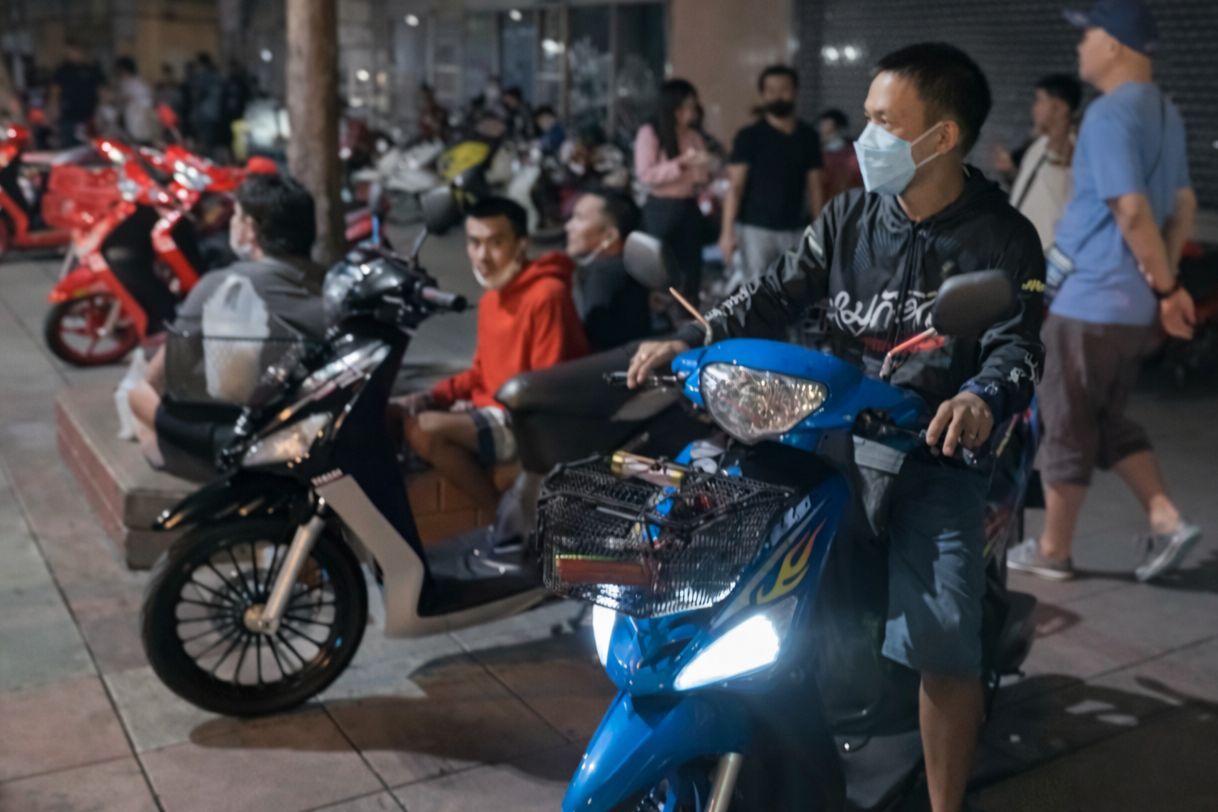
Groups known locally as dek waen, literally cruising kids, meet in car parks and petrol stations, comparing engine modifications and planning rides. The conversations revolve around technical details: larger pistons, altered fuel injectors, straight-pipe exhausts that strip away silencers for maximum noise and minimal backpressure.
The modifications aren’t subtle, as a stock scooter designed to transport office workers at 60 kilometres per hour gets rebuilt to hit 120. The transmissions are swapped, carburettors replaced, and bodywork stripped away. These modifications are common in motorcycle racing in Thailand.
The goal is speed, but also recognition, and in this world, a properly modified bike confers status, and the ability to outrun police adds to the legend.
The racing tradition
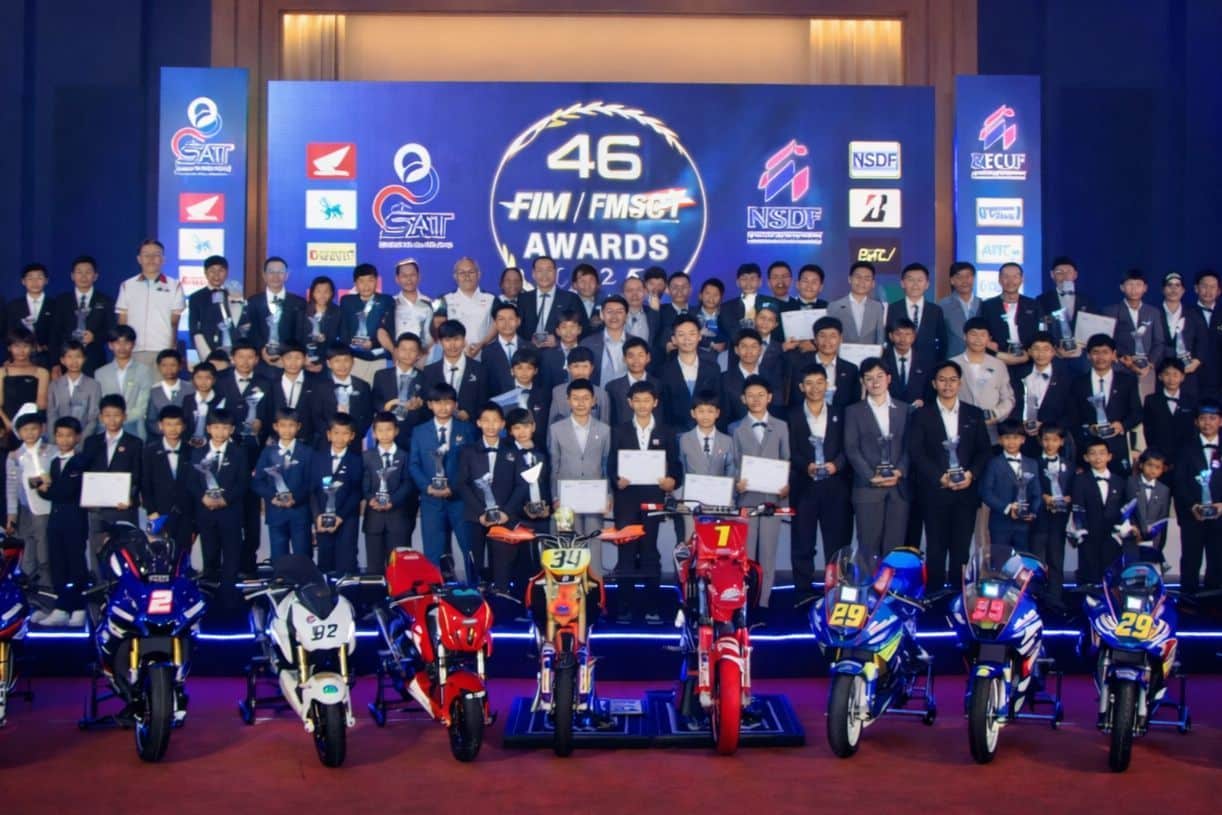
Motorcycle racing in Thailand has formal roots. Competitive events date back to the nineteen-seventies, when enthusiasts raced European bikes at venues like Lumphini Park and Nadung Ranch. As national associations formed, the sport became more structured.
Thailand now hosts sanctioned competitions under the Federation of Motor Sports Clubs of Thailand, from motocross 450cc races to national road racing series.
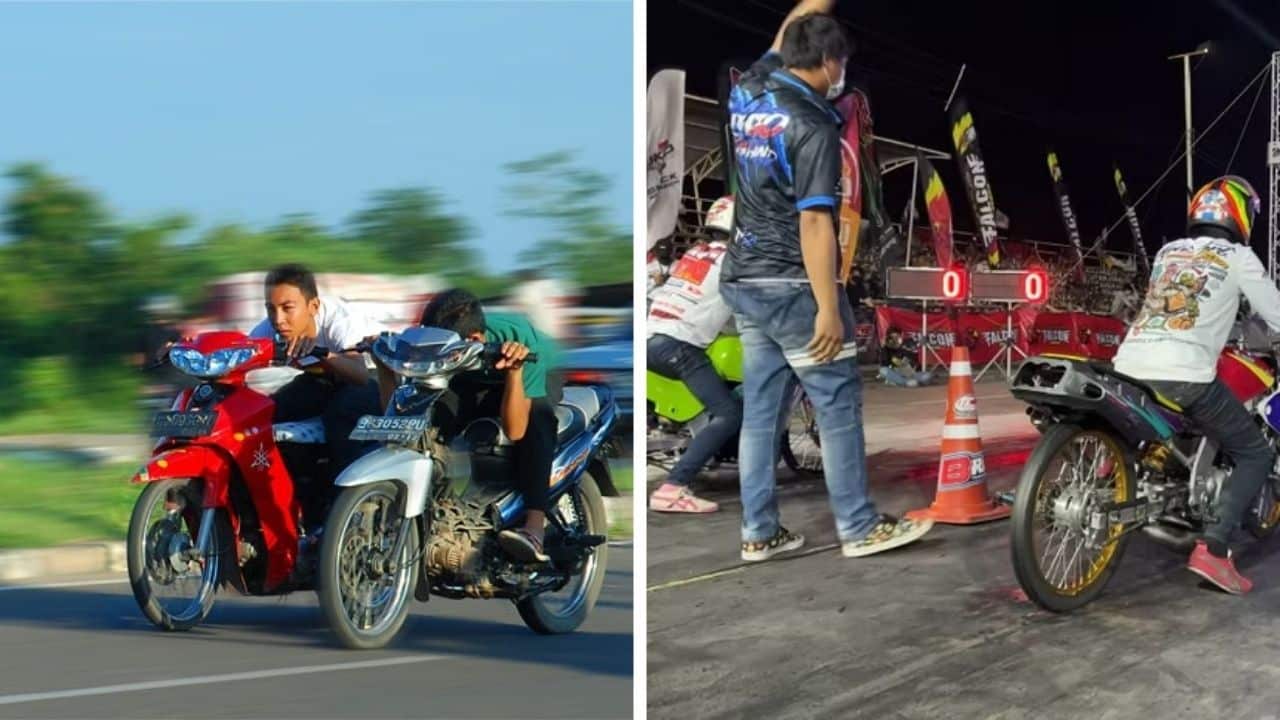
But the legal racing world exists parallel to the street scene, rarely intersecting. The kids racing on Sukhumvit Road at 2am aren’t thinking about track days or racing licences. They’re after something more immediate: the rush of speed, the attention of peers, the thrill of pushing a machine past its breaking point on public roads.
Groups like the Vanz Boys in Bangkok built reputations this way. Their fame came not from official competitions but from street racing and the ability to evade police.
In earlier years, according to reports, some officers tolerated the activity during certain hours, allowing informal racing late at night, provided it didn’t extend past agreed-upon times. The arrangement was precarious, dependent on unwritten rules and the discretion of individual officers.
Crackdowns and consequences
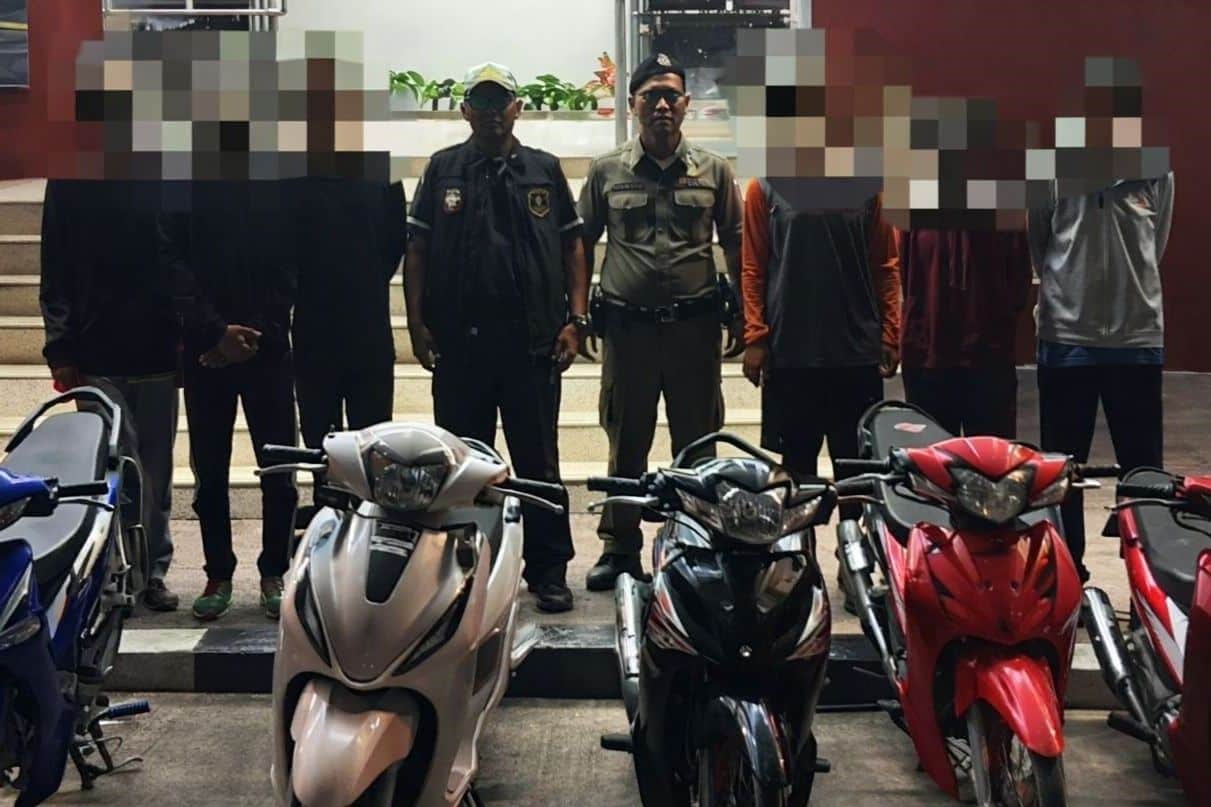
That tolerance has limits. Bangkok police periodically launch operations to intercept these motorcycle racing groups, leading to arrests and charges under traffic and public safety laws in Thailand.
In Pattaya, local authorities have confronted teenagers involved in early-morning street racing along tourist corridors, seizing modified motorcycles and summoning riders and their parents for warnings.
On 10 January, a coordinated sweep in Surin Province led to the arrest of fifteen motorcycle gang members connected to repeated complaints about illegal racing in Mueang Surin District. Police seized fourteen motorcycles, and several suspects received prison sentences.
Similar incidents occur regularly across the country: neighbours complain about noise and dangerous riding, authorities respond, and modified bikes are impounded.
The pattern suggests a cycle rather than a solution. Crackdowns scatter groups temporarily, but the activity resurfaces elsewhere. As early as 2015, Thai authorities discussed criminalising preparations for street racing, not just the act itself, to enable earlier intervention.
With that in mind, the proposal reflected both the persistence of the culture and the difficulty of suppressing it.
The sanctioned alternative
At the other end of the spectrum sits Burapa Bike Week in Pattaya, founded in 1997. The annual multi-day rally attracts thousands of riders from Thailand and abroad for parades, charity rides, and custom bike showcases. Authorities coordinate traffic management and safety measures.
International motorcycle clubs attend, including chapters of groups like the Outlaws and Hells Angels, bringing their own subcultures into the mix.
These organised events occupy a different space from street racing. They’re sanctioned, publicised, and framed as community gatherings rather than public nuisances. Yet they exist within the same broad motorcycle culture, drawing from the same passion for bikes and riding that animates the teenage racers on Bangkok’s motorways.
The presence of international clubs adds complexity, and police have reported operations targeting outlaw motorcycle clubs, monitoring their activities whilst allowing sanctioned gatherings to proceed.
The clubs host rides ranging from social events to charity runs; their members are often older, wealthier, and riding machines that cost more than most Thai families earn in a year.
A culture in motion
What emerges is a landscape of competing motorcycle cultures, all coexisting on roads. There are the daily commuters on stock scooters, navigating traffic with practised efficiency, and the dek waen with their modified machines and nocturnal motorcycle races, all happening in Thailand.
The formal racing circuits with their licensed competitors. The international rally attendees are on touring bikes. Each group inhabits the same physical space but operates according to different rules and aspirations.
For young riders in particular, the appeal of street racing seems tied to questions of status and identity. In interviews and reports, participants describe the social bonds formed around bikes, the peer recognition that comes from skilful riding or successful modifications.
These gatherings centre on community spaces where riders meet to show off their machines and plan future activities.
Residents in affected areas call for consistent enforcement and regular patrols. In Pattaya, complaints about teenage street racing on motorways at night frame the activity as a public nuisance requiring sustained response. The complaints are practical: the noise disrupts sleep, the motorcycle racing endangers other motorists, and the disregard for traffic laws undermines public order in Thailand.
Yet the activity persists. On weekend nights in Bangkok, you can still find groups gathered at petrol stations and car parks, engines idling, riders checking their phones for word about where the next run will happen. The modified scooters sit at odd angles on their kickstands, exhausts blackened from use, fairings scraped from close calls with kerbs and crash barriers.
Around 1am, someone gives a signal, engines rev, and the group moves out onto the main road, accelerating hard, weaving through whatever traffic remains. For a few minutes, they own the street, pushing their machines to speeds that make pedestrians stop and stare.
Then sirens wail in the distance, or someone spots a police checkpoint ahead, and the group scatters, riders peeling off down side streets and alleyways they’ve memorised for exactly this purpose.
By morning, the roads are ordinary again. Commuters on factory-stock scooters head to work. The modified bikes are parked in garages or under apartment buildings, their riders asleep after a night of racing. The cycle will repeat next weekend, or the weekend after, it always does.
Related articles:
• Why trucks and buses in Thailand are moving works of art
• Thailand’s rising stars in single-seat racing
• Vroom vroom therapy and Thailand’s obsession with motorsports
Latest Thailand News


















Follow The Thaiger on Google News: