Chinese New Year in Thailand: History, tradition, and celebrations

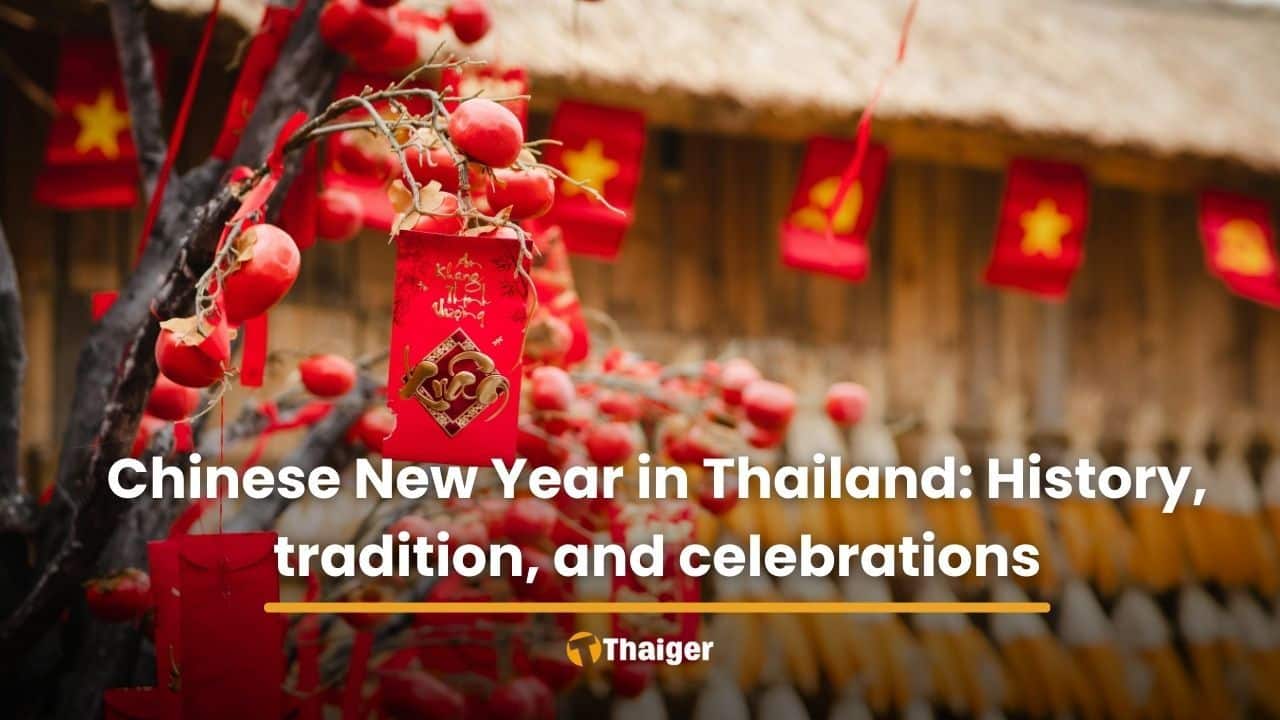
For most Thai-Chinese families, the real Chinese New Year typically happens at home. Celebrations centre around the family table, at the home altar, and perhaps in kitchens, where generations gather to prepare dishes together.
Wander to Yaowarat during Chinese New Year, and you’ll understand immediately why this tradition matters. It gets really busy during this time, but the public festivities you see in here are only part of the story.
This is all part of an annual celebration known locally as Trut Chin, Thailand’s take on the Lunar New Year, and it’s celebrated in late January or February, following the lunar calendar, generally falling on February 17.
At its heart, it’s a deeply domestic affair, one that revolves around family, ancestors, and the home. About 10 to 15 per cent of Thailand’s population has Chinese ancestry, but the festival has grown beyond any single community.
On this page
| Section (Click to jump) | Short summary |
|---|---|
| How it all started | Chinese New Year in Thailand grew from centuries of migration and cultural blending, evolving into a festival that feels both Chinese and distinctly Thai. |
| How the three days work | The festival follows a three-day home-centred cycle of preparation, ancestor worship, reunion meals, and celebration with family and good fortune traditions. |
| The food matters | Symbolic dishes representing luck, prosperity, and longevity play a central role, with regional variations reflecting Thailand’s cultural diversity. |
| Celebrations around Thailand | Public festivities bring colour and parades across major cities, even though the festival remains primarily a family celebration at home. |
| Old traditions, new ways | Modern adaptations like digital ang pao and eco-friendly temple practices show how the festival continues evolving while preserving its emotional core. |
How it all started
Over centuries, Chinese traditions have found their place alongside Thai customs to create something distinctly local.
Sino influence in Thailand dates back to the 13th century, with waves of traders and migrants, Teochew, Hokkien, Hakka, and others, settling across Thailand.

As these communities permeate Thai society over time, both identities merged, and these traditions are kept alive and well. Trut Chin feels Thai because it is. Here, it’s just what happens in February.
How the three days work
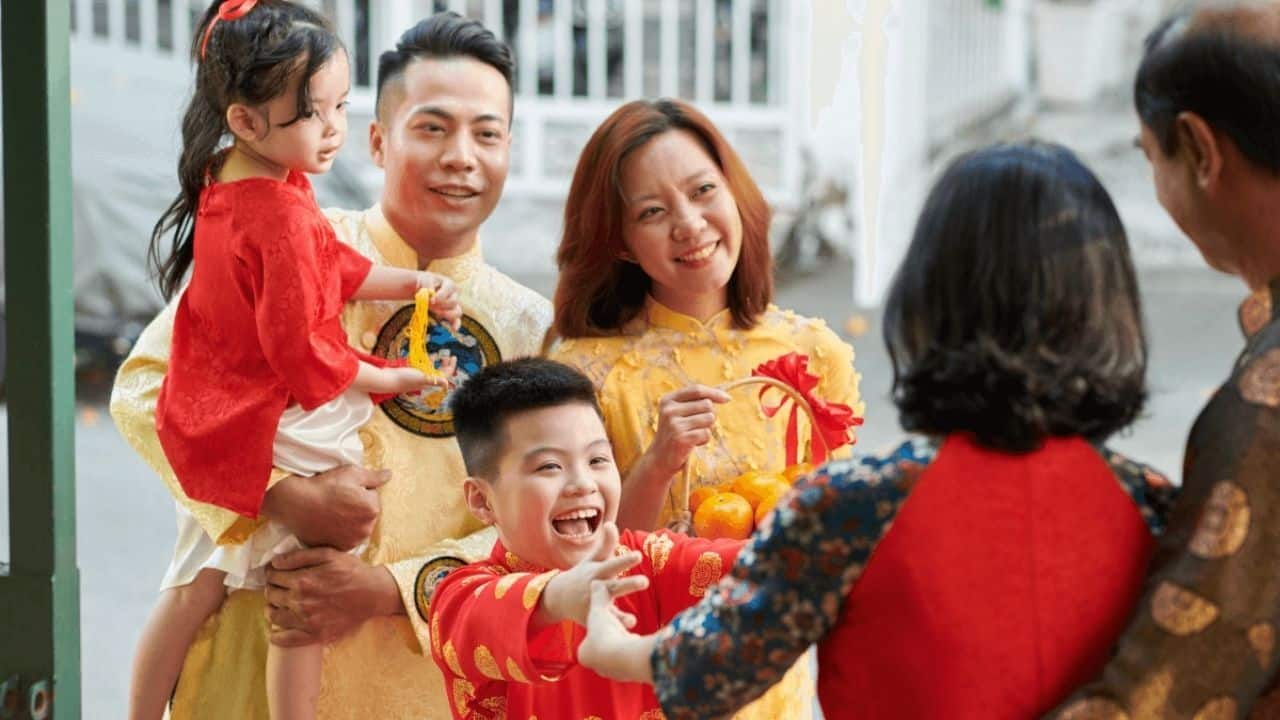
The three-day celebration cycle is fundamentally a home affair. While tourists may flock to street festivals, Thai-Chinese families are at home, carrying out rituals that have been passed down for generations.
Wan Chai
The first day centres on preparation. Markets get packed with people buying offerings, meat, fruit, incense, and those special paper items for burning later.
Back at home, families work together on a proper deep clean to sweep out bad luck from the past year. Homes are decorated with red lanterns, couplets, and auspicious symbols. Altars are set up or refreshed, ready for the days of worship ahead.
But once celebrations start, you’ve got to put those brooms away. No one wants to accidentally sweep away incoming good fortune.
Wan Wai
This is the most important day spiritually, and it all happens at home. Morning offerings go to household gods, thanking them for protection. Later comes ancestor worship at the home altar, which is the emotional centre of the entire festival.
Tables are laid out with whole chickens, duck, pork, sweets, and much more. Multiple generations gather together as the eldest family members lead the rituals. Burning incense invites the ancestors to share the meal. In the afternoon, food’s left outside for wandering spirits who don’t have family to remember them.
The day ends with burning paper offerings, from joss paper to elaborate paper versions of phones and cars. Then comes the reunion dinner, the most important meal of the year, where the entire family sits together to share the food that was offered to the ancestors.
Wan Thiao
The third day is for enjoying yourself. Everyone wears new red clothes, and younger people receive ang pao (lucky red envelopes with money) from elders. For this final day, work is placed on the back burner, substituted for positivity, family, and celebrations
Not everyone participates equally, of course. Younger Thai-Chinese generations might skip the rituals and ceremonies but still show up for the food. While families are strict about traditional protocols, others improvise. The festival adapts to whoever’s celebrating it.
The food matters
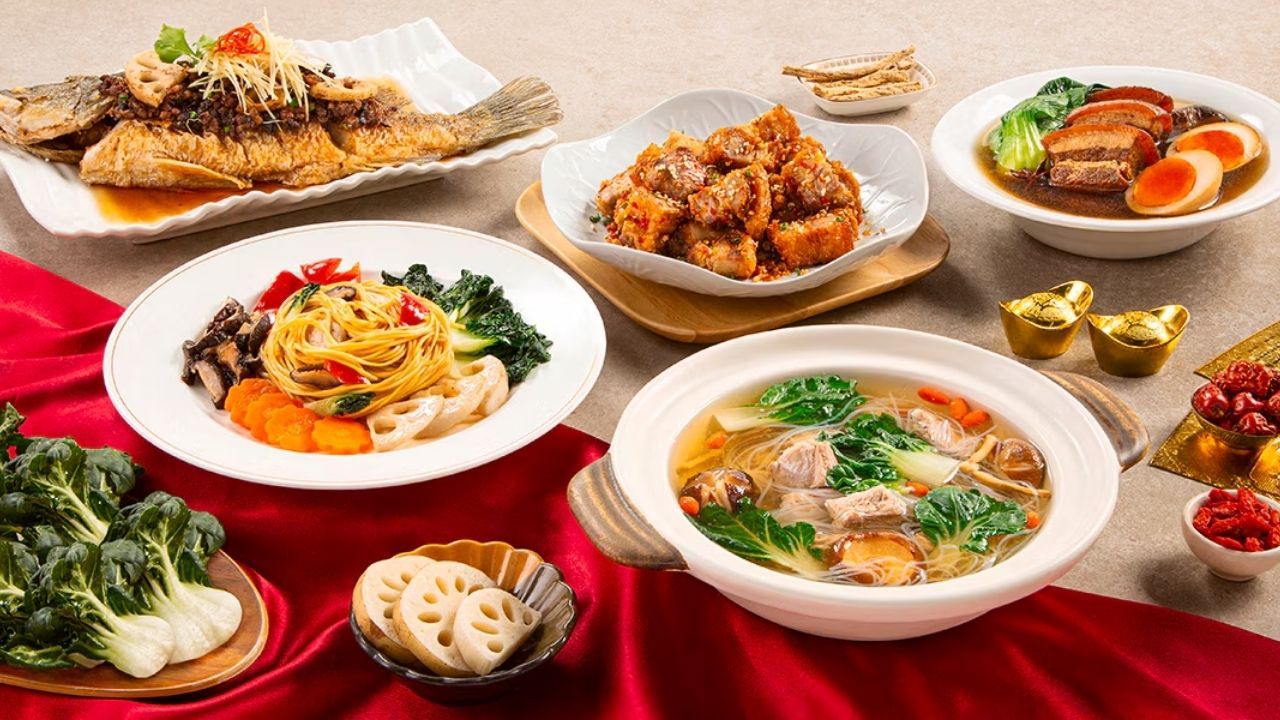
Every plate on the table during the Chinese New Year carries symbolic weight. Take fish, for example. The dish arrives whole because the Chinese word for fish sounds like “surplus.” You want enough and then some.
Longevity noodles stay uncut (seriously, don’t break them) for a long life. Break the noodles, and you’re cutting your years short.
Mandarin oranges are everywhere for their lucky golden colour and round shape. Nian gao, that sticky rice cake called khanom kheng here, has a name meaning “higher year,” moving up in life.
Peranakan families down south have their own flavours, most notably moo hong (braised pork belly) and mee hokkien, offering a glimpse into how Chinese dishes are adapted with Malay and Southern Thai flavours.
Celebrations around Thailand
While most of the festival happens behind closed doors, public celebrations draw crowds and create the festive atmosphere you’ll see if you visit Thailand during this time.
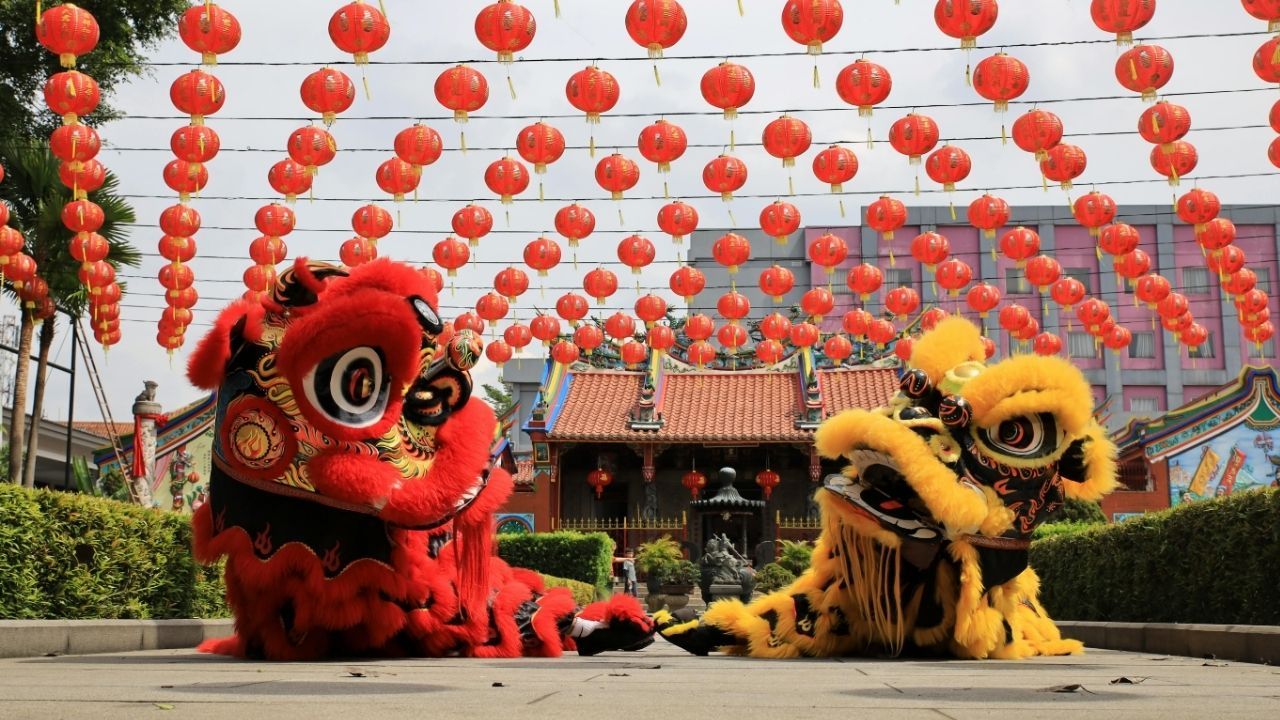
During the festivities, Bangkok’s Yaowarat (also referred to as Chinatown) may be closed to cars, sometimes with Royal Family members at the opening ceremony. Chinese Buddhist temples, such as Wat Mangkon Kamalawat, open up to flocks of people making merit, whilst dragon dancers perform through the streets.
Though for 2026, it was announced that festivities along Yaowarat are cancelled to honour the passing of Her Majesty Queen Mother Sirikit.
Meanwhile, Phuket’s celebration happens against gorgeous Sino-Portuguese shophouses. Red lanterns illuminate Thalang Road as the Hokkien community puts on parades and temple ceremonies. Up in Chiang Mai, things are generally quieter and more temple-focused around Warorot Market.
The real showstopper is Nakhon Sawan’s 12-day Pak Nam Pho Festival with its Golden Dragon parade, lion dances, glowing floats, and acrobats on tall poles.
But even in these cities, the majority of Thai-Chinese families will most likely be at home with relatives, not out watching parades.
Old traditions, new ways
What makes Trut Chin special in Thailand is the harmonising of Thai and Chinese customs.
Families make merit at Buddhist temples alongside traditional Chinese rituals. That generous Thai spirit, nam jai, shows up in charity work during the festival.
Time is one constant that is universal to us all. And as the festival evolves, so does Bangkok. Temples now encourage electronic firecrackers and shorter incense sticks for air quality. Even ang pao has gone digital; banking apps let you send red envelopes through your phone, which some elderly relatives may still view with suspicion.
Shops have gotten behind it too, timing promotions to coincide with celebrations.
Chinese New Year works in Thailand for the same reason most festivals work anywhere: family, memory, hope. The specifics are Chinese, the lanterns, the dumplings, the red envelopes, but the emotions are ubiquitous.
Those emotions are felt most strongly at home, around tables where families have gathered for generations, in front of altars where ancestors are remembered and honoured.
By the third day, when the streets are finally quiet and the last red envelopes have been handed out, Yaowarat returns to its usual state. The lanterns stay up for a while longer. They always do.
Latest Thailand News






















Follow The Thaiger on Google News: