Thailand monitors Nipah virus threat following Indian outbreak

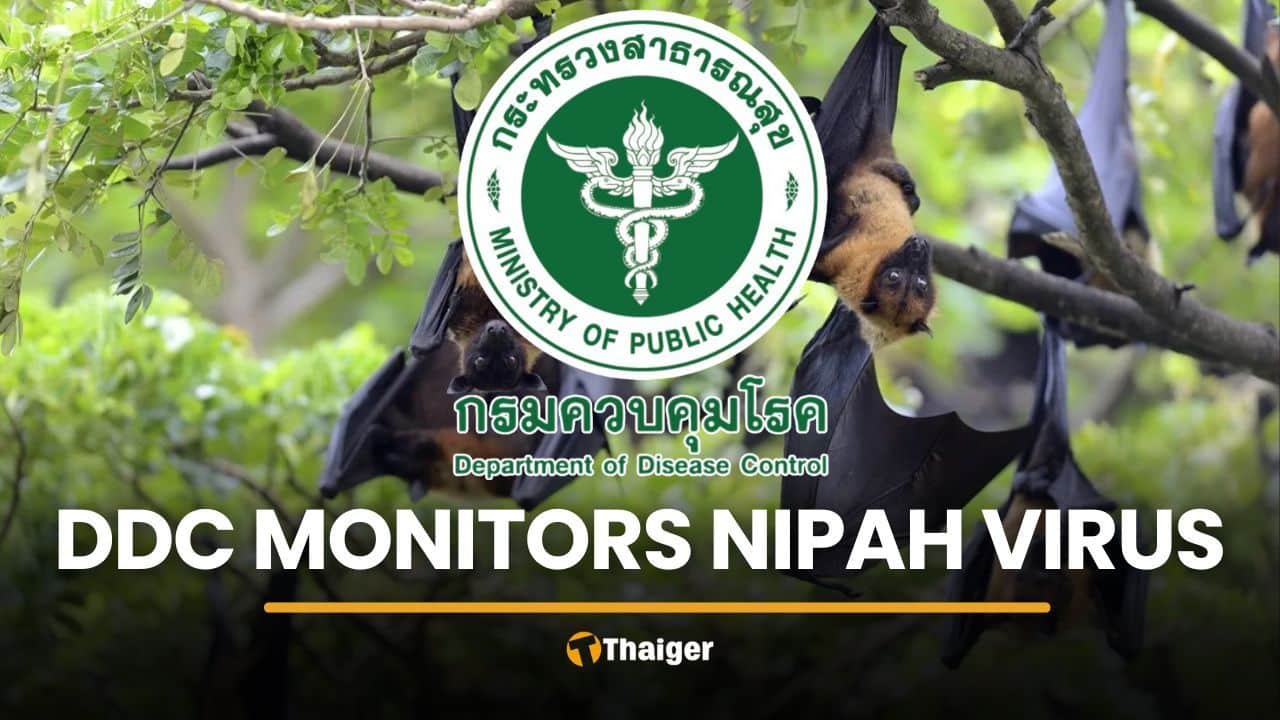
Thailand’s Department of Disease Control (DDC) has issued a public alert today, January 23, over the Nipah virus following an outbreak in India, urging coordination with the One Health network to prevent potential spread into the country.
The DDC confirms on its Facebook page that it is closely monitoring the situation and is fast-tracking coordination with the One Health network. The aim is to detect any potential cases early and prevent transmission across species.
Officials stressed that while no cases have been reported in Thailand, the virus’s history and high fatality rate warrant increased vigilance.
According to the World Health Organisation (WHO), the Nipah virus is a zoonotic disease that can spread to humans through contact with infected animals, contaminated food, or directly from person to person. Fruit bats of the Pteropodidae family, especially those in the Pteropus genus, are the virus’s natural hosts.
WHO also notes that fruit or sap contaminated with bat saliva or urine has been the likely source of several outbreaks in South and Southeast Asia.
Nipah virus infections in humans can range from showing no symptoms at all to causing severe respiratory illness or even fatal encephalitis, an inflammation of the brain that can lead to coma within 24 to 48 hours.
Initial symptoms include fever, headache, muscle pain, sore throat, and vomiting, which may escalate to confusion, drowsiness, and seizures. Up to 20% of survivors suffer long-term neurological effects.



The fatality rate for the Nipah virus ranges from 40% to 75%, depending on healthcare access and outbreak response. There is currently no approved vaccine or specific treatment. Treatment focuses solely on managing symptoms and providing intensive care for severe respiratory or brain-related complications.
Human-to-human transmission has been documented, particularly in healthcare settings and among caregivers. During a past outbreak in Siliguri, India, 75% of cases were linked to hospital transmission.
Although Thailand has not had a recorded outbreak, WHO has noted evidence of Nipah virus antibodies in fruit bats of the Pteropus genus in Thailand, suggesting that the virus is present in the country’s wildlife.
The public is advised to avoid contact with sick animals, wash or peel fruit before eating, and steer clear of items possibly contaminated by bats. They should also avoid unprotected contact with infected individuals and practise frequent handwashing.
In similar news, a leading virologist in Thailand has warned the public that a mutated strain of influenza is spreading across the country, as reduced vaccine effectiveness contributes to rising case numbers.
Latest Thailand News

























Follow The Thaiger on Google News: