Did you know NASA found a Christmas Tree in space?
Why a cluster of newborn stars looks strangely familiar to a festive time of year

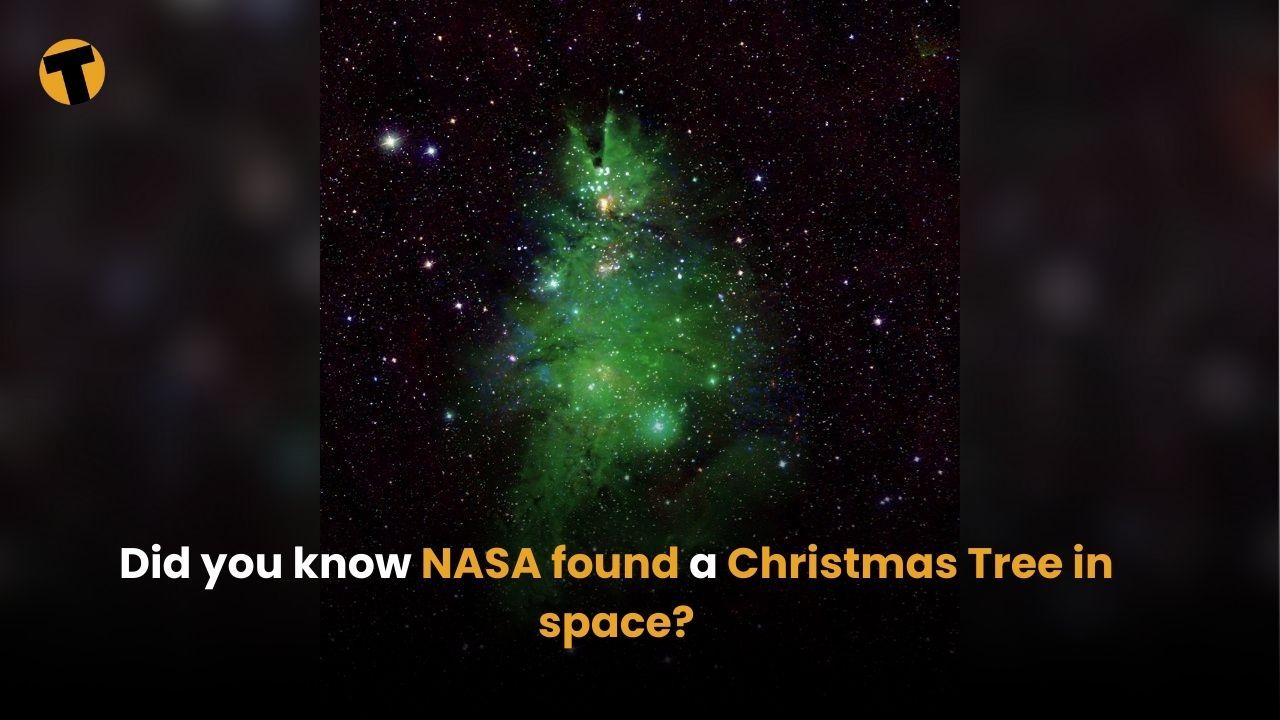
While you’re hanging ornaments and stringing lights on your Christmas tree this season, NASA has spotted a cosmic version twinkling 2,500 light-years away in our Milky Way galaxy. The “Christmas Tree Cluster,” officially known as NGC 2264, is a stunning grouping of young stars that, with a little help from telescopes and clever imaging, bears a striking resemblance to a festive evergreen adorned with glowing lights.
This isn’t your ordinary holiday decoration. The Christmas Tree Cluster in space is a collection of sprightly young stars, ranging in age from about one to five million years old.
That might sound ancient, but in cosmic terms, these stars are practically newborns. They vary dramatically in size, with some containing less than a tenth of our Sun’s mass while others pack about seven times as much stellar material.
How NASA made a cosmic Christmas tree in space
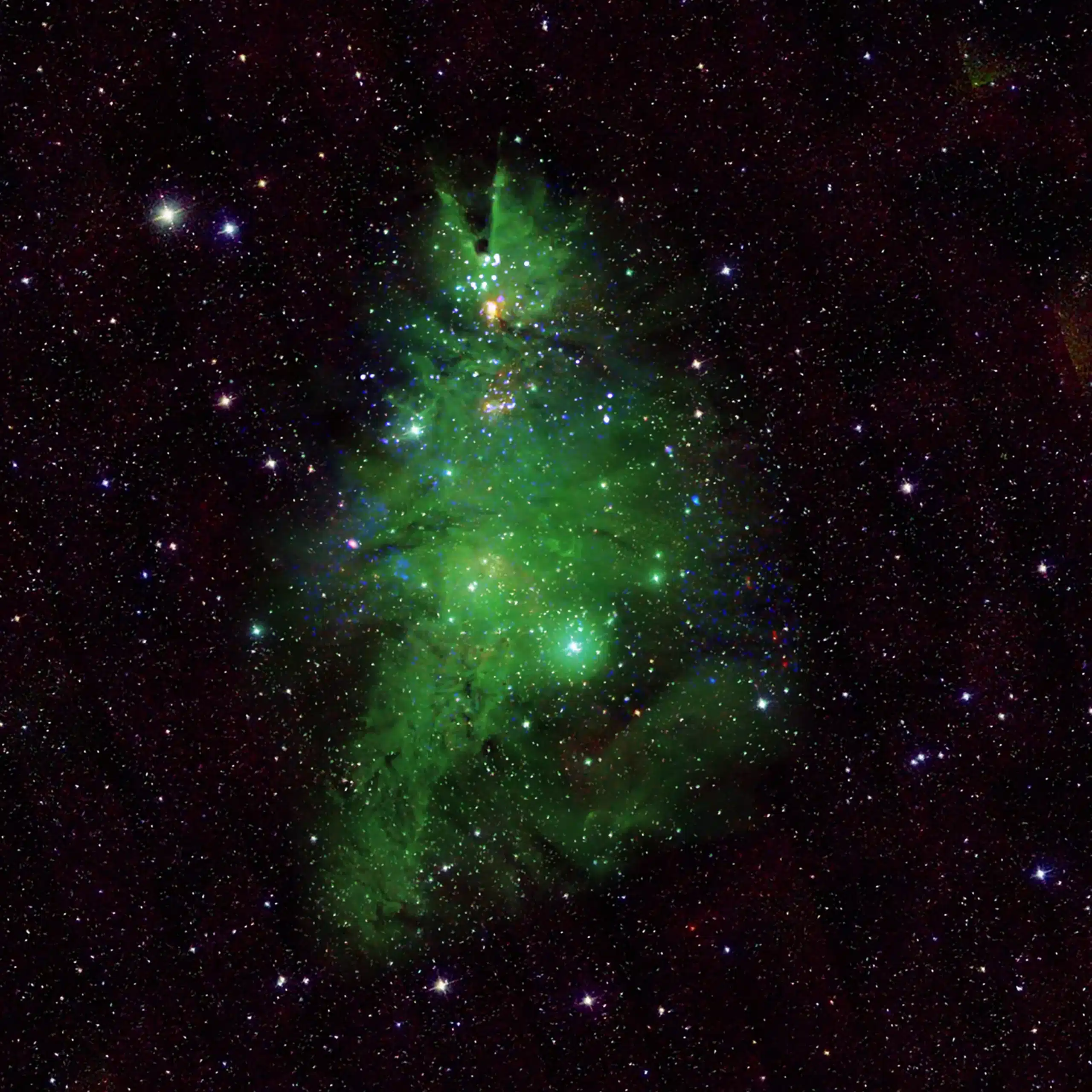
The festive appearance comes from a composite image that combines data from three different sources, each revealing a different aspect of the cluster. NASA’s Chandra X-ray Observatory captured the blue and white “lights” on the tree, young stars giving off X-rays as they flare and pulse with energy.
Optical data from the National Science Foundation’s WIYN telescope on Kitt Peak shows the green gas of the surrounding nebula, which forms the “pine needles” and boughs of the tree. Infrared data fills in the foreground and background stars in white, creating the impression of a tree standing against a starry winter sky.
To enhance the Christmas tree effect in space, astronomers rotated the image about 160 degrees from the standard orientation where north points upward. This puts the tip of the roughly conical cluster shape at the top of the image, just like the peak of a Christmas tree reaching toward the sky.
The animated version of the image, as seen below from the NASA website, takes the festive feeling even further. The blue and white stellar “lights” blink and twinkle across the tree, mimicking the twinkling lights you’d see on a tree in your living room.


But here’s the catch, those coordinated blinks are artificial, added to emphasise the locations of the X-ray emitting stars. In reality, the stars don’t flash in sync like programmed holiday lights.
The science behind the sparkle
The real variations happening in these young stars are far more chaotic and dramatic than any blinking pattern. These stellar youngsters are volatile and undergo powerful flares caused by magnetic field activity—think of solar flares from our Sun, but significantly more intense.
As the stars rotate, hot spots and dark regions on their surfaces move in and out of view, creating natural brightness changes. The thickness of gas obscuring the stars also fluctuates, and some stars are still actively pulling in material from surrounding disks of gas, all contributing to their dynamic behaviour.
The stars in NGC 2264 are going through the turbulent early stages of stellar life, surrounded by the very gas and dust from which they formed. These young stars are essentially cosmic teenagers who are energetic, unpredictable, and still growing into their final forms.
A reminder to look up this holiday season
There’s something beautifully fitting about discovering a Christmas tree in the cosmos during the holiday season. It serves as a reminder that the universe is filled with wonders that can inspire awe and spark imagination, much like the holiday traditions we celebrate here on Earth.
Where to celebrate the festive season (Christmas & New Years) in Bangkok
While your Christmas tree might last a few weeks before the needles start dropping, the Christmas Tree Cluster has been decorated with stellar lights for millions of years and will continue to shine for millions more.
The cluster sits in our own Milky Way galaxy, relatively close in astronomical terms at 2,500 light-years away. That means the light we’re seeing from these stars today actually left them around 500 BCE, during the time of Ancient Greece and the early Roman Republic.
The stars have been putting on this cosmic light show long before humans even conceived of decorating trees for the holidays.
If you’d like to see more stunning images from the Christmas Tree Cluster or explore other cosmic wonders captured by NASA’s telescopes, the Chandra X-ray Observatory regularly publishes new imagery and multimedia content throughout the year.
This holiday season, when you’re gazing at your own twinkling tree, you can take comfort knowing that somewhere out in the vast darkness of space, the universe is celebrating with us as well.
Source: Sprightly Stars Illuminate ‘Christmas Tree Cluster’ — NASA
Latest Thailand News

























Follow The Thaiger on Google News: