Business class flights to Thailand in 2026: Best routes, airlines, and what’s changed

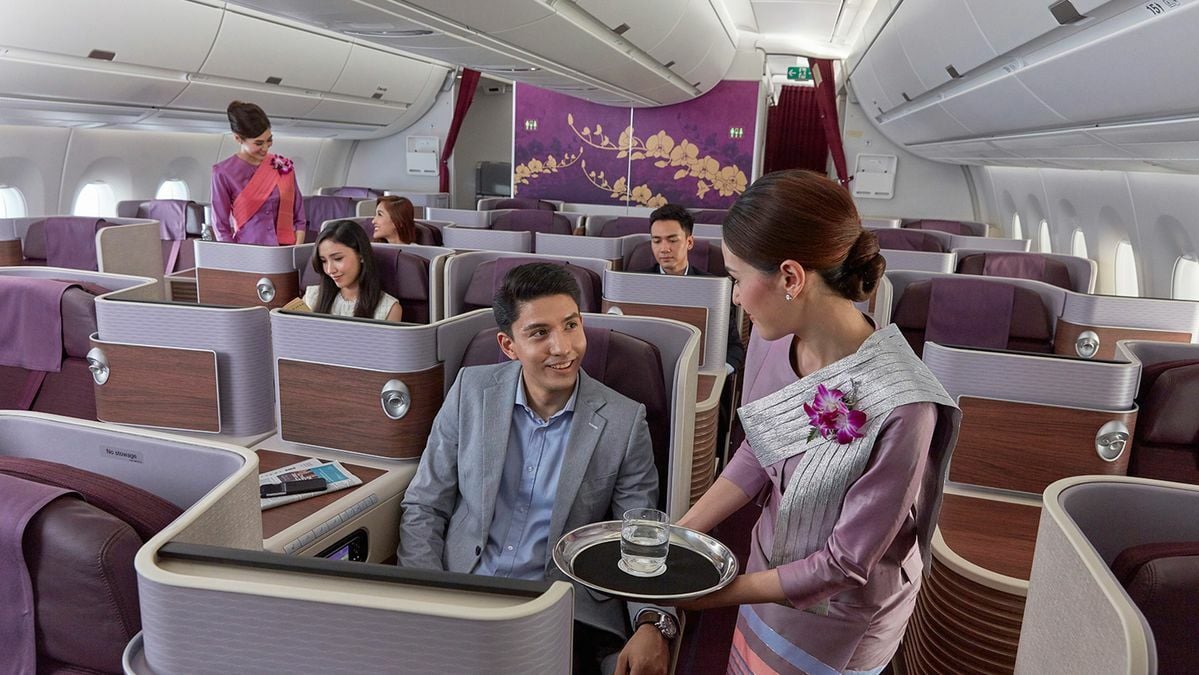
For U.S. travellers heading to Thailand, business class in 2026 still means a one-stop journey, and that makes the routing decision almost as important as the cabin itself. With no nonstop business class flights to Thailand currently available, the quality of the trip depends not only on the airline but also on the connection city, total travel time, and how smoothly you arrive in Bangkok.
A well-planned itinerary can leave you ready to begin your trip, while a poorly timed one can cost you much of the first day.
We will take a look at the most practical route options, the main airlines, and explain what has changed for travellers arriving in Thailand this year.
Are business class flights to Thailand worth it in 2026?
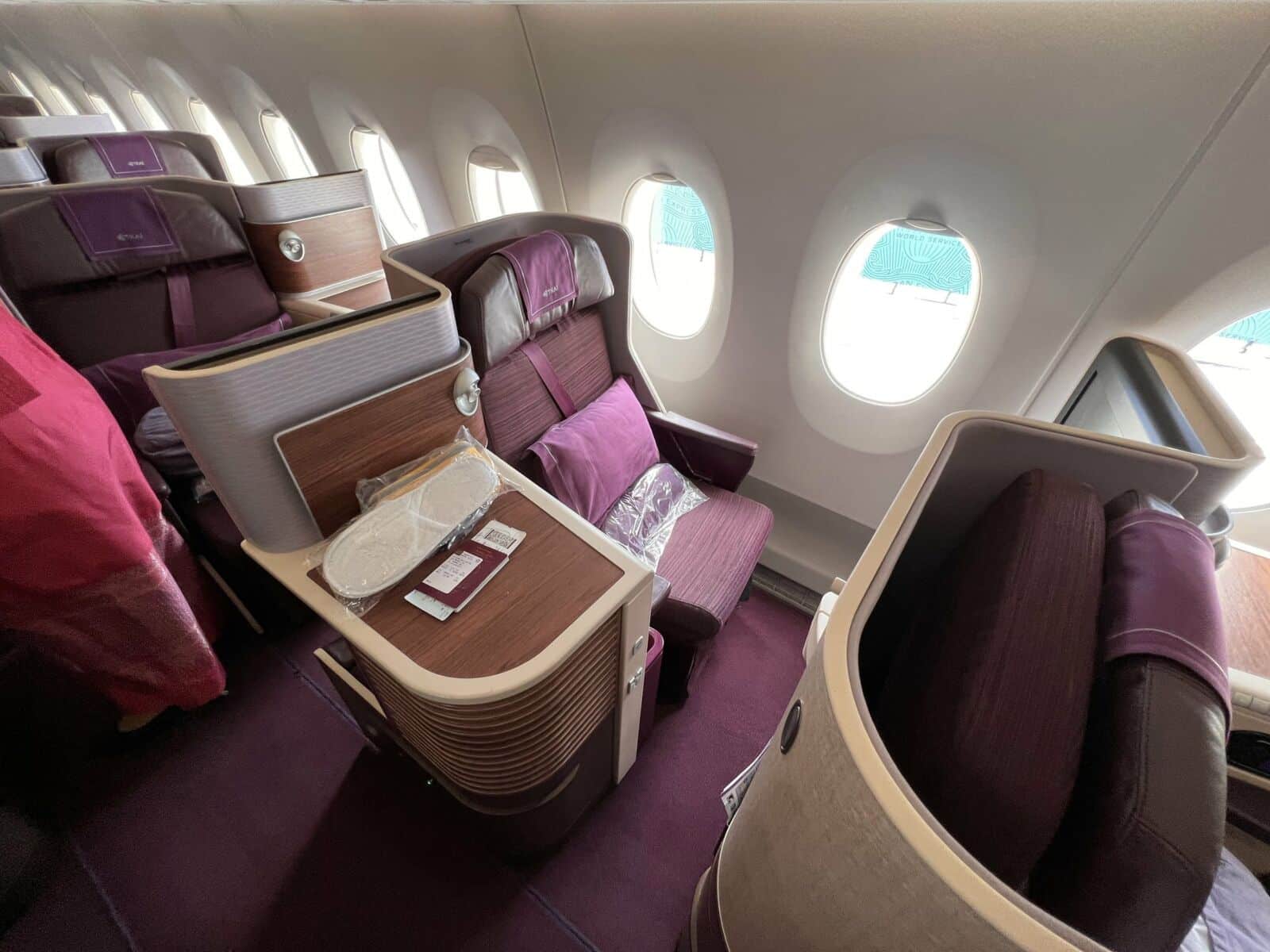
On most U.S.–Thailand itineraries, yes. In 2026, the trip still means a long one-stop journey of roughly 18 to 24 hours, and that alone keeps business class relevant for travellers who want to arrive rested rather than spend the first day recovering. The value here is practical: it is not about extra indulgence, but better sleep, less physical drain, and a more functional arrival in Thailand.
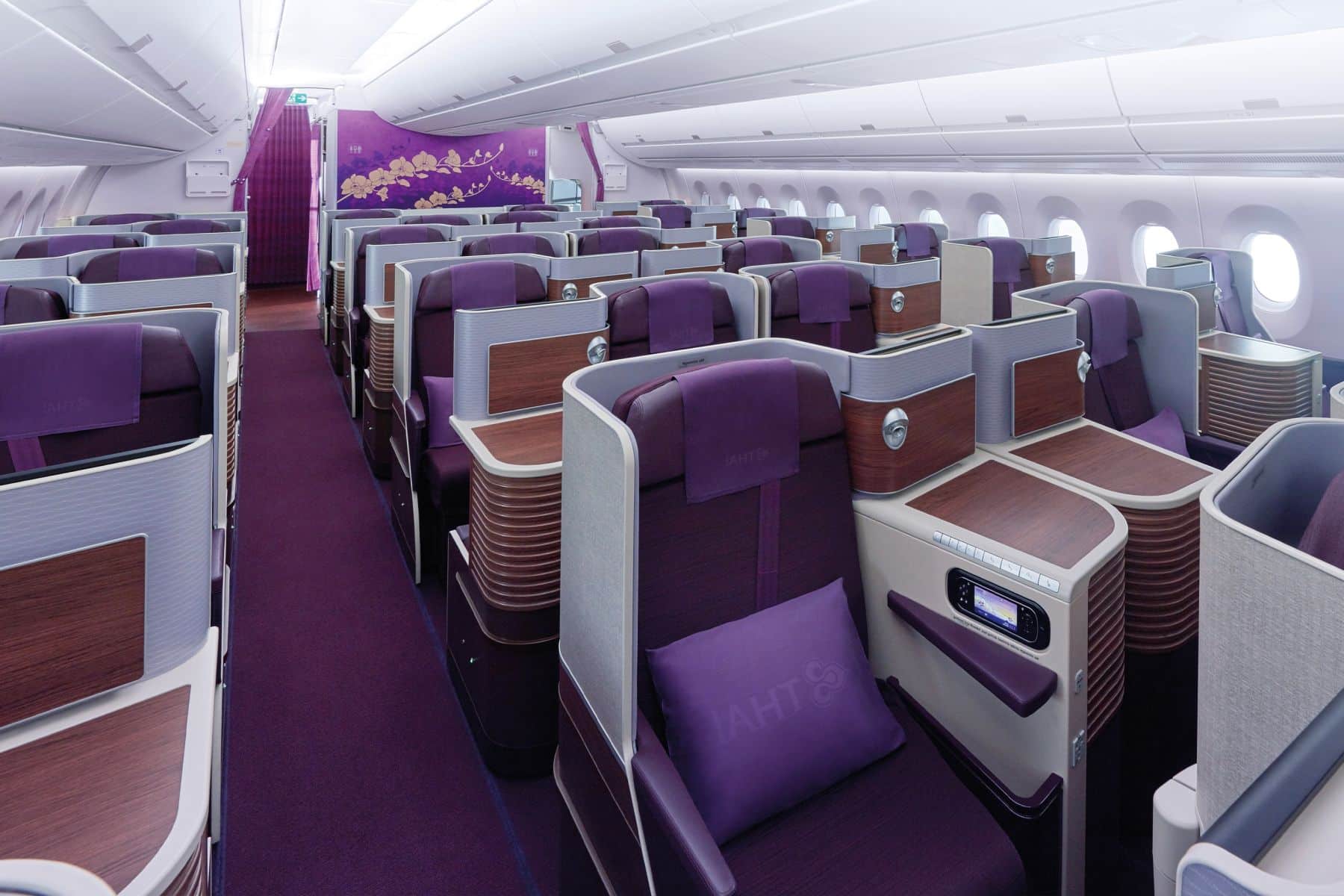
On routes such as Los Angeles–Bangkok with EVA Air or New York–Bangkok with Qatar Airways, the airlines currently use wide-body aircraft with lie-flat business-class cabins. Where the seat is a true 1-2-1 product with direct aisle access, the difference over economy is significant on a trip this long: you are more likely to sleep properly, move without climbing over another passenger, and step off the aircraft less depleted.
That matters even more on flights that arrive in Bangkok in the morning or around midday. Instead of arriving exhausted, checking in, and losing several hours to recovery, you have a better chance of reaching your hotel, resetting quickly, and using the day rather than writing it off.
The same applies to the connection itself. Because even in 2026, the flights to Thailand still have at least one stop, lounge access, priority services, and a less tiring transfer are not minor perks. They make the journey feel significantly more manageable.



Which one-stop options work best?
Once the question of whether business class is worth it is settled, the next step is choosing the one-stop itinerary that makes the journey easier rather than harder. On this route, the key differences are practical: how much the routing adds to the total journey time, whether the long-haul seat is a true lie-flat bed with direct aisle access, and whether the connection is simple enough to handle without long walks, confusing transfers, or a rushed layover.
What matters most when comparing one-stop routes
For travellers flying from the U.S. to Bangkok, three things usually matter most. First, the routing should be reasonably direct. A better cabin loses some of its appeal if the itinerary adds unnecessary hours.
Second, the long-haul business-class seat should be the kind that makes proper rest realistic, ideally a lie-flat seat in a 1-2-1 layout rather than an older product with less privacy or more awkward access.
Third, the connection should work smoothly in practice, with manageable walking distances, clear wayfinding, and enough onward service to Bangkok to reduce the risk of an awkward misconnection.
The strongest one-stop options from the U.S. to Bangkok
EVA Air via Taipei
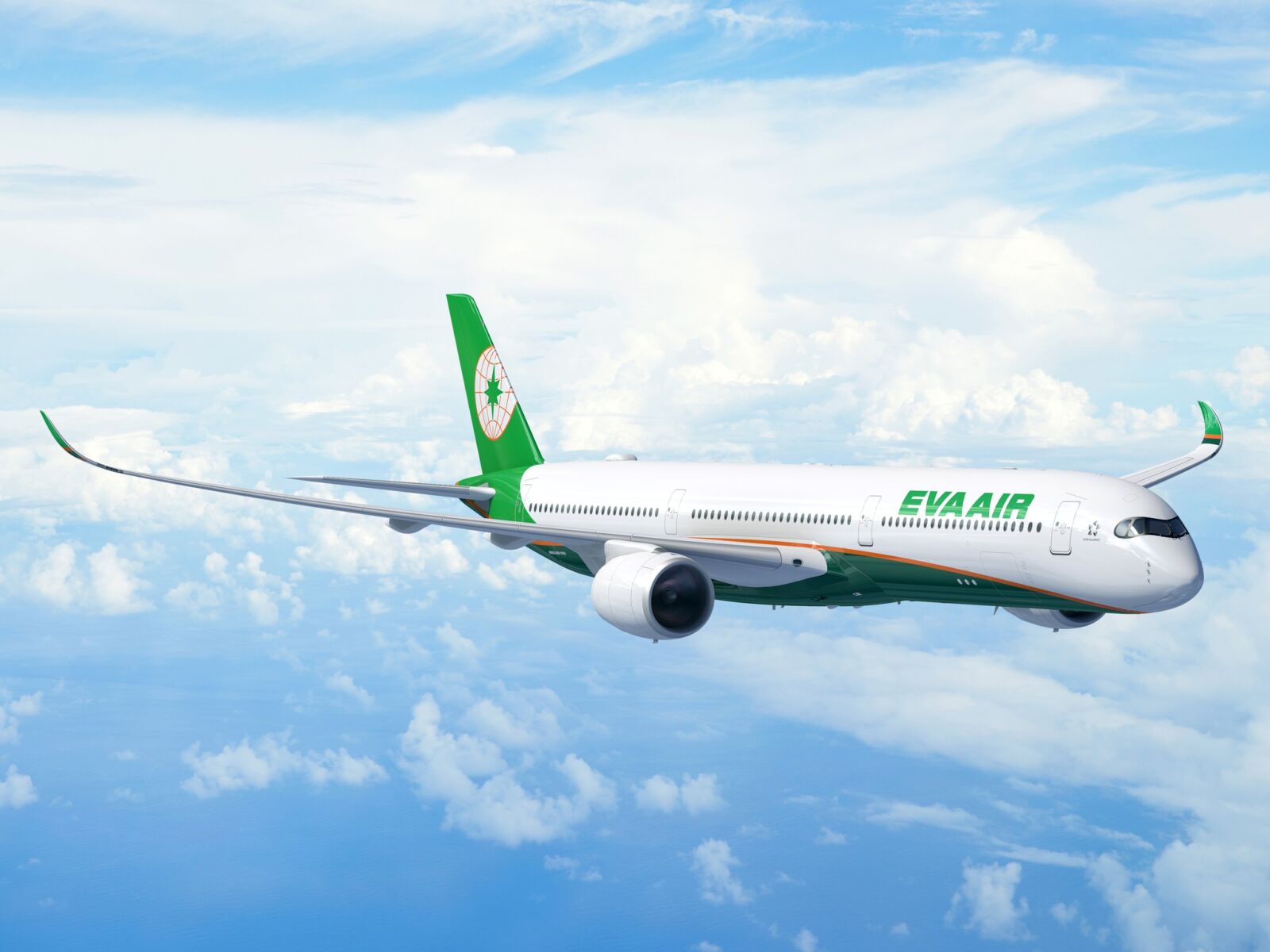
EVA Air is one of the strongest options because the routing through Taipei is efficient, the airport is easy to handle in transit, and the long-haul cabin is usually more consistent than products that vary widely by aircraft.
From Los Angeles, San Francisco, and New York, it typically uses Boeing 777 or 787 aircraft on the Pacific crossing, with Royal Laurel Class in a lie-flat 1-2-1 configuration. Taipei also works well as a transfer point because it is easier to move through than many larger hubs, with shorter walking distances and a more compact layout. That combination makes EVA Air a strong choice for travellers who care about keeping the journey efficient without giving up seat quality.
ANA via Tokyo
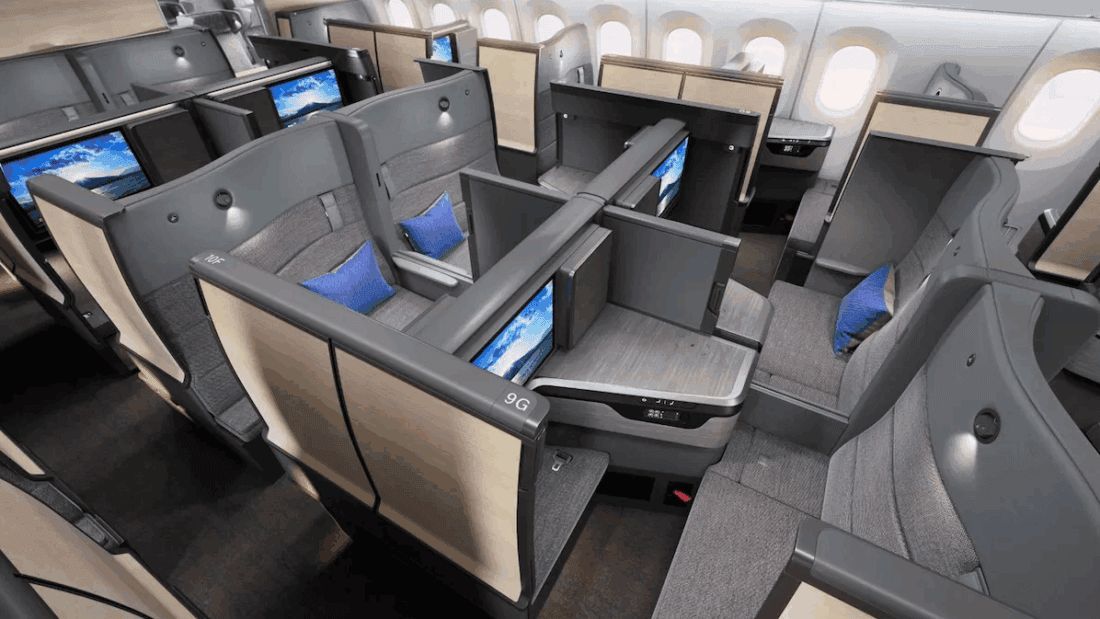
ANA works well for travellers who prefer connecting through Japan and want a transfer experience that is orderly and easy to follow. Tokyo offers clear signage, structured airport flow, and multiple onward services to Bangkok, which helps if schedule flexibility matters.
On selected Boeing 777 aircraft, ANA also offers “The Room” product with a 1-2-1 layout and sliding doors. The lie-flat seats are 37.5 inches wide, the most spacious on the market. Boeing 787 aircraft may also have the older staggered 1-2-1 configuration, so ANA is strongest when you verify the aircraft rather than assume the same cabin across the fleet.
Qatar Airways via Doha
Qatar Airways makes the strongest case when the seat and onboard experience matter more than taking the shortest path to Bangkok. On aircraft fitted with Qsuite, it offers one of the best business-class products available on the market, with enclosed seating, strong privacy, and a more polished cabin experience than many competitors.
In Doha, your layover will have a touch of Middle Eastern luxury, as you will be able to visit the exquisite Al Mourjan Business Lounge. The drawback is that this is a less direct routing from the U.S. to Thailand than connecting through East Asia, so it usually makes more sense for travellers who are willing to accept a longer journey in exchange for a better premium product.
Where Thai Airways fits in
Thai Airways is also part of the picture, but not on equal terms with the main one-stop options. It is not a primary U.S.–Thailand option because it does not operate long-haul service from the United States. Its relevance begins once Bangkok is already part of the itinerary.
If you fly into Asia on a Star Alliance carrier such as EVA Air or ANA, Thai Airways becomes useful as the onward leg, especially if you want to continue to places such as Phuket, Chiang Mai, Singapore, Ho Chi Minh City, or Hanoi without breaking the itinerary across unrelated carriers.
What changed for arriving in Bangkok in 2026?
At Suvarnabhumi Airport (BKK), the main change for arriving travellers is that some international flights now use the satellite concourse. Depending on your gate, reaching immigration may involve an internal train or a longer walk, so arrival can feel slower than expected even after landing.
Entry rules you should check before flying
Thailand continues to offer visa-free entry for many travellers. As of 2026, nationals of 93 countries, including American citizens, are eligible for a 60-day visa exemption. However, it is always better to confirm your eligibility before flying, especially if your trip involves work or a longer stay.
All travellers must also complete the Thailand Digital Arrival Card (TDAC) on tdac.immigration.go.th.
How to choose the right business class flight to Thailand
Start with the route, not the seat. If you want the shortest journey from the U.S., focus on connections through Taipei or Tokyo, which avoid the larger detour of routing through Doha and usually keep total travel time lower.
Then check the aircraft and seat you are actually booking. If onboard comfort matters most, compare aircraft types and cabin layouts carefully, as not every Boeing 777 or 787 offers the same business-class product. A true 1-2-1 lie-flat seat can make a noticeable difference on a flight of this length.
If Bangkok is not your final destination, look at the onward connection before you book. A strong long-haul option can still become inconvenient if the onward connection means a long layover, a poorly timed domestic flight, or a separate booking.
Judge the fare by overall value rather than price alone. Platforms like Businessclass.com can help you narrow the most relevant options.
In 2026, the key to flying business class to Thailand is choosing a one-stop itinerary that works well from departure to arrival. On a journey this long, the best option is usually the one that balances route efficiency, a genuinely restful long-haul seat, and a connection that does not undo the value of the cabin itself.
Latest Thailand News

























Follow The Thaiger on Google News: