Can foreigners really buy a condo in Thailand without paying taxes?

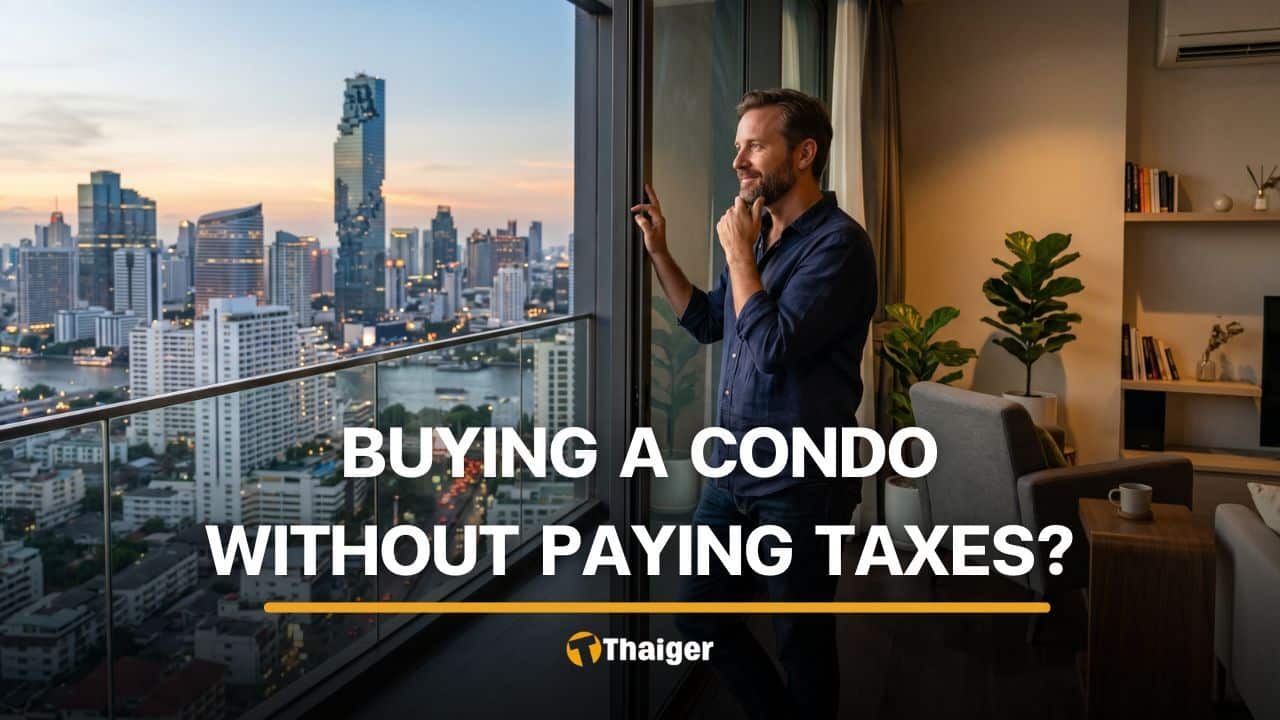
A British buyer recently made headlines after purchasing a 56 million baht freehold condominium near Bang Tao Beach in Phuket and claiming the deal left him with no personal income tax liability on his global earnings. The post went viral, sparked a wave of online debate, and left a lot of expats asking the same question: can you buy a condo in Thailand as a foreigner without paying tax, and is it actually legal?
The honest answer is: partly yes, and partly no, and the distinction matters a great deal if you are planning to buy property in Thailand. The claim holds up on the income tax side but falls apart if you read it as a blanket “no taxes on anything” statement. Here is what the law actually says.
The case that started the conversation
A foreign buyer confirmed that his £1.3 million (56 million baht) acquisition near Bang Tao Beach involved a freehold condominium unit, compliant with the Thai Condominium Act.
He stated that the purchase qualified him for the Long-Term Resident Wealthy Global Citizen visa, which permitted extended stay in Thailand and provided a personal income tax exemption on foreign earnings under Royal Decree No. 743.
Legal experts verified that the 2024 tax regulations for standard residents do not apply to LTR visa holders regarding global income.
The buyer was right about the income tax. But the framing of “no tax” is where things get complicated because there are taxes attached to the property transaction itself that the LTR visa does not touch.
On this page

| Section (Click to jump) | Summary |
|---|---|
| How foreigners can legally buy a condo in Thailand | Foreigners can legally buy condo in Thailand as foreigner through freehold ownership under the Condominium Act, provided the 49% foreign quota and fund transfer rules are met. |
| The taxes you will pay when buying | When you buy condo in Thailand as foreigner, transfer fees and seller-side taxes still apply, as no visa removes Land Department transaction costs. |
| The LTR visa and Royal Decree 743: where the real tax benefit lives | The LTR visa offers a personal income tax exemption on foreign earnings, which is the main financial advantage when structuring a property purchase. |
| Ongoing tax liabilities after purchase | Even after you buy condo in Thailand as foreigner, Thai-source income like rent and resale gains remains taxable under local regulations. |
| Alternative structures | Other structures such as Thai companies or leaseholds exist, but they carry legal risks, tax drawbacks, or limitations compared to freehold condos. |
| What the structure actually looks like in practice | In practice, the most efficient setup combines a freehold condo purchase with LTR status, balancing legal ownership with foreign income tax protection. |
How foreigners can legally buy a condo in Thailand

The first thing to understand before getting to the tax question is that buying a condo in Thailand as a foreigner is genuinely possible and legal, under the right conditions. Thailand prohibits foreign nationals from owning land outright. The primary exception is the Thai Condominium Act B.E. 2522 (1979), which allows foreigners to hold freehold title to individual condominium units in perpetuity. This is a real, enforceable ownership right and not a leasehold workaround.
| Rule | Detail |
|---|---|
| Foreign ownership type | Freehold title to individual condo units only — not land |
| Foreign ownership quota | Maximum 49% of total building floor area (calculated in sq metres, not number of units) |
| Quota check required | Written confirmation from the condominium juristic person before signing |
| High-demand areas | Quota frequently exhausted in Bang Tao (Phuket) and Sukhumvit (Bangkok) before project completion |
When it comes to leasehold versus freehold, the distinction is straightforward. Freehold gives you a full title (a Chanote) in perpetuity. Leasehold caps your legal right at 30 years under the Civil and Commercial Code, and the “30+30+30” extension clauses commonly seen in contracts are contractual only; they are not registrable and offer no in rem protection.
Leasehold can sometimes satisfy the investment requirement for an LTR visa application, but it is not the same ownership right as a freehold condo title and is generally only worth considering if the foreign quota in a building has been exhausted.
The Foreign Exchange Transaction (FET) Form
To register a condo in your name at the Land Department, the full purchase price must arrive from overseas in foreign currency. When funds of US$50,000 or more reach a licensed Thai bank and are converted to baht, the bank issues a Foreign Exchange Transaction (FET) Form.
| Requirement | Detail |
|---|---|
| Minimum wire amount for FET | US$50,000 (below this, a bank credit-advice letter suffices) |
| Form must name | The buyer, the specific unit, and match or exceed the purchase price |
| Funds cannot come from | A local Thai baht account or domestic bank transfer to the seller |
| Why does it matter later | Allows repatriation of sale proceeds without capital control issues |
The taxes you will pay when buying

No visa, including the Long-Term Resident visa, exempts you from the taxes and fees collected at the Land Department at the moment of transfer.
| Tax / Fee | Rate | Trigger | Who pays |
|---|---|---|---|
| Transfer fee | 2% of appraised value | Every transaction | Typically split 50/50 between buyer and seller |
| Specific Business Tax (SBT) | 3.3% | Seller held property under 5 years, or a corporate seller | Seller |
| Stamp duty | 0.5% | Only when SBT does not apply | Seller |
| Withholding tax | 1% (corporate) or progressive (individual) | Every transaction | Seller |
On the 56 million baht Phuket purchase, assuming a corporate developer as seller, the SBT alone came to approximately 1,848,000 baht and corporate withholding tax around 560,000 baht. The 2% transfer fee on 56 million baht totals 1,120,000 baht, typically split with the buyer covering around 560,000 baht of that.
It is also worth noting the government stimulus measure: Thailand has temporarily reduced transfer and mortgage registration fees to 0.01% through June 2026. This sounds significant, but applies only to Thai nationals buying properties valued under 7 million baht. A foreign buyer at 56 million baht is excluded on both counts.
The LTR visa and Royal Decree 743: where the real tax benefit lives
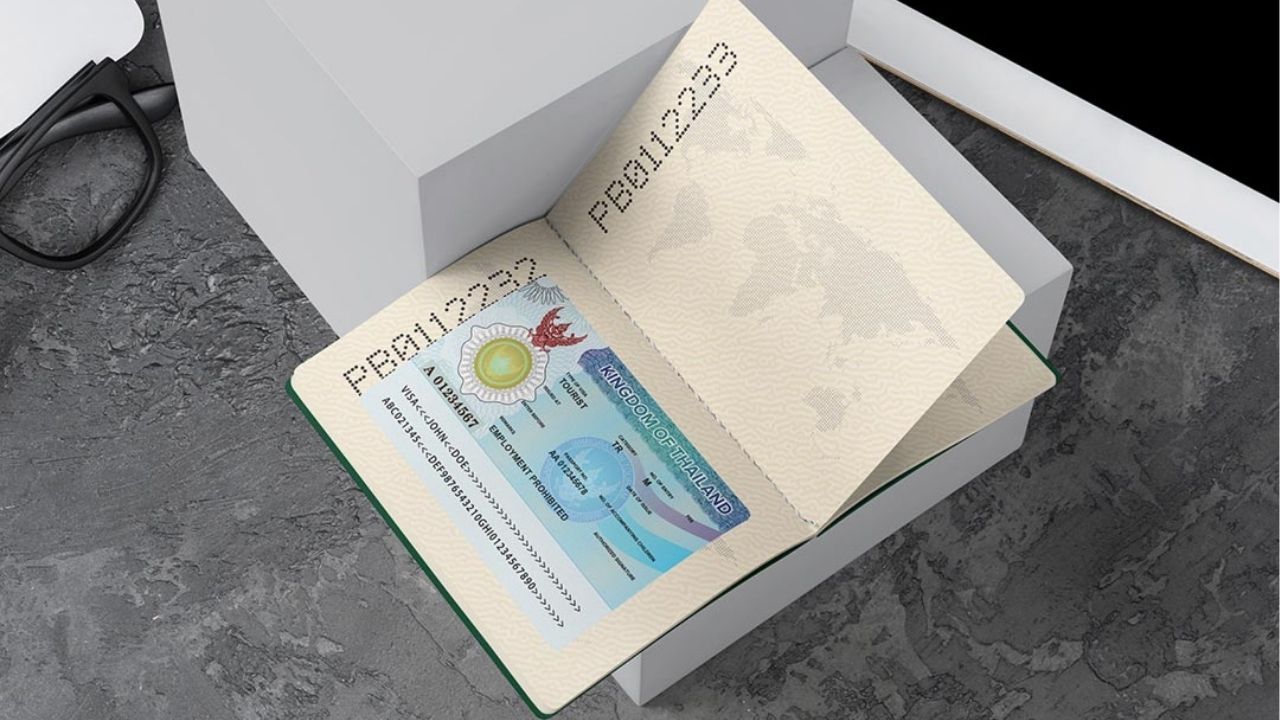
LTR Wealthy Global Citizen — eligibility requirements
| Requirement | Detail |
|---|---|
| Global assets | At least US$1 million in qualifying assets (cash, deposits, listed securities, regulated portfolios) |
| Thai investment | At least US$500,000 in qualifying Thai instruments |
| Qualifying Thai investments | Thai government bonds (5+ years maturity), Thai company equity, SET-listed shares held 12+ months, or a freehold condo in your own name |
| Annual income requirement | Removed by Cabinet resolution, January 2025, no longer required |
| Health insurance | US$50,000 in Thai-valid coverage, or US$100,000 bank deposit held 12+ months |
| Visa duration | 10 years (two 5-year blocks) |
| Reporting | Annual instead of 90-day |
| Dependents | No cap, includes parents and recognised same-sex partners since 2025 |
| Fee | 50,000 baht |
A 56 million baht freehold condo (roughly US$1.6 million) clears the US$500,000 investment threshold and can also count toward the US$1 million global asset test. The BOI values the property at the Land Department-registered price, not market value — so under-declaring the transaction price to save on transfer taxes can push the investment below the qualifying threshold.
What Royal Decree 743 actually exempts
Section 5 of Royal Decree No. 743 provides a personal income tax exemption for LTR holders in the Wealthy Global Citizen, Wealthy Pensioner, and Work-from-Thailand Professional categories.
| Income type | Covered by exemption? |
|---|---|
| Foreign salary or employment income | Yes |
| Offshore business profits or dividends | Yes |
| Foreign rental income | Yes |
| Capital gains on overseas assets | Yes (under prevailing practitioner interpretation) |
| Thai rental income from your condo | No — Thai-source, fully taxable |
| Capital gains on the resale of Thai property | No — Thai-source, fully taxable |
Why this matters: the 2024 tax change
In September 2023, the Revenue Department issued Departmental Instruction Por. 161/2566. From January 2024, any Thai tax resident spending 180 or more days in Thailand per year must declare foreign-source income in the year it is remitted, regardless of when it was earned. This ended the old practice of deferring remittances by a year to avoid Thai tax.
LTR Wealthy Global Citizens, Wealthy Pensioners, and Work-from-Thailand Professionals are exempt from this. The legal hierarchy is clear: Por. 161 is a departmental instruction; Royal Decree 743 is primary legislation, and the instruction cannot override the decree.
BDO Thailand, HLB Thailand, PwC, and KPMG all confirm the exemption holds. By contrast, holders of a Thailand Privilege Visa, standard retirement visa, or DTV have no such protection and face progressive rates of up to 35% on remitted foreign income.
Ongoing tax liabilities after purchase
The LTR exemption covers foreign-source income only. Here is what remains taxable regardless of your visa status.
| Tax | Rate | Notes |
|---|---|---|
| Thai rental income tax | Progressive 0% to 35% after 30% standard deduction on gross rent | Filed via PND.94 (mid-year) and PND.90 (annual) |
| Withholding by the Thai tenant | 5% if the tenant is a Thai juristic person (creditable) | 15% final tax if the landlord is a non-resident |
| Land and Building Tax | 0.02% to 0.10% of appraised value per year | On a 56 million baht unit: roughly 11,200–28,000 baht per year |
| Capital gains on resale | Progressive withholding at the Land Office | The formula uses standardised deductions by years of ownership; SBT 3.3% applies if held under 5 years |
Alternative structures
The LTR Wealthy Global Citizen visa, combined with a freehold condo, is the most tax-efficient legal route available. The alternatives each carry significant drawbacks. The Thailand Privilege Visa offers no tax exemption whatsoever; holders are fully subject to Por. 161 at up to 35% on remitted income.
The Thai limited company structure (49% foreign, 51% Thai) is legal only with genuine Thai shareholders contributing real capital, and the 2025 enforcement environment has sharpened dramatically against nominees, with criminal prosecution risk for both parties.
Company-held property also attracts 20% corporate income tax and loses the individual seller’s capital gains concessions. Leasehold is worth considering only when freehold quota is unavailable, and even then, its 30-year ceiling and unenforceable extension clauses are real limitations.
What the structure actually looks like in practice
For any foreigner looking to buy a condo in Thailand, the LTR Wealthy Global Citizen visa, combined with a freehold condominium purchase and Royal Decree 743, is the most tax-efficient legal structure currently available. It is not tax-free ownership. It is a personal income tax exemption on foreign earnings layered on top of an otherwise standard Thai property investment.
To use the Phuket example: the buyer paid standard Land Office transfer taxes at purchase. He will pay Thai income tax on any rental income from the unit and withholding tax if he sells. But the foreign income he remits into Thailand, salary, dividends, overseas capital gains, is shielded from Thai personal income tax by Royal Decree 743 as long as his LTR status remains valid and he files his annual PND.90 return to document the exemption.
That is a meaningful and genuinely valuable tax position, and it is the closest thing to a tax-free outcome that exists when you buy a condo in Thailand as a foreigner. It is just not the same as buying a condo and paying no taxes on anything.
Latest Thailand News
























Follow The Thaiger on Google News: