Why investors are choosing Bangkok property over Singapore and Hong Kong in 2026
Getting more for less in prime markets

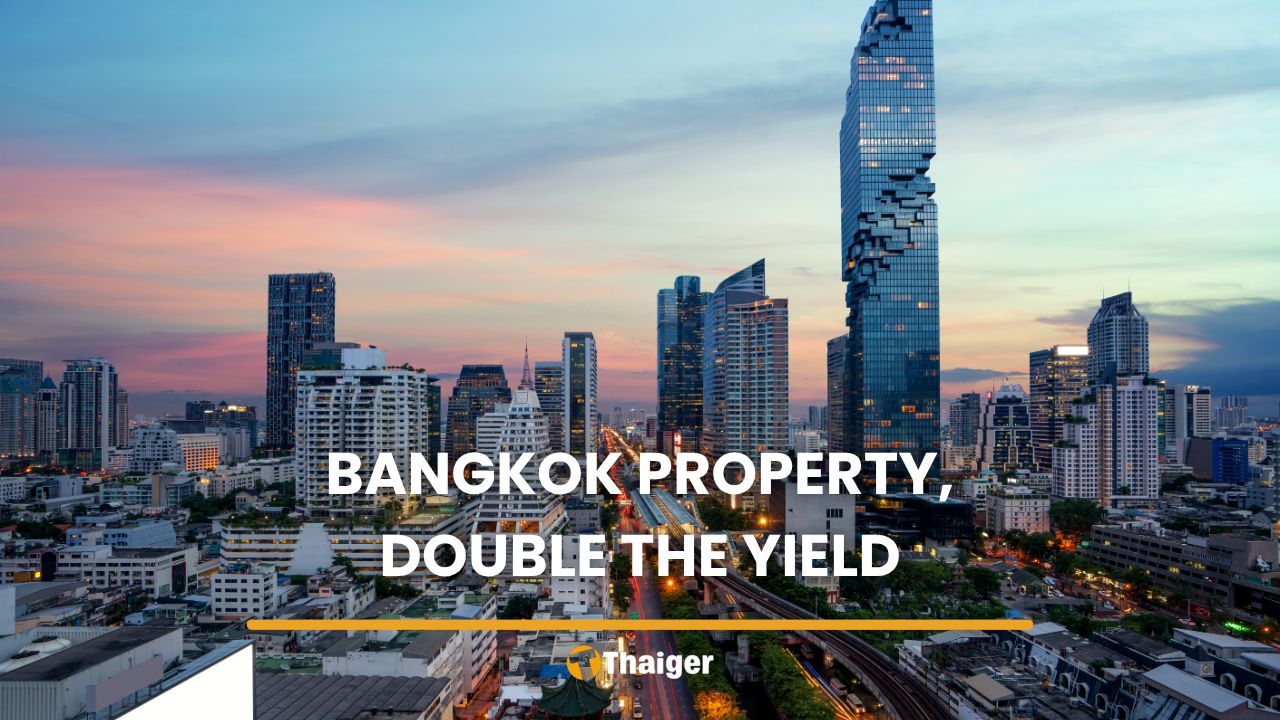
For a US$500,000 (17.5 million baht) budget, a buyer in Singapore’s Core Central Region walks away with roughly 20 square metres of property. The same budget at the Hong Kong Peak gets around 10. In prime Bangkok property along Sukhumvit, that same amount buys approximately 80 square metres of freehold condo, with change to spare.
That contrast is why Chinese, Hong Kong, Singaporean and Middle Eastern buyers keep choosing Bangkok over its regional rivals. The Thai capital is the only major Asian city where a foreign buyer can purchase freehold property at single-digit US$ thousands per square metre, pay no stamp duty equivalent, and collect gross rental yields of 5 to 7%, all at the same time.
Singapore and Hong Kong offer two of those three. Bangkok offers all of them.
How far does your money go?
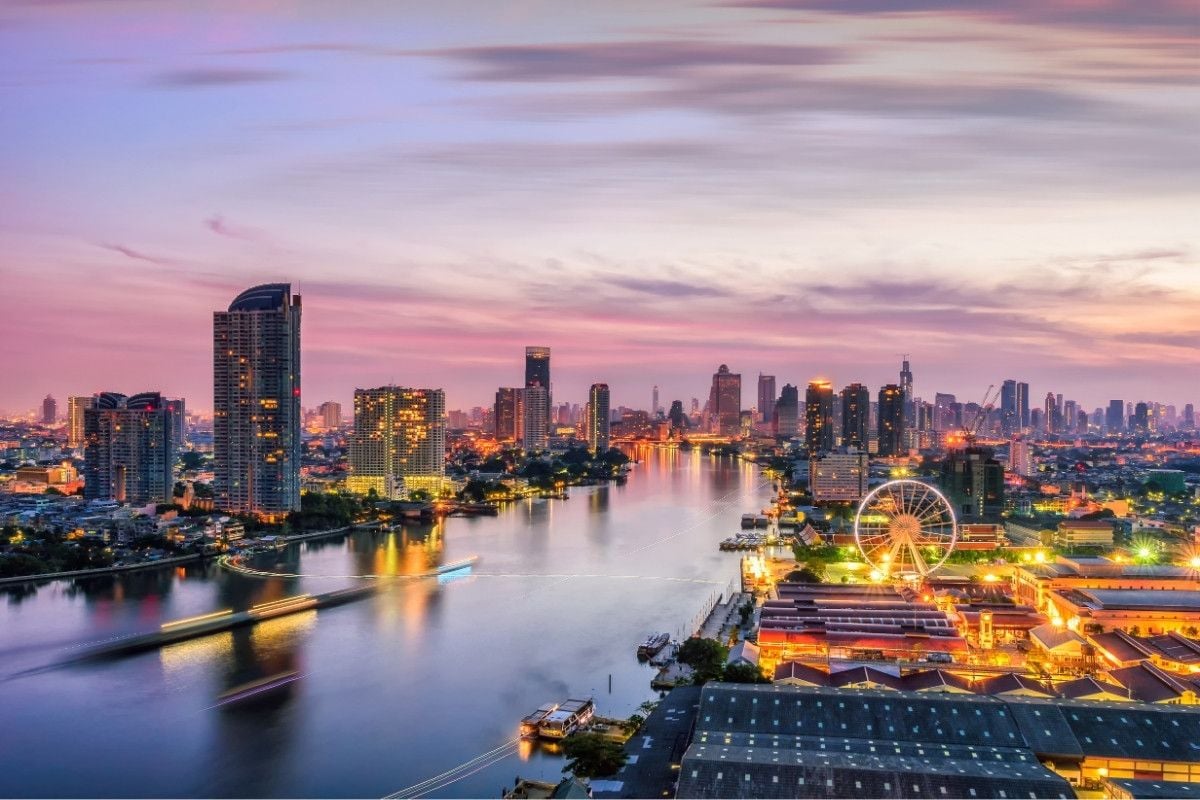
Bangkok property prices average roughly 140,000 to 155,000 baht per square metre, or around US$4,200, with prime CBD stock across Sukhumvit, Silom and Sathorn running 200,000 to 350,000 baht per square metre.
Compare that to Singapore, where Urban Redevelopment Authority data for Q3 2025 put new-launch averages in the Core Central Region (CCR) at around US$26,900 per square metre. Hong Kong’s prime addresses, the Peak and Mid-Levels, trade at US$48,000 to 83,000 per square metre.
Put simply, Bangkok is roughly one-quarter the price of Singapore’s CCR and as little as one-tenth of Hong Kong’s flagship offerings. These figures represent a structural arbitrage that has persisted for over a decade, rather than a developing-market discount.
For buyers holding Hong Kong or Singapore dollars, the baht’s relative weakness stretches that price gap even further in real terms.

| Bangkok | Singapore | Hong Kong | |
| Prime (US$/sqm) | $5,800 to $8,700 | ~$26,900 (CCR) | $48,000 to $83,000 |
| Mid-market (US$/sqm) | ~$4,200 | ~$22,600 (RCR) | ~$17,100 |
| Gross yield (citywide) | ~6% | 3.1 to 3.4% | ~3.9% |
| Foreigner stamp duty | None | 60% ABSD | 0% (abolished Feb 2024) |
| 2024 price trend | +3.4 to 7% (prime) | +3.9% | -7.1% |
If the table above tells one story, it is this: Bangkok leads on yield, undercuts on price, and charges foreign buyers nothing extra to get in.
The income advantage
Bangkok’s citywide gross rental yield of around 6% outpaces Singapore’s 3.1 to 3.4%, and Hong Kong’s 3.9%, and that gap becomes even more striking when you look at specific districts.
Even Bangkok’s lowest-yielding zone, prime Sukhumvit around Asoke and Phrom Phong, delivers 4 to 5.5%, which still beats both rival cities’ citywide averages. Two neighbourhoods in particular illustrate why yield-focused buyers keep coming back to the same postcodes.
On Nut: Consistent returns
Running 25 to 40% cheaper than upper Sukhumvit, while sitting just fifteen minutes from Asoke by train. The lower BTS Sukhumvit corridor, covering Phra Khanong, Punnawithi, On Nut and Udom Suk, has become one of Bangkok’s most reliable rental belts.
Prices in the area average 128,000 to 160,000 baht per square metre, with gross yields running 5 to 6.5% and studios reaching 7%. One-bedroom units, on average, rent for around 20,000 baht a month and two-bedrooms around 34,000 baht.
Rent growth across Phra Khanong and Bang Na hit 8 to 13% year-on-year in early 2026, a strong performance at a time when sale prices have been largely flat. Much of that is driven by a structural tenant base of expatriate professionals, international school staff and a growing wave of digital nomads, all of whom cluster here because the BTS delivers them anywhere on the Sukhumvit line without a transfer.
With further BTS extensions planned along the lower Sukhumvit corridor, accessibility is only set to improve.
View condos for sale in On Nut listed by FazWaz
Huai Khwang: The growth play
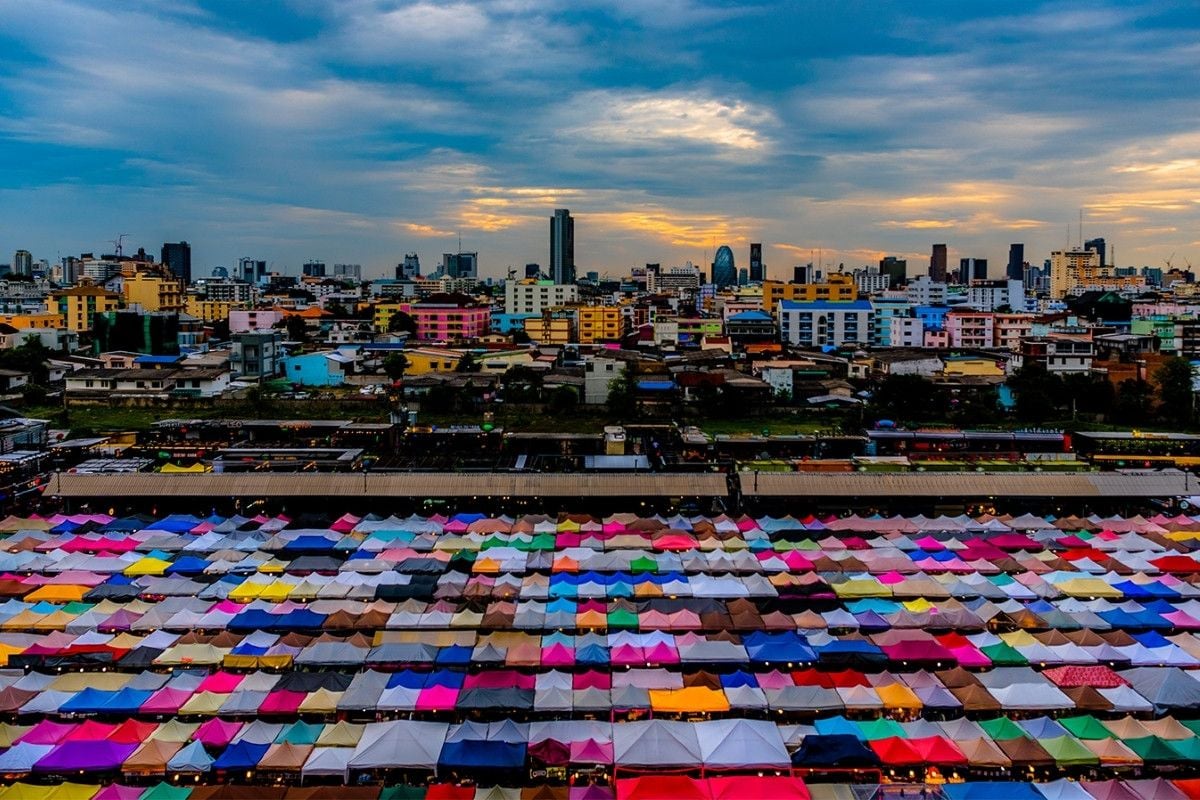
Sitting on the MRT Blue Line at Thailand Cultural Centre, Huai Khwang and Sutthisan stations, with direct connections to Silom and Asoke, Huai Khwang has become one of the most compelling Bangkok property investment districts for foreign buyers. It is also the city’s established New Chinatown, a detail not lost on Chinese and Hong Kong buyers who have driven enquiries here for years.
Prices average 125,000 to 135,000 baht per square metre, sitting 13 to 17% below the Bangkok median, with gross yields running 5 to 7%, the strongest band of any major Bangkok submarket. Real Estate Information Centre (REIC) data for Q4 2024 flagged Huai Khwang–Chatuchak–Din Daeng as the fastest-appreciating submarket in greater Bangkok.
But the bigger catalyst still lies ahead. The MRT Orange Line, whose eastern section is targeted for late 2027 after BEM signed its 30-year PPP contract with MRTA in July 2024, will turn Phra Ram 9 into a triple-interchange hub connecting the Blue Line, Orange Line and Airport Rail Link at Makkasan. Current prices in Huai Khwang have not yet reflected that.
View condos for sale in Huai Khwang listed by FazWaz
The legal and tax case
One of the less-discussed reasons Bangkok property keeps attracting foreign capital is how straightforward the legal framework actually is.
Foreign nationals can buy freehold condominiums under the 1979 Condominium Act within a 49% foreign-quota ceiling, with the quota calculated per building, meaning popular developments in prime areas can reach their limit and leasehold structures of up to 30 years are the standard alternative when that happens.
There is no capital gains tax on exit, and annual land and building tax on a rented-out condo runs just 0.02 to 0.30% of assessed value. Total transaction costs sit between 2.5 and 6.3%, a fraction of what investors pay elsewhere in the region.
| Bangkok | Singapore | Hong Kong | |
| Foreigner stamp duty | None | 60% ABSD | 0% (abolished Feb 2024) |
| Capital gains tax | None | None | None |
| Annual property tax | 0.02 to 0.30% | N/A | N/A |
| Total transaction cost | 2.5 to 6.3% | ~65%+ (foreigners) | ~4.25% ceiling |
Singapore’s 60% Additional Buyer’s Stamp Duty is the number that tends to stop investors in their tracks. On a S$2 million Singapore condo, a foreign buyer would pay approximately S$1.27 million in stamp duty.
Hong Kong abolished its equivalent in February 2024, which helped, but with prime prices still running at US$48,000 to 83,000 per square metre, the absolute cost remains a constraint for most buyers.
Thailand also offers three practical visa options that make long-stay residency accessible. The Thailand Privilege Visa runs from 650,000 baht for a five-year Bronze tier to 1.5 million baht for the ten-year Platinum, with airport fast-track and immigration concierge included.
The Long-Term Resident (LTR) Visa is a ten-year BOI-administered option for wealthy global citizens, requiring US$1 million in assets and a US$500,000 Thai investment, with work-from-Thailand professionals paying a flat 17% income tax rate rather than up to 35% on the progressive scale.
The Destination Thailand Visa (DTV), launched in July 2024 at just 10,000 baht for a five-year multi-entry, allows stays of up to 180 days at a time and is designed specifically for remote workers and location-independent professionals, making it one of the strongest structural drivers of rental demand across On Nut and Phra Khanong.
Who is already buying
Context matters here. China’s domestic property market has been in a prolonged downturn since 2021, with major developers collapsing and home prices falling across most major cities, giving wealthy Chinese buyers a concrete reason to move capital offshore.
For Hong Kong buyers, post-2019 political uncertainty accelerated emigration and pushed a wave of liquid capital toward accessible, well-priced alternatives in the region. Bangkok, sitting at the intersection of affordability and familiarity, has absorbed much of that flow.
Foreign buyers transferred an estimated 14,899 condo units worth 60.92 billion baht in Thailand in 2025, around 14.7% of all condo transfers nationwide and roughly 18% of new Bangkok property sales.
Chinese buyers have led the market for seven consecutive years. Property data firm Juwai IQI’s 2024 survey found Thailand had overtaken the United States as the top destination for Chinese high-net-worth buyers purchasing homes above US$5 million, jumping from seventh place to first in a single year.
Hong Kong buyers are drawn by a price differential of roughly one-fifth per square metre versus their home market, with developer-reported enquiries up more than 30%.
Middle Eastern interest is growing steadily too, with enquiries from the Gulf, Turkey and Israel rising year-on-year, driven in part by Bangkok’s growing reputation as a lifestyle base with short-haul access to the rest of Asia, and a cost of living that makes long stays practical.
Rounding out the picture, Myanmar purchases were up 146%, Taiwan up 57%, and Indian buyers averaged the highest ticket price at 6.9 million baht per unit. That family end-user profile confirms Bangkok’s appeal is broadening rather than narrowing.
The window is open
Bangkok’s value case has been well-documented, but what makes 2026 a particularly interesting entry point is the gap between current pricing and imminent infrastructure. The MRT Orange Line’s eastern section opens in late 2027. One Bangkok and Dusit Central Park are said to complete their residential phases by 2026 to 2028. In both On Nut and Huay Khwang, prices are still running ahead of the full re-rating those projects will bring.
Add to that a legal framework that is foreign-friendly, with freehold ownership, no stamp duty surcharge and no capital gains tax, alongside gross yields that comfortably double what investors collect in Singapore or Hong Kong, and the question stops being why Bangkok property, and starts being why not sooner.
Latest Thailand News






















Follow The Thaiger on Google News: