Bangkok condo buyer’s guide: What the viewing doesn’t show

Buying a condo in Bangkok as a foreigner is one of the most significant financial decisions you’ll make in Thailand, and one of the least protected ones. There is no mandatory buyer protection framework, no standardised escrow, and no licensing system for agents. What exists is a clear legal pathway to freehold ownership, a market actively courting foreign capital, and, if you know where to look, the tools to make a genuinely informed purchase.
Most buyer guides stop at the legal and financial layer. This one doesn’t.
Any property viewing looks its best in the first twenty minutes. The air conditioning runs quietly, the agent opens the curtains, and the city performs. Almost any decent unit can hold itself together for a short visit.
Henry Tan knew this, at least in theory. Professionally settled, German-Singaporean, experienced in Singapore and European property markets, he was looking at Bangkok as both a place to live and a long-term asset. He arrived with a lawyer on speed dial, several opinions, and more questions than answers.
Then the inspection started in earnest. A slow drain, a damp smell near the wardrobe, and a repair notice with no date. A juristic office reply that didn’t quite answer the question asked. Henry grew quieter as practical buyers often do when the sales story stops carrying all the weight.
A foreign buyer isn’t only purchasing a unit, they’re entering a building, a juristic office, a sinking fund, a street, and a neighbourhood with its own rhythms. You can replace a tired fridge, but it’s much harder to improve a weak building culture from inside Unit 31A.
In this guide
Step 1: Start with the life around the address
Henry’s first search was sensible: he filtered by district, budget, floor, view, and BTS distance. That’s how most buyers start. A clean shortlist, but a thin one.


The address has to support a life: groceries, clinics, taxis in the rain, food after work, and Bangkok pavements in the hot season.
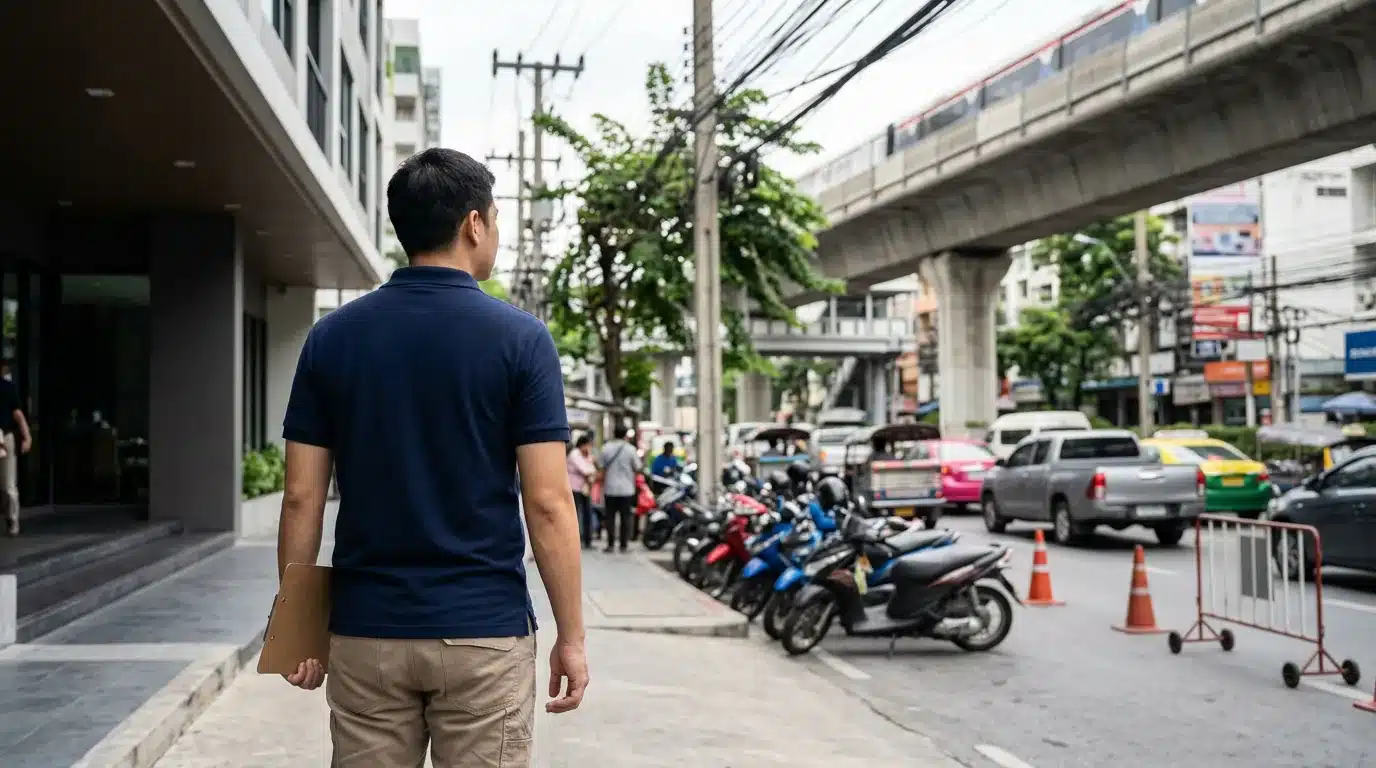
Henry liked one building because the map said six minutes to the BTS. The map wasn’t wrong. It just couldn’t account for broken pavement, an awkward crossing, motorbikes using the footpath with confidence, and almost no shade until the station entrance.
Bangkok Inspect is an independent property intelligence service for foreign buyers in Bangkok. Their free buyer tools, including the Lifestyle Index and Elevator Index, sit alongside full pre-purchase condo inspections, giving buyers a complete picture before they commit.
Step 2: Slow the deal before the deposit
Pressure changes how buyers think. Sellers know it.
Henry’s first real wobble came when the unit he liked started to attract “other interest.” This may have been true. It may also have been a Tuesday.
Either way, he found himself reading a reservation form on his phone in a lobby. Not the natural habitat of good judgment.
Before signing anything, confirm the inspection window. If the report lands after you’ve accepted tight terms, the strongest point of negotiation may have already passed. The refund wording matters as much as the deposit amount. A small deposit with weak conditions can still create a serious practical problem.
Get the timing right, and the buyer has room to act on what they find.

Step 3: Inspect for what a viewing misses
This is the step most buyers skip, and it is also the one most later regretted.
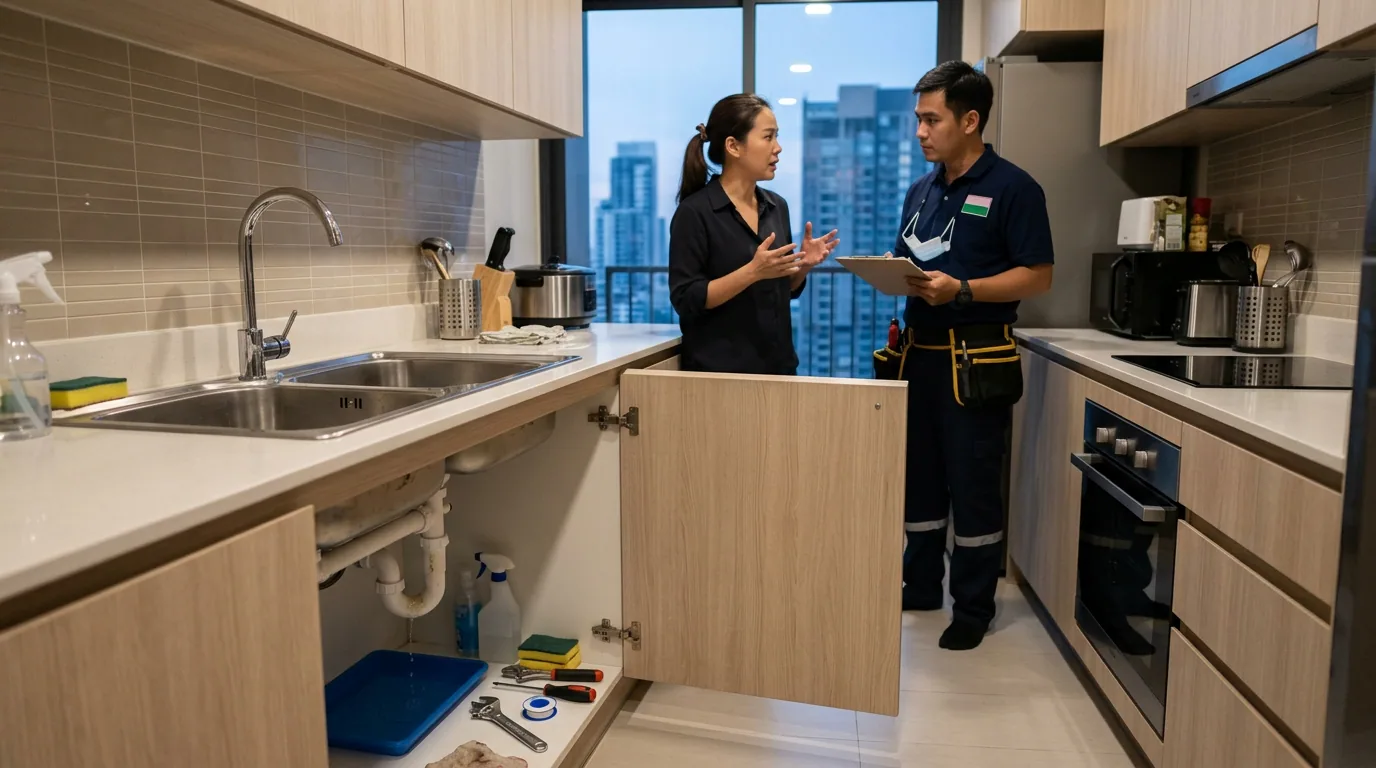
The gap is structural. The agent’s job is to close the sale. The lawyer checks the title, the quota, and the contract. Nobody on that team is checking whether the waterproofing behind the bathroom tiles has failed, whether the AC is growing mould, or whether building management is the kind that ignores a dripping sink for three weeks.
A viewing tells Henry whether he likes the condo, and an inspection tells him what he may inherit.
Defect rates in Thai new-builds are well documented, and foreign buyers face an added layer of exposure: unfamiliarity with local construction norms and a language barrier that makes documents harder to read.
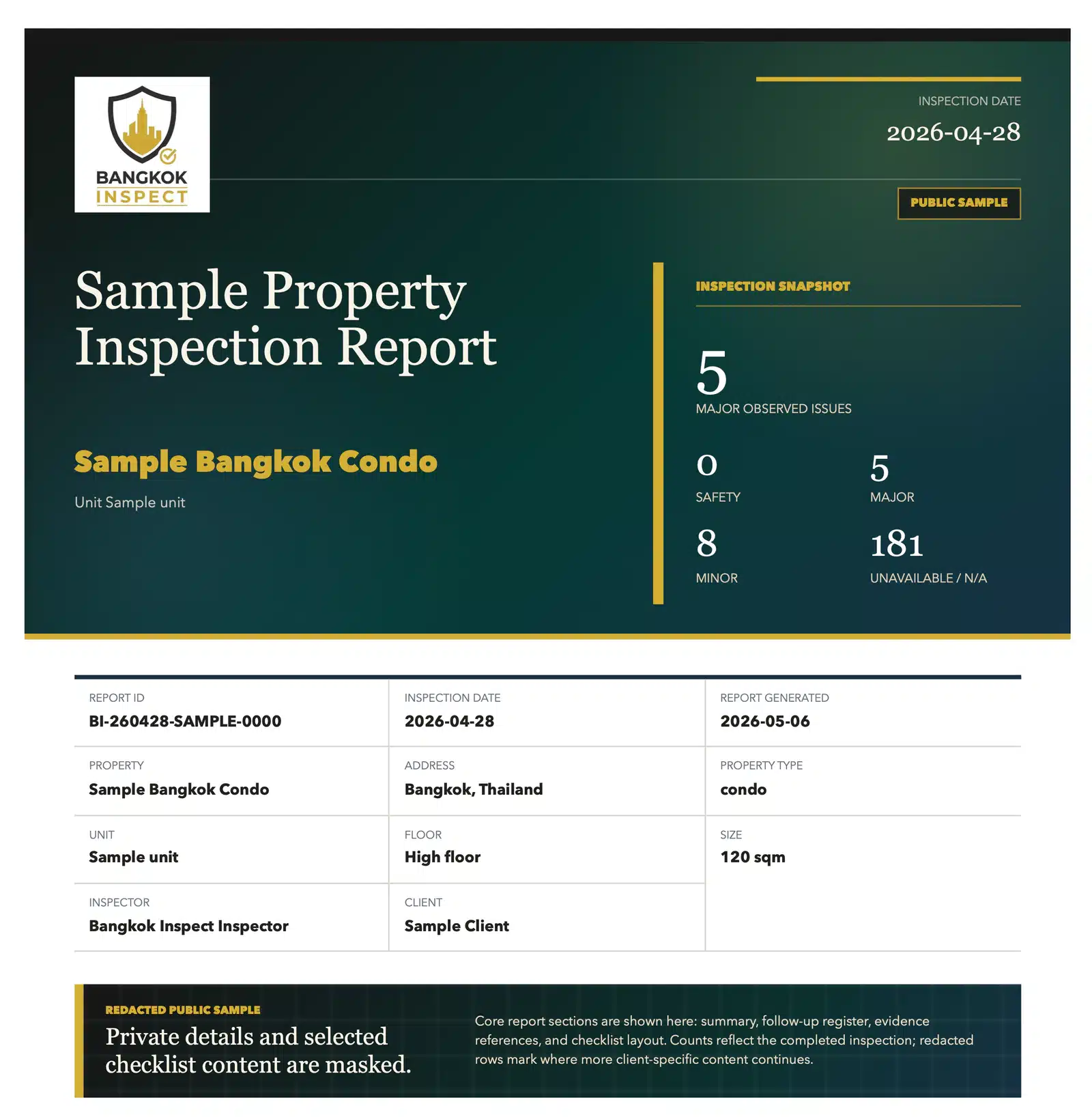
Bangkok Inspect works in the quieter areas: moisture patterns, mould risk behind furniture, AC drainage, water pressure, window seepage, swollen joinery, patched ceilings, and whether a previous repair treated the symptom rather than the source. A buyer sees a clean wall. An inspector may find a cold patch, skirting stains, or a moisture reading that changes the conversation.

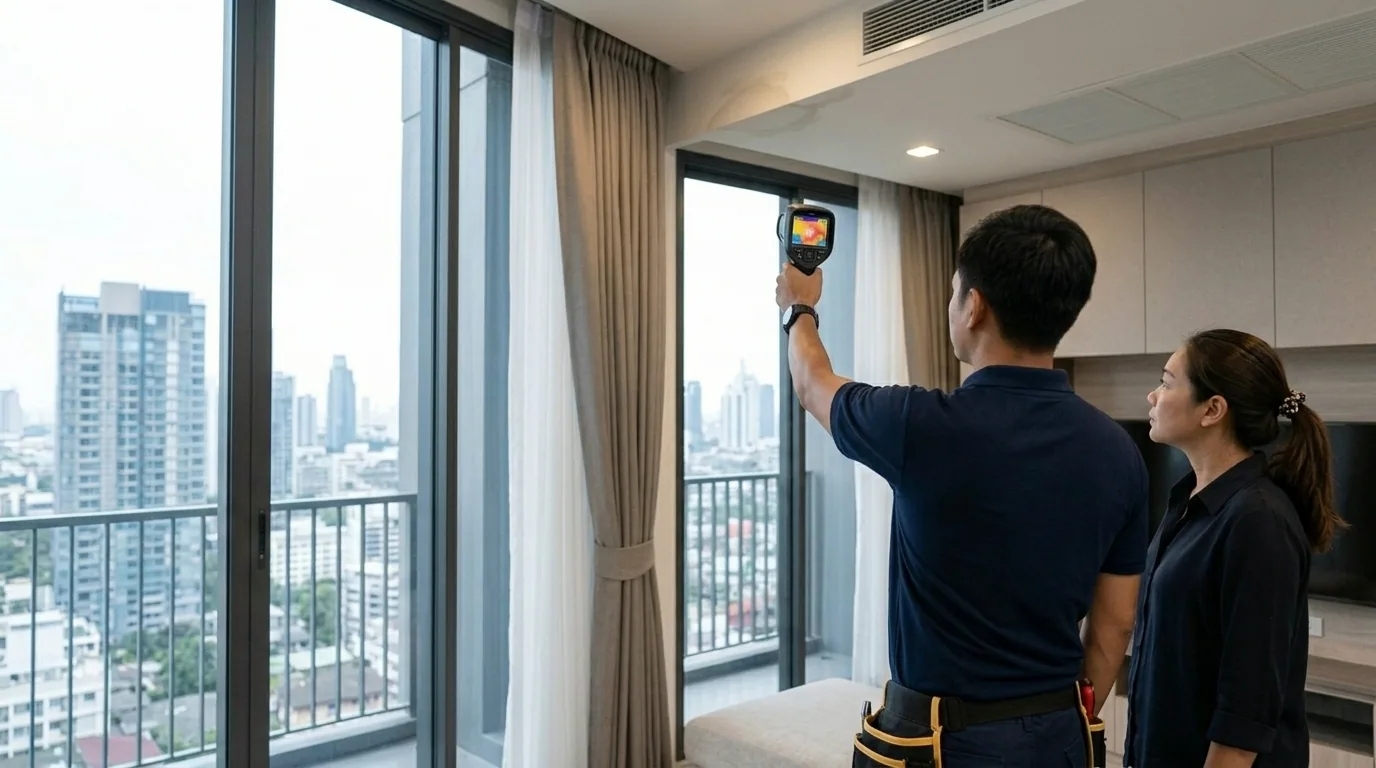
What a report gives you that a viewing never can is documented specificity: a written record of what was found, where, what it likely means, and what to do about it. That’s the difference between entering a price negotiation with an impression and entering with evidence.
A practical note for overseas buyers: many Bangkok Inspect inspections are conducted for clients not physically in Thailand. From coordinating access with the agent or developer to delivering the full report, photos, and videos through your preferred channel, the team manages the entire process on your behalf, so you’re never chasing information or relying on a seller’s word.
Step 4: Read the building, not just the unit
The unit is the part Henry can renovate. The building is the part he joins.
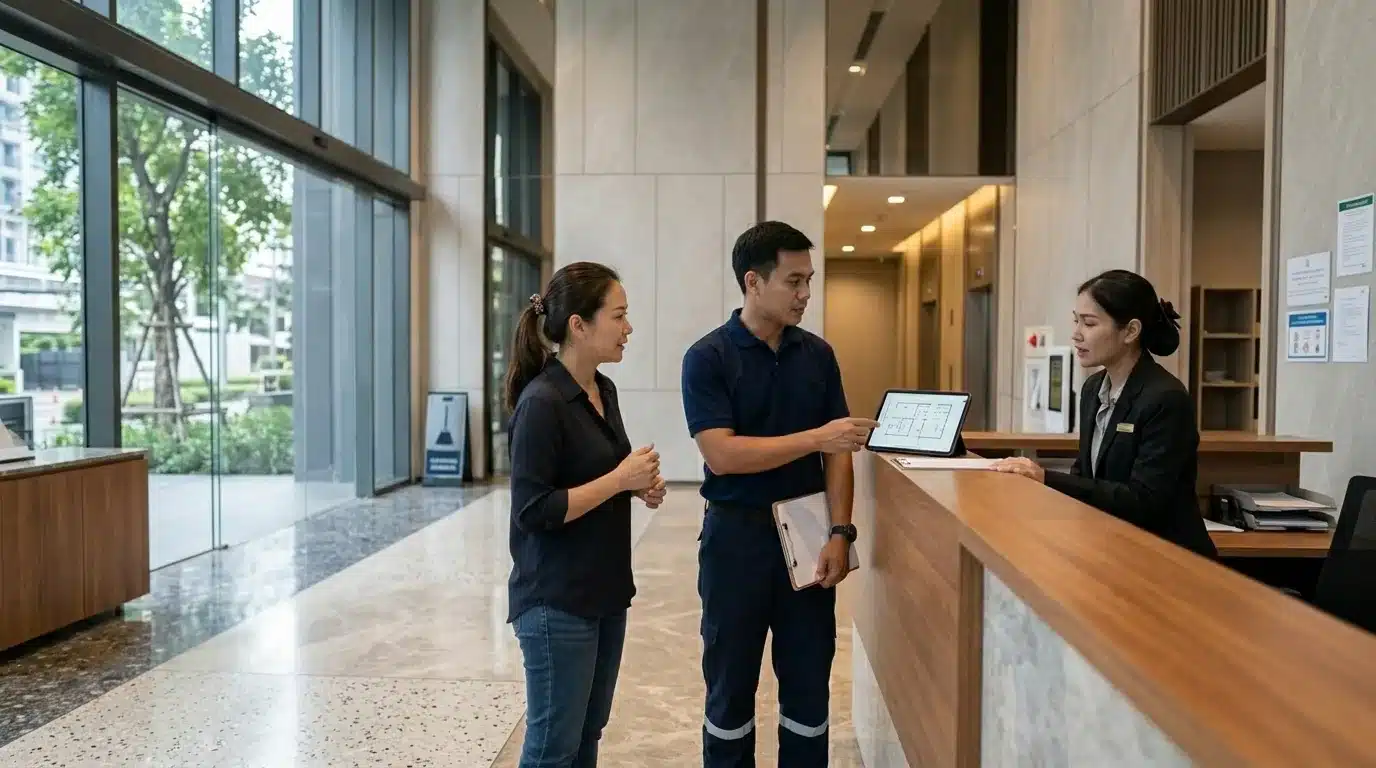
Building stewardship shows up in small ways: lift condition, corridor smell, staff response, repair notices, waste areas, pool and gym upkeep, and whether the juristic office answers clearly.
One question that has moved from technical footnote to practical concern: earthquake resilience. Newer Bangkok condos increasingly include anti-seismic construction features designed to allow controlled movement during tremors. Older buildings often lack them. Following the March 2025 Mandalay earthquake, felt across Bangkok, this is now worth raising before transfer, not after.
Bangkok Inspect’s Elevator Index estimates peak-hour lift pressure using floor count, unit count, and passenger lift numbers. It’s a signal of daily friction that photographs and floor plans never show.

Step 5: Use the findings while they still matter
An inspection report should not become a souvenir.
Henry used his while the deal was still open. The conversation shifted from a vague sense that something felt off to a specific list: repair these items, clarify this watermark, confirm this juristic point in writing, treat this mark as cosmetic. Clear findings give everyone in the transaction — buyer, seller, agent, lawyer — something concrete to respond to.
Bangkok Inspect is independent and buyer-side. It takes no referral fees or commissions from agents, sellers, developers, or building managers. If repairs are agreed, a re-inspection creates a second record before transfer. “Fixed” can mean many things in a chat message.
Some findings need immediate repair. Some need monitoring. Some need a specialist. The buyer’s advantage is knowing which is which.
Step 6: The buyer’s advantage is better attention
Buying a Bangkok condo as a foreigner is several decisions stacked together: legal eligibility, fund documentation, unit condition, building care, and whether the address supports the life you’re planning.
The paperwork puts your name on the title. It cannot tell you whether the balcony drains, whether the wall behind the wardrobe is damp, whether water pressure drops when two fixtures run, or whether the walk to the BTS feels different in May rain.
Henry began with a shortlist and a view. He ended with a condition record, better questions, a clearer read of the building, and enough evidence to decide without leaning on optimism.
That is the foreign buyer’s advantage in Bangkok: better attention before commitment.
Bangkok Inspect provides independent pre-purchase condo inspections across Bangkok. Their inspectors are fluent in English and Thai, with reports and consultations also available in Japanese and Mandarin on request. Remote inspection capability and a 24 to 48-hour turnaround come as standard. Reach them via WhatsApp, LINE, Telegram, or Messenger, or explore their tools and services at bangkokinspect.com.
Sponsored
Latest Thailand News























Follow The Thaiger on Google News: