What is a refining margin, and why is it soaring during the Iran war?

Drivers are currently sweating over high gas station prices. A major cause is the conflict in Iran. Economic news often highlights rising refinery margins. The normal margin is two baht, but it recently exceeded 17 baht.
Understanding the refinery margin is straightforward.
A merchant buys oranges at a certain price to squeeze and sell bottled juice at a higher price. Oil refineries operate similarly. They buy crude oil from abroad and boil it to separate components into refined products like gasoline, diesel, aviation fuel, or cooking gas. The refining margin is the difference between the ex-refinery selling price of refined oil minus the cost of the crude oil purchased.
Many misunderstand this difference as pure profit for the refinery. This is incorrect. The margin is only a gross profit. Refineries must deduct many other production costs. These include electricity, wages, machinery depreciation, taxes, or interest on factory construction loans.
The Iran war has made crude oil procurement difficult.
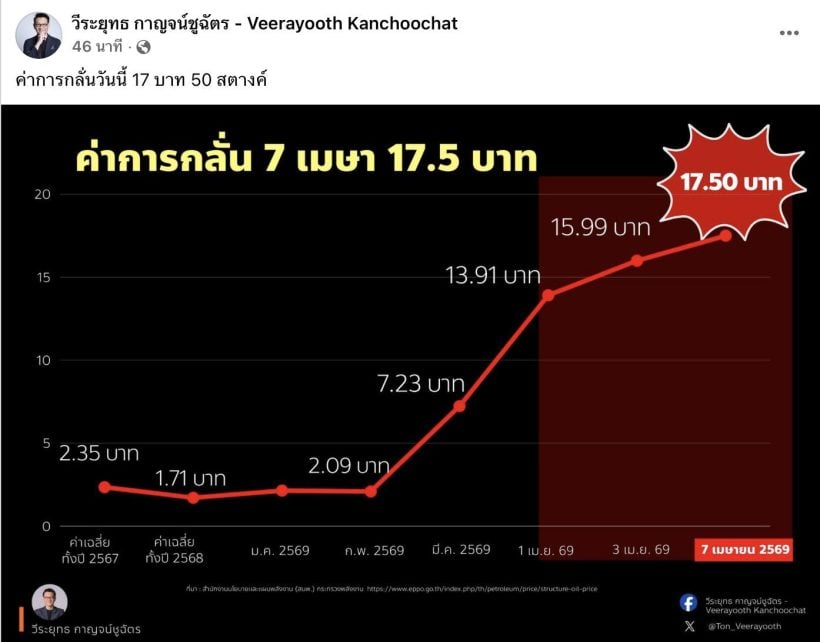
The refining margin jumped from two baht per liter earlier in 2026 to 17 baht per liter in April. This higher figure comes with massive hidden costs for refineries. The war created a war risk premium. Finding oil tankers is difficult. Ocean freight costs have quintupled. Sailing through high-risk areas caused insurance companies to charge premiums 100 times higher than normal.
Energy Minister Akanat Promphan is urgently addressing expensive fuel. He stated on April 6, 2026, that global crude prices are not the only cause. Thailand’s ex-refinery price structure relies on refined oil prices in Singapore. The Singapore market is abnormally volatile. This factor caused the refining margin to skyrocket. The margin remained at a normal two to three baht per liter over the past four to five years.
The average rose to seven baht per liter in March. The margin surged to 16 to 17 baht per liter during the first six days of April. The State Oil Fuel Fund must subsidize prices to lower public expenses. Akanat emphasized the government is not using the fund to absorb excess refinery profits.


The Energy Policy Administration Committee called an urgent meeting with refineries on April 7. The goal is to compare actual costs against real increased expenses. The Energy Ministry prepared two measures if refineries are making excessive profits. The first measure brings excess profits back into the system to help the public. The second measure uses legal authority to immediately cap ex-refinery prices.
ass=”yoast-text-mark”>ta-path-to-node=”6″>The Energy Ministry aims to lower fuel prices to relieve the public burden during the Songkran festival.
“Today, Thailand must stop using imaginary numbers. We must discuss actual cost figures,” Akanat said.
This process ensures fairness for fuel consumers. Refineries must share responsibility during this crisis to help Thais get through this difficult time.
ta-path-to-node=”9″>The government believes some excess profit might remain despite the hidden costs. Officials are negotiating with refineries to pull this profit into the State Oil Fuel Fund. The main goal is to subsidize and lower pump prices to ease the public’s financial burden.
The Iran war directly affects the global energy supply chain. Thailand is an oil importer and cannot avoid this impact. Understanding the fuel price structure provides a clearer picture of the energy crisis. The public must wait to see what measures the government will implement to manage domestic energy prices.

Latest Thailand News
























Follow The Thaiger on Google News: