Thailand says fuel reserves sufficient amid global oil concerns

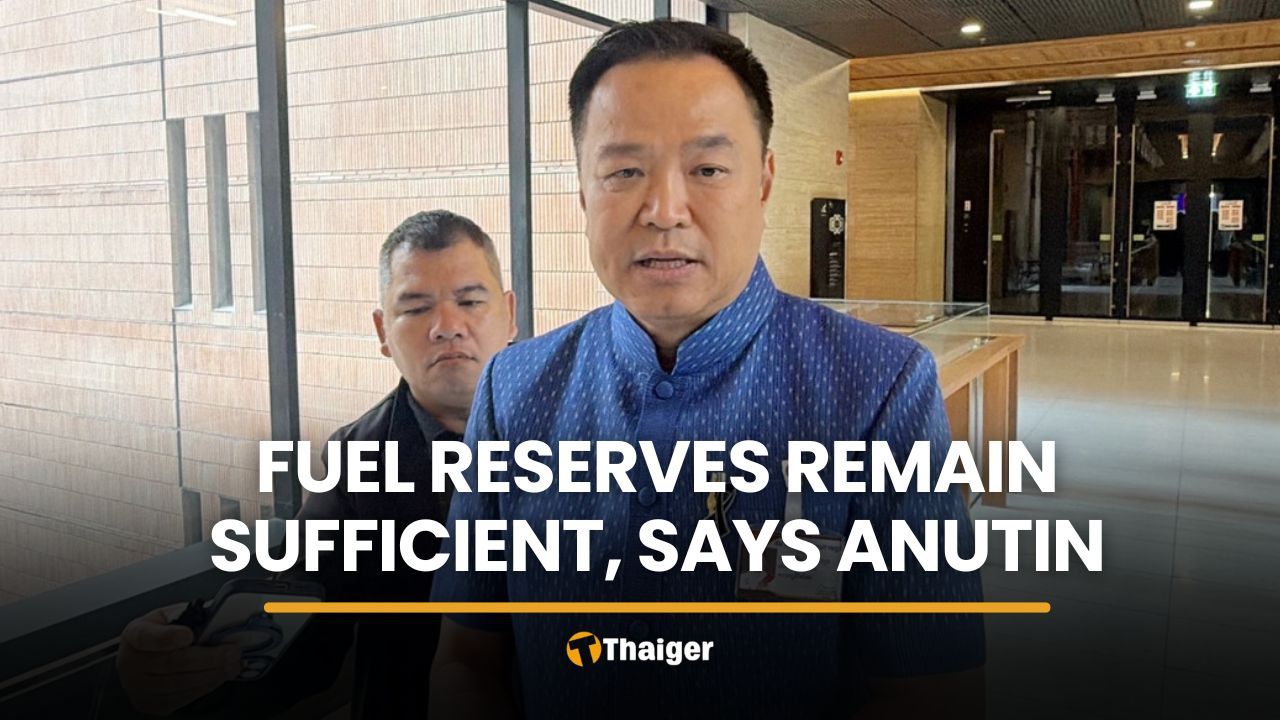
Thailand is unlikely to face a fuel shortage despite global uncertainties, Prime Minister Anutin Charnvirakul said today, March 15, urging the public to conserve energy while reassuring that oil supplies remain stable.
Speaking at the House of Parliament, Anutin said Thailand would maintain oil sales to Laos, adding that the country is not facing any immediate fuel shortages.
He said major oil traders, including Thai Oil, Bangchak, Shell, and SPRC (Caltex), have confirmed there are currently no signs that Thailand will run out of fuel.
However, he urged the public to use energy more cautiously due to the uncertainty caused by international conflicts.
“Even if there is no shortage, it is beneficial for everyone to be aware and start saving energy,” he said.
Thailand’s oil reserves have increased from around 60 days to about 90 days, and could approach 100 days if consumption is reduced and exports remain limited.


Anutin said Thailand currently holds the largest oil reserves in ASEAN, though comparisons with countries like Japan, which can store more than 200 days of supply, must consider differences in economic size and logistics.
He also reassured the public that Thailand is unlikely to face an energy shortage because most of the country’s electricity is generated using natural gas produced in the Gulf of Thailand, with additional capacity available if needed.
Oil prices, however, will continue to fluctuate according to global market conditions, he said, though the Oil Fuel Fund may help stabilise prices and reduce the impact on consumers depending on budget availability. Anutin also urged people not to panic or hoard fuel.
“There is no need to stockpile oil,” he said. “The government will manage the situation to prevent sudden price spikes.”
Thailand imports roughly half of its oil from major producing countries, while the rest comes from other regions, meaning supply would not immediately disappear even if disruptions occur.
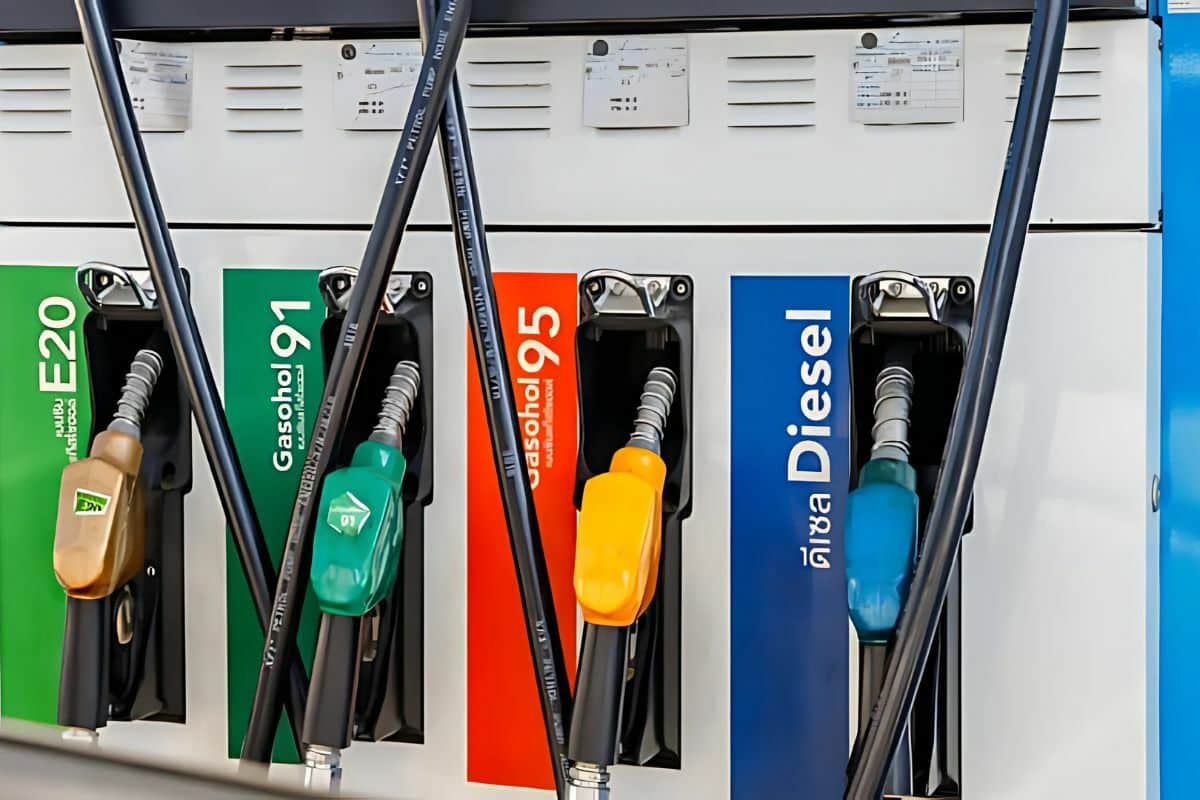
When asked about the possibility of importing oil from Russia, Anutin said discussions were ongoing and that PTT, Thailand’s national energy company, maintains extensive international business connections.
He added that in the business world there are always market mechanisms and trading channels, and that global suppliers would be unlikely to cut ties with a major buyer like PTT, reported Thai Ch8.
In a separate development, Israel’s ambassador to Thailand said that Thais feeling the effects of higher fuel costs should direct their frustration at Iran, citing what she described as its deliberate disruption of energy market stability.
Latest Thailand News























Follow The Thaiger on Google News: