SRT Red Line Salaya–Nakhon Pathom extension mapped for 2033 opening

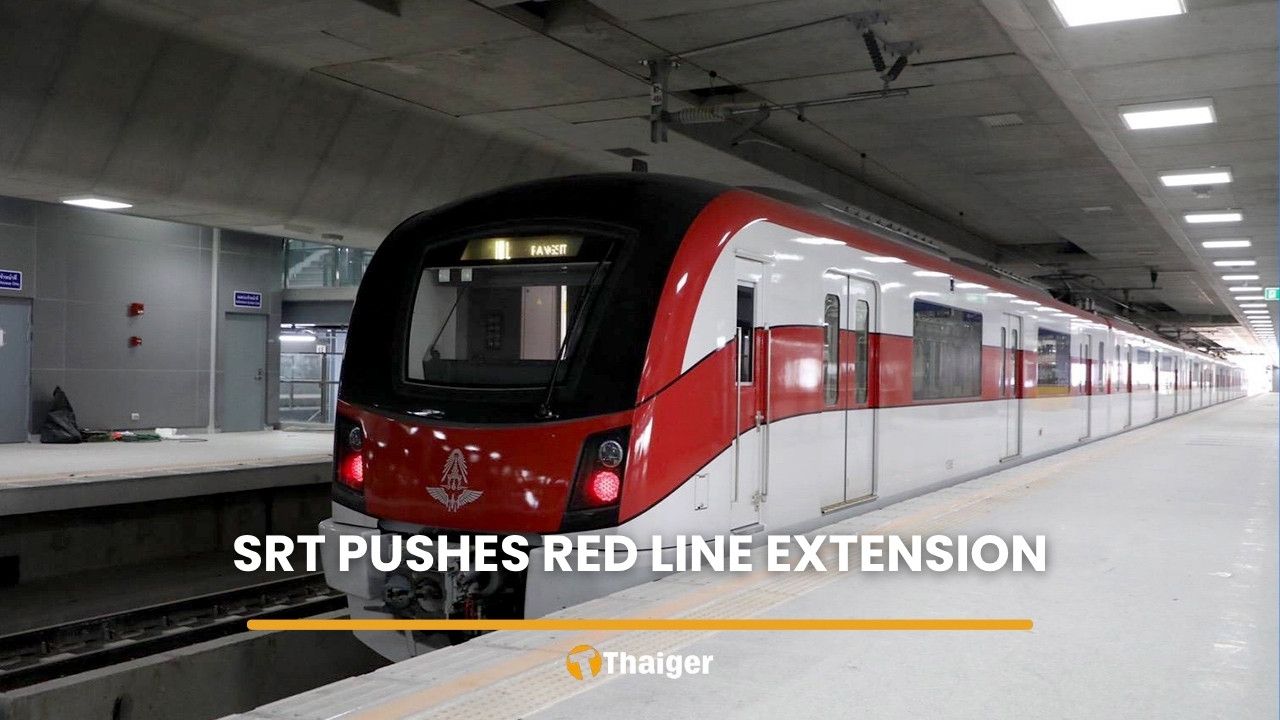
Thailand’s State Railway of Thailand (SRT) is advancing plans for the Red Line Salaya–Nakhon Pathom extension, a proposed 25.3-kilometre route with a target opening year of 2033.
SRT is also moving ahead with two Red Line extensions scheduled to begin construction in 2026, with contract signings planned for March and June 2026.
The projects include the northern extension from Rangsit to Thammasat University, Rangsit Centre, and the western extension from Taling Chan to Salaya, with a branch to Siriraj Hospital. SRT expects both to open by 2029.
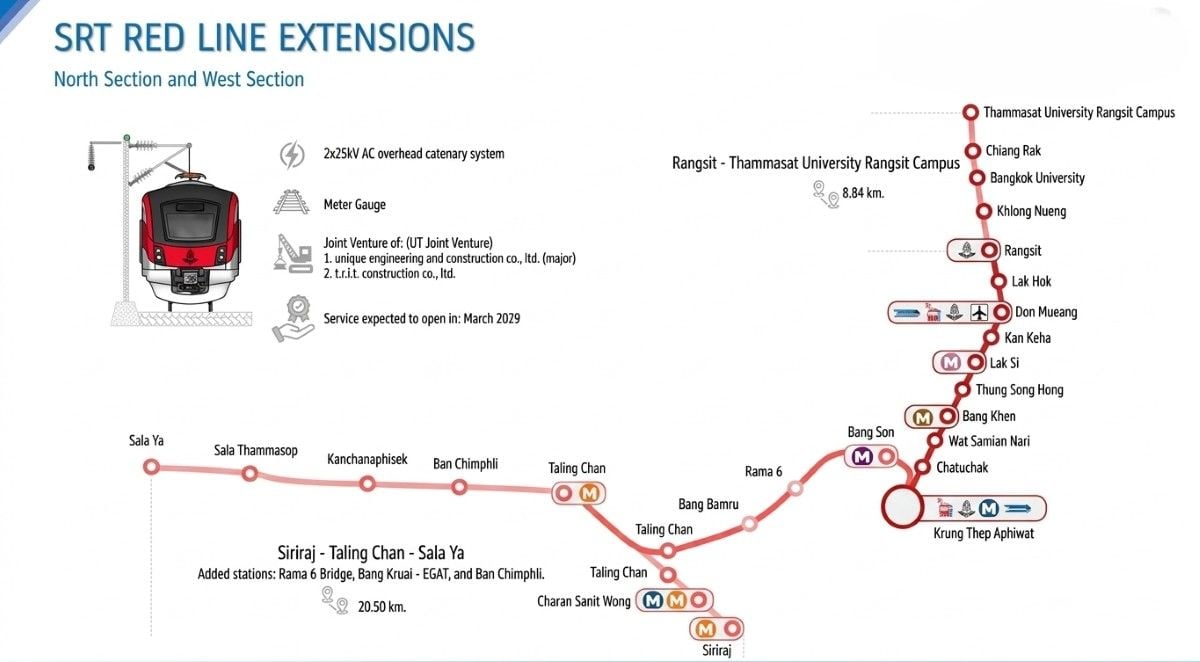
With the western line set to reach Salaya, SRT wants to extend service to Nakhon Pathom city. The idea was studied in 2007, but SRT says the data is outdated due to urban growth and changing travel patterns, prompting a new study covering environmental impacts, archaeological sites and the most suitable design.
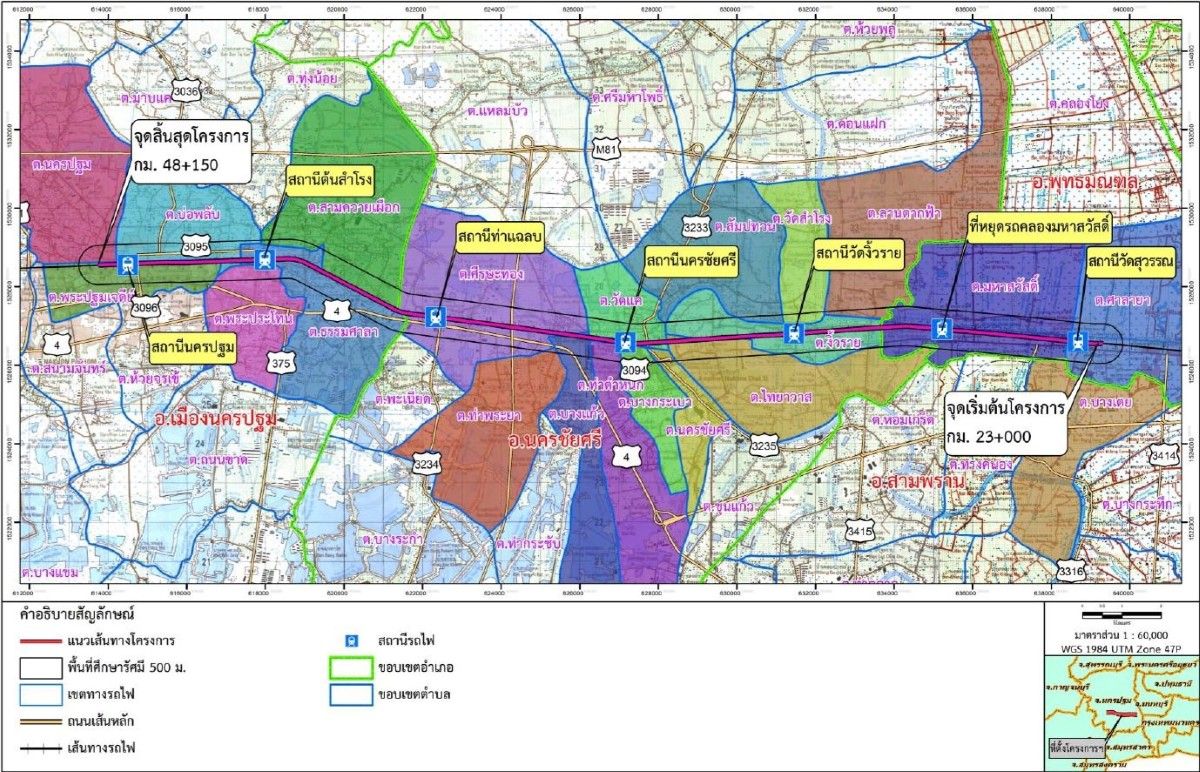
The planned alignment would run at ground level from Salaya station to Nakhon Pathom station, with seven intermediate stations and stops, including:
- Wat Suwan station
- Khlong Maha Sawat
- Wat Ngio Rai station
- Nakhon Chai Si station
- Tha Chalaep station
- Ton Samrong station
- Nakhon Pathom station
The route would pass through four districts in Nakhon Pathom province.
SRT said it aims to complete studies and detailed design by 2027, then seek approval and complete the environmental impact assessment process by 2029. Construction is planned to start in 2030 and take about three and a half to four years.


The timeline has drawn attention because M-Map 2 places several projects in its A1 “urgent and ready” group, including the Thammasat extension, the Salaya extension, the Taling Chan–Siriraj link and the Brown Line (Khae Rai–Lam Sali).
Meanwhile, the Red Line “missing link” sections, Bang Sue–Makkasan–Hua Mak and Bang Sue–Hua Lamphong, were temporarily left out due to a design issue involving a skywalk connection to the new Ramathibodi Hospital.
Michael Kenner, co-founder of FazWaz and managing director of LIFUll Connect, said Salaya already functions as a university hub due to Mahidol University and the Kanchanaphisek Medical Centre, with a floating population of students, lecturers and medical staff in the tens of thousands per year.

He said rail access could shift rental demand from general dormitories towards low-rise condominiums with shared facilities such as co-working spaces, fitness centres and swimming pools, while also attracting city workers seeking lower rents and commuting by rail to Krung Thep Aphiwat Central Terminal.
Kenner added the extension could also support growth in landed housing, including detached houses, semi-detached houses and townhomes, by encouraging new commuter towns through Nakhon Chai Si and Nakhon Pathom, citing lower land costs than Nonthaburi and Samut Prakan.
He concluded by saying nearby areas such as Krathum Lom and Sam Phran could benefit from faster connections to Salaya.
Latest Thailand News
























Follow The Thaiger on Google News: