How is Thailand using virtual reality to train doctors, students, and workers?
How immersive tech is reshaping education, healthcare, and workforce training nationwide

Virtual reality has moved from novelty to necessity across Thailand’s education sector. The technology now addresses real problems such as training medical teams, teaching environmental conservation, and upskilling industrial workers, aligning with the national Thailand 4.0 strategy that prioritises digital infrastructure and innovation-driven growth.
The investment backing this transformation is substantial. The Ministry of Education’s Anywhere Anytime initiative allocated US$800 million (2026-2031) to provide VR-capable devices to over 600,000 secondary students. The Bangkok Metropolitan Administration expanded digital classrooms to 437 schools.
What distinguishes Thailand’s approach is breadth; VR reaches government vocational colleges, public hospitals, and energy sector facilities, not just elite international schools.
On this page
| Section (Click to jump) | Short summary |
|---|---|
| Current uses | VR already improves medical safety, environmental learning, vocational skills, and industrial training by letting people practise complex tasks without real-world risk or waste. |
| Challenges that remain | High costs, uneven access, motion sickness concerns, and limited Thai-language content still slow nationwide adoption. |
| Future prospects | By 2026, VR is expected to scale across healthcare, education, and training through national platforms, AI-driven simulations, and curriculum integration. |
Current uses: Where virtual reality delivers results today in Thailand
Medical training saves lives through simulation
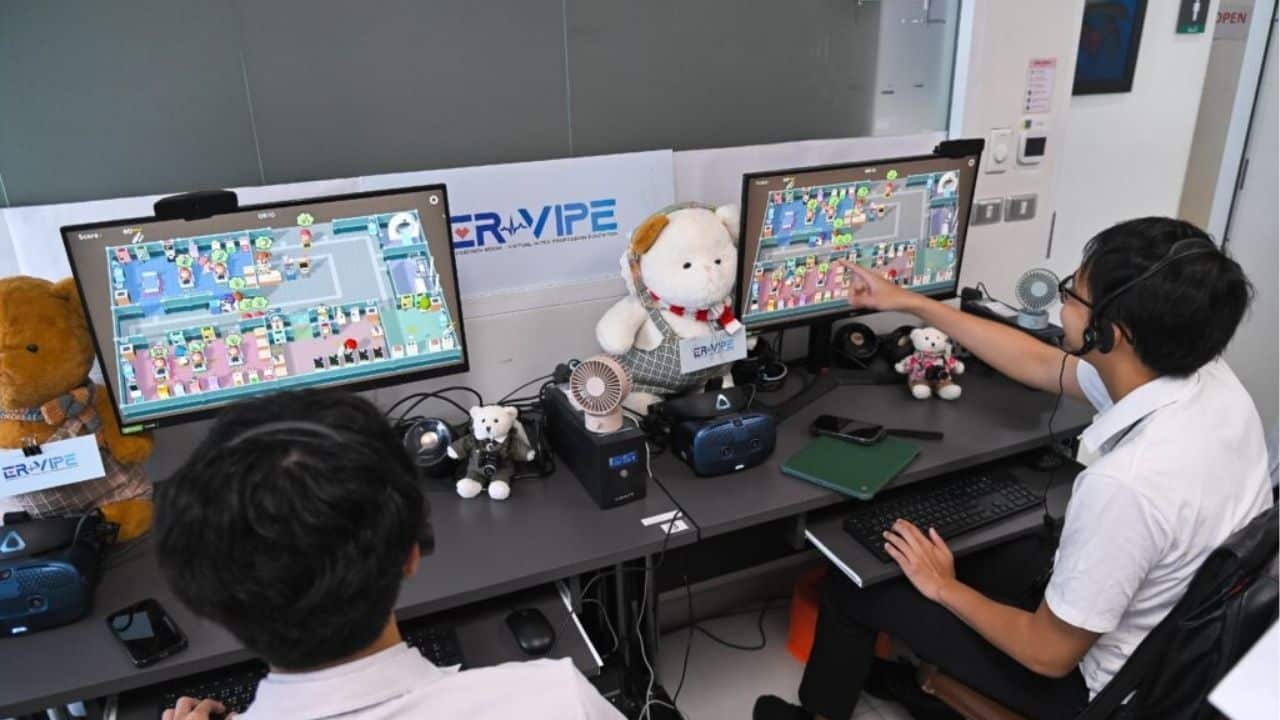
Chulalongkorn University’s ER-VIPE (Emergency Room – Virtual Interprofessional Education) platform showcases the most quantifiable impact of VR. Although it is ot the main tool of the programme, there is use for it alongside physical training dolls, computer programs and applications.
ER-VIPE places healthcare teams into high-pressure virtual emergency scenarios using the TeamSTEPPS framework (Team Strategies and Tools to Enhance Performance and Patient Safety).
Thailand records 400,000 unsafe medical care cases annually (costing 9.6 billion baht), mostly from poor teamwork. After piloting in five hospitals, ER-VIPE demonstrated a 28% improvement in communication and eliminated 38 critical errors in simulations, projecting 3.5 fewer errors and 2.3 fewer deaths per month per hospital.

The Metaverse Lab-XR from Chulalongkorn’s Faculty of Allied Health Sciences won Thailand’s 2025 “Excellent Innovation Award” from MHESI. This digital twin clinical laboratory lets students practice with infectious samples or expensive equipment virtually.
Environmental education makes conservation tangible
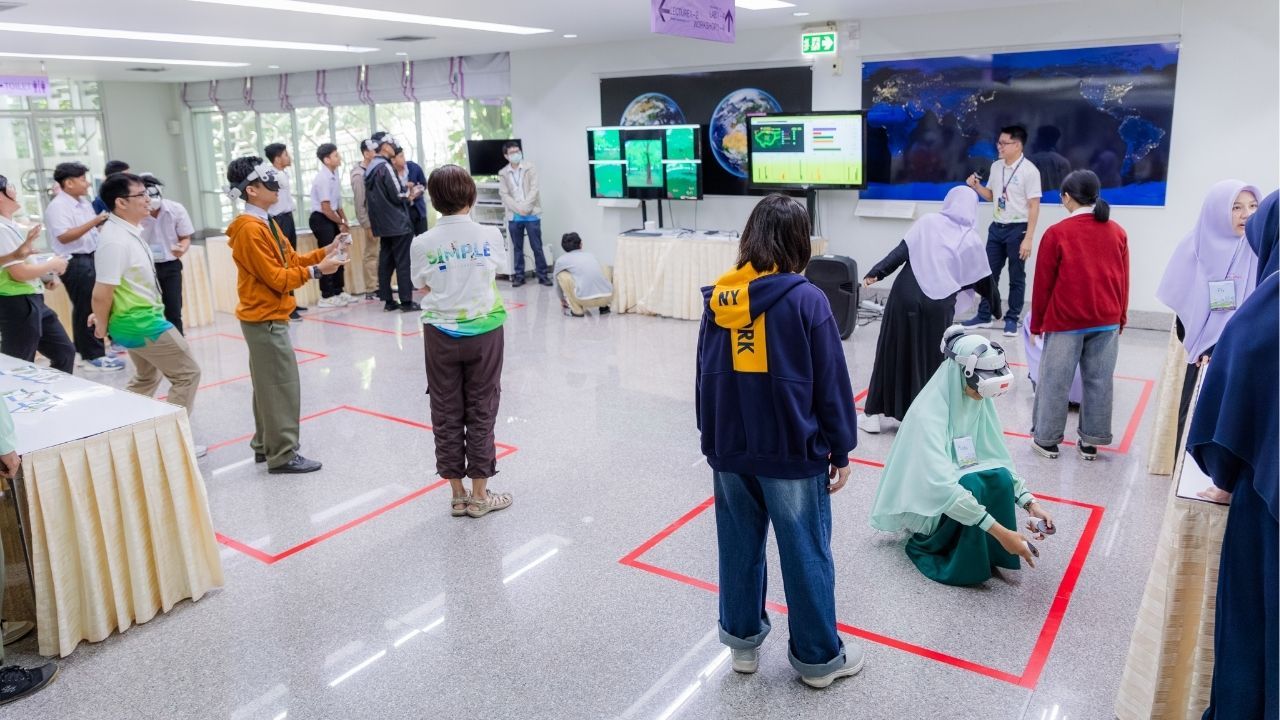
The EU-supported SIMPLE project brought 13 high schools to Chiang Mai University in January 2025. Students used a Seed Collection VR game in degraded virtual forests, learning that ecosystem recreation is exponentially harder than destruction. Teachers reported significantly boosted engagement.
UNESCO’s Sustaining Our Oceans project introduced an AR/VR Diving Library in mid-2025, allowing urban students to explore mangroves and coral reefs without the need to be scuba-certified or learning to be, which usually costs a lot.
Industrial and vocational safety provides freedom to fail
VR’s freedom to fail concept proves valuable in high-stakes industries. One of the implementations that follows this concept is Thai Airways, and how their pilots are trained using virtual reality outside of Thailand, such as how a lot of pilots are usually trained.
Notably, Thai Airways had also extended their service to the general public with the Thai FlyEX programme, which allowed people to learn and try their hand at flying in a controlled and safe environment. A lot of students of Aerospace have visited this programme.
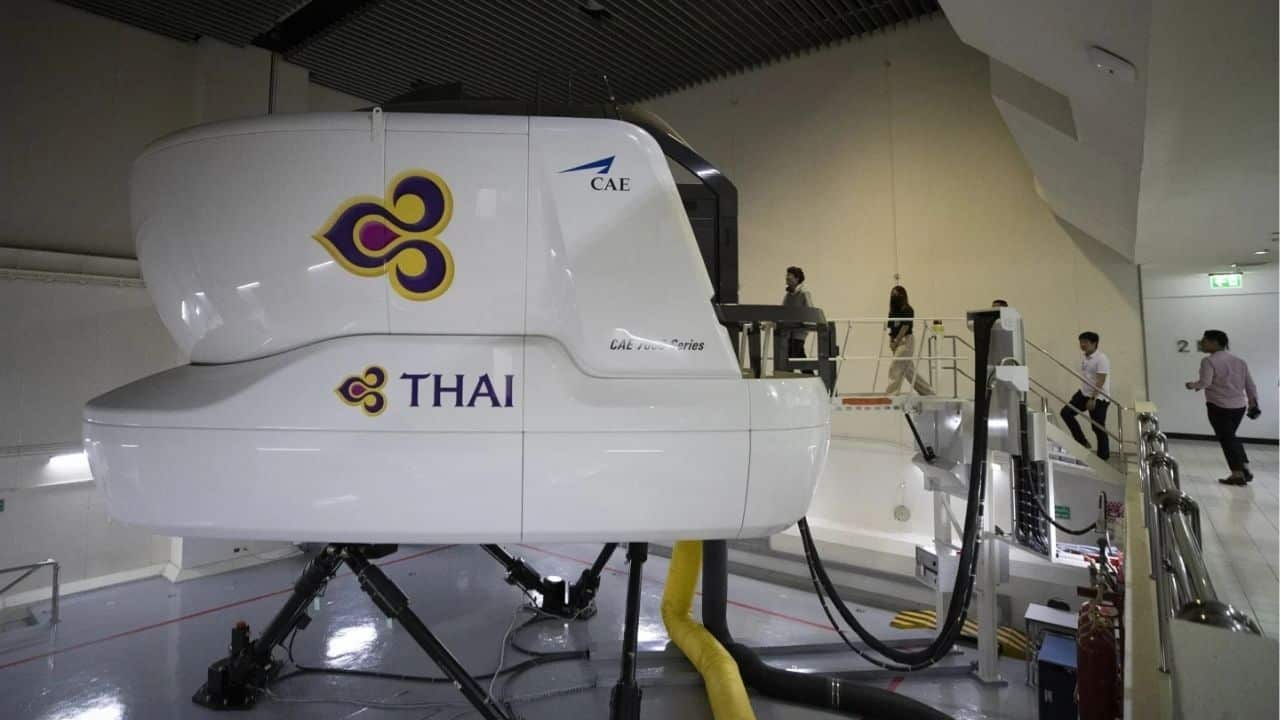
According to their Facebook page, the service was suspended indefinitely on July 13, 2024, and there have been no updates on their page since then.
Another notable example is the Thai is PTTEP, a petroleum exploration and production company based in Thailand that has also been using VR for their training as well.
PTTEP has used VR since 2023 for confined space entry and emergency evacuation drills on offshore platforms. SCG Chemicals offers 90+ VR courses for chemical leak and fire safety simulations.
Challenges that remain in virtual reality in Thailand
Despite momentum, obstacles persist. The digital divide threatens equitable access; ensuring rural students have high-fidelity simulators requires sustained funding and high-speed internet for cloud-rendered VR. Hardware costs remain prohibitive for many schools despite rental markets and government grants.
Furthermore, the RAM shortage that is going on right now has indirectly affected the pricing of acquiring VR Headsets by increasing their price.
Another challenge would be cybersickness (VR-induced motion sickness), which presents technical challenges for primary school deployment. Developers now focus on mixed immersion modes and strict session length protocols to protect developing vision systems.
Content localisation matters: most VR educational content originates abroad, and creating Thai-language, culturally relevant simulations requires local development investment. KMITL’s Interactive Digital Centre with EON Reality addresses this by training students to program and design VR through courses.
Future prospects: 2026 and beyond
Several catalysts point toward deeper 2026 integration:
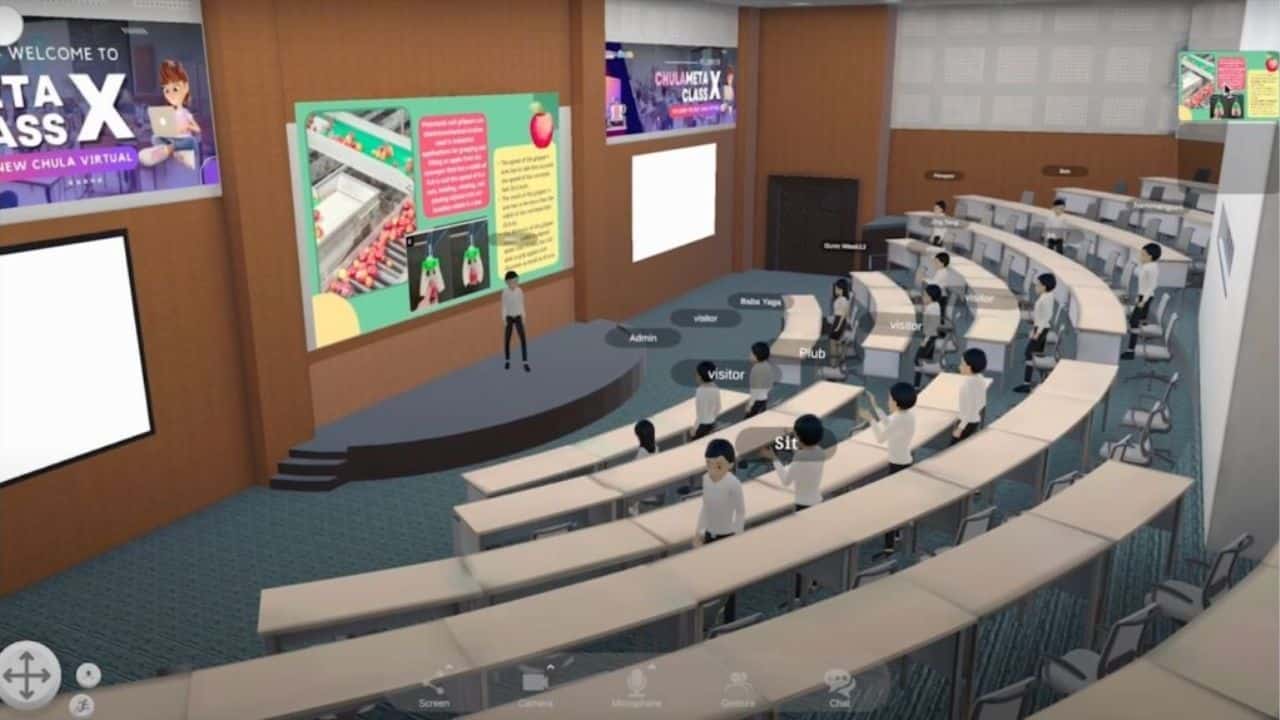
Platform maturation: Chulalongkorn’s ChulaVerse (launched late 2025) combines CV World (3D virtual campus) and CV Learn (virtual classroom) with 360° videos and full VR for lab training like CPR and surgical simulations. Plans include expansion beyond Chulalongkorn for wider lifelong learning access.
Healthcare institutionalisation: ER-VIPE, supported by nine professional healthcare councils, is scaling nationwide with plans for hospital accreditation standard integration under “Zero Harm 2030.” Success may drive similar adoption in aviation, military, and disaster management.
AI-VR convergence: Thailand’s “3+1 Languages” policy (Thai, Chinese, English, Digital Literacy) suggests movement toward Generative VR—where AI creates real-time scenarios based on student performance, transitioning from static experience to dynamic tutor.
Curriculum expansion: SIMPLE’s nationwide environmental curriculum rollout by 2026 will bring immersive ecosystem and climate change modules to biology and geography classes across Thailand.
By 2026, the vision includes elementary students touring historical sites inThailand in virtual reality. The vision will also include medical interns training on virtual patients, and public immersive learning at museums. Thailand positions itself not as a Metaverse consumer but as a regional hub for creation and application for strategic foresight in leveraging technology for human capital development.
Also: Smartwatches can really detect heart disease, and Samsung proves the most accurate
Sources:
• Chulalongkorn University – ER-VIPE Emergency Room Virtual Training
• NSTDA – SIMPLE Project: Sustainability and Metaverse Learning
• Ministry of Education Thailand – Anywhere Anytime Learning Initiative
• EON Reality – Virtual Reality Solutions for Education
Latest Thailand News



















Follow The Thaiger on Google News: