How UOB is aiming to close Thailand’s education gap with three connected programmes
A closer look at the three programmes to expand digital access, financial literacy, and youth innovation in Thailand

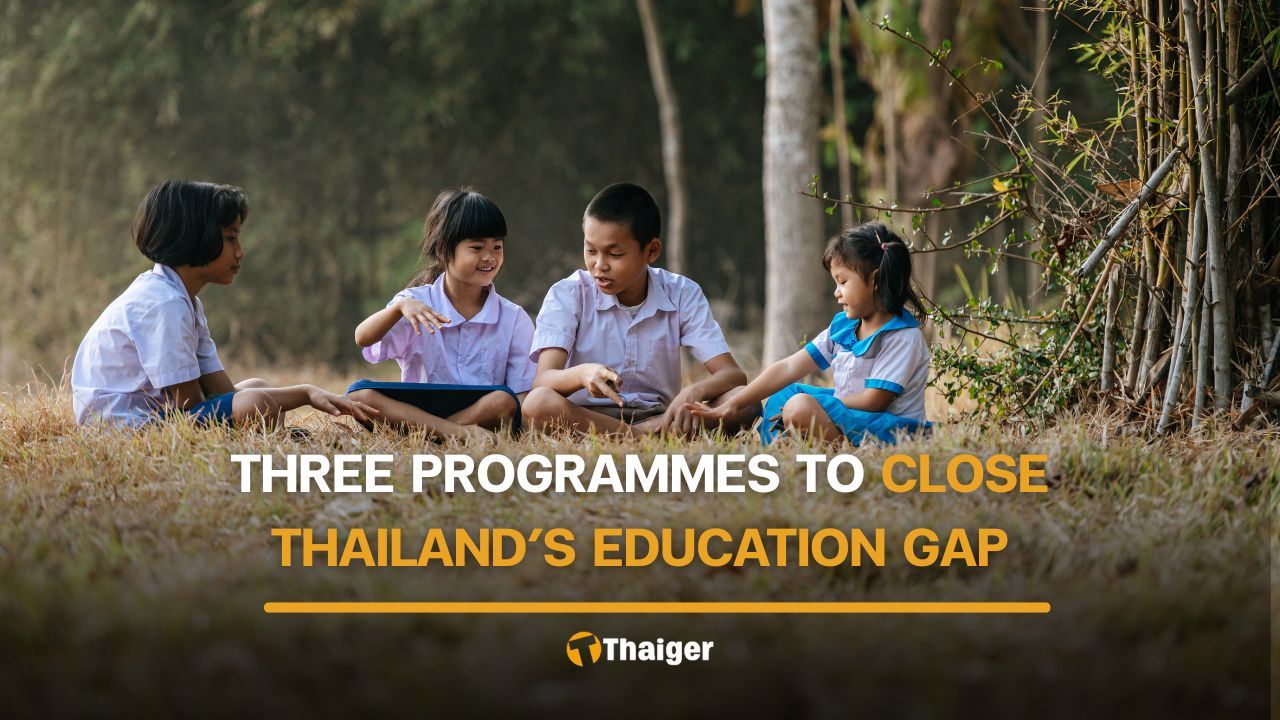
Seventeen students sharing a single computer. This is not a scenario from decades past, but the current reality in many Thai schools today. While technology creates unprecedented learning opportunities, access remains deeply unequal across Thailand’s education system, and this digital divide is just one piece of a larger challenge facing the country’s youth.
Dhornratana Olanhankij, Country Head of Brand, Media and Communications, UOB Thailand, said the bank’s youth programmes were designed in response to realities like these, where access and opportunity still depend heavily on where a student is born
On this page
| Section | Summary |
|---|---|
| The education gap holding Thai students back | Thailand’s learning outcomes and access remain unequal, with many schools lacking basic digital tools. The impact links to financial literacy needs and future-ready skills. |
| Programme 1: My Digital Space – Building foundational access | UOB builds digital classrooms in remote schools and supports learning in maths, science, and English. The programme also trains teachers and tracks improvement over time. |
| Programme 2: UOB Money 101 – Teaching financial responsibility | Secondary students learn budgeting basics and how to separate needs from wants. Graduates can become Junior Coaches and run community projects. |
| Programme 3: UOB Wonder Lab – Creating space for innovation | Students develop sustainability ideas and pitch solutions, with a shift towards real partner challenges and structured mentoring. The format is moving closer to a hackathon model. |
| A connected journey, not separate programmes | The programmes are designed as a progression from access to financial capability to innovation. Each stage builds towards long-term youth readiness. |
| A different approach with depth over scale | UOB prioritises long-term follow-up, teacher support, and school readiness over rapid expansion. Funding and delivery rely heavily on internal volunteers and participation. |
| Building a more equitable Thailand | Support is targeted at remote provinces rather than major cities to reduce inequality. The aim is to lift opportunities where resources are weakest. |
| Why youth investment matters now | High household debt, fast digital change, and sustainability pressures make youth preparation urgent. The approach focuses on deep, lasting outcomes rather than reach alone. |
The education gap holding Thai students back
International assessments paint a concerning picture of Thailand’s education landscape. PISA results show Thai students still lag behind their peers in foundational subjects, with a clear inequality between urban schools and those in remote areas.
According to data from the Equitable Education Fund, more than 30% of Thai schools lack computers, Wi-Fi, or basic digital devices needed for modern learning. Beyond infrastructure, schools in underserved communities often lack adequate budgets and personnel to deliver quality education.
The consequences extend beyond the classroom. Thailand’s household debt remains high, reflecting a broader need for financial literacy that starts young. Meanwhile, the rapid pace of technological and environmental change demands that young people develop not just academic skills, but the creativity and problem-solving abilities to drive sustainability and innovation.


UOB, a regional ASEAN bank operating in Thailand, has structured its social investment around a fundamental belief, Dhornratana said: economic stability begins with how prepared the next generation is to face the future.
Rather than pursuing reach for its own sake, the bank has developed three interconnected programmes designed to build what it calls a “connected journey” for Thai youth, one that progresses from access to capability, to innovation, and ultimately to scale.
Programme 1: My Digital Space – Building foundational access
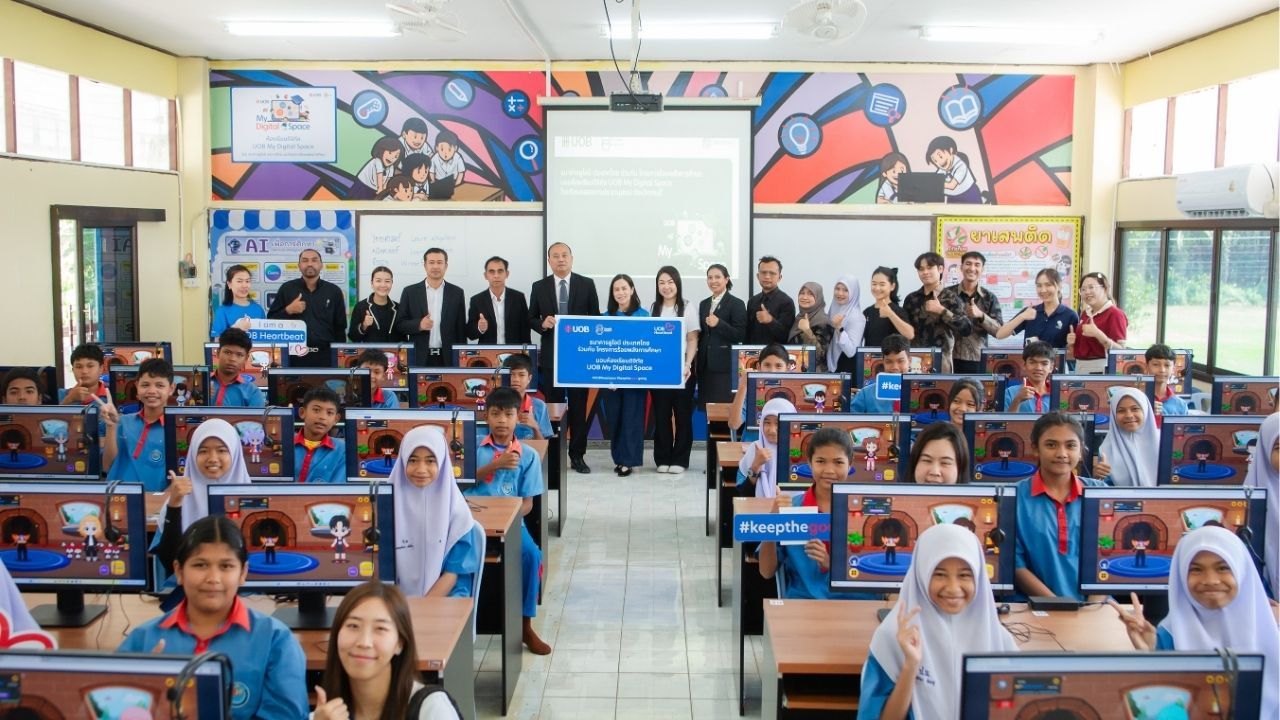
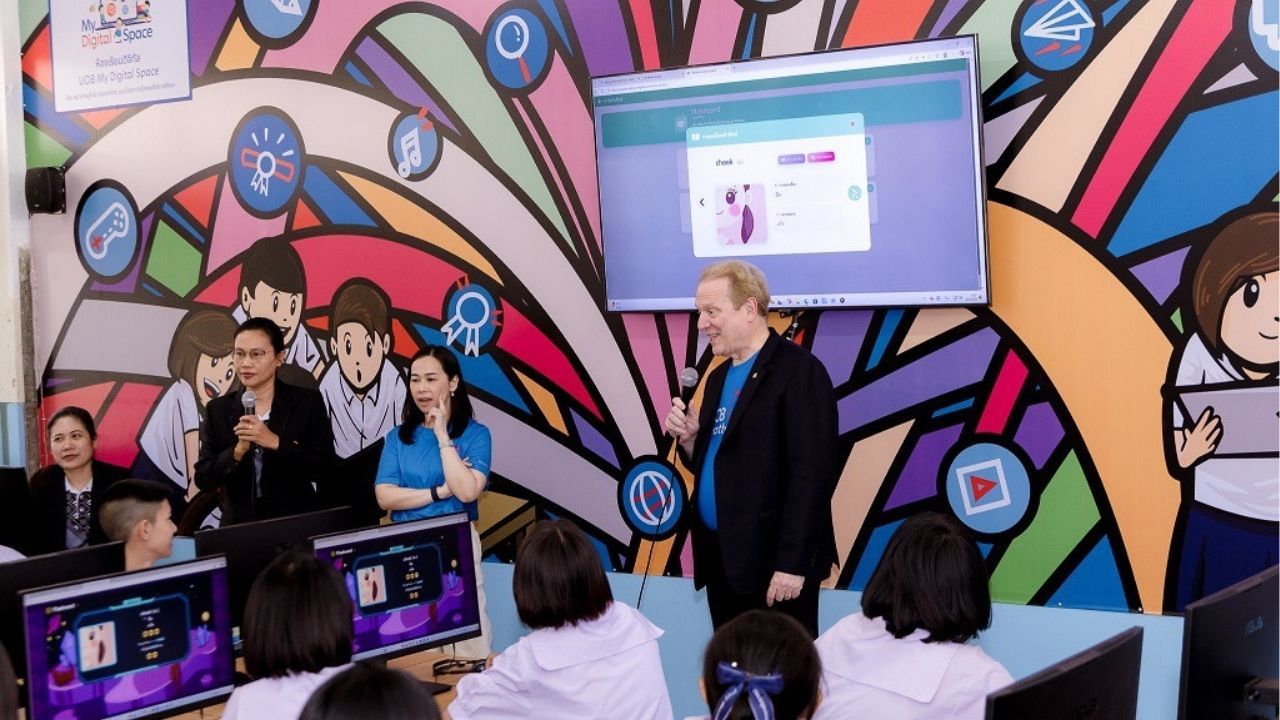
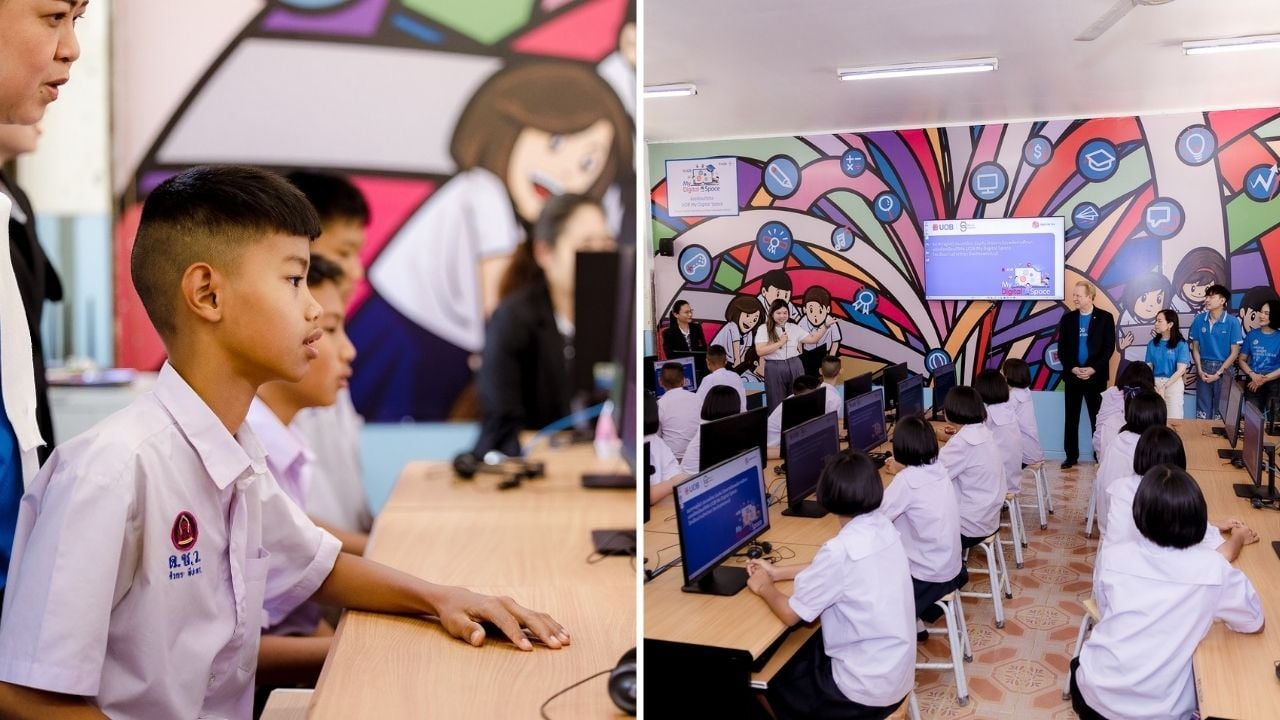
My Digital Space addresses the technology gap head-on by establishing fully equipped computer classrooms in remote schools. But the programme goes well beyond simply distributing hardware.
Each digital classroom integrates curriculum in three critical subjects for university entry: mathematics, science, and English. Students who previously could only read about science experiments in textbooks can now access virtual labs. English learners can interact with native speakers to improve pronunciation and vocabulary.
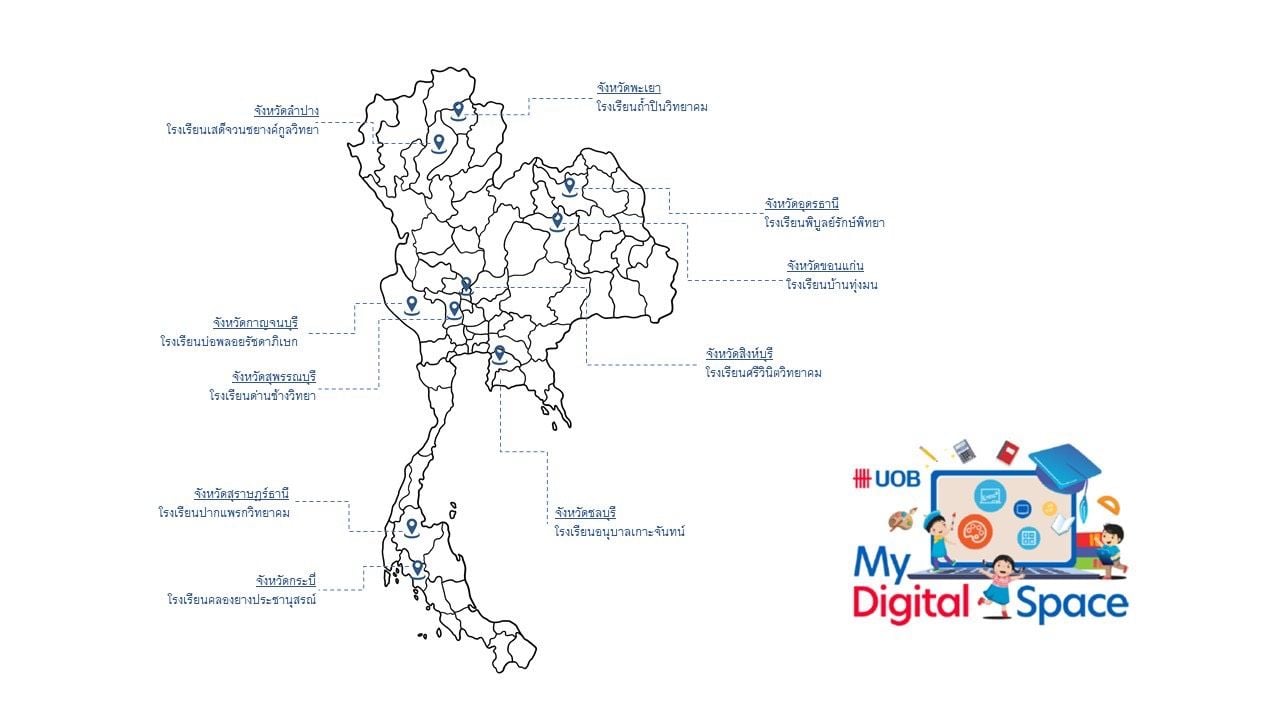
Over five years, the programme has reached 10 schools across 10 provinces, serving 5,504 students. The digital curriculum has accumulated more than 10,045 user sessions over four years, with schools integrating the technology across multiple subjects beyond the core three.
One example demonstrates the programme’s impact on inclusion: a student using a wheelchair who would typically need to make the difficult journey from her island home to school can now access learning from home, removing physical barriers that once limited her education.
The results speak to genuine improvement, not just increased access. In the programme’s first cohort, schools where only 32% of students were high performers saw that figure jump to 62% after three years of using the digital classroom and integrated curriculum, a statistically significant improvement showing that when equipped with quality resources, students in remote areas have potential that was previously overlooked.
Unlocking teacher potential
Dhornratana stressed that technology alone does not improve learning outcomes, which is why the programme trains teachers before delivery and supports them during implementation.
Critical to the programme’s success is the recognition that technology alone changes nothing. UOB works extensively with teachers before and during implementation, helping them adapt their teaching methods to integrate digital tools effectively. The concern is real: a computer lab where students simply engage with online content could actually reduce meaningful interaction with classroom teachers.
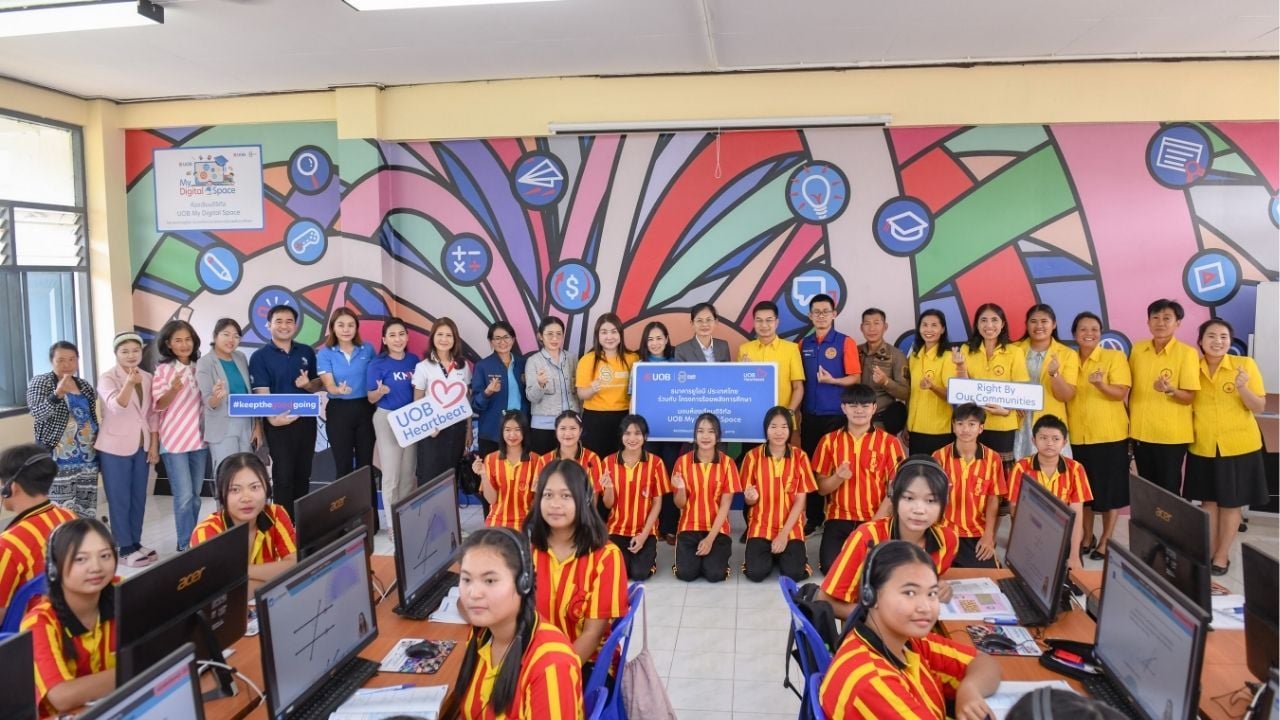
To address this, the programme has equipped 144 teachers across participating schools, providing training on how to blend digital resources with hands-on instruction. UOB has also partnered with platforms that help teachers share teaching materials, exchange techniques, and support each other as they navigate these changes.
The bank has learned that each province presents unique challenges; in some areas, Thai is not even students’ first language, requiring ongoing adaptation and support.
Career guidance has been added as another layer, recognising that students in remote schools often lack exposure to different career paths and struggle to envision their futures. The programme now includes resources to help students think about their aspirations and plan accordingly.
Programme 2: UOB Money 101 – Teaching financial responsibility

Financial literacy forms the second pillar of UOB’s approach. The UOB Money 101 programme teaches secondary school students fundamental money management: how to save, track income and expenses, and critically, how to distinguish between needs and wants when making purchasing decisions.
Over five cohorts spanning five years, 8,214 students across 72 schools in 33 provinces have completed the programme. But the most distinctive element is what happens next. Students who finish the course can apply to become “Junior Coaches,” pitching ideas for how to spread financial literacy in their communities.
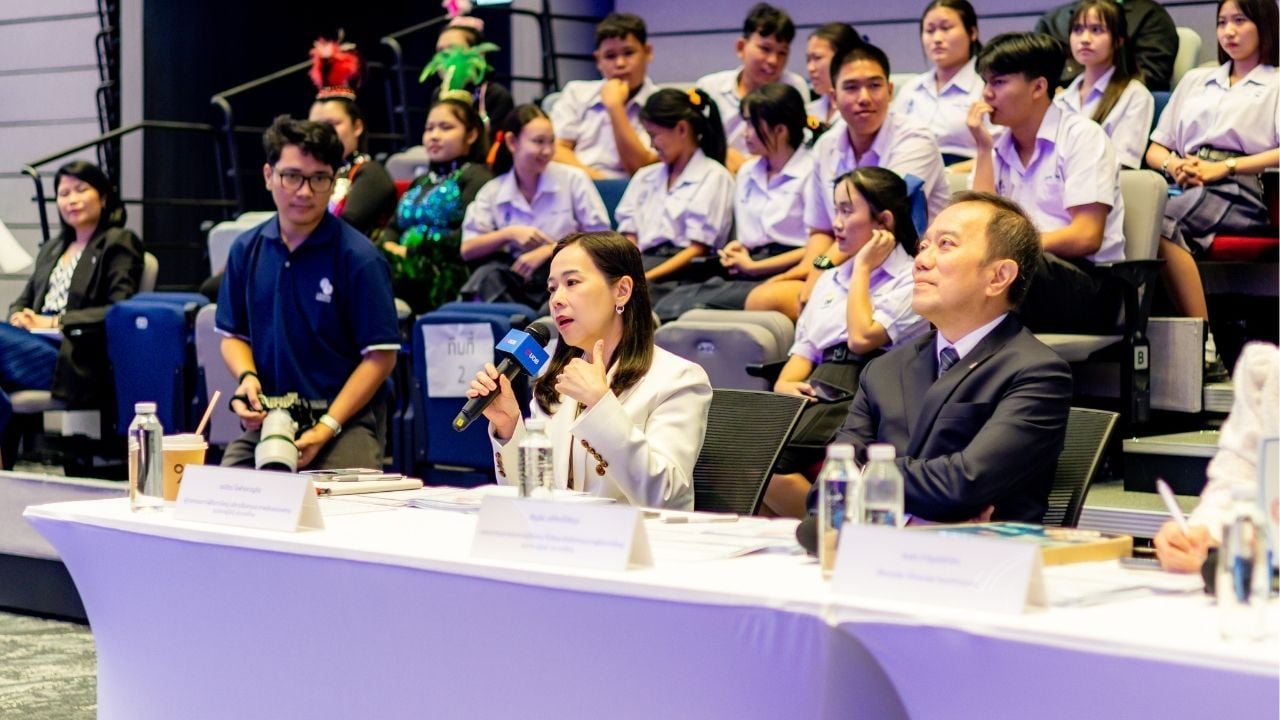
The results have been creative and impactful. One group of three students decided to target senior citizens in their community, recognising that while grandparents often have money, they may lack the skills to identify scams, a growing problem in Thailand. The students taught their elders not just budgeting basics, but cyber awareness to help them outsmart fraudsters.
Another group developed a financial literacy game using Roblox, reasoning that while the standard curriculum was useful, they could make learning more engaging for younger students through gamification. They then used their game to teach children in lower grades.
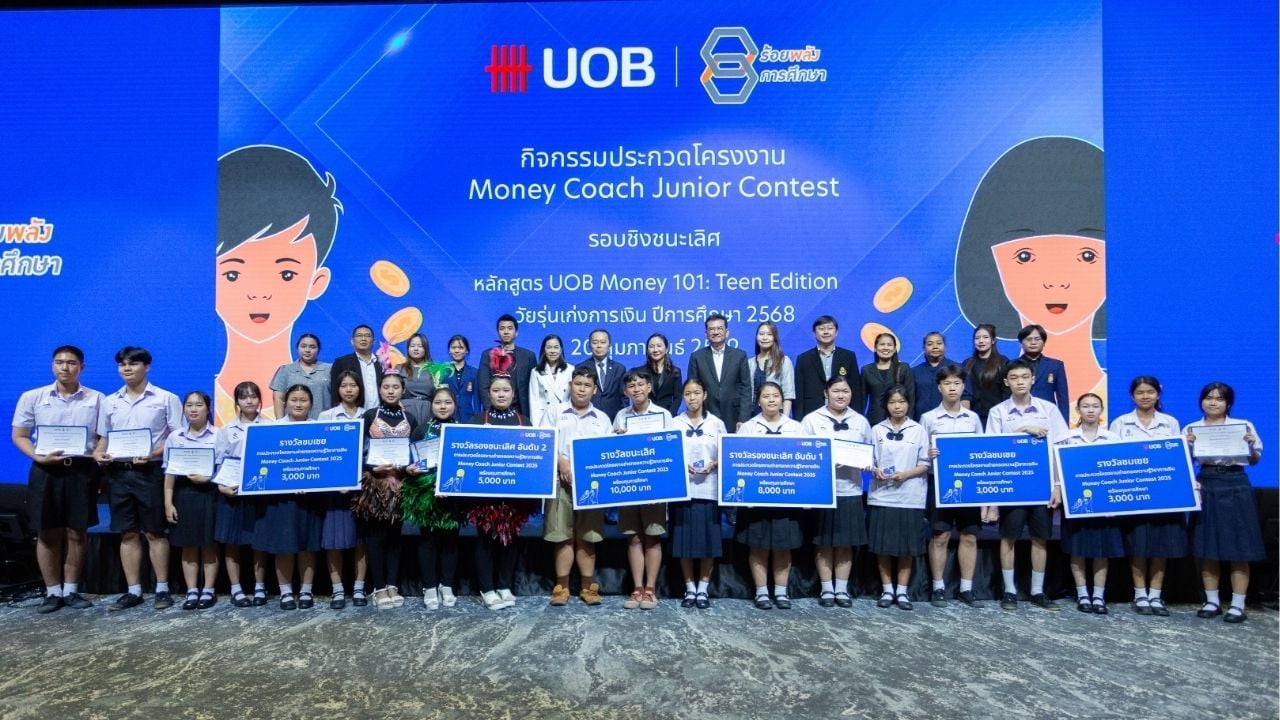
The programme measures success not only by numbers, but also by behavioural change. Students can actually maintain income-expense records, make better spending decisions, and demonstrate financial concepts through their own creative projects.
Dhornratana stressed the programme tracks behavioural change, such as whether students can keep income-expense records and make smarter decisions, rather than relying only on participation totals.
Programme 3: UOB Wonder Lab – Creating space for innovation
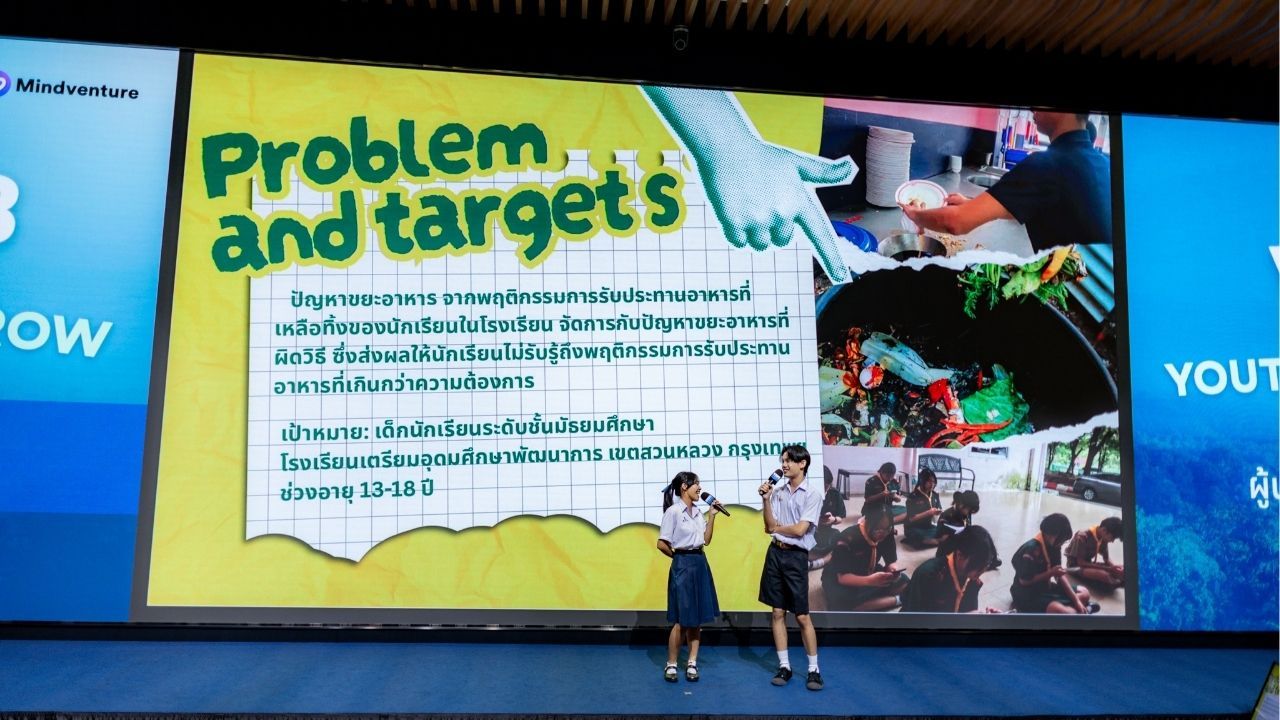
The third programme, UOB Wonder Lab, provides a platform for youth to develop sustainability-focused projects. In its first year, more than 400 students participated, with 102 teams submitting ideas and 10 finalists presenting their concepts.
Student innovations have ranged from the practical to the ambitious: turning pineapple waste into cat litter, using electronic waste to build air purifiers for donation to community foundations, and converting agricultural waste into sports equipment.
The pattern UOB identified was clear, in which young people have ideas, but often lack the space and support to develop them.
This year, UOB Wonder Lab is evolving significantly. Rather than students addressing problems in their immediate surroundings, UOB is partnering with real organisations to provide actual business challenges.
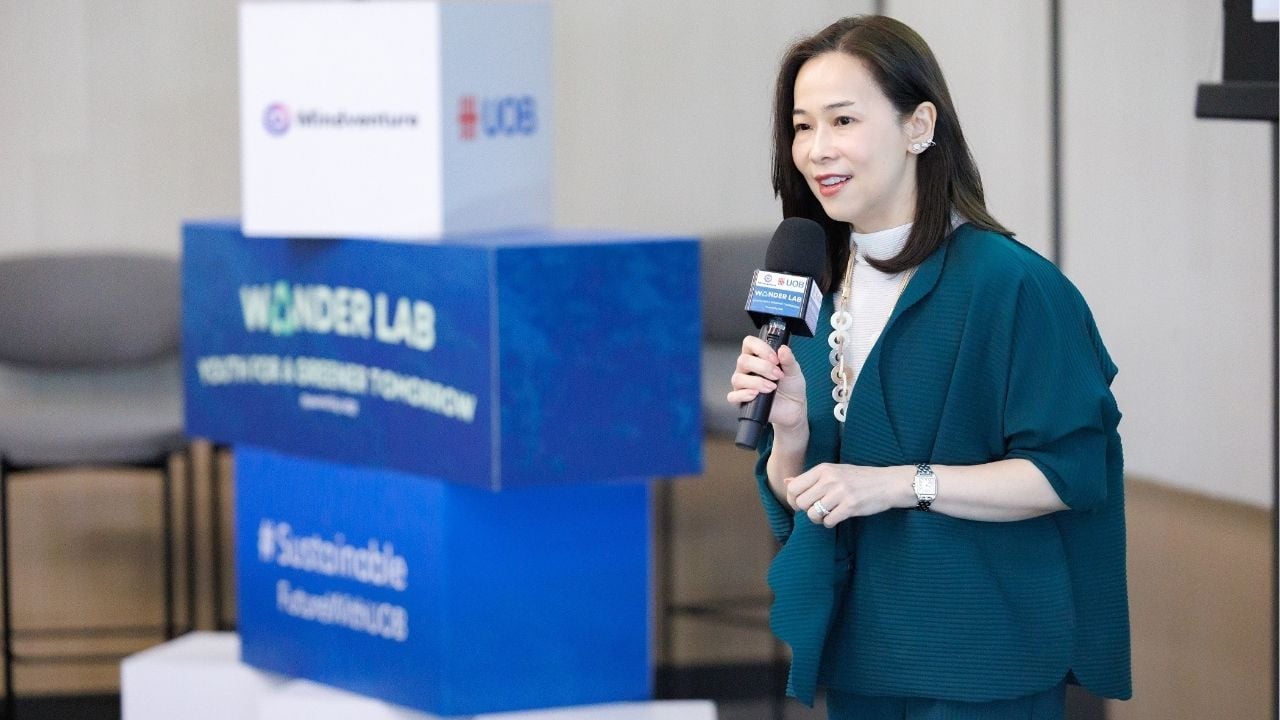
Students will receive proper briefings and mentorship, learning frameworks from design thinking through to pitching and presentation. The programme is expanding to include more university-level students, with a format moving closer to a hackathon structure.
The bank expects to present three to five different problem statements from partner organisations, for example, a company seeking to achieve net zero emissions within two years, asking students to propose solutions.
The goal is to connect youth innovation more directly to real-world working challenges, with longer-term ambitions to create a multi-country format that showcases projects from across the region.
A connected journey, not separate programmes
UOB emphasises that these three programmes are not independent initiatives but a deliberate progression. The bank sees national resilience as fundamentally dependent on youth readiness, which requires a foundation of quality education, financial discipline, and opportunities to create and drive new ideas.
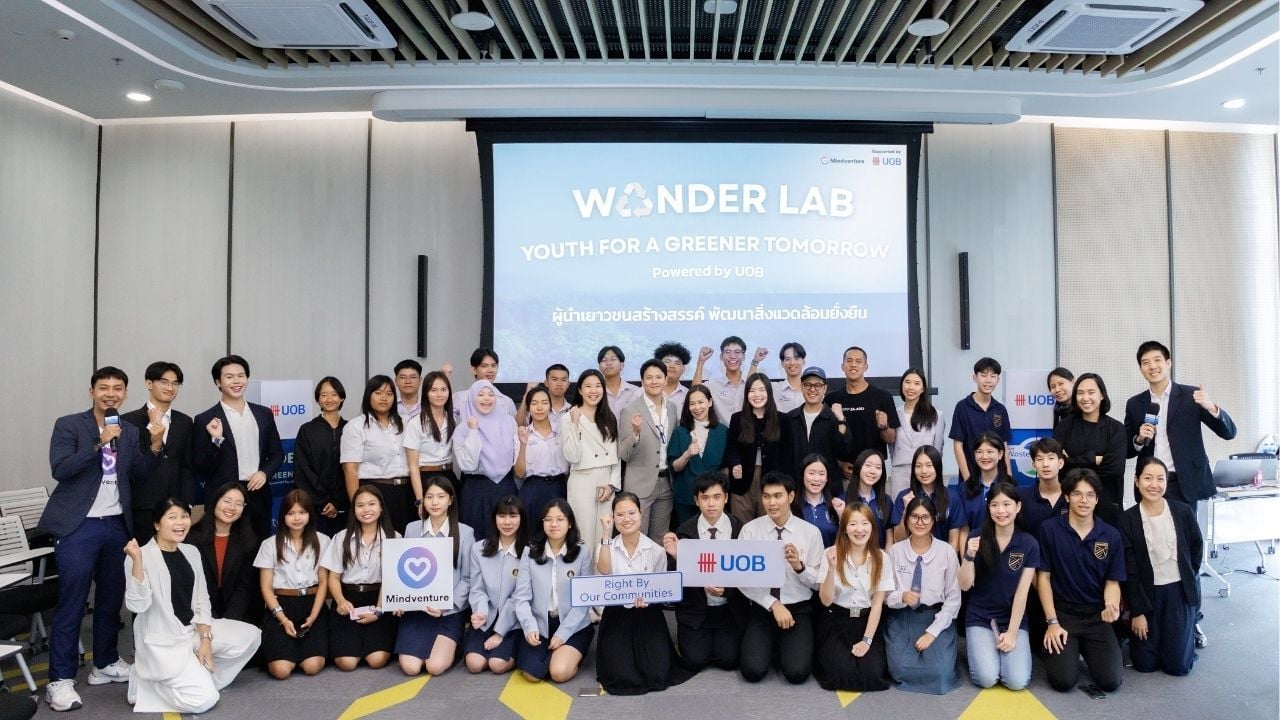
Students first gain access to digital learning tools and strengthen their academic foundations. They then develop financial responsibility and learn to make sound decisions with resources. Finally, they’re given space to innovate and contribute solutions to sustainability challenges.
Each stage builds on the previous one, with students from the digital classroom programme potentially continuing to Money 101, and then to UOB Wonder Lab as they advance in their education.
A different approach with depth over scale
Dhornratana said the bank prioritises depth because distributing equipment without training and follow-up often leads to underused or abandoned computer labs.
What distinguishes UOB’s approach is an explicit focus on depth rather than rapid expansion. The bank commits to three-year follow-ups with schools that receive digital classrooms. Before bringing a school into the programme, UOB conducts interviews to assess readiness and commitment. The goal is lasting change, not numbers on a report.
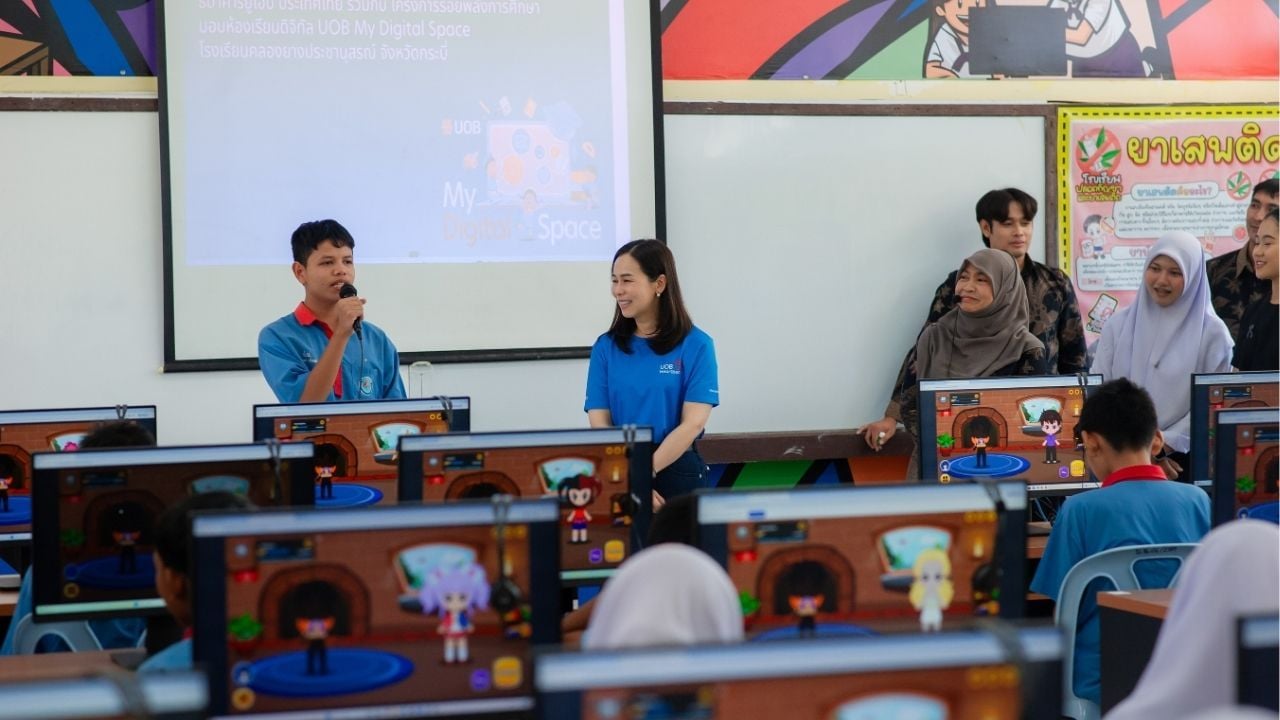
This philosophy extends to implementation. When the bank provides a digital classroom, teams of 30 to 50 employee volunteers visit schools, with staff able to take volunteer leave to participate. Funding comes primarily from employee fundraising and customer participation, rather than external sponsors, creating internal ownership of the outcomes.
The bank acknowledges this approach means slower growth and careful school selection, but points to abandoned computer labs from other initiatives as evidence that distribution without integration and support ultimately wastes resources.
Teachers already juggle multiple subjects, administrative duties, and curriculum development, adding technology without proper support and training simply becomes another burden rather than an enabler.
Building a more equitable Thailand
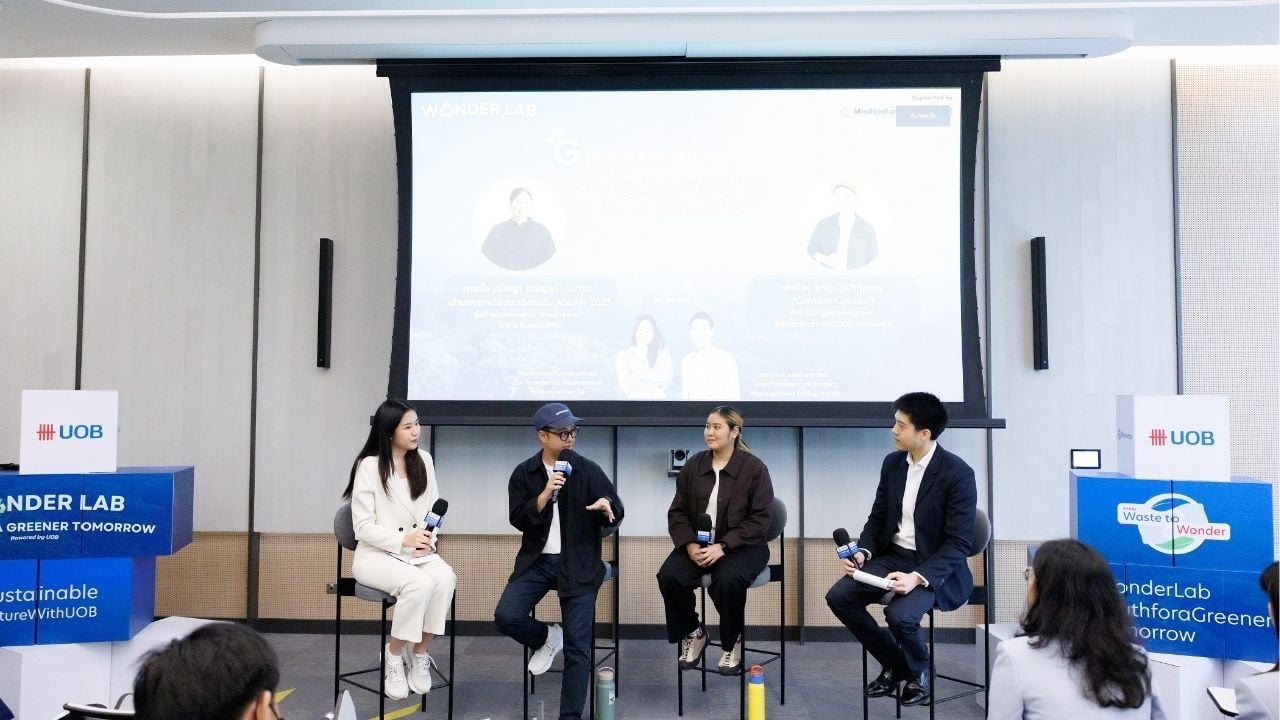
The programme’s geographic focus reflects a deliberate choice to address inequality. All 10 provinces in the My Digital Space initiative are in remote areas, and none are in major cities like Bangkok, Phuket, or Chiang Mai.
The reasoning is straightforward: urban schools have adequate resources, while the wealth disparity between Thailand’s major cities and rural areas means underserved schools should receive support first.
The hope is that by teaching youth in these areas to become financially literate and innovation-driven, the programmes can contribute to elevating Thailand as a whole, rather than widening the gap between those with access to resources and those without.
Why youth investment matters now
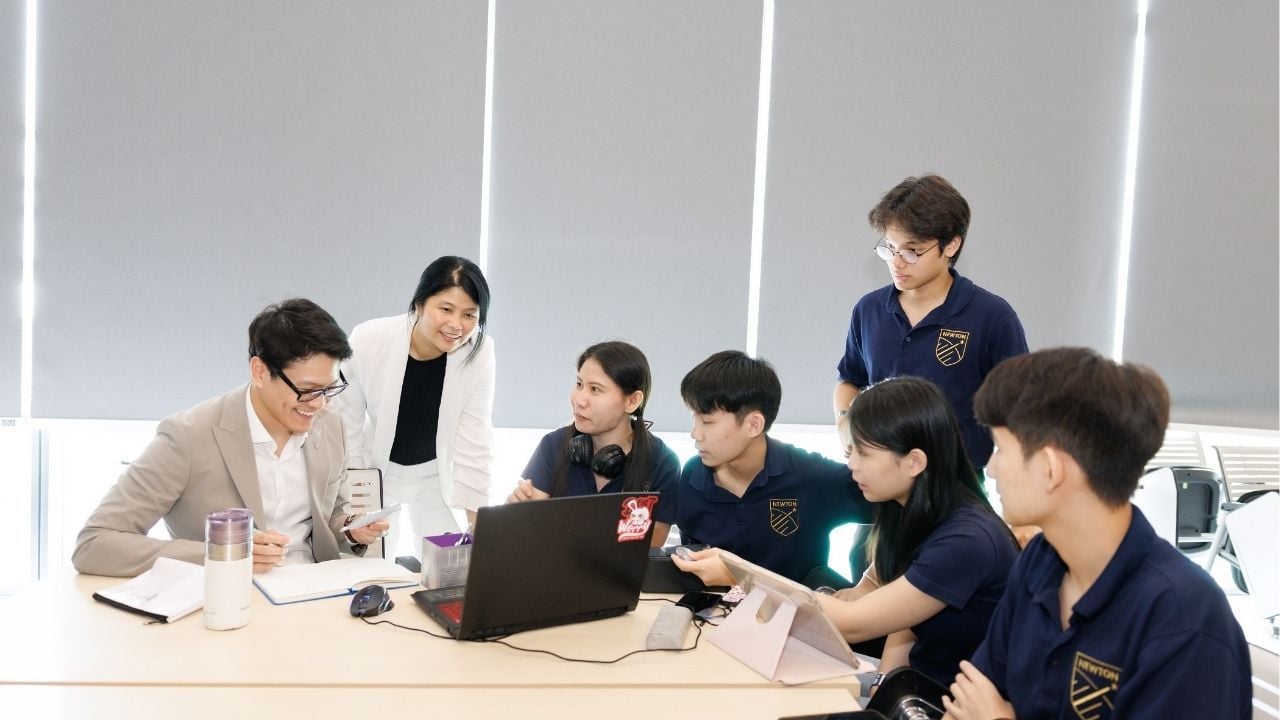
Thailand faces a pivotal moment. The country’s household debt remains high, digital transformation is accelerating, and the urgency of environmental sustainability grows more pressing each year. How Thailand’s current generation of youth navigates these challenges will shape the country’s stability and prosperity for decades.
UOB’s work suggests that preparing young people for this future requires more than good intentions or one-time interventions. It demands sustained commitment, deep partnerships with educators, and recognition that different communities face different obstacles.
It requires seeing potential where it has been overlooked, and creating pathways, access to technology, financial knowledge, and space for innovation, that allow that potential to develop.
Thailand’s future depends not on how many students are reached, but on how deeply they are prepared. Whether this approach can scale while maintaining its emphasis on depth, and whether other institutions adopt similar models, remains to be seen.
What’s clear is that for the students in remote schools who can now access learning from home, or for the teenagers teaching their grandparents to spot scams, the impact is already tangible.
Latest Thailand News

























Follow The Thaiger on Google News: