Why you still can’t get a direct flight from the US to Thailand

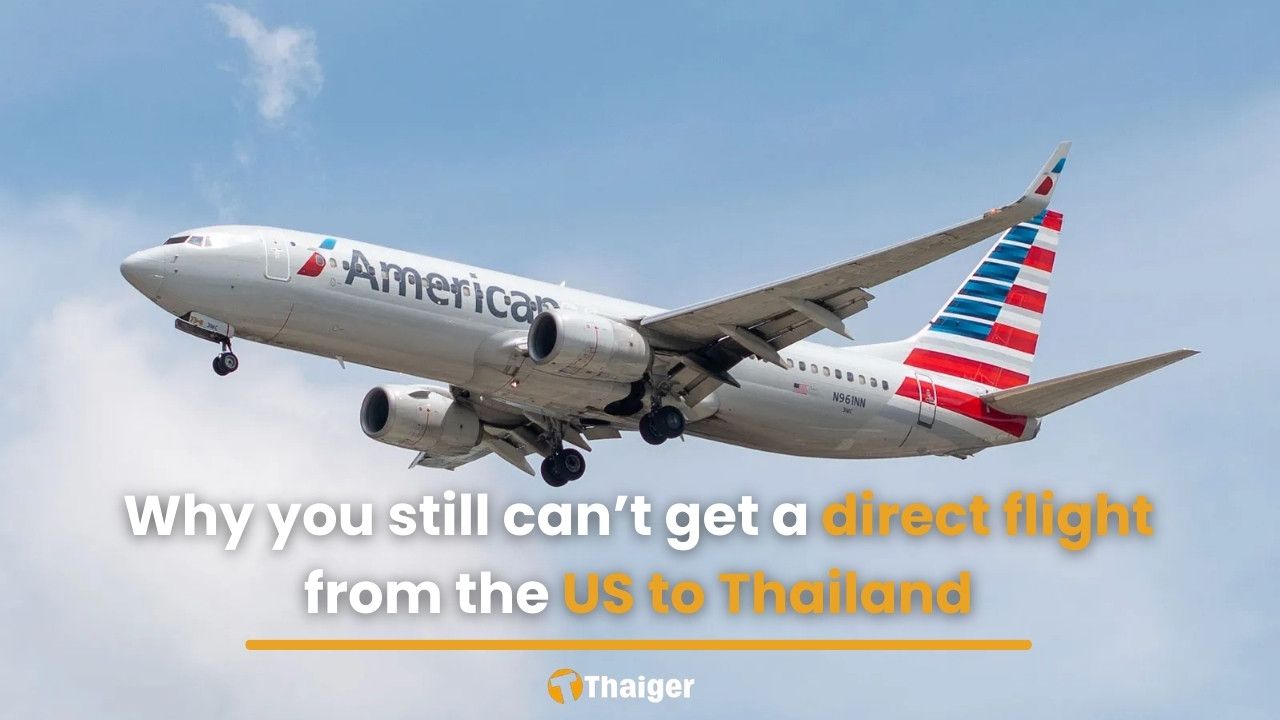
Thailand welcomed more than 35 million international visitors in 2024, and interest from US travellers continues to grow. Undoubtedly, Thailand has become a bucket-list destination for many Americans. Yet a question remains: Why are there still no direct flights between the United States and Thailand?
In reality, the answer is quite complex. A mix of aviation regulation, airline economics, aircraft technology and market demand has kept direct services off the map for years.
On this page
| Section | Summary |
|---|---|
| The FAA downgrade that froze routes for a decade | Thailand’s 2015 FAA Category 2 downgrade blocked Thai airlines from launching US routes and limited partnerships until Category 1 status returned a decade later. |
| Ultra-long-haul flights are brutally expensive | US–Thailand routes are among the longest in aviation, with high fuel costs, crew requirements, and limited premium demand making nonstop flights financially risky. |
| Thai Airways already tried direct US flights and lost money | Thai Airways previously operated nonstop flights to New York and Los Angeles, but the routes were loss-making due to inefficient aircraft and high operating costs. |
| Thai Airways’ restructuring changed priorities | Following bankruptcy protection in 2020, Thai Airways prioritised profitable regional and European routes while waiting for new long-haul aircraft deliveries later in the decade. |
| Why Air Canada can fly nonstop, but US airlines do not | Vancouver’s northern location shortens flight distance and reduces costs, allowing Air Canada to successfully operate nonstop Bangkok flights with less competition. |
| One-stop flights already meet demand | Strong global hub connections allow airlines to serve Thailand profitably without committing aircraft to challenging nonstop routes. |
| Demand from US travellers is rising fast | Growing tourism interest, social media exposure and new airline testing indicate increasing demand from US travellers visiting Thailand. |
| When could nonstop flights finally return | Strong premium demand, new aircraft deliveries and Thai Airways’ continued recovery will likely determine when nonstop routes become viable. |
| The future of nonstop US-Thailand flights | With regulatory barriers removed and tourism demand rising, nonstop flights appear increasingly possible in the late 2020s. |
The FAA downgrade that froze routes for a decade
In 2015, the US Federal Aviation Administration downgraded Thailand’s aviation safety oversight to Category 2. This did NOT mean Thai airlines were unsafe. Instead, the country’s aviation regulator did not fully meet international oversight standards.
Even with this in mind, the downgrade still had major consequences. Thai airlines could not launch new routes to the US, codeshare partnerships with American carriers were restricted, and long-haul expansion stalled for nearly a decade.
Thailand regained Category 1 status in April 2025, removing the regulatory barrier and allowing Thai airlines to once again expand US routes and partnerships. However, regulation was only one piece of the puzzle.
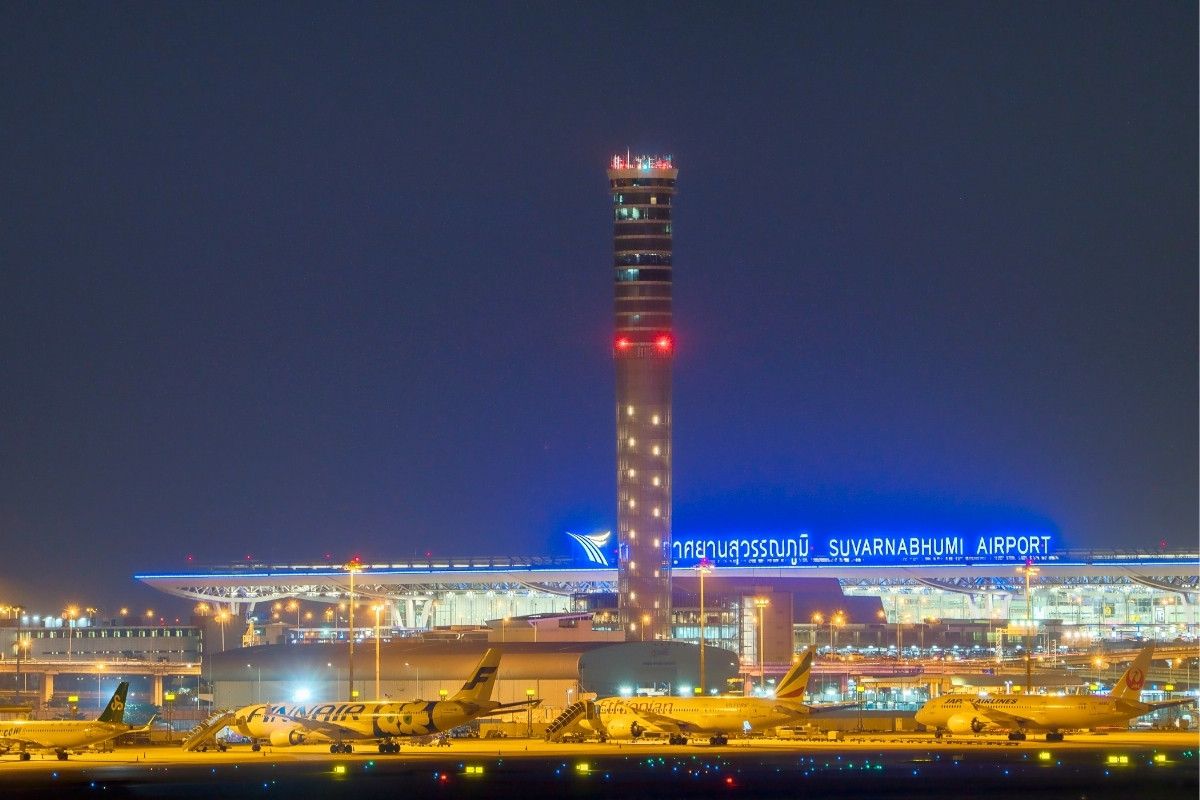
Ultra-long-haul flights are brutally expensive
Flying nonstop between the US and Thailand is one of the toughest routes in commercial aviation. The distance between Los Angeles and Bangkok is around 8,269 miles, placing it firmly in the ultra-long-haul category.


These flights face serious operational challenges as aircraft remain away from their home base for long periods, fuel consumption is extremely high, and airlines must carry extra crew for rest rotations. Weight restrictions can also reduce cargo capacity, cutting into another important revenue stream.
Ultra-long-haul routes usually succeed when they connect major business hubs. Cities such as Singapore and London generate strong premium cabin demand from corporate travellers willing to pay higher fares for convenience. Thailand, however, is primarily a leisure destination.
Most passengers travelling to Thailand could be considered as holidaymakers, digital nomads or people visiting friends and family. These travellers are typically more price-sensitive and are happy to accept a longer journey if it means saving money.
Without a strong pool of premium passengers, direct flights become far harder to justify financially.
Thai Airways already tried direct US flights and lost money
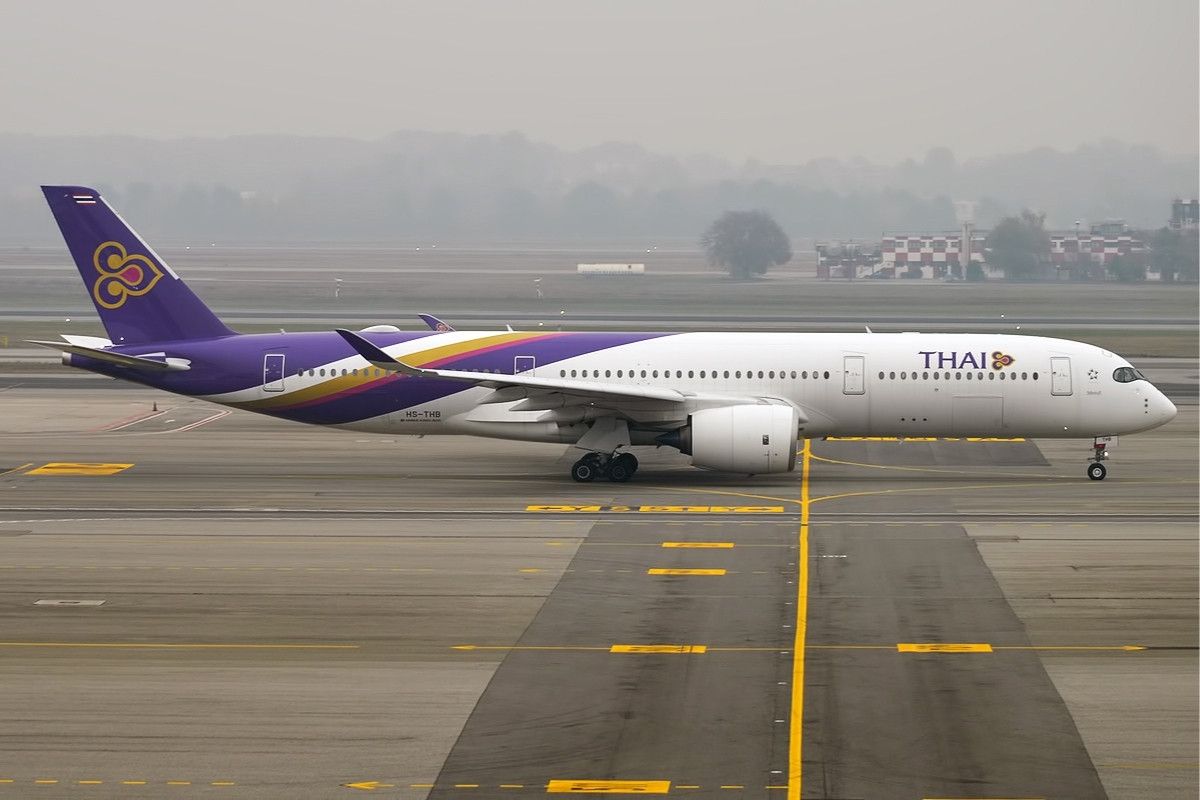
Thai Airways previously operated direct routes from Bangkok to both Los Angeles and New York using Airbus A340-500 aircraft.
These flights lasted up to 18 hours and were among the longest in the world at the time. Despite strong traveller interest, the economics did not follow suit. The aircraft used were not fuel-efficient enough, and the routes were consistently loss-making.
The New York route ended in 2008, followed by Los Angeles in 2015. This history still shapes airline decision-making today and explains why carriers remain cautious about returning.
Thai Airways’ restructuring changed priorities
The situation became even more complicated when Thai Airways entered bankruptcy protection in 2020 after years of financial losses. The airline has since undergone a major restructuring focused on rebuilding and returning to profitability.
Today, the carrier is prioritising routes that generate reliable revenue, particularly in Europe and across Asia. Even though Thailand regained its FAA Category 1 rating in 2025, US routes are not currently part of the airline’s short-term expansion plans.
Another challenge is aircraft availability. Thai Airways expects new long-haul aircraft deliveries later in the decade, with some arriving around 2027. Airlines typically need fleet growth and financial stability before launching high-risk ultra-long-haul routes.
Why Air Canada can fly nonstop, but US airlines do not
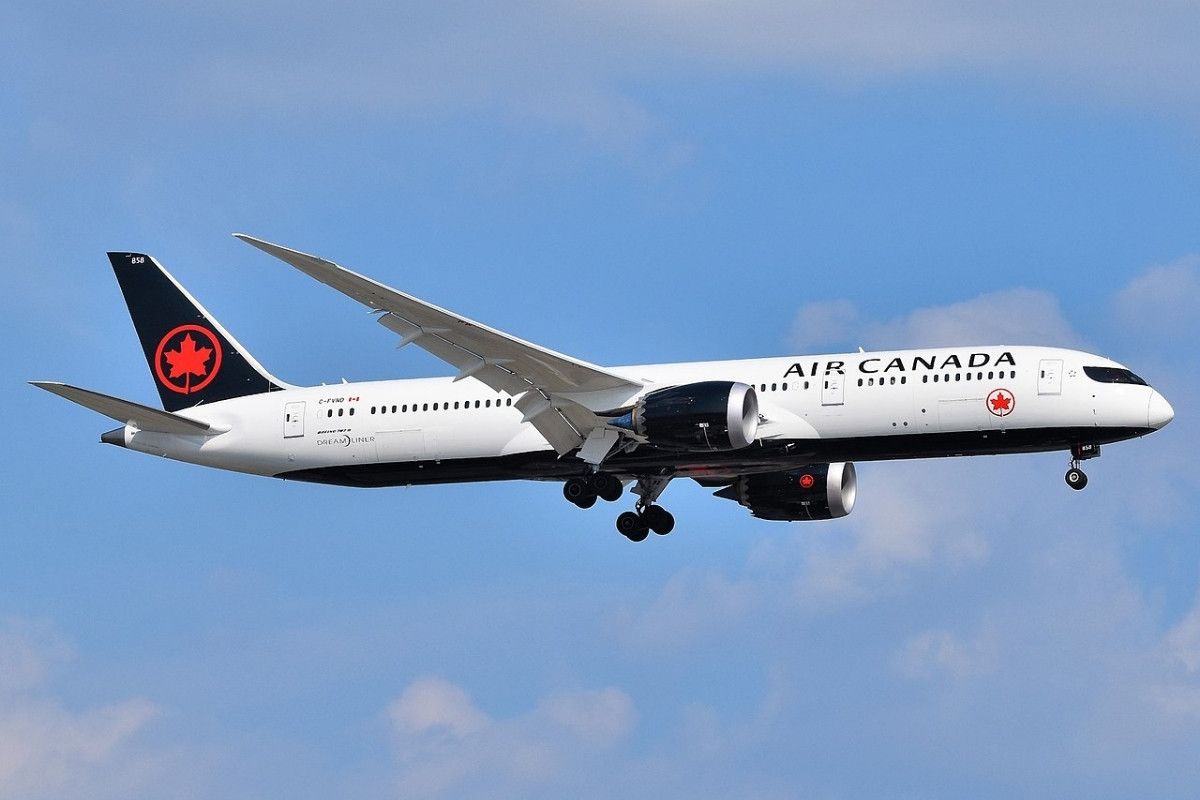
Air Canada currently operates nonstop flights between Vancouver and Bangkok, proving the route can work under the right conditions. Geography plays a major role.
Vancouver sits much further north than Los Angeles, making the route nearly 1,000 miles shorter. That difference significantly reduces fuel consumption and operating costs. The Canadian carrier also faces less competition on Southeast Asia routes from its Vancouver hub, allowing it to serve a niche market successfully.
Direct flights are possible, but only when the economics align.
One-stop flights already meet demand
Another major reason nonstop services remain limited is that travellers already have plenty of alternatives. Passengers can reach Thailand through major hubs across Asia, the Middle East and Europe.
Popular connection hubs include:
- Tokyo
- Seoul
- Taipei
- Hong Kong
- Dubai
- Doha
- London
- Frankfurt
From a business perspective, the current system works well. Airlines can profit from the demand without committing aircraft to a challenging nonstop service.
Demand from US travellers is rising fast
While nonstop flights remain rare, demand from American travellers is growing quickly. Thailand’s tourism industry has gained increased visibility in recent years thanks to social media, luxury travel trends and television productions filmed in the country.

The latest season of The White Lotus has been widely credited with boosting US interest in destinations such as Koh Samui. United Airlines has already begun testing the market by launching a Los Angeles to Bangkok service via Hong Kong in 2025, suggesting airlines are watching demand closely.
When could nonstop flights finally return
The return of nonstop US-Thailand flights will likely depend on several factors aligning. Airlines need stronger premium demand, more fuel-efficient aircraft and confidence in long-term profitability. Thai Airways also needs to complete its financial recovery and expand its long-haul fleet.
Several conditions must align:
- Strong growth in premium travel demand
- Delivery of newer long-haul aircraft
- Continued recovery of Thai Airways
- Confidence in long-term profitability
Most industry observers see the late 2020s as a more realistic timeframe rather than an immediate return.
The future of nonstop US-Thailand flights
There is no single reason why nonstop flights remain rare. The reality is a mix of regulation, economics, airline finances, aircraft availability and strong existing connection networks.
The regulatory barriers have been removed, aircraft technology continues to improve, and tourism demand is rising. Nonstop flights between the United States and Thailand may not be here yet, but they are closer than they have been in years.
Related articles:
⋅ New international flight routes to Thailand
⋅ The essential guide to domestic flights in Thailand
⋅ United Airlines resumes Bangkok flights after 11-year hiatus
Latest Thailand News

























Follow The Thaiger on Google News: