Thailand-Europe airfares surge after Middle East airspace closures

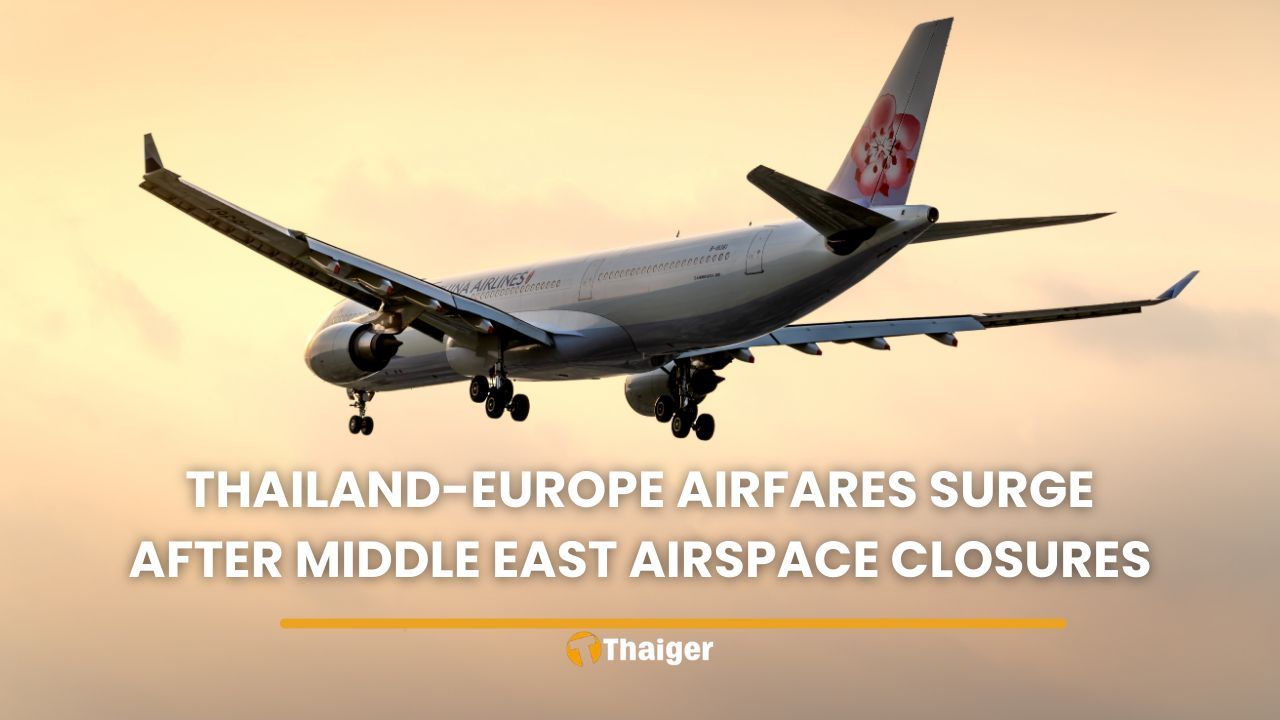
Thailand to Europe airfares have surged by up to 100% after Middle East airspace closures linked to the Israel-Iran conflict disrupted flights and reduced seat capacity on Europe routes.
Thai Airways and other carriers are showing limited availability and sharply higher prices, according to Thailand’s Civil Aviation Authority (CAAT), Thai officials and airline website checks.
CAAT said yesterday, March 4, that eight Middle Eastern airlines operating in Thailand had suspended flights, cutting capacity on key international routes, particularly to Europe. The regulator said the closures affected major Gulf carriers that previously handled more than 10,000 passengers per day from Thailand.
Acting Transport Minister Phiphat Ratchakitprakarn said Thai Airways had reported fully booked Europe-bound flights as European tourists shifted to direct services instead of transiting through the Middle East. Many flights were fully booked through next week, while fares on airlines still operating rose sharply.
On the Bangkok-London route, CAAT said one-way economy fares on Thai Airways International had risen to more than 70,000 baht from an average of about 30,000 baht. It also said Singapore Airlines fares had increased to around 58,000 baht.
A Reuters check of the Thai Airways website showed Bangkok-London tickets sold out until late the following week, with high fares when seats were available. A one-way economy ticket was listed at 71,190 baht (US$2,265) on March 15, before dropping to 27,045 baht by March 18.
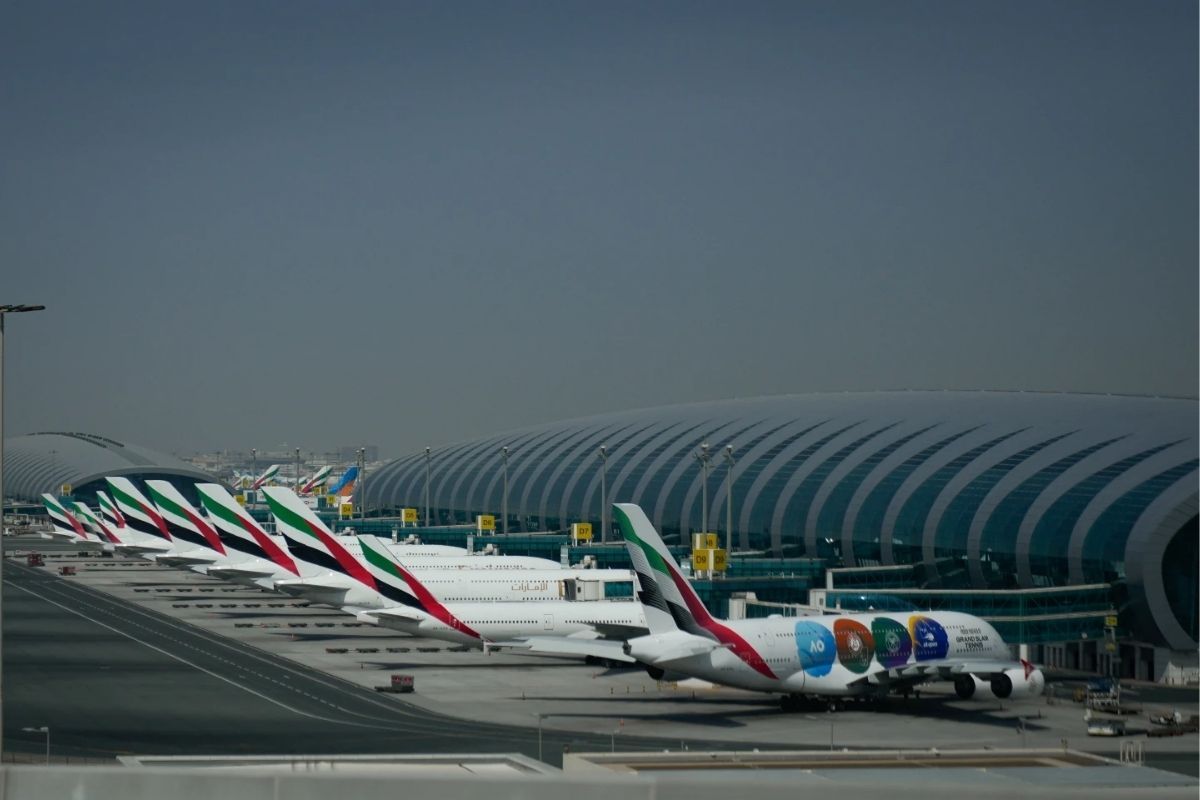
Major Gulf hubs, including Dubai, remained closed for a fourth day yesterday, Reuters reported. Dubai, the world’s busiest international airport, normally handles more than 1,000 flights a day.

The closures have reduced capacity on heavily travelled routes such as Australia to Europe, where Emirates and Qatar Airways typically hold a large market share. Reuters checks of several airline websites yesterday showed few near-term bookings and high prices for flights from Asia to London.
CAAT said the fare increases reflected strong travel demand and reduced supply, with prices moving closer to maximum market levels. The regulator said it has no authority to cap international ticket prices because fares are set by competition, seasonal demand and bilateral aviation agreements.
CAAT added that its oversight is limited to slot allocation, passenger rights and safety standards. Officials also warned that rising global oil prices could push aviation costs higher and lead to further increases in fares.
The regulator said airlines affected by the disruption could seek approval to raise fuel surcharges for cargo operations, which are included in ticket prices. As of the time of reporting, no airline had formally requested a surcharge adjustment.
On March 4, CAAT invited Emirates and Qatar Airways for talks to monitor assistance for stranded passengers, including accommodation, refunds and rebooking arrangements following the airspace closures.
Airlines able to operate non-stop Asia-Europe flights can avoid closed Middle East airspace by routing north via the Caucasus and Afghanistan, or south via Egypt, Saudi Arabia and Oman. However, longer routings may increase flight times and fuel use, raising costs at a time of higher oil prices.
According to a report by Bangkok Post, Subhas Menon, head of the Association of Asia Pacific Airlines, said the disruption was costly for airlines. He said that if Europe could only be served at high cost, airline profitability would be undermined, adding that connectivity would be the price paid in the end.
Latest Thailand News
























Follow The Thaiger on Google News: