Lost your license plate in Thailand? Here is what to do next
The paperwork, fees, and timeline for replacing a missing license plate in Thailand

Your license plate is missing. Maybe the monsoon rains swept it clean off the bracket, maybe it bent beyond recognition in a minor scrape, or maybe you walked back to your parked car and noticed it had simply vanished. Whatever the cause, driving without a plate in Thailand is a legal issue you need to resolve quickly—and the process is more straightforward than you might expect, provided you show up with the right paperwork.
Here is everything you need to know about replacing a lost, stolen, or damaged license plate in Thailand as an expat.
On this page
| Section (Click to jump) | Summary |
|---|---|
| Why this matters | Driving without a legal licence plate can lead to fines, voided insurance after accidents, and serious legal risk if a stolen plate is used in crimes. DIY or handwritten plates are treated as counterfeits and carry severe penalties. |
| Lost, stolen, or damaged? Your first step differs | The correct first step depends on the situation. Lost plates can go straight to the DLT, stolen plates should be reported to the police, and damaged plates must be surrendered when collecting replacements. |
| What documents do you need? | Expats must prepare passport copies, a visa, an entry stamp, a vehicle registration book, and proof of residence via a work permit, an immigration certificate, or an embassy affidavit. Power of Attorney rules apply if using a representative. |
| Step-by-step: the DLT process | Book via DLT Smart Queue, visit the office where the vehicle is registered, submit documents, pay fees, keep the receipt as a temporary substitute, and collect the new plate after production. |
| Watch out: road tax and inspections | Replacement plates cannot be issued if the road tax has expired. Owners may need compulsory insurance, vehicle inspection, and tax payment before applying. |
| Financed vehicles: an extra layer | Vehicles under finance require borrowing the registration book, paying a deposit, and obtaining corporate authorisation from the lender before proceeding. |
| Provincial mismatch | Replacement plates must be issued in the province where the vehicle is registered. Travelling back is usually easier than transferring registration to a new province. |
| Avoid the agents (or at least know the risks) | Official fees are low, so high agent prices reflect service costs. Always request official receipts and avoid handing over registration documents without proper safeguards. |
Why this matters
Under Section 11 of Thailand’s 1979 Motor Vehicle Act, every vehicle on public roads must display a legally issued, unobstructed license plate at all times. The fine for driving without one is up to 2,000 baht, and while that might seem manageable, the bigger risks are elsewhere.
If you are involved in an accident while driving without a plate, your insurer, whether mandatory Por Ror Bor or your voluntary Class 1 policy, can classify your vehicle as illegally operated and void your coverage entirely, leaving you personally liable for all damages. On top of that, if a stolen plate ends up attached to another vehicle used in a crime, you want a paper trail proving it was out of your hands.
Do not attempt to make a temporary plate yourself. A handwritten or DIY substitute is treated as a counterfeit and carries penalties of up to five years in prison and a 10,000 baht fine.
Lost, stolen, or damaged? Your first step differs
Before heading anywhere, identify your situation:

- Lost (fell off, washed away in floods, detached on a rough road): You can go directly to the Department of Land Transport (DLT). No police report is required, though you can choose to file one.
- Stolen: File a police report first and keep a copy. This is not always legally mandatory for the DLT process, but it protects you if the plate number is later connected to crimes or traffic violations.
- Damaged or badly faded: Keep the damaged plate with you. You will need to physically hand it back to the DLT when you collect the new one.
What documents do you need?
This is where expats hit the most friction. Prepare everything below before making the trip.
Identity and vehicle documents:
- Original passport
- Signed photocopies (in blue ink only) of: your biographical page, your current non-immigrant visa, and your most recent entry stamp
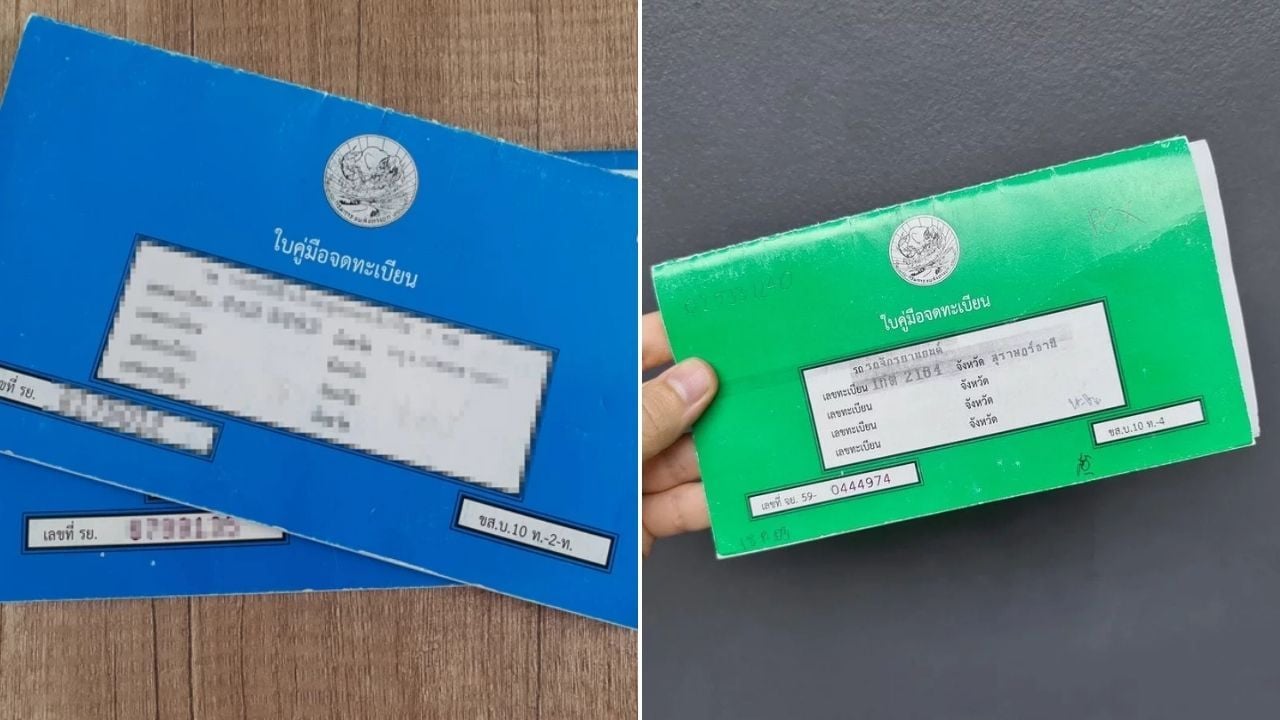
- Original Blue Book (ใบคู่มือจดทะเบียนรถ) for cars, or Green Book for motorcycles
Proof of residence
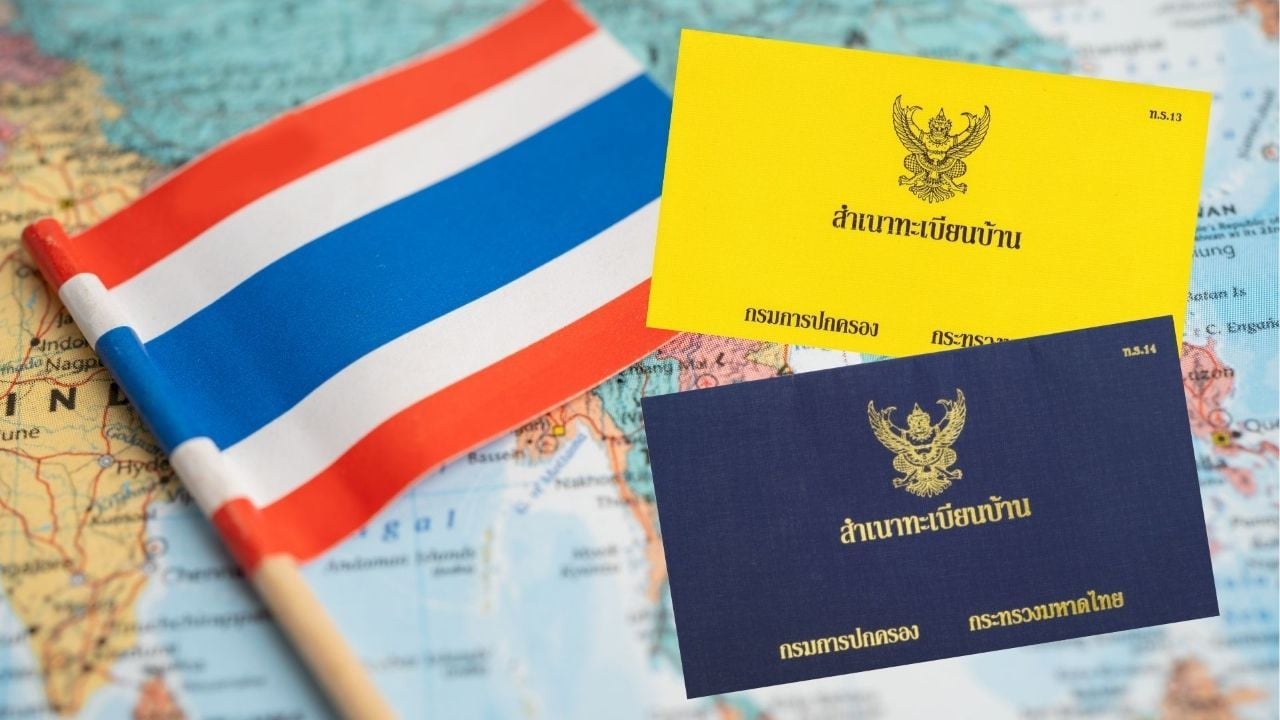
Thai citizens use their House Registration Book. As an expat, you have three options:
Option 1: Physical Work Permit. If your work permit booklet lists your residential address, signed copies of every page are generally accepted. Note: Digital work permits often omit home addresses and are frequently rejected by DLT offices.
Option 2: Immigration Certificate of Residence. The most common route for retirees and those without a compliant work permit. Obtain this from your local Immigration Bureau office. You will need your passport, a copy of your lease or title deed, and your TM30 receipt (the document your landlord files to report your residence). Cost is typically around 1,000 baht and is valid for 30 days from issue—so time your DLT visit accordingly.
Option 3: Embassy or Consular Affidavit. Some embassies provide a notarised address certification for their citizens. The DLT accepts these without question, but fees range from 500 to 2,000 baht depending on your nationality.
If you cannot attend in person
The DLT accepts a representative with a written Power of Attorney (หนังสือมอบอำนาจ). This document must have physical stamp duty affixed, not digital, as follows:
| Type of Authority Granted | Stamp Duty Required |
|---|---|
| Single act (one visit, one task) | 10 baht |
| Joint acts, more than once | 20 baht |
| Multiple continuous/separate acts | 30 baht |
For a straightforward plate replacement, 10 baht is technically sufficient. Many experienced agents affix 30 baht worth of stamps to cover any unexpected complications on the day.
Step-by-step: the DLT process
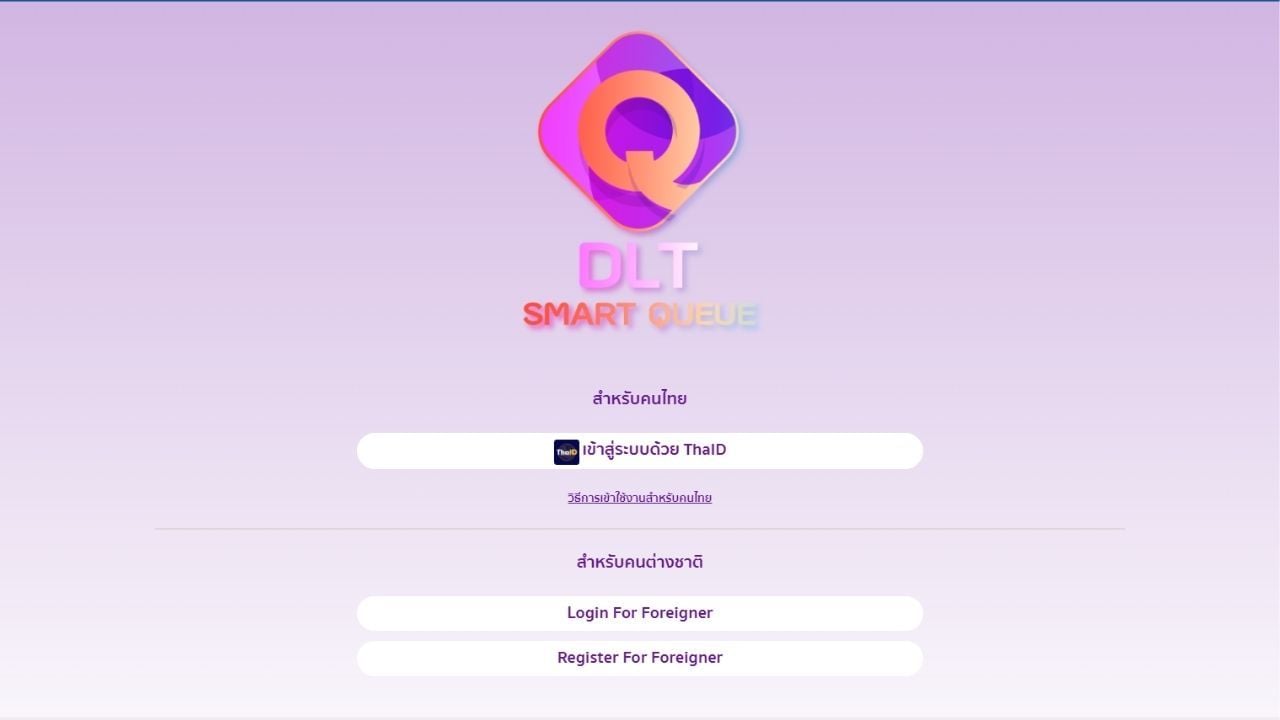
- Book your appointment via the DLT Smart Queue app or online at https://gecc.dlt.go.th. The system has a foreigner-specific flow accepting passport numbers. If the app rejects your data (a common frustration), walk-ins are permitted but deprioritised—arrive as early as possible.
- Go to the correct office, so your replacement must be processed at the DLT office responsible for the province where your vehicle is registered. Bangkok vehicles go to one of five DLT Area offices (the central office on Phaholyothin Road, Chatuchak). Provincial vehicles go to that province’s transport office.
- Submit your documents and pay fees, and let staff verify your paperwork, collect fees, and issue an official receipt. Note the payment cutoff is typically 3.30pm, so plan accordingly.
- Keep your receipt, as this is your legal substitute for the missing plate while you wait. Carry it in the vehicle at all times alongside your Blue or Green Book.
- Collect your new plate and install it immediately. If your case was damaged rather than lost, surrender the old plate at pickup.
What it costs
| Fee | Cars | Motorcycles |
|---|---|---|
| Application fee | 5 baht | 5 baht |
| Plate fee (per plate) | 100 baht | 100 baht |
| Typical total | 205 baht (front + rear) | 105 baht (rear only) |
| Special/auction plate | 600 baht per plate | 600 baht |
How long will you wait?
| Registration | Typical production time |
|---|---|
| Bangkok | ~5 business days |
| Provinces | ~10 business days |
During this period, avoid cross-provincial travel if you can. Your receipt is legally valid, but being stopped at a checkpoint without a plate will require you to explain the situation every single time.
Watch out: road tax and inspections
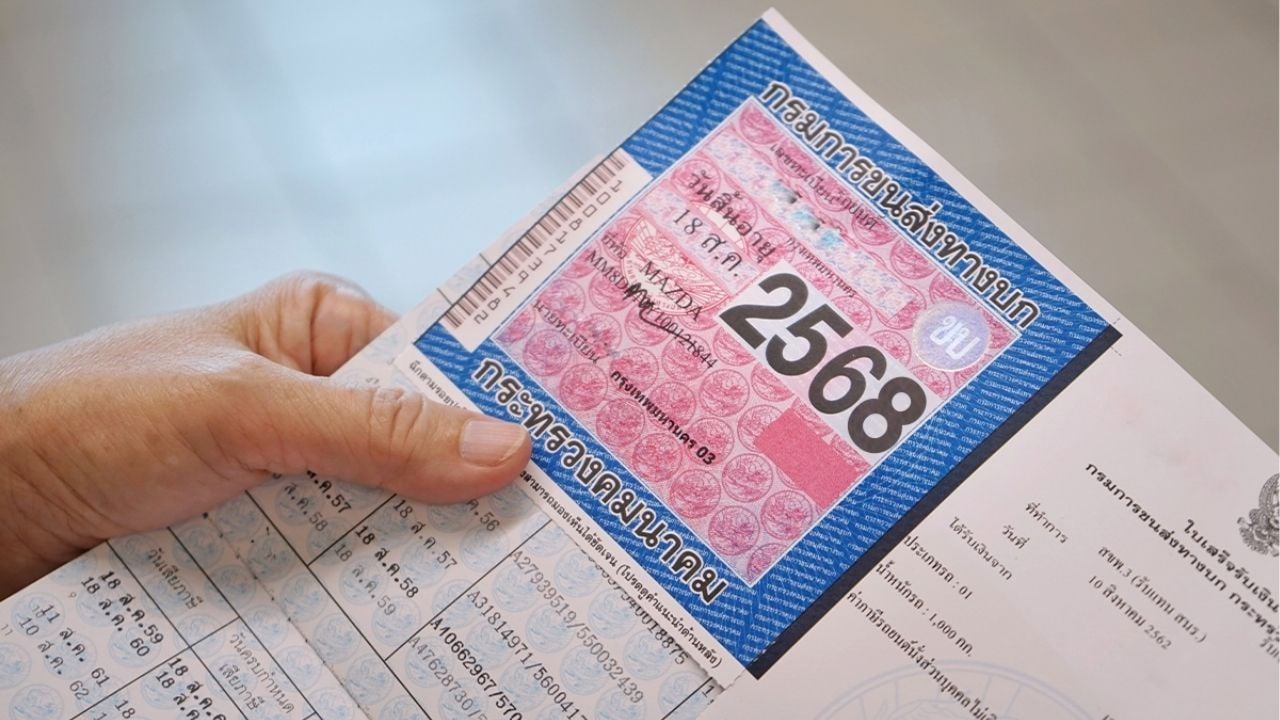
The DLT will not issue a replacement plate if your annual road tax has expired. Before your visit, check that your tax sticker is current. If it is not, you will need to:
- Purchase a valid Por Ror Bor compulsory insurance
- Have your vehicle pass a Tor Ror O (ตรอ) technical inspection if your car is older than seven years or your motorcycle is older than five years (cost: 200 to 500 baht)
- Pay the outstanding road tax
- Only then apply for your replacement plate
What looks like a 105 baht errand can quietly become a multi-day process if your tax has quietly lapsed.
Financed vehicles: an extra layer
If your vehicle is under a finance or hire-purchase agreement, the lender holds your original Blue or Green Book. You cannot proceed without it. Contact your finance company first and expect:
- A cash deposit of 2,000 to 5,000 baht to borrow the registration book
- Confirmation that all payments are up to date (arrears will block the release)
- A corporate Power of Attorney from the finance company authorising you to request the replacement on their behalf, along with their company registration certificate and the signatory’s ID
Some finance companies handle the DLT process internally for a service fee—expensive, but worth considering if you cannot afford days away from work.
Provincial mismatch
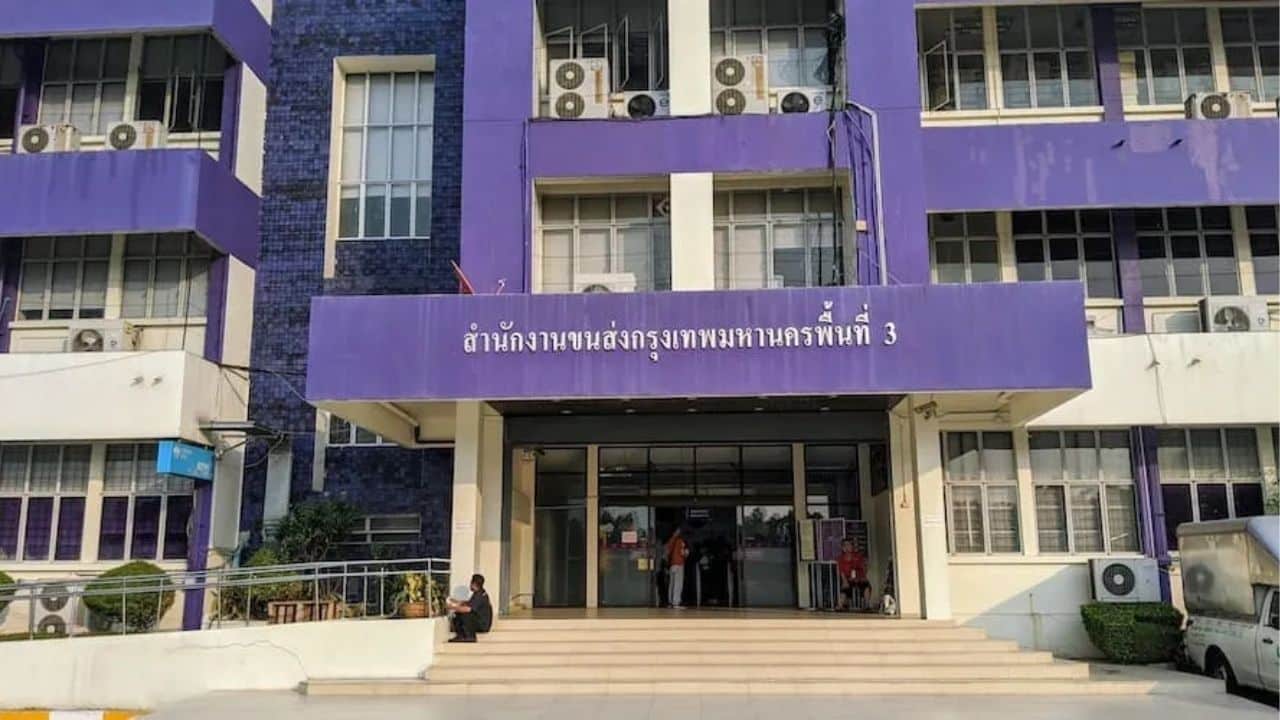
If your plate is registered in one province and you are currently in another, you cannot simply walk into the local DLT. The replacement must be processed in the province of registration. The alternative, a full inter-provincial transfer, involves significant fees, a physical inspection, and new proof of residence for the new province. For most people, travelling back to the original province is the simpler option.
Avoid the agents (or at least know the risks)
The official DLT fees are very low—205 baht for a car, 105 baht for a motorcycle. Any agent quoting significantly more is charging a service premium on top. That may be worth it for your time, but always insist on an official DLT receipt for every payment and never hand over your original registration book without a clear chain of custody. Unscrupulous agents have been known to quote inflated fees under the guise of travelling to another province on your behalf.
For English-language help at police stations or in urgent situations, contact the Tourist Police hotline at 1155.
Useful official links
- DLT Smart Queue
- DLT e-Service (plate requests + vehicle tax)
- Thai Police Online reporting: https://www.thaipoliceonline.go.th
Get your documents together before you go, double-check your road tax, and book your queue slot in advance. The DLT process itself is fast once you are through the door—it is the preparation that makes or breaks the day.
Related articles:
• Is it cheaper to drive electric vehicles in Thailand?
• A foreigner’s guide to getting a Thai driver’s license in Thailand
• How Thailand’s new traffic fines are playing out?
Latest Thailand News






















Follow The Thaiger on Google News: