The best EVs in Thailand right now – Our top picks for 2026

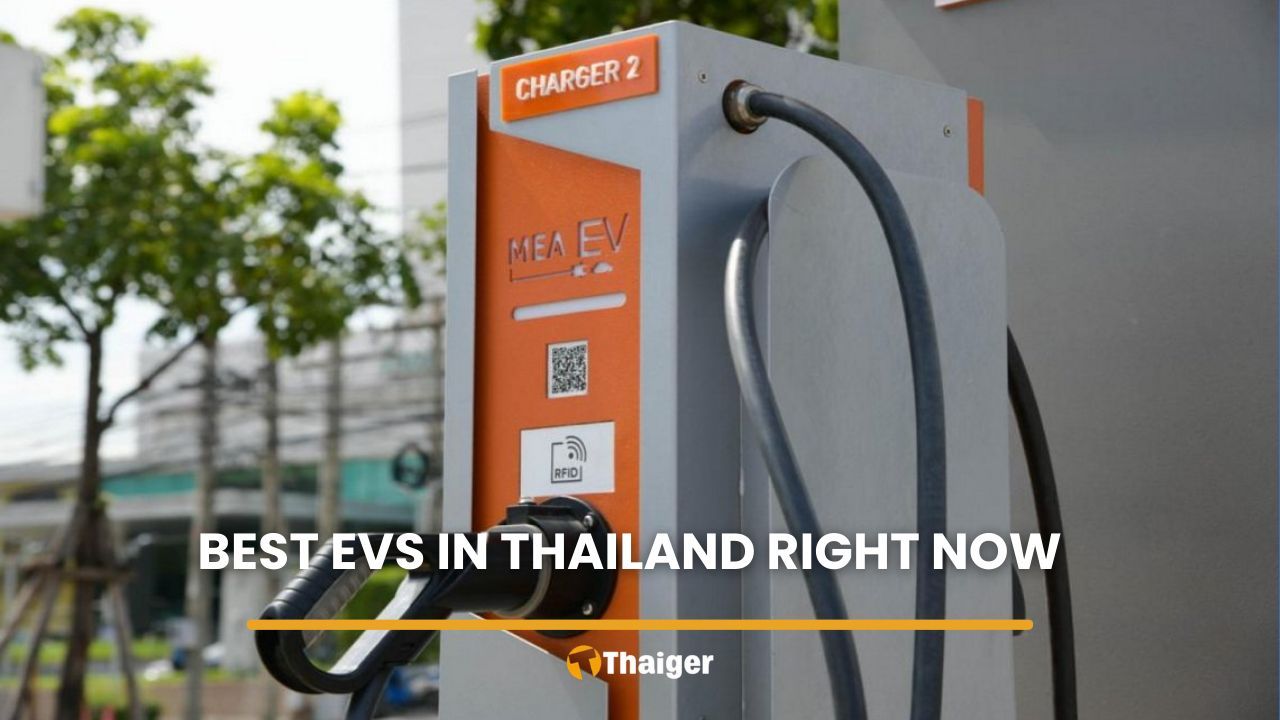
Every time oil prices spike (as they currently are with the US-Israel conflict against Iran), fuel market prices respond with jitteriness. And now, more than ever, sentiments of switching to an electric vehicle (EV) in Thailand for 2026 have never echoed this loudly.
If I were to present this idea to you as recently as this past year, your answer would most likely be along the lines of “EVs are just not there yet” or “Charging them would still take ages, so it’s not entirely worth it.”
But the thing is, this simply isn’t true anymore. In just a handful of years, EVs have progressed exponentially to the point where price and performance rival their tried and true petrol gas guzzling counterparts.
In 2025, over 60 models from more than 15 brands are on sale in Thai markets. Prices have been slashed aggressively, as Chinese brands dominate the entry and mid-range, and the government’s EV 3.0 subsidy scheme gave consumers a reason to switch, for the first time.
The problem now isn’t whether to buy an EV, it’s figuring out which one. So we’ve done the legwork. Below are our top picks across five categories, plus one wildcard entry for a specific type of buyer. All are pure battery-electric vehicles (BEV), all are under ฿2 million, and all are on sale right now through official Thai dealerships.
On this page
| Section | Short summary |
|---|---|
| Best value | The Deepal S05 BEV stands out for combining a low starting price with features and charging performance that are uncommon at this level. |
| Best range | The Tesla Model 3 Long Range RWD offers the longest range under 2 million baht, making it the strongest option for longer trips. |
| Best luxury | The Volvo EX30 Ultra delivers premium materials, strong safety features, and a refined interior at a price well below German rivals. |
| Fastest charging | The Xpeng G6 Long Range leads in charging speed, though its highest peak depends on access to compatible ultra-fast chargers. |
| Best performance | The BYD Seal Performance AWD offers the quickest acceleration and strongest power figures in this group at a highly competitive price. |
Best value: Deepal S05 BEV
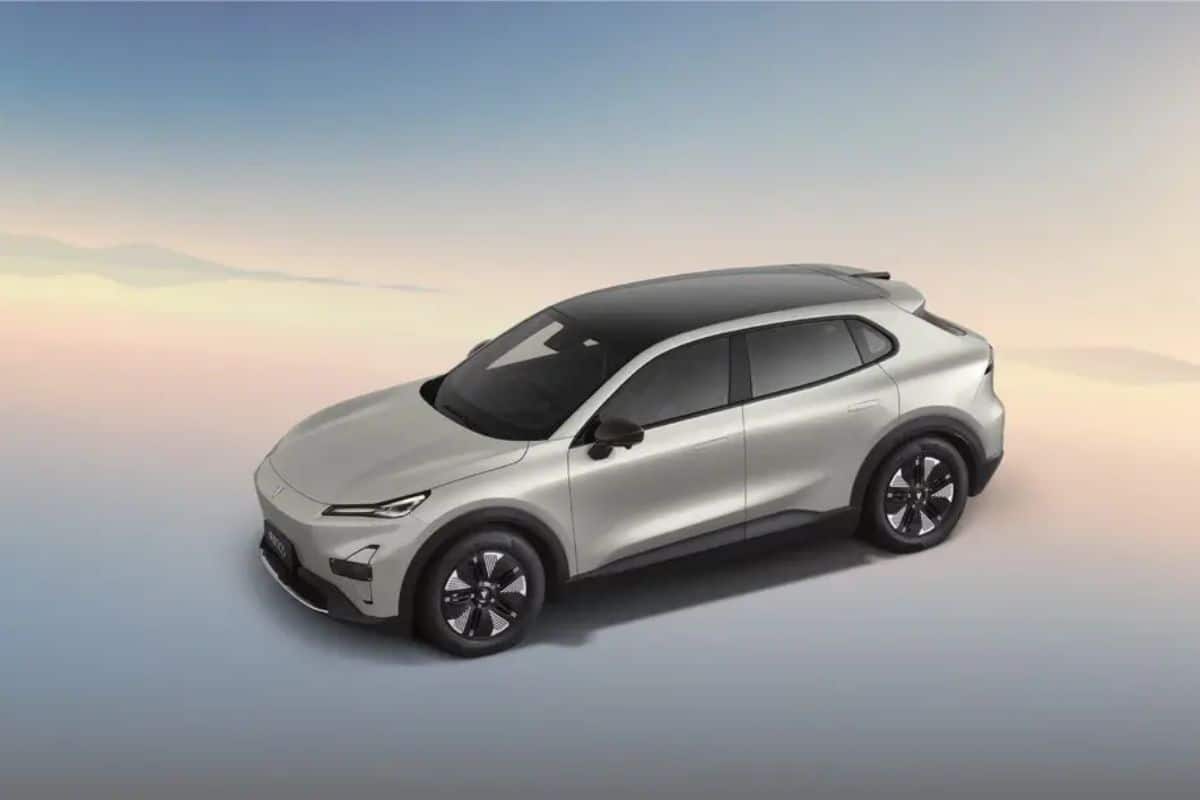
Is it possible for a sub-฿800,000 car to come with an augmented reality head-up display, 3C fast charging, a 159-litre frunk, and frameless doors? The short answer is yes, and it’s the Deepal S05, assembled locally at Changan’s Thai plant since May 2025.


The entry-level Lite variant starts at ฿799,000 and packs a 238 PS rear motor and 320 Nm of torque, a 56.12 kWh CATL LFP battery good for around 470 km (NEDC), and a feature list that most ฿1.5 million cars struggle to match.
The 15.4-inch 2.5K display paired with AR-HUD and a Qualcomm Snapdragon processor means no lag when you try to change something on your stereo. There’s also a 13-litre temperature-controlled centre console compartment and a panoramic sunroof as standard across all trims. In terms of topping up the juice, fast charging peaks at around 150 kW, enough for a 30 to 80% top-up in roughly 15 minutes.
A mid-range Plus variant sits at ฿849,000 and adds ventilated front seats and an upgraded 14-speaker audio system.
Step up to the Max BEV variant at ฿999,000, and you get a 68.82 kWh battery stretching range to approximately 560 km NEDC, a revised 272 PS motor, and a 0 to 100 km/h time of 6.5 seconds. Note: the ฿999,000 Max at the top of the range is the REEV (range-extender) version, not a BEV.
Key specs (Lite):
- Battery: 56.12 kWh CATL LFP
- Range: ~401 km NEDC
- Max DC charging: ~150 kW
- 0–100 km/h: 7.3 seconds
- Torque: 320 Nm
- Warranty: 5 years / 8 years battery
Best range: Tesla Model 3 Long Range RWD
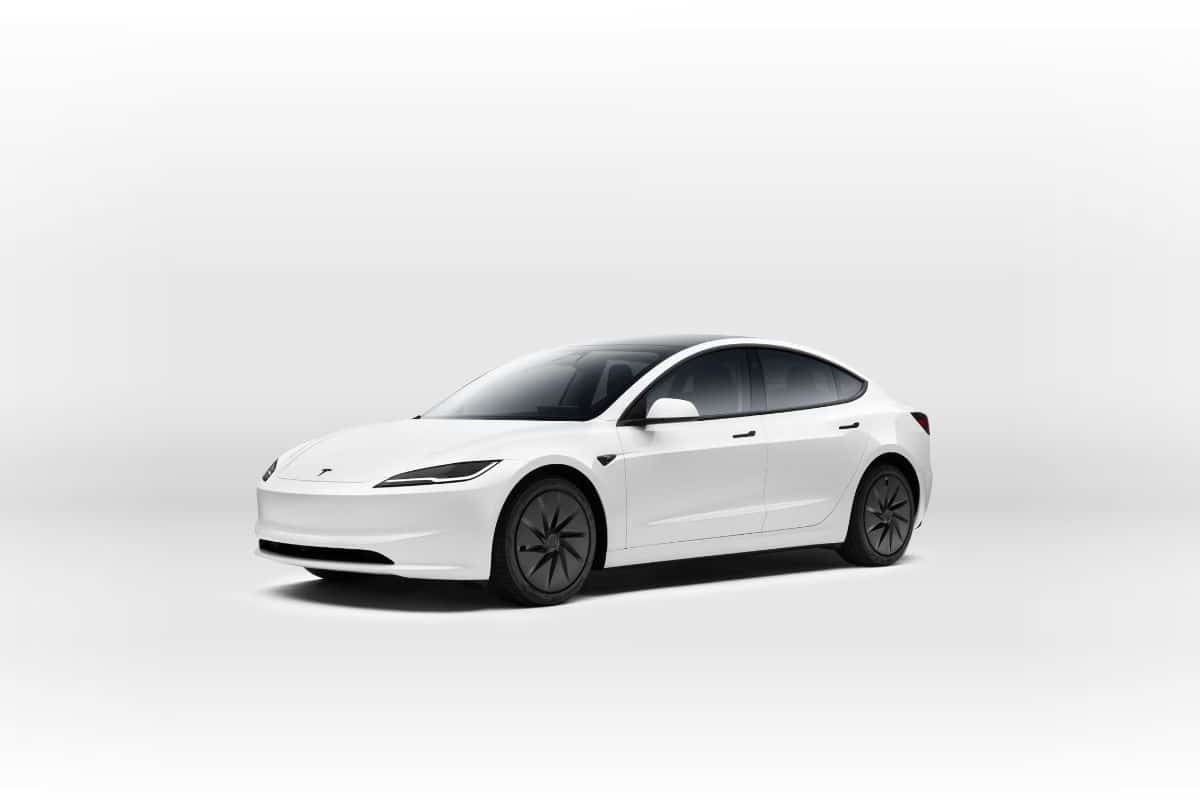
Range anxiety is a real consideration in Thailand, where public charging outside Bangkok and major cities is still patchy (though infrastructure is improving rapidly). The Tesla Model 3 Long Range RWD, launched here in October 2025 at ฿1,599,000, settles that debate more convincingly than any other car on this list.
Tesla states the range hovers around 750 km, which gives the Model 3 Long Range RWD the longest range of any BEV under ฿2 million. In practice, Thai roads and temperatures can push that further.
Automotive YouTuber Bjørn Nyland drove over 900 km on a single charge in Thailand at steady highway speeds, comfortably beating the official figure. Bangkok to Chiang Mai on one charge is genuinely achievable.
The rest of the package holds up. DC charging peaks at 250 kW on Tesla’s Supercharger network, adding around 308 km in 15 minutes. The premium interior includes a 17-speaker audio system, heated and ventilated front and rear seats, an 8-inch rear passenger screen, and basic Autopilot as standard.
Thailand now has 33 Supercharger stations with 201 stalls, with expansion ongoing.
It’s worth noting that Tesla’s lineup in Thailand has expanded significantly. The Model 3 now spans five variants:
- Standard RWD (฿1,149,000)
- Premium RWD (฿1,439,000)
- Long Range RWD (฿1,599,000)
- Long Range AWD (฿1,799,000)
- Performance AWD (฿2,099,000)
The Standard uses a smaller LFP battery with 534 km WLTP range and 175 kW DC charging, a solid option if the Long Range’s price is a stretch.
Key specs (Long Range RWD):
- Battery: ~84.7 kWh NMC
- Range: 750 km WLTP (18″ wheels)
- Max DC charging: 250 kW (Supercharger)
- 0–100 km/h: 5.2 seconds
- Top speed: 201 km/h
- Warranty: 4 years vehicle / 8 years battery & drivetrain
Best luxury: Volvo EX30 Ultra Single Motor
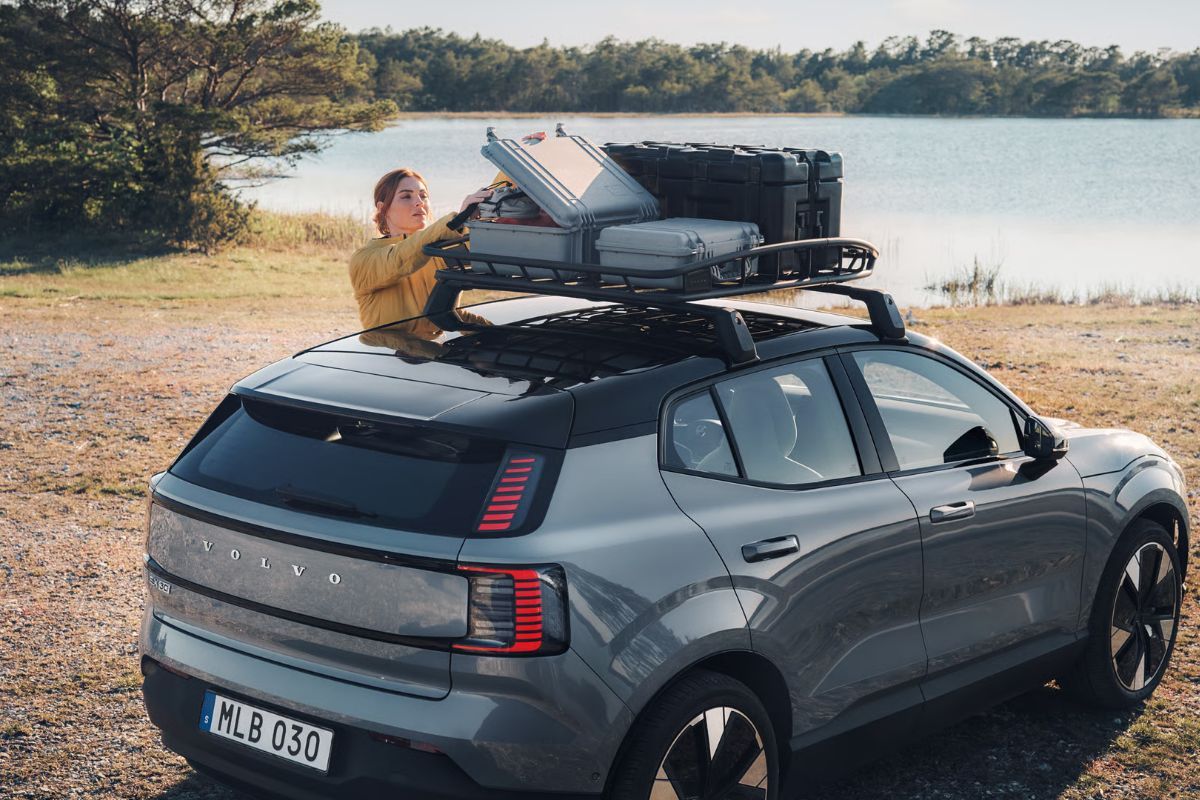
No BMW or Mercedes-Benz electric vehicle gets close to ฿2 million in Thailand. The BMW iX1 opens at ฿2,499,000; the Mercedes EQB at ฿3,020,000. That hands the luxury category to the Volvo EX30 Ultra, and to its credit, it earns the title rather than just inheriting it.
The EX30 Ultra is a compact SUV, priced at ฿1,790,000, that punches well above its size in interior quality. Sustainably sourced materials, a clean Scandinavian design, and a 1,040-watt Harman Kardon 9-speaker system.
The Ultra trim adds a panoramic sunroof, powered and heated front seats, a powered tailgate, a 360-degree camera, and dual-zone climate, none of which feature on the ฿1,590,000 Core trim.
Under the bonnet, a 272 PS rear motor produces 343 Nm and sprints to 100 km/h in 5.3 seconds. Range sits at around 476 km from the 69 kWh battery, with DC charging reaching 153 kW for a 10 to 80% top-up in about 28 minutes.
Volvo’s 5-star Euro NCAP safety rating and comprehensive ADAS suite round out a convincing premium package.
There is also a third variant, the Ultra Twin Motor Performance at ฿1,890,000, which uses a dual-motor AWD setup producing 422 PS and 543 Nm. It covers 0 to 100 km/h in 3.6 seconds, but the range drops slightly to around 460 km WLTP.
This sits just under the ฿2 million ceiling and remains the only performance-oriented European EV SUV at this price in Thailand.
Key specs (Ultra Single Motor):
- Battery: 69 kWh NMC (64 kWh usable)
- Range: ~476 km WLTP
- Max DC charging: 153 kW
- 0–100 km/h: 5.3 seconds
- Top speed: 180 km/h
- Warranty: 3 years vehicle / 8 years battery
Fastest charging: Xpeng G6 Long Range
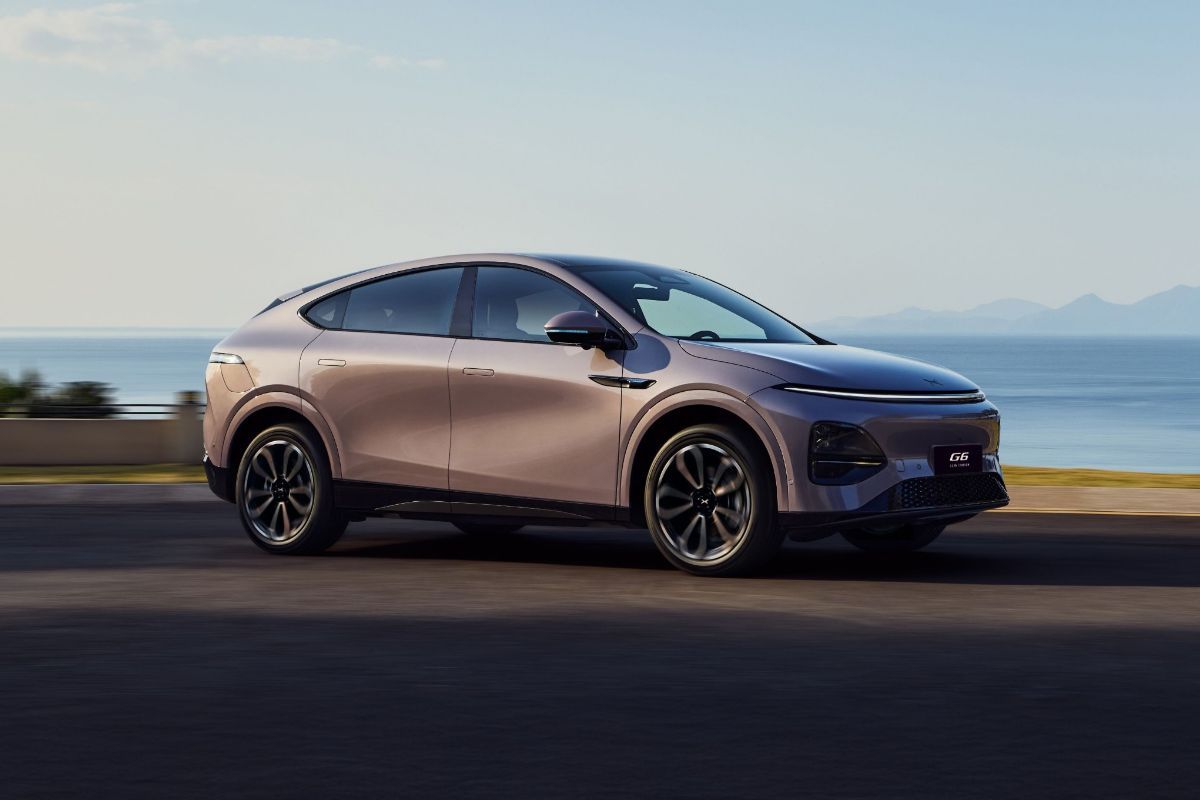
Most EVs in Thailand top out at 150 to 200 kW DC charging. The 2025 Xpeng G6 facelift, launched here in August 2025, accepts 451 kW. That is not a typo.
Its 800-volt silicon carbide platform with a 5C-rated 80.8 kWh LFP battery that charges from 10% to 80% in 12 minutes, faster than any other production EV under ฿2 million, anywhere. To put it in perspective: a Tesla Model 3 LR at a Supercharger adds about 250 km in 15 minutes. The G6 at a compatible 800V charger adds roughly 400 km in the same window.
The Xpeng G6 Long Range, priced at ฿1,349,000, also offers 525 km WLTP range and a 296 PS motor producing 440 Nm of torque that covers 0 to 100 km/h in 6.7 seconds with a top speed of 202 km/h.
The 2025 facelift brought 81 improvements, including a Snapdragon 8295P-powered 15.6-inch display, an Nvidia Orin-X ADAS processor, 18-speaker audio, a suede headliner, and 6 kW V2L capability.
The AWD Performance variant at ฿1,489,000 cuts the sprint to 4.13 seconds and retains the same 451 kW charging. Its dual-motor setup produces a combined output of 551 PS and 717 Nm, and range is marginally lower at 510 km WLTP.
One caveat worth knowing: the 451 kW peak requires a compatible 800V ultra-fast charger, which remains rare in Thailand. At the 150 to 200 kW chargers that make up most of the public network, the G6 still charges faster than rivals thanks to its high-voltage architecture, just not at full potential.
Key specs (Long Range RWD):
- Battery: 80.8 kWh LFP (800V, 5C)
- Range: 525 km WLTP
- Max DC charging: 451 kW (10 to 80% in 12 min)
- 0–100 km/h: 6.7 seconds
- Torque: 440 Nm
- Top speed: 202 km/h
- Warranty: 5 years / 8 years battery
Best performance: BYD Seal Performance AWD
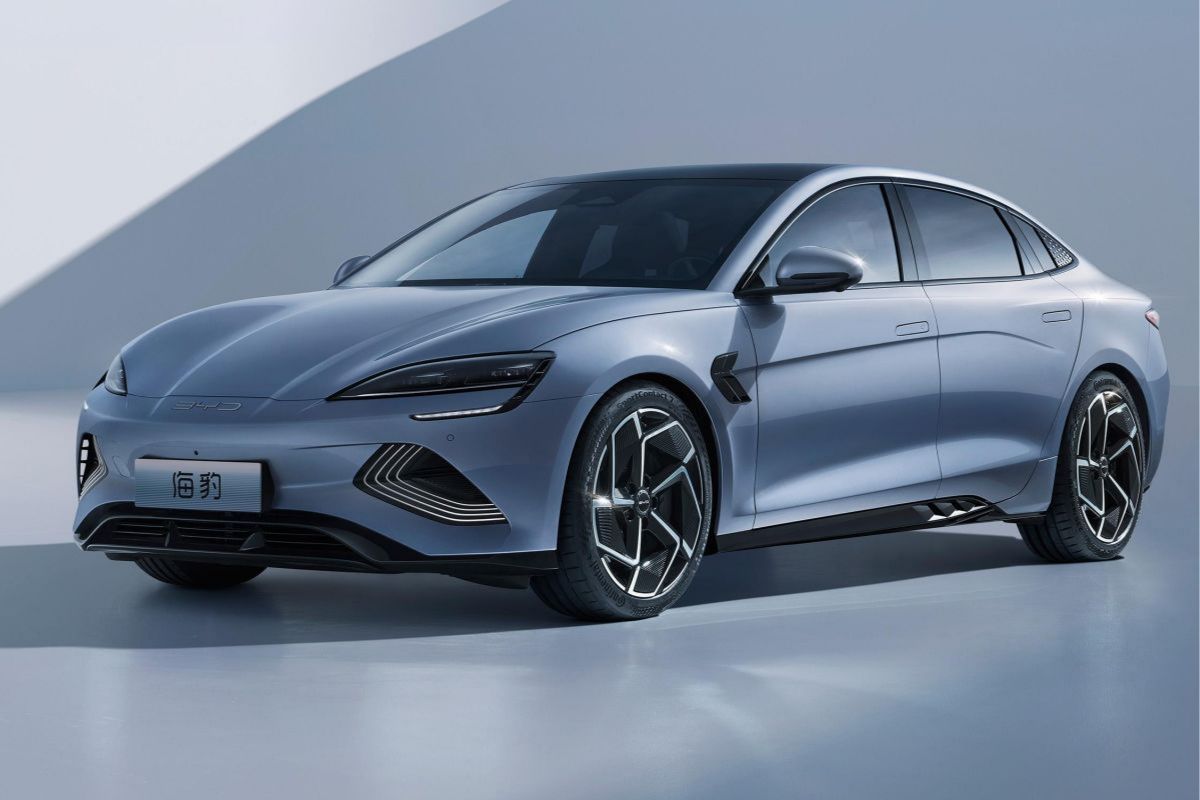
A 3.8-second 0 to 100 km/h time. 530 PS. 670 Nm. The BYD Seal Performance AWD is one of the more absurd value propositions in the Thai car market right now, electric or otherwise.
The Seal comes in three variants in Thailand. The entry-level Dynamic RWD (฿1,325,000) uses a smaller 61.4 kWh battery with 204 PS, a 510 km NEDC range, and 110 kW DC charging.
The Premium RWD (฿1,449,000) steps up to the 82.5 kWh battery with 313 PS, 650 km NEDC range, and 150 kW charging. The Performance AWD tops the range at ฿1,599,000 with the full dual-motor setup.
The performance isn’t just straight-line, either. BYD’s iTAC torque-vectoring system distributes power between axles in milliseconds.
The Cell-to-Body architecture, which integrates the 82.5 kWh Blade Battery into the structural floor, delivers torsional rigidity roughly 60% above the industry average and a low centre of gravity that keeps the car planted in corners. A drag coefficient of 0.219 Cd (lower than that of a Model 3) helps at highway speeds.
Range stands at 580 km NEDC (approximately 460 to 490 km in real-world conditions), and DC charging peaks at 150 kW. Inside, a rotating 15.6-inch display, Dynaudio 12-speaker audio, heated and ventilated seats, and a 53-litre frunk complete a package that feels considerably more expensive than it is.
Dealer discounts have been known to surface, worth asking about at the time of purchase.
Key specs (Performance AWD):
- Battery: 82.5 kWh BYD LFP Blade Battery
- Range: 580 km NEDC (~460 to 490 km real-world)
- Max DC charging: 150 kW
- 0–100 km/h: 3.8 seconds
- Top speed: 180 km/h
- Warranty: 6 years vehicle / 8 years battery
Which one is right for you?
In finding the best EV in Thailand in 2026, it all comes down to what you actually need the car to do. If keeping costs low is the priority, look at what a full charge costs to run versus what you’re currently spending at the pump, the savings case is strongest for high-mileage daily drivers.
If you regularly travel between cities, range and charging network coverage matter more than anything else. If you spend most of your time in Bangkok traffic, fast charging speed becomes far more relevant than theoretical maximum range.
If you want European build quality and a badge that holds its value, the premium end of this list still undercuts anything comparable from BMW or Mercedes.
But what all six have in common is that a year ago, these prices would have seemed unrealistic. Thailand’s EV market has moved fast, and for once, buyers are the ones who benefit.
Latest Thailand News

























Follow The Thaiger on Google News: