LINION brought Neo-Soul to Bangkok Music City and is teaching Asia to feel the groove
How Bangkok Music City became the launchpad for LINION’s international chapter

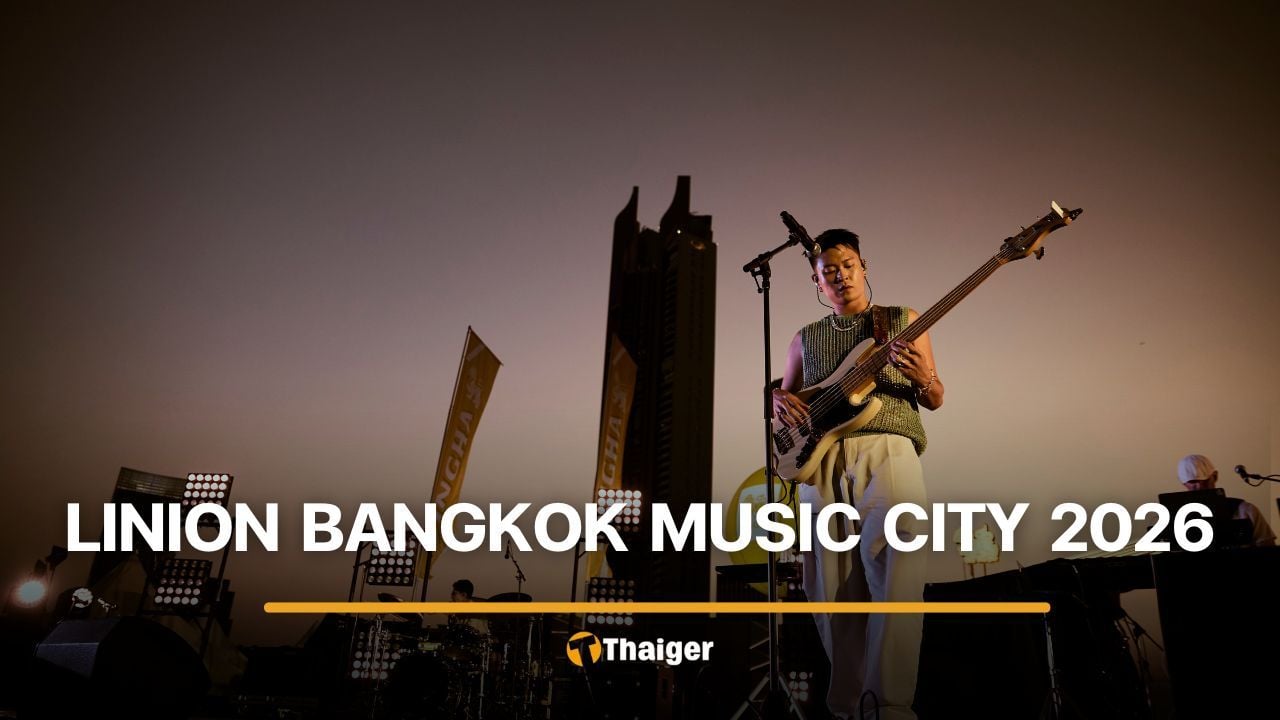
The golden hour light spilt across the Singha Live stage as LINION gripped his bass, the sun setting over Bangkok Music City 2026. It was 6.20pm, that perfect twilight moment when day surrenders to night, and for the next hour, the Taiwanese Neo-Soul artist would guide the crowd through that transition with nothing but groove, his voice, and a philosophy borrowed from ancient Taoism.
“You could just see the sunset, and then I sang my first song until the last song.”
LINION recalls his Bangkok debut. “It was like from sunset to night.”
It was the perfect setting for an artist whose music exists in the spaces between the beats.
I had a chance to talk to LINION on the following day, on January 25 and have gained insights into his music and himself.
The artist who teaches audiences to feel the groove
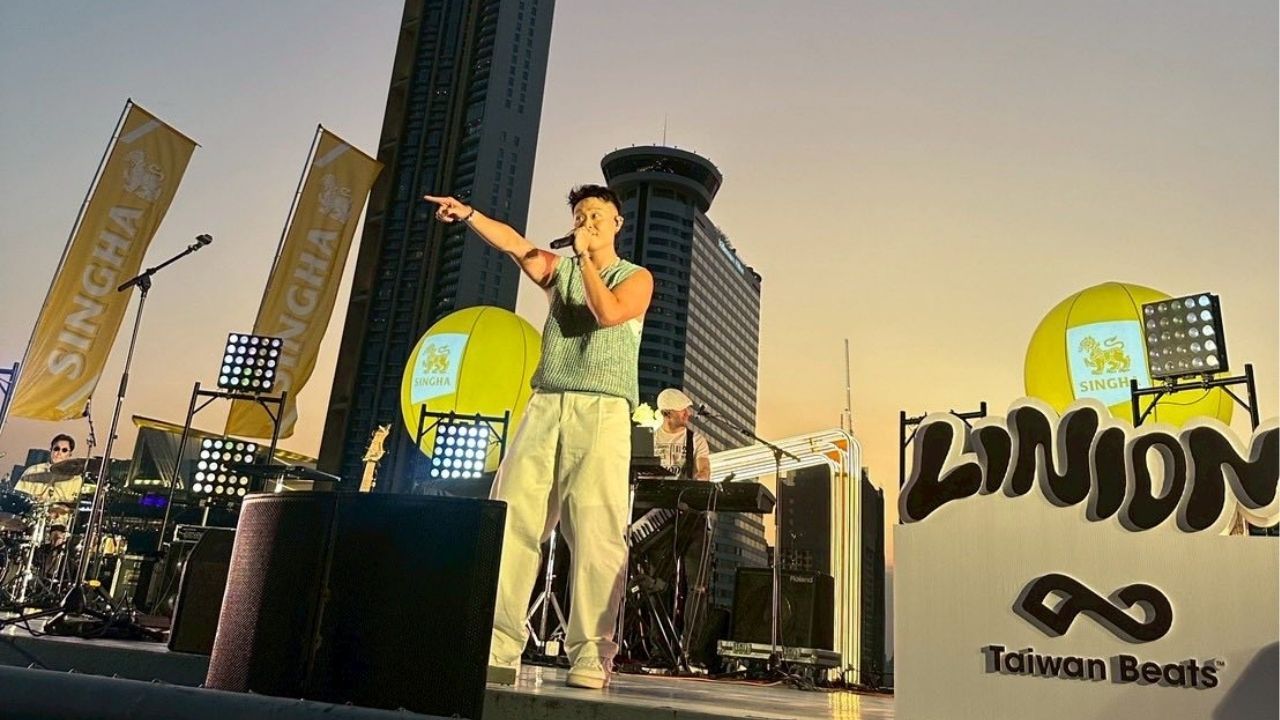
After seven years of establishing himself as one of Taiwan’s leading R&B voices, LINION arrived in Bangkok with a mission that extends far beyond performing. He’s teaching Asian audiences something fundamental: how to move.
“Back in 2018, when I started my first show, all the audience just stood there like an army, like soldiers.”


He explains this while describing his early Taiwan performances. The problem wasn’t the music; it was a cultural barrier embedded in the rhythm itself.
Rock audiences clap on beats one and three. But R&B, hip-hop, and Neo-Soul live on the two and four. For LINION, bridging that gap became central to his artistic mission.
“In 2018, all the people were clapping on one and three, but by 2023, people started doing it on two and four,” he says, measuring five years of cultural shift in a single rhythmic change. “When you tell them ‘let’s clap your hands,’ they know how to do it.”
At Bangkok Music City, he brought that same philosophy.
“I just said on stage, ‘Let’s dance. If you know how to walk, you know how to dance.’ “Walking is a rhythm. So let’s try to dance.”
The response validated what he’s always believed: groove transcends language.
“You don’t understand my lyrics, but you can enjoy the groove. Music is a language.”
The bass player who learned to breathe through music

LINION’s path to becoming a Neo-Soul innovator started in an unlikely place: rock and metal. His first love was the guitar, specifically the Gibson Les Pauls that Slash wielded in Guns N’ Roses. But at 14, everything changed when his teacher introduced him to Primus, the experimental rock band led by bassist Les Claypool.
“Primus was everything when I was 14 years old,” he says. “It was my teacher’s inspiration. So basically, I learned to play Primus style.”
That meant slap bass, the percussive, thumb-and-pop technique that makes the bass sound like a conversation rather than a foundation. He studied the style obsessively until age 19, when he moved to Los Angeles to attend the Musician Institute in Hollywood.
“The first class, they said, ‘Oh, let’s play finger style [bass],'” he laughs. “I realised my fingers were so weak. I could only slap. It looked fancy, though.”
But it was in Hollywood that LINION began understanding what separated competent bass playing from something transcendent. His African American music teachers kept telling him about “layback” which isthat elusive quality where notes sit just behind the beat, creating tension and release.
“I kept asking all my music teachers, ‘What is layback?’ They’d say, ‘It’s a feeling.'”
For years, LINION wrestled with that answer. A feeling wasn’t something he could practice. Then he found his answer in Taoism.
Ancient philosophy meets Neo-Soul
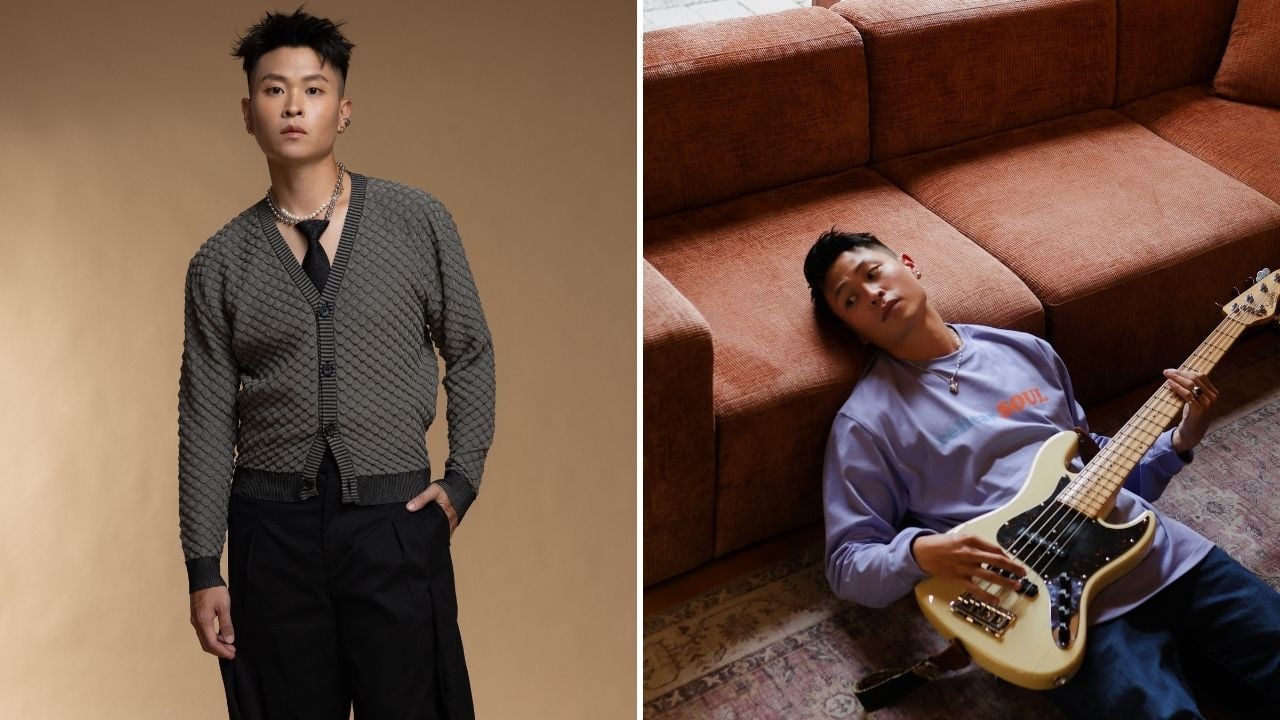
The breakthrough came when LINION connected Neo-Soul’s emphasis on space and breath with Taoist concepts he’d grown up with in Taiwan. In Taoism, breathing isn’t passive, but it’s the fundamental rhythm of life. Inhale, hold, exhale, pause. Each transition contains meaning.
“I used that concept and combined it with Neo-Soul. Neo-Soul has a lot of spirit… artists talk about space, about love… but the music is more laid back. There’s space in between.”
He demonstrates his thinking with the most basic element: the kick drum.
“You hear the kick drum—boom. People always think about the point. Kick drum, snare drum, kick drum, snare drum. But I don’t see it that way. I see the space. How much space do you want to leave? It’s the same as your inhale and exhale.”
It’s in those spaces, the pauses between the beats, where LINION believes soul lives.
“When you inhale to stop that point, and exhale stop that point, that point is where your soul comes from. “That’s how I see Neo Soul and how I use that in my culture.”
This wasn’t cultural appropriation or imitation. It was a translation. LINION took the laid-back feeling his teachers described and found its equivalent in his own cultural DNA.
“For them, it’s body language and their culture, so I had to take that feeling back to my culture and find something really similar. I use my own culture because I came from it. Then I share it with all Asian people.”
The bridge between instruments and cultures
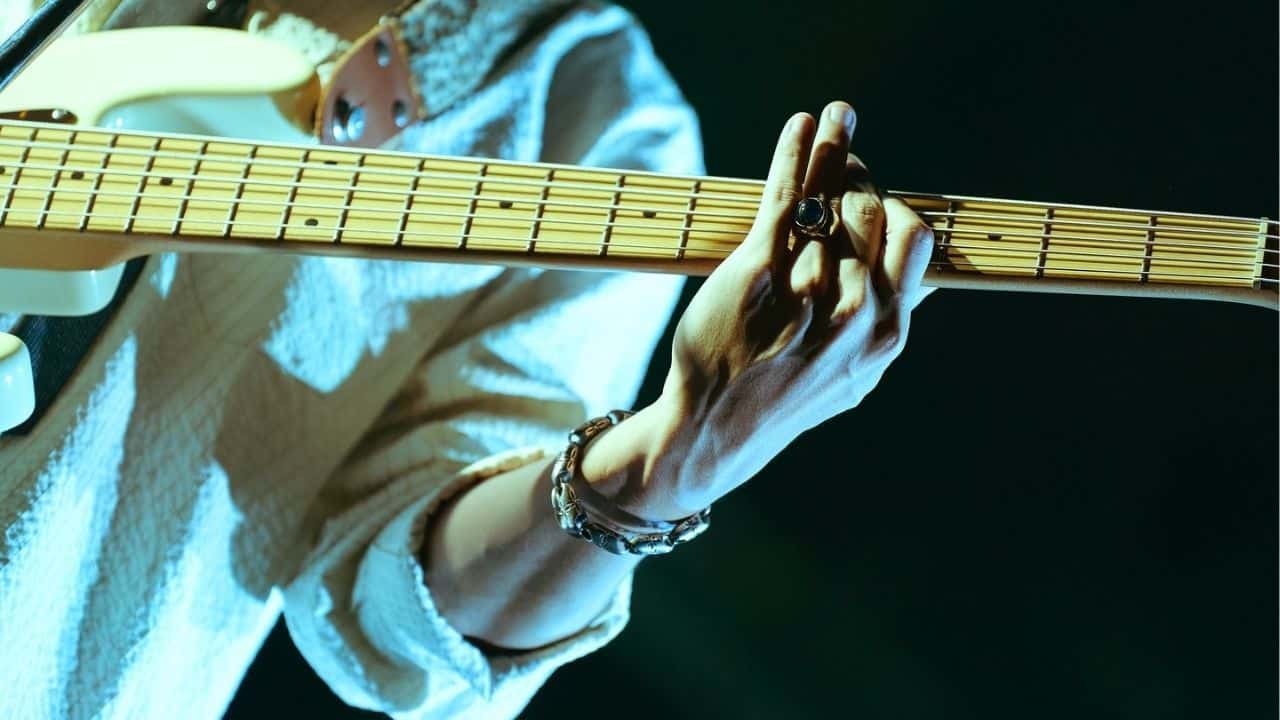
In LINION’s music, the bass functions as more than a rhythm section; it’s the bridge connecting every element. “The bass for me connects the drums to the vocals and the keyboard,” he explains. “I’m like the centre, a bridge connecting all the things.”
His bandmates often tell him his bass sounds like a guitar. That’s because LINION uses it to lead melodies, not just hold down the pocket.
“I have more language in the bass. But it’s suitable. It’s not gonna like cover down the vocal. It’s going to be combined.”
This approach extends to his entire creative process. LINION records all the guitar parts on his albums himself, sometimes creating arrangements so complex that his live guitarists struggle to play them.
“I’ll show them, ‘This is how I play it.’ Sometimes I have to find a really good guitar player, someone better than me, so they can play my music well.”
The technical foundation came from his Musician Institute training, but the philosophy is pure LINION. And it’s paying off on an international scale.
Seven years in Taiwan and now ready for the world
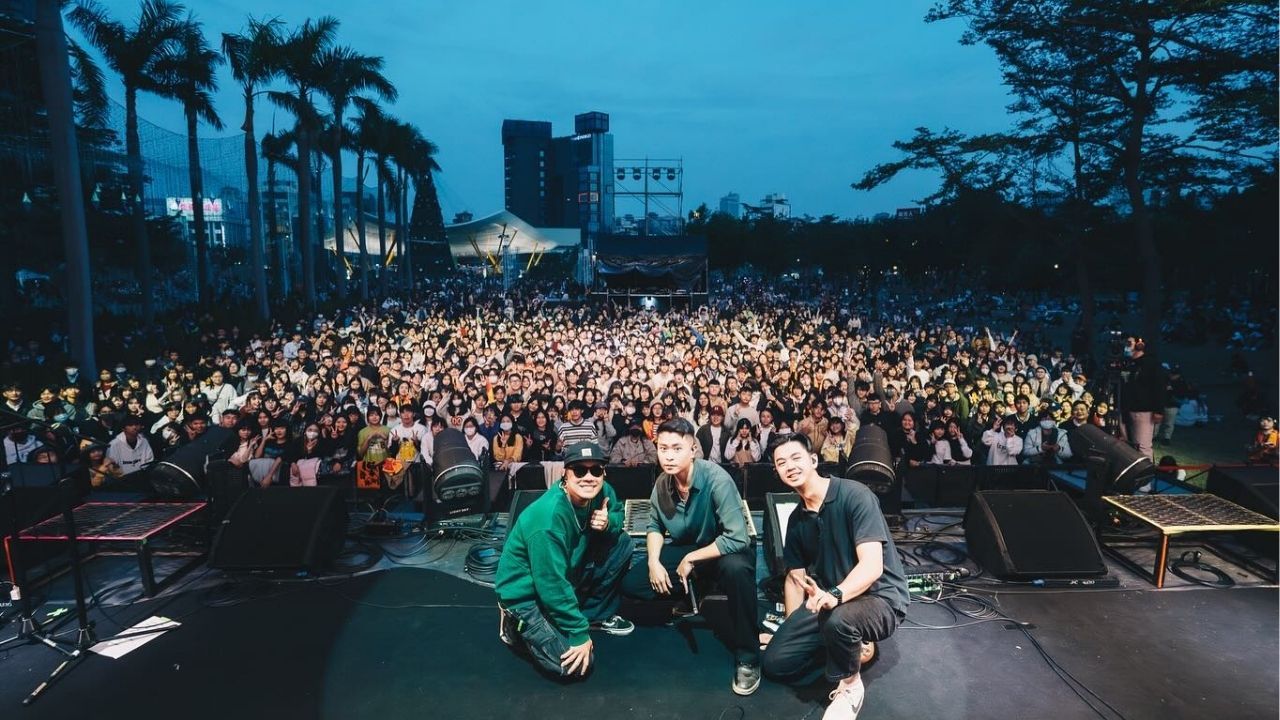
LINION’s achievements in Taiwan are substantial. He’s the first Taiwanese artist nominated for Best R&B Album at the Golden Indie Music Awards (GIMAs) three consecutive times, winning for his second album, Leisurely. His collaborations span Asia, from Japanese artists THREE1989, chilldspot, and illmore to Thai bands Olin and MattiBlue to Chinese R&B artist Aflou.
His commercial reach extends even further. Be My Bagel, created for McDonald’s Taiwan, went viral across Instagram Reels and YouTube Shorts. Red Date became the theme song for the Netflix series At the Moment, performed by the show’s lead actor.
His Spotify streams exceed 6.5 million, with over ten songs crossing the one million stream threshold: Oh Girl, Chase You, Day Off, Cocoon, Mountain Dude, and even Be My Bagel among them.
He’s sold out solo concerts holding over 1,000 people in Taiwan and performed at prestigious venues across Asia: Zepp Shinjuku in Tokyo, Blue Note Beijing, PUNCHLive Festival, and Taiwan Beats Showcase in Seoul.
But after seven years of building this foundation, LINION feels ready for the next chapter.
“My goal starting in 2026 is to explore more beyond Taiwan, because I’ve already been in Taiwan for seven years. I feel like we’re really ready for that.”
And from that, Bangkok Music City represented that first major step.
“This opportunity to come to BMC and play the show is such an honour. I really want to explore more. This lets Thai audiences and international audiences know more about LINION.”
The response from the Bangkok audience exceeded his expectations, too, noting the immediate connection Thai audiences made with his music.
“Yesterday, I got so many new followers!”
The chef who uses cooking to hear music differently
Beyond the stage and studio, LINION has cultivated an unexpected reputation: his Instagram followers sometimes mistake him for a professional chef.
“I post a lot of Reels of me cooking,” he laughs. “I love to cook… It’s part of my daily life, outside of music.”
“When you’re in the music industry long enough, it becomes your profession and your job. You can’t just enjoy it. You’re always picking things apart—’ Oh, I hear this, I hear that.’ You can’t enjoy music like a normal person,”
In the kitchen, with music playing in the background, LINION can finally stop analysing and just listen. “When I’m cooking and listening to music, it’s the only time I feel like I’m enjoying myself.”
Cooking also deepens his understanding of cultural exchange.
“That helped me to understand more about creating the other country’s food culture,” he notes, drawing a parallel to how he translates musical feelings across cultures.
What’s Next: The Fourth Album and Global Collaboration

LINION is preparing to release his fourth studio album in 2025, with plans to expand international collaborations across live sessions, feature collaborations, and festival performances. The direction is clear: bring his groove philosophy to stages worldwide.
He’s also committed to the linguistic challenge that defines his artistry. While LINION finds singing R&B in English “quite easy,” he deliberately focuses on the harder path: writing R&B lyrics in Mandarin.
This revelation surprised me a bit, as I had considered the difficulty to be the other direction.
“I like to challenge the hard parts. Mandarin is the hard part. I want to break through… the pronunciation and how you sing it. Using English to sing R&B is quite easy, so if I want to do the easier part, I’m always ready. But, I have to tackle the hard part first.”
This philosophy, tackling the hardest challenges first, extends to his broader mission. LINION isn’t trying to succeed despite being a Mandarin-language R&B artist. He’s determined to prove it’s possible to bring Taiwanese culture to global stages on his own terms.
“You have to bring your own culture so people recognise what kind of music, what kind of country you come from.”
He says this, referencing how K-pop succeeded by being unapologetically Korean.
“Mandarin is my first language… You can use English anywhere, but you have to bring your own culture.”
At Bangkok Music City, as the sun set and night fell over Thailand, LINION demonstrated exactly that. He taught a crowd to move to a groove that emerged from ancient breathing techniques.
He showed that bass can be a bridge between cultures, and he proved that seven years of patience in Taiwan was preparation for something bigger.
“We are really ready for that,” LINION says of going global. Based on one golden hour in Bangkok, Asia is ready for him, too.
Interested in learning more about him or in following him? You can find him on Instagram, Facebook, X, and YouTube.
Latest Thailand News






















Follow The Thaiger on Google News: