Bangkok air quality hits dangerous levels, but what’s causing the PM2.5 surge?

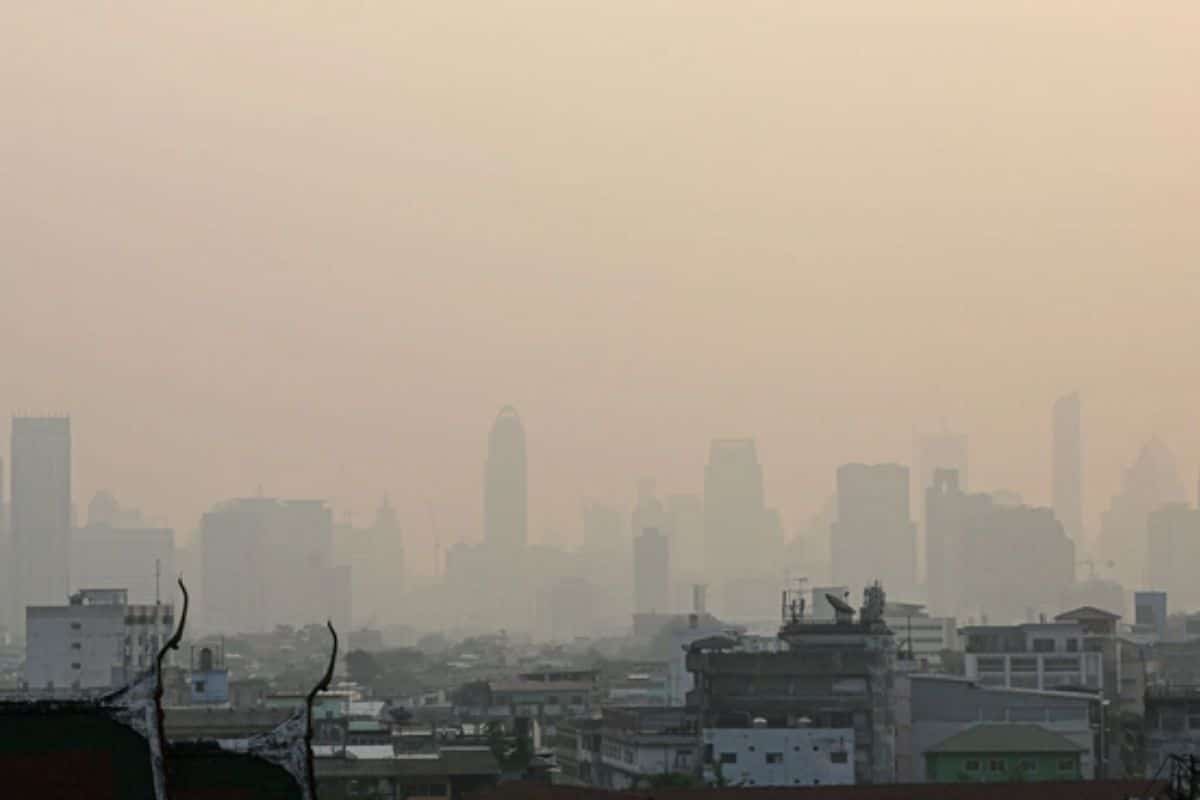
Air quality in Bangkok was once again hazardous this morning, January 16, with PM2.5 levels across the capital soaring above safe standards, prompting health warnings and calls to limit outdoor activities.
At 7am, the Bangkok Air Quality Information Centre reported the average PM2.5 level in the city was 57.3 micrograms per cubic metre (µg/m³), well above the national safety threshold of 37.5 µg/m³. The worst-hit areas include Bang Rak, followed closely by Lat Krabang, and Pathumwan. In total, 12 districts registered hazardous pollution levels.
Top 12 worst PM2.5 districts in Bangkok today:
- Bang Rak – 75.8 µg/m³
- Lat Krabang – 75.5 µg/m³
- Pathumwan – 73.7 µg/m³
- Prawet – 71.4 µg/m³
- Chatuchak – 70.9 µg/m³
- Sathon – 70.4 µg/m³
- Khlong Sam Wa – 68.4 µg/m³
- Nong Chok – 64.8 µg/m³
- Khlong Toei – 64.1 µg/m³
- Bueng Kum – 63.5 µg/m³
- Ratchathewi – 62.8 µg/m³
- Min Buri – 62.2 µg/m³
Bangkok’s air quality is now rated orange in most districts, meaning it has begun to affect health, while some zones like Bang Rak and Lat Krabang have reached the red category, which indicates health-impacting levels for all residents.
Breakdown of PM2.5 zones by region:
- North Bangkok: 53.5 to 70.9 µg/m³
- East Bangkok: 51 to 75.5 µg/m³
- Central Bangkok: 43.7 to 62.8 µg/m³
- South Bangkok: 51.5 to 75.8 µg/m³
- Thonburi North: 48.5 to 60.1 µg/m³
- Thonburi South: 42.9 to 52.8 µg/m³
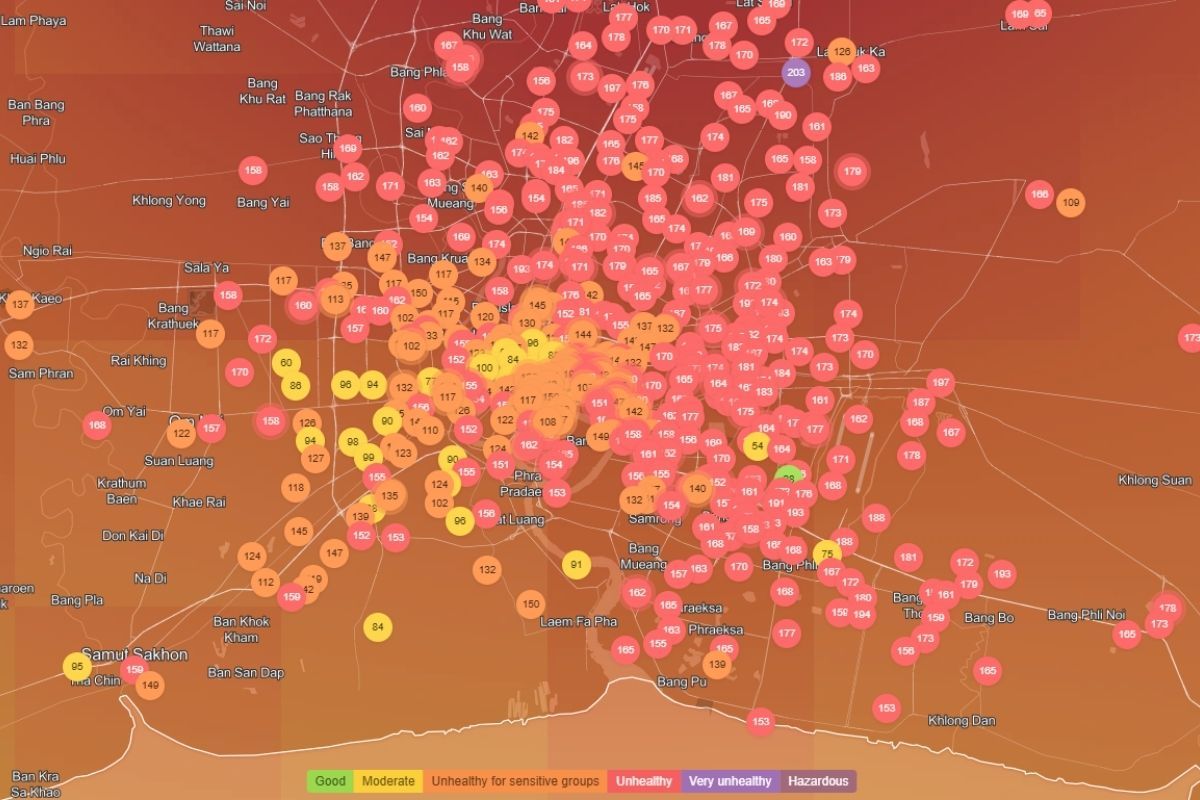
Despite these numbers, authorities noted a slight downward trend in dust levels compared to earlier in the month. However, conditions still pose a threat to public health, especially for vulnerable groups. The Department of Pollution Control is also working with local agencies to mitigate pollution sources, including vehicle emissions and construction dust.
Nevertheless, in orange zones, the Bangkok Metropolitan Administration (BMA) advises the public to wear PM2.5 masks outdoors, limit physical activity, and watch for symptoms like coughing or eye irritation. High-risk groups should avoid outdoor exercise and follow medical advice if symptoms appear.


In red zones, everyone is urged to stay indoors unless necessary. Those with pre-existing health conditions should remain in filtered environments, have medications ready, and monitor their health closely.
Cross-border burning blamed for smog surge
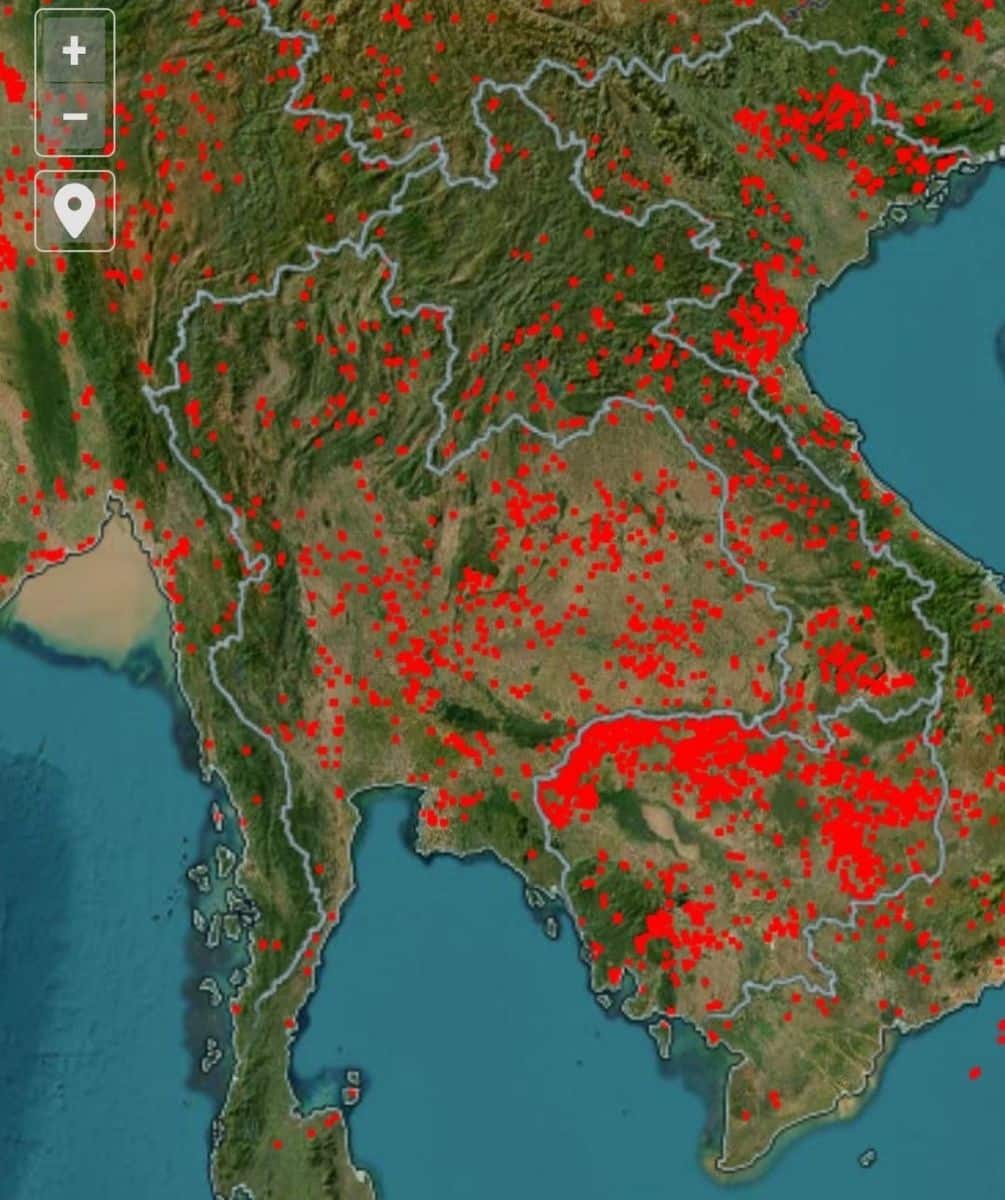
The latest spike in air pollution has been linked to cross-border agricultural burning, according to analysis shared by the Facebook page Ti’ Lom Fah Akat. Citing NASA satellite hotspot data from the past 24 hours, the page reported widespread burning across farmland in Thailand, as well as dense clusters of fires along the Cambodian border.
The situation has been made worse by changes in weather patterns. Weakening cold-season winds have shifted to light southerly and easterly flows, which have trapped polluted air over Bangkok, surrounding provinces, and much of central and eastern Thailand.
With calm wind conditions and a temperature inversion in place, smoke and fine dust from the fires are unable to disperse, leading to a dangerous build-up of PM2.5 in the region.
The page noted that if Thailand were to implement and enforce a Clean Air Act, incidents of cross-border haze and agricultural burning could decrease in the future.
Latest Thailand News





















Follow The Thaiger on Google News: