Middle East conflict threatens Thailand’s GDP with potential 2.31% decline

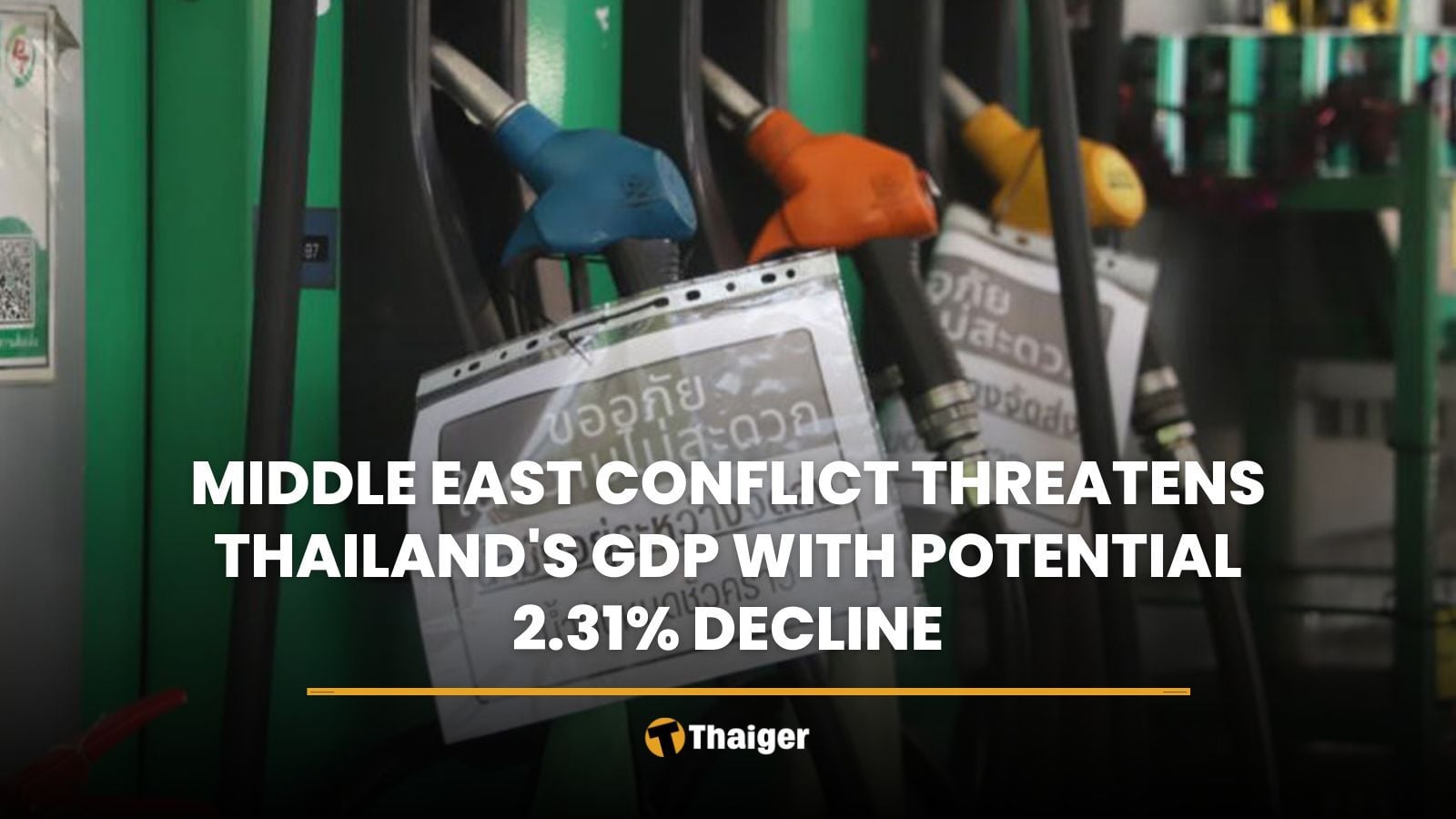
Thailand’s GDP could shrink by up to 2.31 percentage points if the ongoing Middle East conflict remains unresolved, according to an analysis by the Center for Economic and Business Forecasting at the University of the Thai Chamber of Commerce (UTCC).

The centre outlined three scenarios for how the war could affect the economy, ranging from a brief disruption to a prolonged crisis.
In the most contained scenario, a short-term conflict resolved within a month would push energy costs up by 23.3 billion baht, cut export values by up to 32.5 billion baht, and reduce tourism revenue by nearly 9 billion baht, resulting in a 0.35 percentage point drop in GDP.
A longer conflict of around three months, compounded by the closure of the Strait of Hormuz, would cause far greater damage. Energy costs could rise by 80 billion baht, exports might fall by 97.5 billion baht, and tourism revenues could drop by 20.8 billion baht, adding up to a 198 billion baht economic hit and a 1.07 percentage point reduction in GDP. The government would also face fiscal pressure from Oil Fuel Fund losses if excise taxes are cut by 3 baht per litre, creating a fiscal burden of 72.5 billion baht.
The worst-case scenario involves an extended, unresolved conflict. Energy costs could climb by 203 billion baht, exports might decrease by 195 billion baht, and tourism revenue could fall by nearly 29.3 billion baht, producing an economic impact exceeding 427 billion baht and a 2.31 percentage point reduction in GDP.
To cushion the blow, the UTCC recommends energy price subsidies, though it stresses the government must be transparent with the public that subsidy costs will ultimately fall on them. The centre also urges energy-saving measures, securing adequate national energy supplies, and keeping logistics costs manageable by ensuring businesses can access energy at suitable prices.
Thanavath Phonvichai, president of the UTCC, warned that rising logistics costs risk being passed on to consumers, potentially slowing Thailand’s economic recovery. Thanavath also called on the government to address shortages of plastic pellets, which are critical for packaging manufacturing, and to keep fertiliser prices stable given their central role in agriculture.


The centre further recommended infrastructure investment to stimulate growth, and urged the Commerce and Foreign Affairs ministries to identify alternative export markets. On tourism, it suggested targeting Southeast Asian markets to offset the conflict’s impact on visitor numbers. Thanavath also advised offering low-interest loans to small and medium-sized enterprises through specialised financial institutions, alongside clear public communication to prevent panic and hoarding.
Latest Thailand News





















Follow The Thaiger on Google News: