How sports entertainment is changing in Asia – 2026 update


Asia’s sports entertainment landscape looks nothing like it did five years ago. The region now generates more than half of all global esports revenue, while Southeast Asia’s digital economy crossed $300 billion in gross merchandise value during 2025.
The way fans engage with sport has shifted dramatically. Streaming platforms, interactive prediction markets, and digital experiences from platforms like BETVIBE India have created entirely new categories that barely existed a decade ago.
Thailand sits at the centre of this transformation. The country’s ongoing gambling legalisation debate, a rapidly expanding esports scene, and one of Southeast Asia’s most connected populations make it a focal point for the industry. Here is how the picture is unfolding across the region.
Key Takeaways
- Asia accounts for 57% of worldwide esports revenue, with China, South Korea, and Japan leading.
- Thailand’s Entertainment Complex Bill was withdrawn in July 2025 and remains shelved.
- Mobile-first platforms dominate sports fan engagement across Southeast Asia.
- Digital entertainment now merges streaming, gaming, and interactive participation into a single ecosystem.
- Southeast Asia’s digital economy surpassed $300 billion GMV last year.
Esports Is Redefining What Sports Entertainment Means
Competitive gaming has moved well beyond niche communities. The 2025 Esports World Cup in Riyadh brought together over 2,500 players and staff from 89 nationalities, competing across 25 tournaments for a combined prize pool exceeding $70 million.
The event attracted 750 million viewers globally and drew more than 3 million visitors to Boulevard Riyadh City over seven weeks. Team Falcons claimed the Club Championship and its $7 million grand prize.
“Asia Pacific generated roughly 57% of total global esports revenue, with China alone contributing $403 million. South Korea, Japan, and Southeast Asia added substantial figures to that total.”


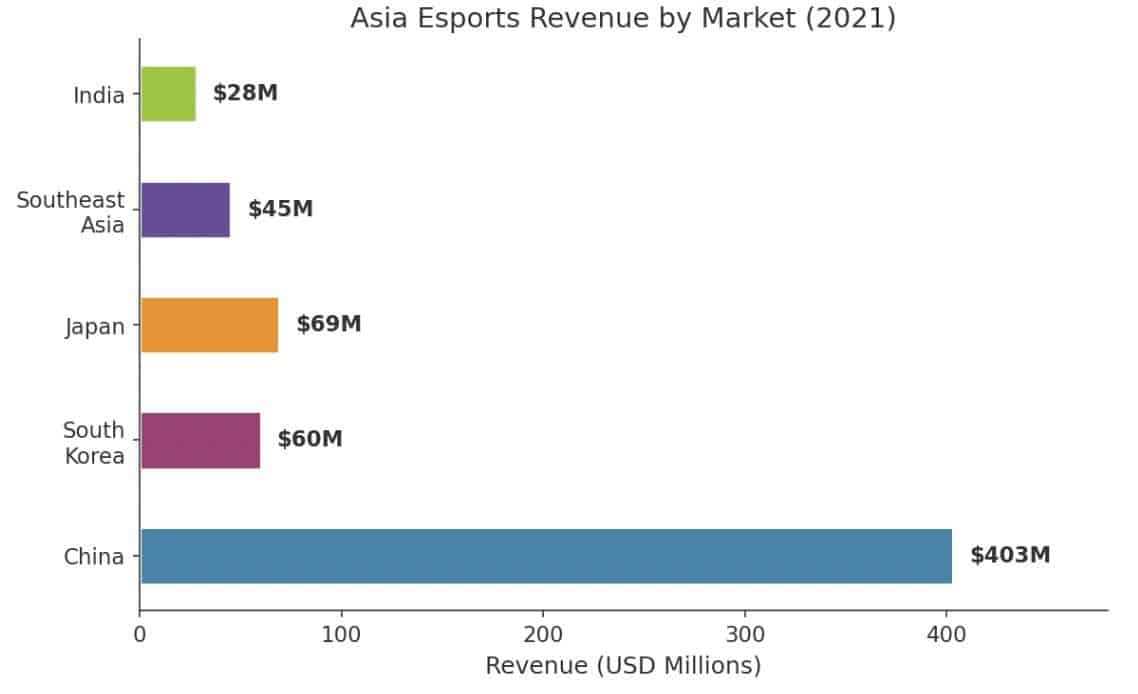
Thailand’s competitive gaming scene reflects this regional momentum. Teenagers in Bangkok malls wear branded jerseys, cheering for Mobile Legends and PUBG Mobile squads on large screens. The Thai government has drafted a Game Industry Act through its Digital Economy Promotion Agency (DEPA), recognising gaming as a sector worth an estimated 30 to 40 billion baht annually.
| 📊 Key Stat: The 2026 Asian Games in Aichi, Japan will feature esports as an official medal event, cementing competitive gaming’s status as a mainstream sport across the continent. |
Digital Platforms Are Reshaping Fan Engagement
Sports fans across Asia no longer sit passively watching a match on television. The shift towards interactive, mobile-first participation has fundamentally altered the fan experience.
A joint report from Google, Temasek, and Bain found that Southeast Asia’s digital economy surpassed $300 billion in GMV during 2025. Entertainment and media consumption drove a significant share of that growth.
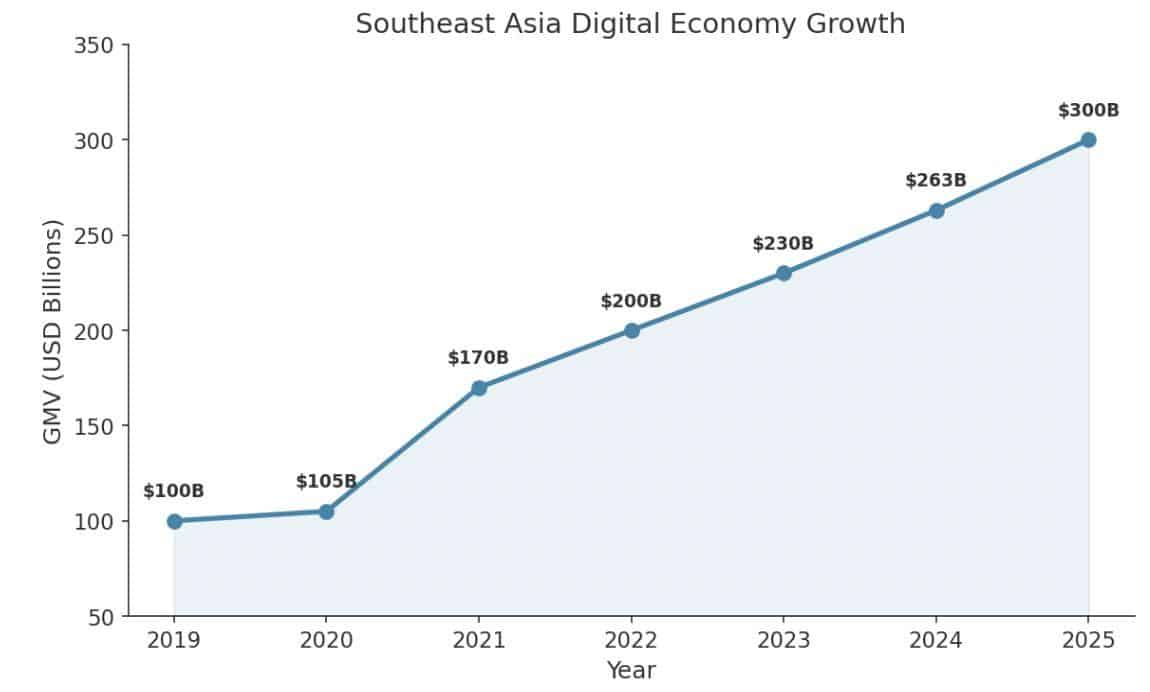
Fan consumption patterns have evolved at every level:
- Streaming dominance: YouTube captures over 58% of gaming audiences in developing Asian markets
- Short form content: TikTok and Instagram Reels spread viral sports moments, pulling younger viewers into emerging categories
- Active participation: Prediction markets, fantasy leagues, and live engagement tools turn spectators into participants
- Creator led discovery: Influencers and athletes promote sports entertainment directly, bypassing traditional broadcast channels
Thai sports fans actively follow football, Muay Thai, and esports through a blend of television, social media, and mobile apps. High smartphone penetration and affordable data plans make Thailand among the most digitally connected populations in the region.
| 💡 Did You Know: PwC projects global entertainment and media revenue will reach $3.5 trillion by 2029. Asia Pacific is expected to outpace every other region, fuelled by mobile connectivity and growing middle class spending. |
Thailand’s Gambling Legalisation Debate and Its Impact on Sports Entertainment
Thailand’s relationship with gambling has always been complicated. The Gambling Act of 1935 effectively banned most forms of betting, with narrow exceptions for the national lottery and licensed horse racing.
That framework has remained largely unchanged for nearly 90 years, despite widespread illegal gambling. A 2023 survey by the Research Centre for Social and Development estimated that 63.1% of Thai nationals, roughly 34.5 million people, gambled during the year.
| 📅 Timeline: January 2025: The Thai cabinet approved the Entertainment Complex Bill. March 2025: Bangkok, Phuket, Chonburi, and Chiang Mai are named as resort locations. July 2025: Bill withdrawn amid political turbulence. September 2025: Senate rejected the proposal. Q1 2026: No confirmed cabinet reconsideration. Status remains in political limbo. |
What the Entertainment Complex Bill Proposed
The Integrated Entertainment Business Act aimed to legalise casinos within large-scale integrated resorts. Key provisions included:
- Five licences: Two designated for Bangkok, one each for Pattaya, Chiang Mai, and Phuket
- Casino space cap: Gaming areas limited to a maximum of 5% of total resort footprint
- 30-year licence terms: Applicants required a minimum paid-up capital of THB 10 billion
- 17% GGR tax: Revenue overseen by a newly established regulatory commission
- Entry barriers for locals: THB 5,000 admission fee and THB 50 million minimum bank balance for Thai nationals
International operators, including Las Vegas Sands, MGM Resorts, Wynn Resorts, and Galaxy Entertainment Group all expressed public interest in entering the Thai market.
Why the Bill Collapsed
Public opposition intensified after the bill’s details surfaced. Religious groups, civil society organisations, and opposition parties raised concerns about addiction, money laundering, and broader social consequences.
Large-scale protests followed. The Stop Gambling Foundation of Thailand gathered signatures calling for a national referendum. Political upheaval within the ruling Pheu Thai party compounded the pressure through mid 2025.
Prime Minister Anutin Charnvirakul, who assumed office after the turmoil, has been explicit about his position. He stated that anyone expecting gambling to stimulate the economy should wait for a different prime minister.
| 💡 Notable Development: While casino legalisation stalled, Thailand reclassified poker as a ‘sport’ through a ministerial order. Sanctioned tournament poker now operates under specific conditions, though all other poker formats remain illegal. |
Online Gambling: A Parallel Reform Effort
Separately from the casino bill, Thai authorities have signalled plans to bring online gambling under regulation. The Digital Economy and Society Minister confirmed that moving underground betting into a legal framework ranks as an urgent government priority.
The logic is straightforward: unregulated platforms already handle billions of baht annually. Formalising the market would generate tax revenue, protect consumers, and undercut criminal syndicates operating across the region.
How Thailand Stacks Up Against Its Neighbours
Thailand’s cautious approach contrasts sharply with its neighbours, which have embraced regulated gambling as an economic strategy.
| Country | Casino Status | Online Gambling | Sports Betting |
| Thailand | Banned (bill shelved) | Illegal (reform planned) | Illegal |
| Singapore | 2 integrated resorts | Regulated | Regulated (Singapore Pools) |
| Philippines | Multiple operators | Licensed (PAGCOR) | Licensed |
| Cambodia | Multiple resorts | Regulated | Available |
| Japan | 3 IR licences approved | Prohibited | Limited (public sports) |
Singapore’s integrated resort model is frequently cited as the template Thailand might adopt. Both countries share similar concerns about social impact, and Singapore’s strict regulatory oversight has demonstrated that controlled gambling can coexist with public welfare.
The Bigger Picture: Where Sport and Entertainment Converge
Changes reshaping Asia’s sports entertainment sector extend well beyond any single policy debate. Several macro trends are driving transformation simultaneously.
Sports Tourism and Major International Events
Hosting large-scale international events has accelerated infrastructure investment throughout the region. From the Tokyo 2020 Olympics to Formula 1 in Singapore, sports tourism generates substantial economic returns for host countries.
Thailand has actively pursued this approach, hosting international sporting events and positioning itself as a destination for both traditional and emerging competitive formats.
Hybrid Physical and Digital Experiences
EATertainment, where food, drinks, and sport collide, is expanding rapidly across Asian cities. Golf simulators, bowling lounges, and artificial surf parks offer social experiences that blend competition with hospitality.
Brands like Topgolf have entered Asian markets, adapting their format with localised menus, music, and game modes. These venues attract families, corporate groups, and casual participants who may never visit a conventional sports stadium.

What Comes Next for Thailand
Thailand occupies a unique position at this crossroads. The country has the digital infrastructure, audience demand, and tourism appeal to become a significant player in Asia’s evolving sports entertainment market.
Several variables will determine what happens next:
- Election outcomes: The next government’s stance on the Entertainment Complex Bill will decide whether casino legalisation receives another attempt
- Online regulation progress: A separate push to formalise online gambling could advance regardless of the casino debate
- Gaming industry legislation: The Game Industry Act, if enacted, would give Thailand a structured framework for growing its esports sector
- Regional rivalry: Neighbouring countries with established casino industries continue attracting Thai tourists and revenue that could otherwise stay domestic
“Thailand is home to a growing array of online platforms that combine entertainment, convenience, and the freedom to access outstanding services from anywhere. Whether you seek digital entertainment or the latest trends, these platforms serve diverse interests and needs.”
— The Thaiger, reporting on Thailand’s digital entertainment landscape
Frequently Asked Questions
Is gambling currently legal in Thailand?
Most gambling remains prohibited under the 1935 Gambling Act. Only the national lottery and licensed horse racing operate legally. The Entertainment Complex Bill to allow casinos was withdrawn in July 2025, with its future depending on political developments after the next general election.
What happened to Thailand’s casino bill?
The cabinet approved the Entertainment Complex Bill in January 2025, but political instability forced its withdrawal by July. The Senate rejected the proposal in September 2025. No confirmed reconsideration has occurred as of early 2026.
How large is the esports industry in Southeast Asia?
Southeast Asia has one of the world’s biggest gaming audiences, driven by mobile-first platforms and a young population. Vietnam and Malaysia lead regional esports viewership, while Thailand is growing rapidly with government-backed industry legislation under development.
Will Thailand legalise online gambling?
The government has announced its intention to regulate online betting as a separate initiative from casino legislation. The Digital Economy and Society Ministry leads the effort, though no formal bill has reached parliament yet.
How does Singapore’s gambling model compare to Thailand’s proposal?
Singapore operates two integrated resort casinos under strict oversight, including entry levies for citizens. Thailand’s shelved proposal mirrored this structure closely. Singapore’s framework remains widely considered a successful template for controlled, regulated gaming.
A Region in Constant Motion
Sports entertainment across Asia continues evolving at a pace that makes fixed predictions unreliable. Esports viewership now rivals the largest traditional sporting spectacles. Digital platforms blur the boundary between spectator and participant. Countries like Thailand are grappling with how to regulate industries that already operate in the shadows.
The common thread connecting these shifts is a generation of fans who expect entertainment to be interactive, mobile, and personalised. Whether through competitive gaming tournaments, streaming innovation, or new regulatory frameworks, the future of sports entertainment in this region will be shaped by how quickly institutions adapt to that expectation.
Latest Thailand News

























Follow The Thaiger on Google News: