Boarding schools in Thailand: Safer, more structured, and cheaper than the UK?
What sets Thailand’s boarding experience apart for international students

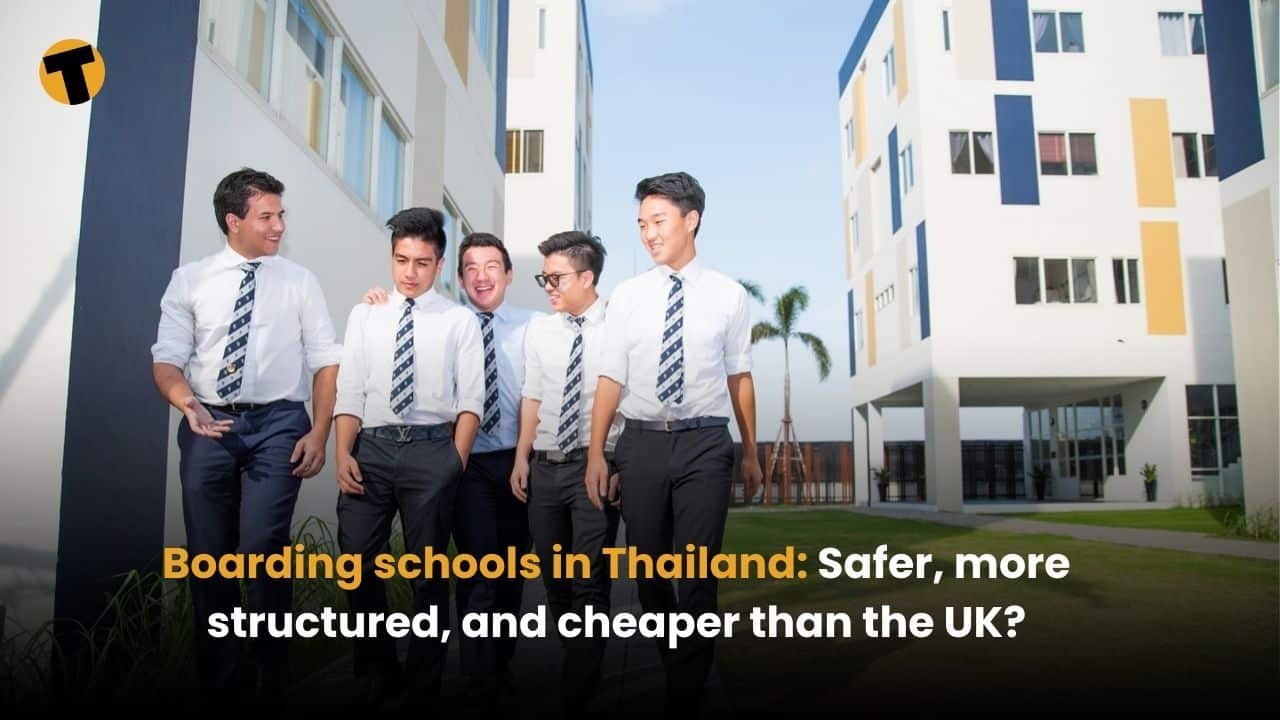
The Thaiger key takeaways
- Thailand’s boarding schools offer a highly structured, calm environment that many parents view as safer and more supportive compared to other regions.
- Annual fees remain significantly lower than in the UK, with a wide range of international schools providing modern facilities and strong academic pathways.
- The rise in global families choosing Thailand reflects a shift toward flexible, multicultural learning communities with strong pastoral care.
For expat parents in Thailand, or those considering the move, the education question looms large. Bangkok’s traffic jams, limited extracurriculars in remote provinces, and the challenge of academic continuity for mobile families have many turning to boarding school. But Thailand’s international boarding schools aren’t just a convenient alternative; they’ve become a destination offering world-class facilities and academics that rival the UK, for roughly half the price.
The pricing and information below are collected from the tendencies and the average of multiple sources. Be sure to talk to your desired school in more detail to understand more about them.
Is a boarding school in Thailand a better choice
| Section (Click to jump) | Short Summary |
|---|---|
| The cost reality | Highlights how Thailand delivers major long-term savings compared to UK boarding without reducing quality. |
| Safety and pastoral care | Explains how international schools in Thailand provide strict safeguarding, 24/7 care, and high medical standards. |
| Structure and routine | Shows how boarding environments create disciplined, productive daily schedules difficult to replicate at home. |
| Academic excellence | Summarises top exam results and global university placements that rival elite UK schools. |
| Brief school profiles | Offers snapshots of Thailand’s leading boarding schools and what types of students they best serve. |
| Practical considerations | Covers admissions timelines, testing, fees, and visa information for parents planning ahead. |
| The verdict | The verdict on which is a good choice for you. |
The cost: Substantial savings without compromise

UK boarding school fees have risen sharply. The average full boarding fee now falls between £42,000 and £50,000 per year, (∼1.8 million to 2.1 million Thai baht), while elite schools often exceed £55,000 to £60,000 (∼2.3 million to 2.5 million Thai baht).
If the UK government moves forward with its proposed 20% VAT on private school fees, annual costs could rise even higher. When you add required guardianship fees (£2,000 to £5,000), three peak-season flights, uniforms, and various extras charged throughout the year, many families face £65,000 to £75,000+(∼2.8 million to 3.2 million+ Thai baht) per child annually.
Thailand’s leading international boarding schools offer a very different cost structure. Annual fees typically range from ฿800,000 to ฿1,500,000, often representing 40% to 70% savings compared to the UK.
Over five years (Years 9–13), that difference can result in £100,000 to £200,000 (4.2 million to 8.5 million Thau baht) in savings per child. Thai boarding fees are also generally more inclusive: meals, laundry, weekend activities, and 24-hour medical support are usually covered, whereas UK schools frequently add significant charges for these services.


| Cost item | UK boarding school (typical range, per year) | Thailand international boarding school (typical range, per year) |
|---|---|---|
| Tuition + boarding fees | £35,000 to £50,000 (elite schools £55,000 to £60,000+) | 1,000,000 to 1,500,000 Thai baht (≈ £22,000 to £34,000) |
| VAT on fees | +20% VAT on tuition/boarding (already included in many “headline” figures from 2025) | Not applicable to school fees in the same way |
| Guardianship (international students) | ≈ £1,000 to £4,000+ per year | Usually not required in the same formal way |
| Flights and visas | Several thousand pounds per year (multiple peak-season returns) | Lower if the family is already based in Asia / Thailand or the child studies closer to home |
| Uniforms, trips and “extras” | Often several thousand pounds per year (uniform, sports kit, weekend trips, exam fees) | Many items are included in the annual fee (boarding often covers meals, laundry, and many activities) |
| Indicative total annual cost | ≈ £50,000 to £70,000+ (depending on school and extras) | ≈ 1.1 to 1.7 million Thai baht (roughly £24,000–£38,000, depending on school and extras) |
| Estimated five-year total (Years 9–13) | ≈ £250,000 to £350,000+ per child | ≈ £120,000 to £180,000 per child (equivalent) |
| Approximate savings over five years | ≈ £100,000 to £200,000 per child (depending on school choices and exchange rates) | |
Safety and pastoral care: Addressing some concerns
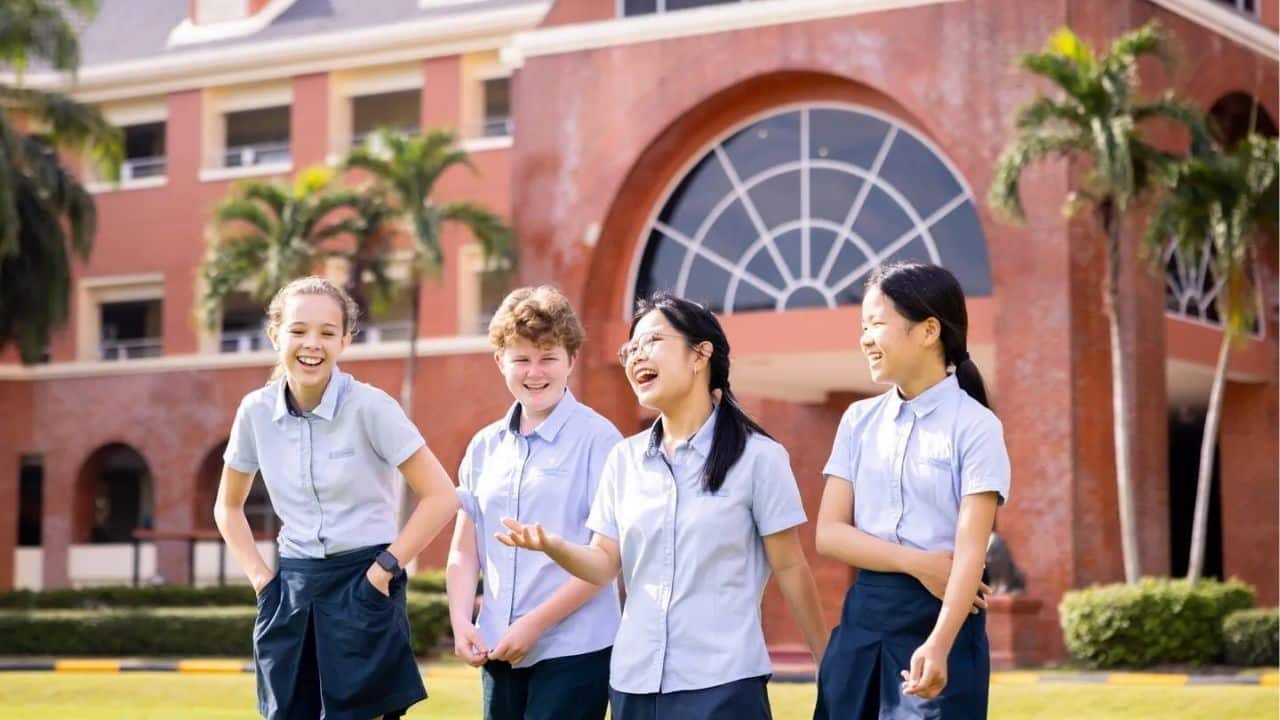
Any parent considering boarding prioritises safety, and this is often a key concern for families relocating to Thailand. While online forums sometimes discuss bullying issues within local state Thai schools, these comments typically refer to non-international environments and do not reflect the standards of international or boarding schools.
Thailand’s leading international boarding schools operate under globally recognised accreditation frameworks, including the Council of International Schools (CIS), Federation of British International Schools in Asia (FOBISIA), International Baccalaureate (IB), WASC, and NEASC. These accreditations require strict safeguarding, child protection, and welfare policies that are closely aligned with UK and international best practice.
Schools such as Harrow International School Bangkok, Regents International School Pattaya, and British International School Phuket (BISP) publish clear and comprehensive child protection and anti-bullying policies. These typically include structured escalation pathways, access to designated safeguarding leads, counselling services, and trained house parents — ensuring concerns are acted on professionally rather than culturally minimised.
Physical security at major boarding schools is strong. Campuses operate as controlled-access environments, usually with:
- Gated entry points
- ID or QR-code checks for all visitors
- CCTV across academic and residential zones
- Separate, restricted-access entrances for boarding houses (possibly with keycard or biometric)
Boarding houses at schools like BISP and Regents are staffed by full-time house parents, assistants, and matrons, providing consistent 24/7 adult supervision and pastoral support.
Medical support is robust as well. Major international schools maintain on-site medical centres with registered nurses. For example, Harrow Bangkok operates a 24-hour medical centre, and most schools have established partnerships with top private hospitals in Bangkok or Phuket for emergencies.
All staff who work with children must pass Safer Recruitment checks, typically including international police clearance (e.g., enhanced DBS for UK hires) and child-protection training before employment.
Structure and routine: Every hour with purpose

For day students in Bangkok, hours are lost to gridlock. For families in remote provinces, quality extracurriculars are scarce. Boarding solves both by creating an environment where every hour is purposeful.
A typical day follows a disciplined rhythm: wake at 6.30am to 7.00am, breakfast with nutritionist-designed menus (Western and Asian options), full academic day 8am to 3.30pm. Then comes boarding’s advantage: 3.45pm to 5:00pm, co-curricular activities (CCAs) are mandatory, every student participates in sports, music, drama, or clubs.
The “secret weapon” is supervised prep time (6.30pm to 8.30pm). Students complete homework in structured study periods, with subject specialists rotating through boarding houses to provide extra support. This removes the daily homework battle and develops independent study skills.
Weekends are enrichment, not downtime. Rugby School Thailand’s 80-acre Chonburi campus enables sailing, outdoor survival skills, and trail running on Saturdays, with Sunday excursions to water parks and cultural sites. Regents Pattaya offers community service projects and adventure training through its Round Square affiliation. BISP provides competitive sports fixtures and beach trips, leveraging Phuket’s island setting.
This regimented approach ensures students are physically active, socially engaged, and academically supported seven days a week, difficult for even dedicated parents to replicate at home.
Academic excellence: Results that rival the UK

The 2024 to 2025 results from Thailand’s leading schools rival prestigious UK institutions. Shrewsbury achieved 65-78% A*/A grades, more than double the UK national average of 27-28%. Harrow Bangkok posted 70% A*/A at A-Level, placing it in the elite category globally. Brighton College Bangkok, named “British International School of the Year 2024,” achieved 80-82% A*/A.
For IB schools, BISP maintains a 97% pass rate with a 33-point average (global average is 30), with 10% scoring 40+ points, the Oxbridge/Ivy League threshold. Regents Pattaya achieved a 100% pass rate with a 32-point average.
University destinations validate Thailand as an educational launchpad. Shrewsbury’s Class of 2025 secured 5 Oxbridge offers and 7 Ivy League placements (Cornell, Stanford). Harrow Bangkok places graduates at Stanford, Oxford, and Imperial College London. Rugby Thailand and BISP send students to Cambridge, Melbourne, Toronto, and Brown.
Some brief school profiles
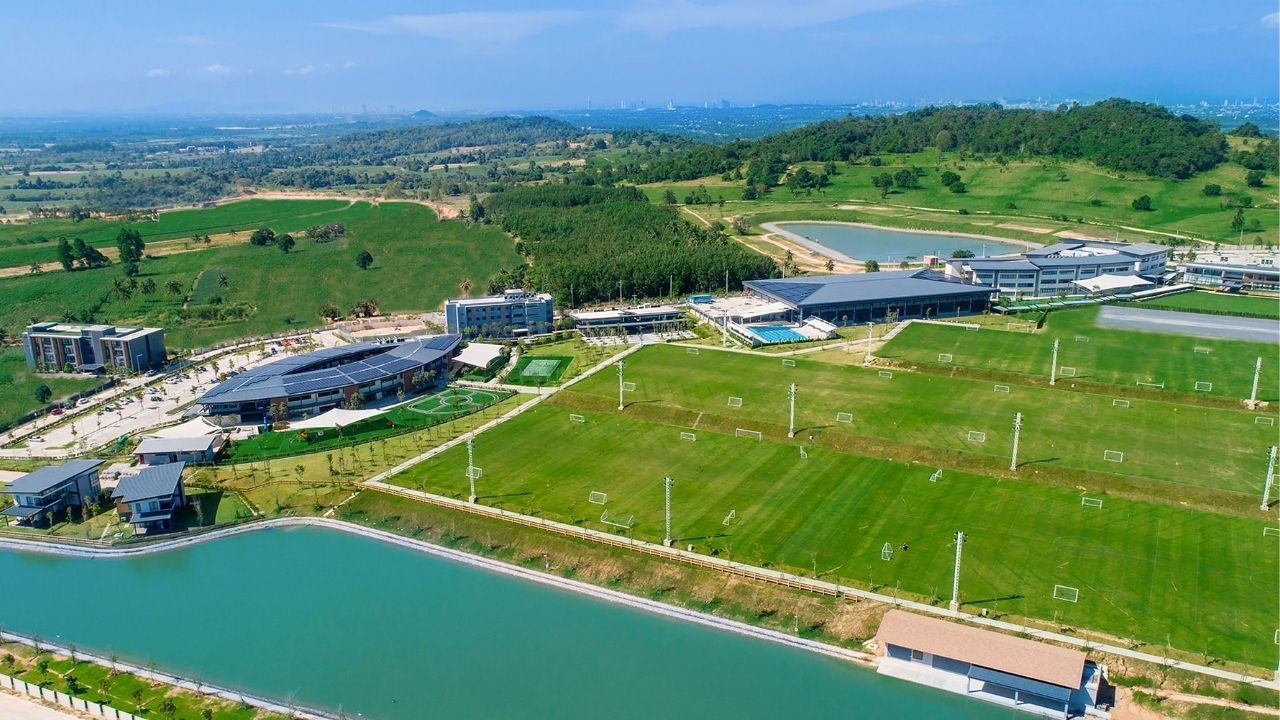
Harrow International School Bangkok – Near Don Mueang Airport. Emphasises leadership and traditional British house culture in its dedicated Boarding Village. Nearly 40% of upper school boards. Best for academically ambitious students thriving in competitive, traditional environments.
Rugby School Thailand – 80-acre campus in Chonburi (75 minutes from Bangkok). Prioritises “the whole person” through outdoor education and character building. Flexible boarding options (day, weekly, full). Best for active children needing space.
Shrewsbury International School Bangkok (Riverside) – Central Bangkok location with the highest A*/A percentages regionally. Excellence in academics and performing arts. Best for intellectual or artistic students targeting Oxbridge.
Regents International School Pattaya – IB Diploma in a supportive Round Square environment. 100% pass rate despite non-selective admissions. Best for students thriving in nurturing settings.
British International School Phuket (BISP) – IB academics with high-performance sports academies (football, tennis, swimming, golf). 120+ boarding community in a tropical campus. Best for student-athletes.
Practical considerations: Admissions and visas
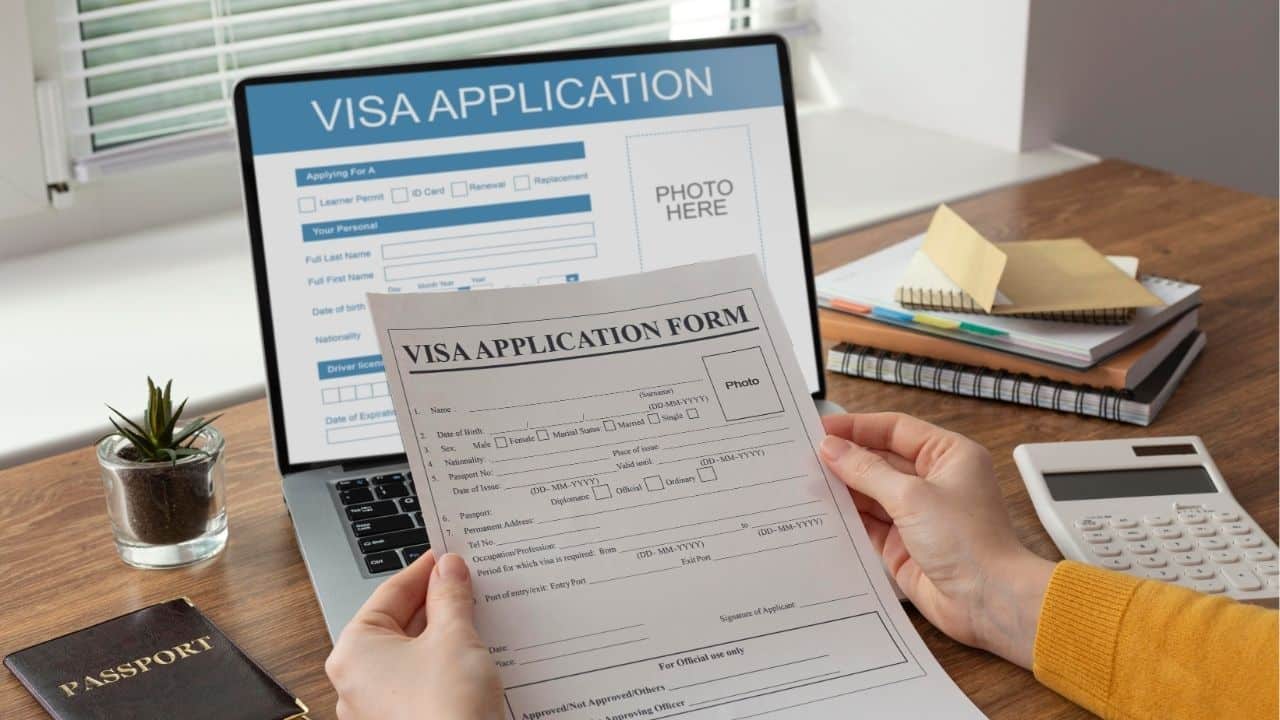
Apply 6 to 12 months ahead for most boarding schools in Thailand. Highly competitive entry points (such as Year 7, Year 9, and Year 12) may require applying up to 12 to 18 months in advance, especially at top-tier schools with long waiting lists.
Admissions assessments commonly include:
- CAT4 cognitive ability test (online or onsite)
- English as an Additional Language (EAL) assessment for students who are not native speakers
- Interview with the Head of Boarding, Principal, or Head of Secondary
Typical financial commitments include:
- Application fee: 5,000 to 7,500 Thai baht
- One-time enrolment/registration fee: 150,000 to 250,000 Thai baht (varies by school)
- Refundable security deposit: 100,000 to 200,000 Thai baht
- Boarding materials fee (optional at some schools): 10,000 to 25,000 Thai baht
Schools provide full Education Visa (ED) support for enrolled students.
For parents wishing to stay long-term in Thailand, options include the Thailand Privilege (Elite) Visa or Guardian Visa, although full boarding means parents do not need to reside in Thailand.
All details above match the fee patterns of well-known international schools such as Harrow Bangkok, Shrewsbury, Regents, RIS, BISP, and UWC Thailand.
The verdict

For expat families in Thailand, and those considering the move, boarding school represents more than convenience. It’s a strategic educational decision backed by compelling economics, robust safety frameworks, structured daily life, and academic results that open doors to the world’s top universities.
The question isn’t whether Thailand’s boarding schools are good enough compared to the UK. In 2026, they’ve graduated from a regional alternative to a global destination. With savings of £20,000-40,000 annually per child, world-class facilities often newer than UK counterparts, and pastoral care that prioritises wellbeing alongside academics, Thailand’s boarding schools offer what many parents thought impossible: elite education without the elite price tag.
For the globally mobile family, the Thai option isn’t a compromise; it’s an upgrade.
Sources:
- International School Database – Boarding International School in Thailand
- Thomas Keith Education – Boarding Schools in Thailand: Education & Growth
- Expats in Bangkok – International School Fees Comparison 2024
- Harrow International School Bangkok – Boarding Information and Fee Schedules 2025-2026
- Nord Anglia Education – Regents International School pattaya achieve an impressive 100% IBDP pass rate 2025
British, American, or IB curriculum in Thailand: Which one actually fits your child?
Latest Thailand News
























Follow The Thaiger on Google News: