What you need to know before getting a hair transplant in Thailand
A specialist-led guide to natural results, proper diagnosis, and long-term planning with Dr Damkerng Pathomvanich

Hair loss has a way of creeping up quietly. One day, the hairline feels a little higher, the crown a little thinner, and suddenly you’re paying attention to the mirror again. For many people, hair transplantation becomes part of the conversation sooner or later. Thailand has become one of the places people look to.
If you’re one of the people thinking about getting a hair transplant in Thailand, it helps to understand what actually makes a result work long-term. We spoke to a renowned Hair Transplant surgeon at MedPark Hospital Bangkok, Dr Damkerng Pathomvanich, who has been practicing hair transplantation in Thailand for over 3 decades, to break down what you need to know before you commit.
On this page
| Jump to section | Quick summary |
| How hair transplantation became what it is today in Thailand | How hair transplantation in Thailand evolved from scepticism and small procedures to modern techniques capable of delivering natural, reliable results. And can be completed in 1 to 2 days in selected cases. |
| What patients expect from a hair transplant today | Why modern patients prioritise natural hairlines, realistic density, and results that still look good years later. |
| Why diagnosis is a step you cannot skip | The importance of identifying the true cause of hair loss before undergoing surgery and why not all hair loss should be treated with transplantation like in Alopecia Areata, Lupus must be treated medically. |
| How your hairline should be designed | What goes into hairline design, why lower isn’t always better, and how collaboration between doctor and patient affects results. Shape of hairline effect in round face, triangular face, square face, etc. |
| Understanding the limits of your donor hair | Why donor hair is limited, the risks of overharvesting, and why “unlimited grafts” can cause long-term problems. Cause diffuse thinning, see through look at the back and side. |
| Choosing between FUE and FUT | Key factors that determine whether FUE or FUT is more suitable, including hair colour, hairstyle preferences, and scalp laxity etc. |
| Treating advanced hair loss | How advanced hair loss is planned, including the use of beard or body hair and managing expectations realistically. Medication for hair loss. |
| When you are correcting a previous procedure | Common reasons patients seek repair work and why correcting poor results is often more complex than primary surgery. |
| The long-term reality patients rarely hear about | Why hair transplantation doesn’t stop hair loss and the role of medication plays in maintaining results over time. |
| Choosing the right doctor is important | What to prioritise when selecting a hair transplant doctor and why experience matters more than price. |
How hair transplantation became what it is today in Thailand
When Dr Damkerng first returned to Thailand after training in the United States, hair transplantation was still viewed with scepticism. “Not many people were doing hair transplants,” he says. “Many doctors hadn’t even heard about it, and people believed it was not successful or that it would get infected.”
Early procedures were limited in scale and ambition, with limited techniques, unpredictable graft survival, and low expectations. At the time, performing 100 or 200 grafts was considered standard. Over the years, as surgical techniques improved and team-based approaches became better, outcomes began to change.
“Now we can do 1,000 or 4,000+ grafts a day,” Dr Damkerng explains. “Sometimes 6,000 grafts over two consecutive days, enough to cover extensive baldness.” More importantly, transplanted hair began to grow, on average in four months, and blend naturally with existing hair.
What patients expect from a hair transplant today

Modern hair transplant patients are far more informed than they were a decade ago. They aren’t simply looking for more hair, but results that look believable in daily life, under natural light, and years down the line.


“They’re looking for really natural-looking hairlines,” says Dr Damkerng. “Not a straight hairline, not a pluggy look, and not thin, artificial density.”
Achieving that result requires careful decisions about how hair is placed, how dense it is, and how it grows in relation to your face. The goal is to have hair that is natural and continues to look appropriate as you age.
Why diagnosis is a step you cannot skip
Before you are ever considered a candidate for surgery, a proper diagnosis should come first. Not all hair loss can or should be treated with transplantation. “We always start with diagnosis,” says Dr Damkerng. “We examine the scalp, check hair density, and look for any pre-existing condition.”
This evaluation includes a magnified examination of hair follicles, measurement of hair density in different scalp regions, and assessment of hair thickness. These details reveal whether hair loss is genetic or caused by other conditions such as autoimmune disease, hormonal imbalance, chemotherapy, or scarring.
“If it’s alopecia areata or hair loss from systemic disease, transplantation is not the treatment. You have to treat the cause first,” Dr Damkerng told The Thaiger.
Skipping this step can lead to disappointing or even damaging results, which is why diagnosis should never be rushed.
How your hairline should be designed
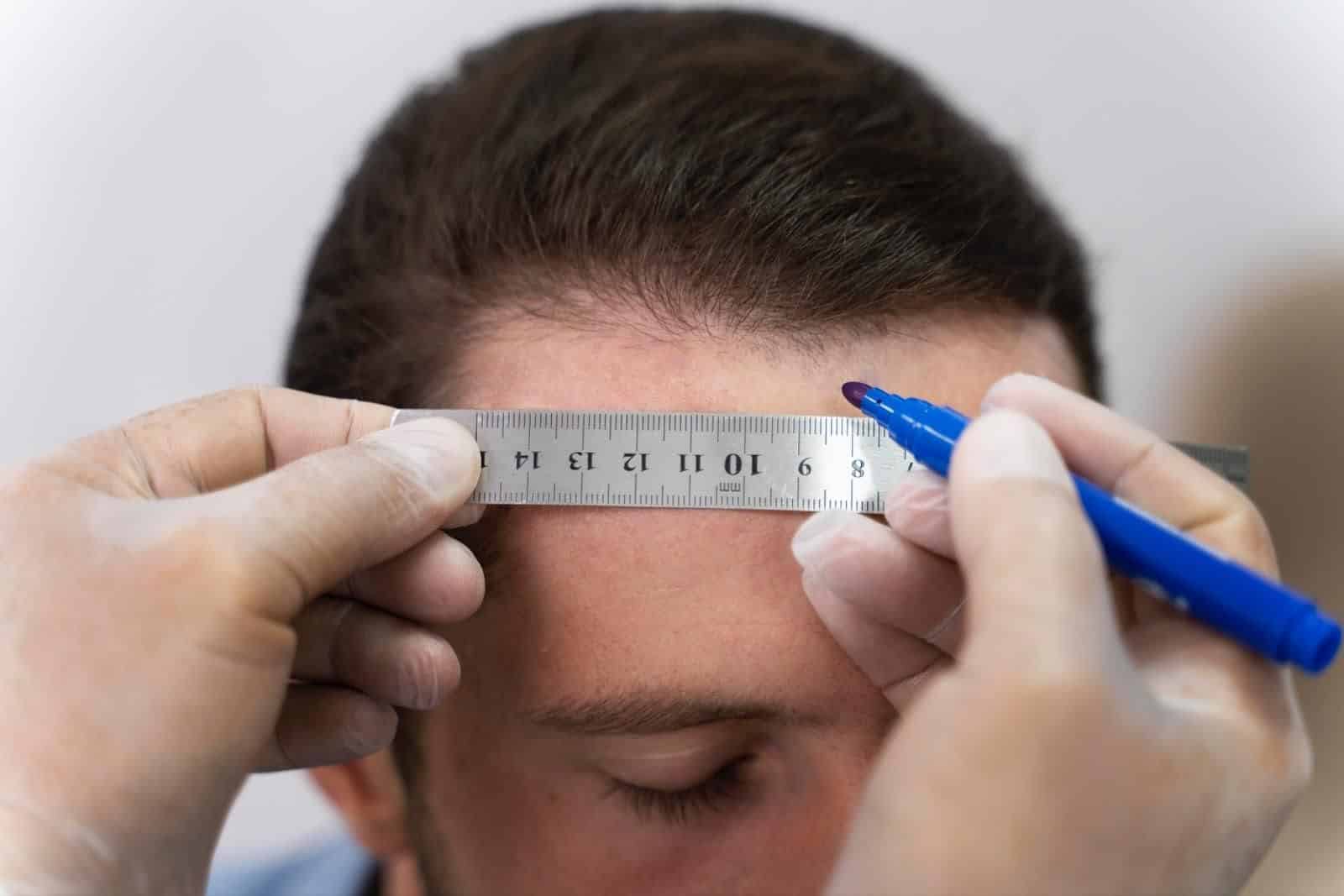
The hairline is the most visible and emotionally charged part of a hair transplant. Designing is an art and it requires more than technical skill. It requires restraint, communication, and an understanding of facial proportions, rule of ⅓ , chin to nose, and nose to brow to hairline.
“The hairline design is a benchmark of the doctor,” Dr Damkerng says. “Every patient has a different face shape — round, oval, square, triangular jaw — and a different pattern of hair loss.”
Many patients request very low hairlines, but this is not always realistic. “If someone has significant hair loss and wants a very low hairline, they may not have enough donor hair,” he explains. In such cases, raising the hairline slightly and softening its shape can preserve grafts for future needs while still producing a natural result.
Equally important is collaboration. “What I draw might be my preference, but not the patient’s,” he says. “We talk, we look in the mirror together, and we decide.”
Technology such as laser alignment tools can assist with symmetry, but they cannot replace experience or conversation. A natural hairline is rarely perfectly straight or mathematically precise. Just as important is your involvement in the process, as the final design should reflect both medical reality and personal preference.
Understanding the limits of your donor hair
One of the most important truths about hair transplantation is that donor hair is limited. You only have a certain amount of hair that can be safely moved without affecting how the back and sides of your head look.
“We map the safe zone and measure how many grafts are available. Usually, you can safely take about 40 to 50 percent, from the donor area safe zone,” Dr Damkern explains.
This is why he’s strongly cautions against clinics advertising unlimited grafts. “Unlimited grafts means unlimited damage to the donor area,” he says. Hair loss is progressive, and many patients will need additional procedures years later. Using too much donor hair too early leaves few options for the future.
Choosing between FUE and FUT
You may hear strong opinions about whether FUE or FUT is better, but the right choice depends on your hair characteristics, lifestyle, and long-term goals. “People with grey or white hair often do better with FUE,” Dr Damkerng notes, as follicle visibility affects how grafts are handled during surgery.
Hairstyle also matters. If you prefer very short hair, FUE may help reduce visible scarring. If you wear your hair longer, both techniques can work well when done properly. Scalp flexibility is another factor, as very tight scalps are not ideal for strip surgery. For women, shaving is often a major concern, which is why non-shaven and long-hair techniques are increasingly used to preserve appearance during recovery.
The Hair Restoration Centre at MedPark Hospital Bangkok offers various techniques to suit your needs. These include FUT, FUE, and the COMBO technique (FUE + FUT).
Treating advanced hair loss
If your hair loss is advanced, planning becomes even more important. The first step is understanding how much donor hair is available and how best to distribute it. “If the scalp donor is not enough, we talk about beard or body hair,” Dr Damkerng says.
Beard hair has become a reliable option in recent years. “For the past five years, we’ve done a lot of beard hair. It grows well, and patients are happy.” In some cases, you may decide to prioritise the front hairline and accept lower density behind. These decisions are deeply personal and depend on what makes you feel most comfortable with your appearance.
When you are correcting a previous procedure
Repair cases are a common part of experienced hair transplant practices. Many people seek help after undergoing procedures that didn’t grow well or were poorly planned. “The most common problems are hairlines that are too straight or too pluggy,” Dr Damkerng says.
Incorrect angle and direction can cause hair to grow unnaturally, while older techniques using large grafts may leave visible texturing on the scalp. Repair often involves removing grafts and redistributing them carefully, which is technically demanding and requires a conservative approach to protect what donor hair remains.
The long-term reality patients rarely hear about
Hair transplantation doesn’t stop hair loss from progressing. This is one of the most important points patients overlook.
“Hair loss is progressive,” Dr Damkerng says. “Even transplanted hair can change over many years.”
He has followed patients for decades and observed that long-term graft survival varies. Medication plays a critical role. “When you do hair transplantation, you need to take medication,” he explains. Without it, surrounding hair continues to thin, and overall density declines.
Choosing the right doctor is important
When asked for advice, Dr Damkerng keeps it simple. “Choose a qualified doctor with experience and a good team. Don’t focus on price.”
Cheap procedures often become expensive problems. Repairing donor damage or unnatural results costs far more than doing the procedure properly the first time.
A well-executed hair transplant can restore not just hair, but confidence. In Thailand, the expertise exists. The difference lies in choosing care that respects biology, time, and the reality that good hair restoration is never rushed.
Dr Damkerng Pathomvanich sees patients at MedPark Hospital Bangkok for hair transplant consultations focused on safety, planning, and natural results.
Sponsored
Latest Thailand News

























Follow The Thaiger on Google News: