Japanese expat shares Why you must carry a stack of 20-Baht notes in Thailand

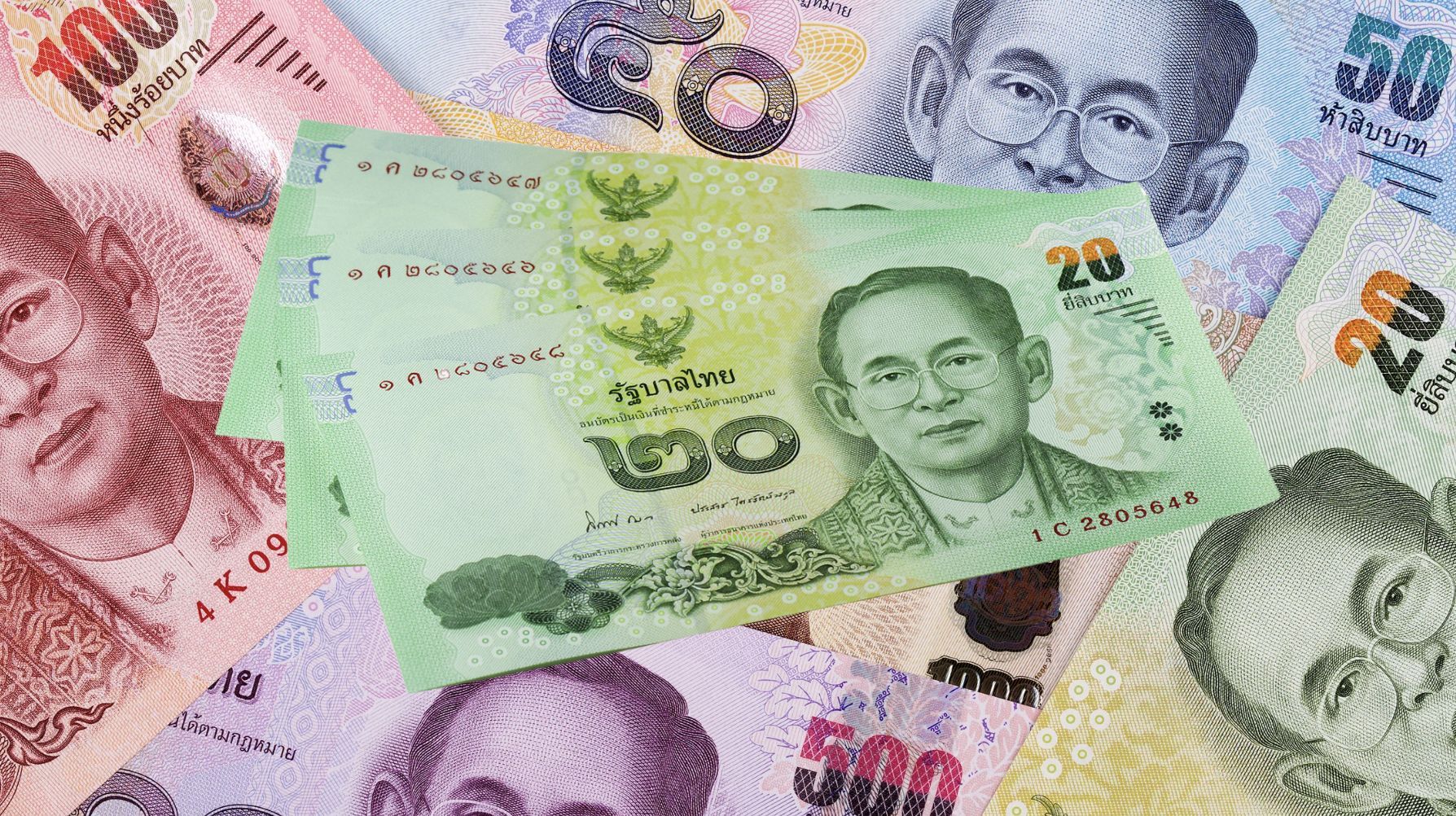
Viral Tip: Japanese Expat Reveals Why Carrying a Stack of 20-Baht Notes is Essential for Rural Thailand
BANGKOK — A Japanese expatriate living in Thailand has post a good tip on social media. A practical financial tip for traveling upcountry. she adviced always carry a thick stack of 20-baht banknotes.
user @mlxism17 posted a photo of a fresh bundle of 20-baht bills, explaining that this simple habit significantly improves the travel experience in Thailand’s provinces.
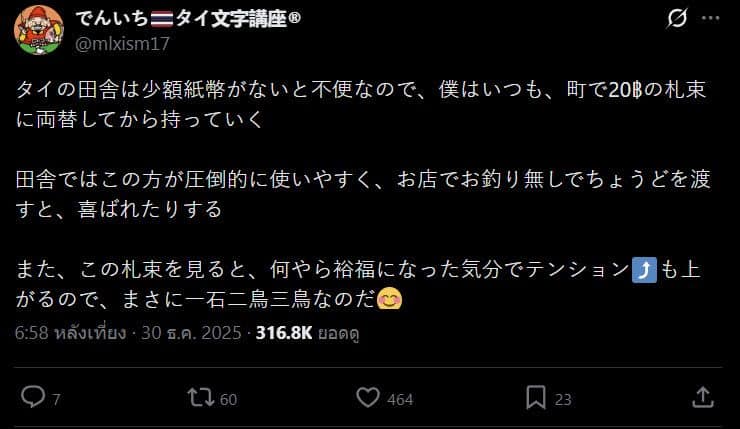
The user explained the logic behind the photo, stating, “In the Thai countryside, using high-value banknotes is often inconvenient. Therefore, I usually exchange money for 20-baht notes while in the city to keep on hand.”
According to the post, this method offers two distinct advantages
1. Convenience for Vendors It streamlines daily life in rural areas. Local shopkeepers and vendors are visibly delighted to receive exact change, sparing them the hassle of finding change for 500 or 1,000-baht bills.
2. Psychological Boost “Additionally, seeing this stack of cash makes me feel somewhat wealthy, giving me peace of mind. It’s truly a win-win situation for both sides,” the user added.


The post resonated with netizens, observing that this trick isn’t exclusive to tourists or expats. Many Thai locals also prefer breaking their cash into smaller denominations to facilitate smoother transactions for street food, transportation, and small daily purchases.
Traveler’s Note: Understanding Thai Currency
For tourists planning a visit to Thailand, familiarizing yourself with the Thai Baht (THB) is essential for a smooth journey. While digital payments via QR codes are growing rapidly, cash remains king in local markets, street food stalls, and rural areas.
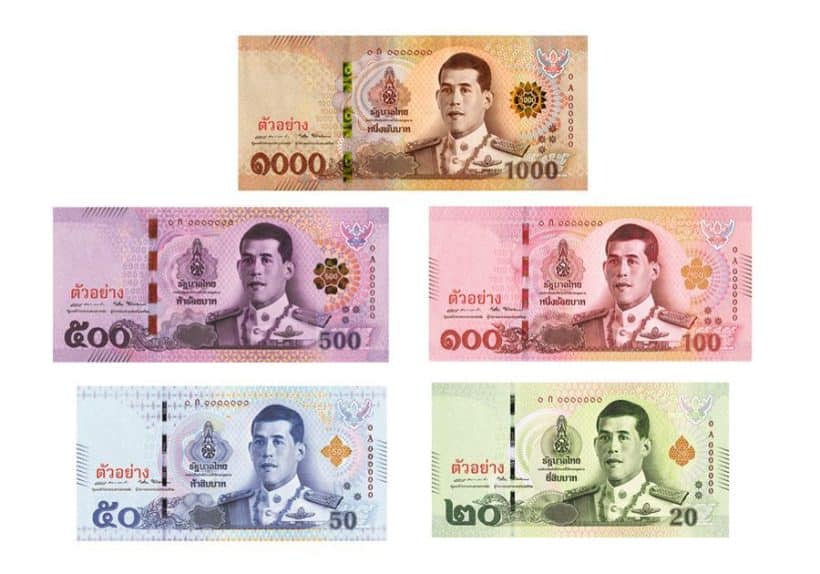
Thai Banknotes are color-coded for easy identification
-
-
20 Baht (Green): The most versatile note for small purchases like water, street snacks, or motorcycle taxis.
-
50 Baht (Blue): Now mostly polymer (plastic), durable and water-resistant.
-
100 Baht (Red): Commonly used for meals and transportation.
-
500 Baht (Purple): Used for mid-range purchases.
-
1,000 Baht (Brown): The highest value. While accepted in malls with convenience stores like 7-Eleven, small vendors in rural areas often struggle to find change for this note.
-
The Common coins include 1, 2, 5, and 10 Baht. The 10-Baht coin (silver outer ring with a brass center) is particularly useful for public transport like the BTS Skytrain ticketing machines.
Pro Tip: Follow the viral advice—break your large 1,000-baht bills at convenience stores or department stores whenever possible. Hoarding a stash of Green (20) and Red (100) notes will save you from awkward “no change” situations when exploring local communities.
Thai Pakdee Party plans to cancel 1,000 and 500 baht banknotes
Latest Thailand News

























Follow The Thaiger on Google News: