Thailand’s best beach towns for long-term living (2026)


Thailand’s coastline has always been a draw, but when it comes to long-term living, there’s more to consider than a pretty beach. These days, many of Thailand’s beach towns have grown into liveable, well-connected hubs with strong expat communities, international hospitals, and real infrastructure.
Still, each place brings its own rhythm, costs, and quirks. Before we begin, ask yourself this: Are you eyeing early retirement, remote work, or just a change of pace? Here’s how Thailand’s top coastal towns compare, so you can choose one that suits your lifestyle best.
On this page
| Section (click to jump) | Short summary |
|---|---|
| Phuket | A highly developed beach destination offering city-level infrastructure, strong healthcare, and family-friendly amenities. |
| Koh Samui | An island lifestyle centred on wellness, long dry seasons, and a balance between comfort and natural surroundings. |
| Pattaya and Jomtien | A coastal city option combining beach access with fast internet, affordability, and close ties to Bangkok. |
| Hua Hin | A calm, residential beach town known for dependable healthcare, expat communities, and stable living conditions. |
| Krabi and Ao Nang | A nature-focused coastal area offering lower living costs, scenic surroundings, and a slower pace of life. |
| Understanding coastal weather | Explains how Thailand’s Andaman and Gulf coast climates affect long-term comfort and seasonal planning. |
| Healthcare tips | Outlines practical healthcare considerations for expats living in beach towns, including insurance planning. |
| Which town is right? | Brings lifestyle, cost, healthcare, and climate factors together to help narrow down the best personal fit. |
Best for infrastructure and convenience: Phuket
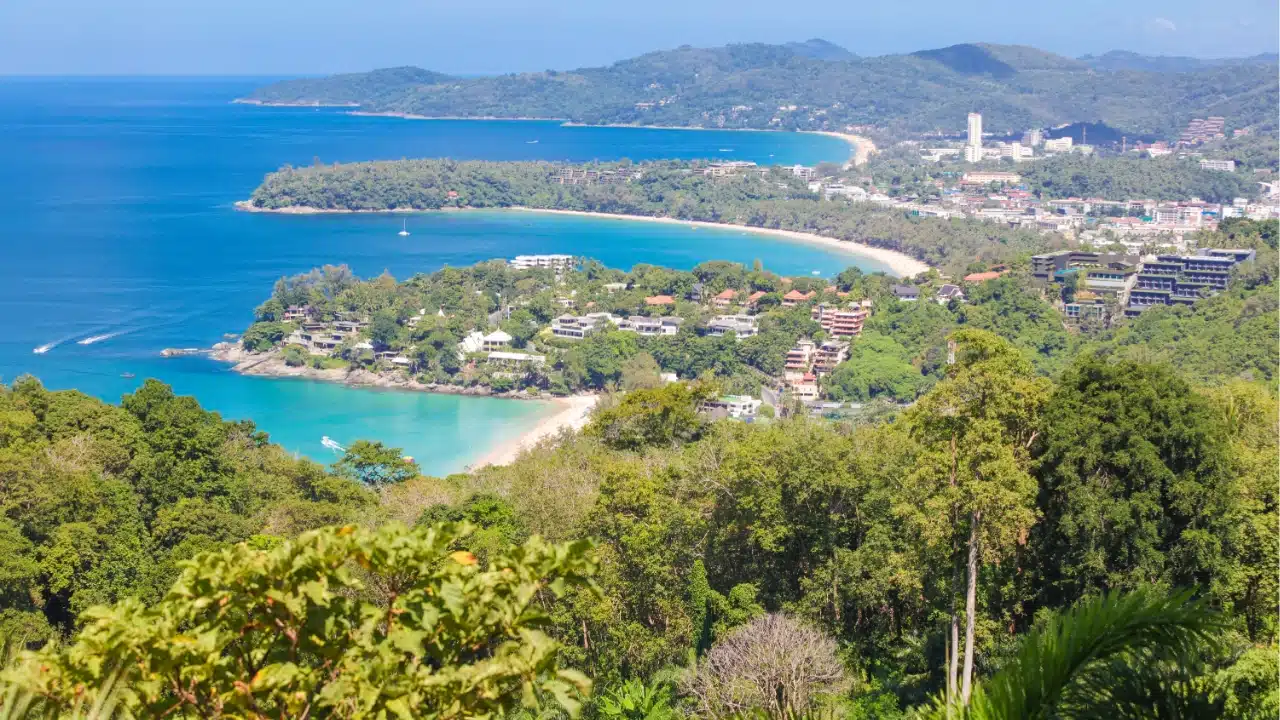
Phuket is as close as it gets to combining city convenience with beach living. It’s now a fully fledged Smart City, with the infrastructure to match. Think international schools, hospitals, shopping malls, and gated communities.
Cherng Talay and Bang Tao are hotspots for families thanks to their proximity to schools like BISP and UWC Thailand. Meanwhile, Chalong and Rawai are popular among long-term expats for their balance of local life and modern amenities.
But expect to pay a premium here, international school fees can range from 300,000 to over 800,000 baht a year. Healthcare is a strong point, with facilities like Bangkok Hospital Phuket and Samitivej Phuket offering specialist care.


Phuket is ideal for:
- Families prioritising education and healthcare
- Professionals who value convenience and are comfortable with higher costs
- Expats needing regular access to specialist medical care
- Those who want it all: modern amenities, international schools, and a coastal vibe
Weather: Dry from November to April, monsoons from September to October
Best for wellness and long dry seasons: Koh Samui
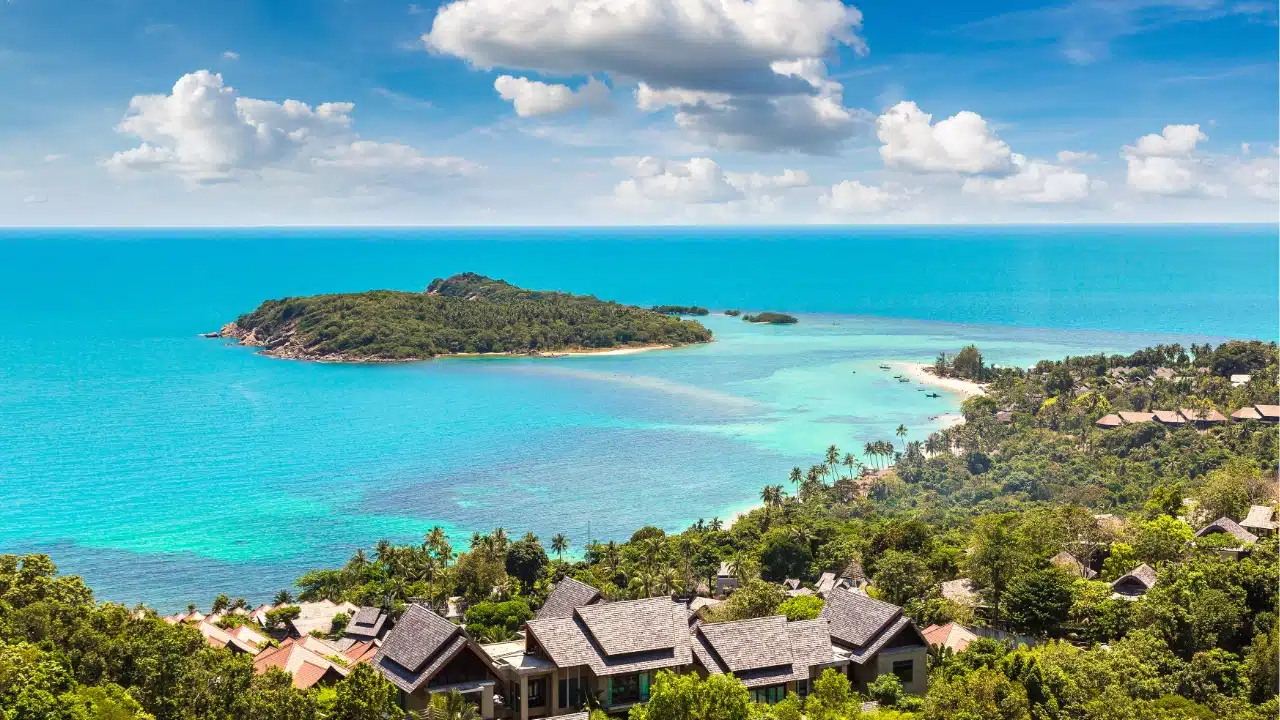
Koh Samui offers beach beauty with a strong focus on wellness. It’s especially popular with expats interested in health-conscious living, from yoga retreats to organic markets.
Chaweng and Bophut are the main hubs, while Lamai and Maenam offer quieter settings. Families are increasingly drawn to the area, thanks in part to the International School of Samui.
Costs vary: budget nomads can manage on 25,000 baht a month, while retirees or families often spend between 50,000 and 100,000 baht. Bangkok Hospital Samui offers JCI-accredited care and emergency airlift options.
Koh Samui is a fit for:
- Expats looking for wellness-oriented lifestyles
- Families with school-age kids
- Those wanting a year-round beach life with fewer rain disruptions
- Residents okay with paying a bit more for island life
Weather: Dry from January to August, with short monsoons from October to December (Gulf pattern)
Best for digital nomads and city access: Pattaya and Jomtien
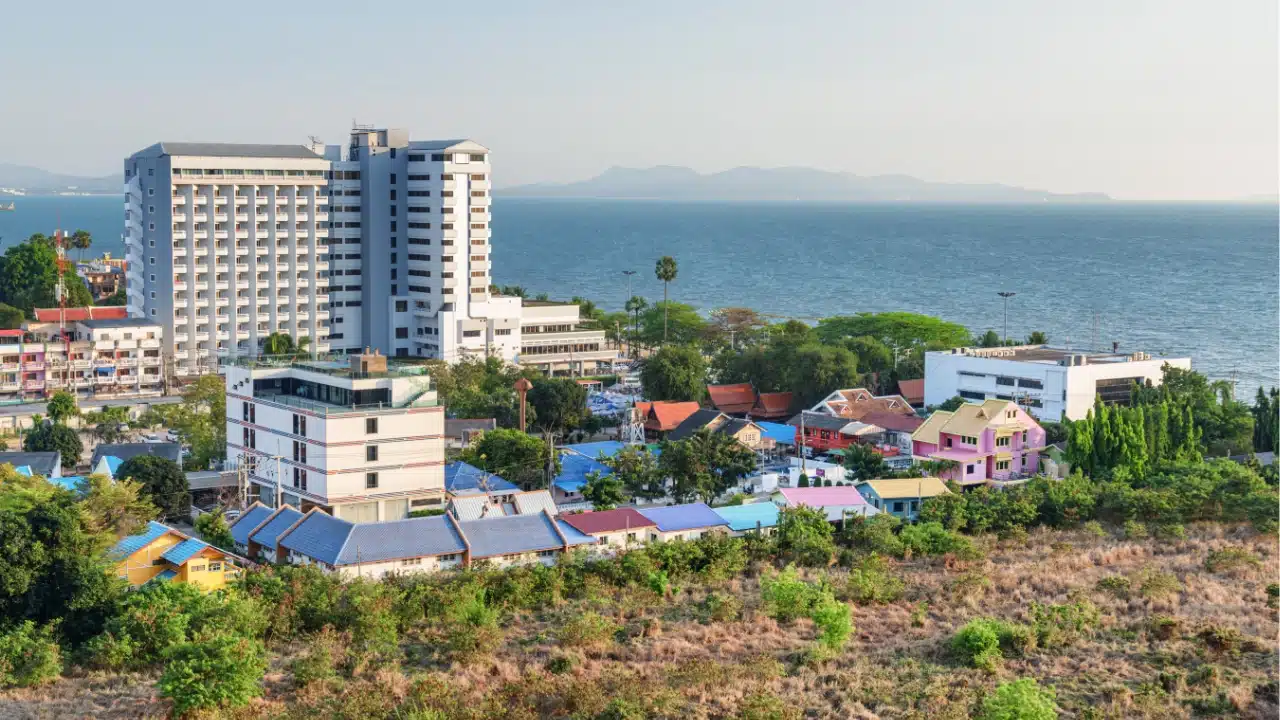
Once known for its nightlife, Pattaya has matured into a city that incorporates business, family life, and beach culture. It’s close to Bangkok (just 90 minutes away) and is part of the Eastern Economic Corridor, meaning better infrastructure and transport links.
Jomtien, next door, offers quieter beaches and modern condo living. A one-bedroom unit here costs between 20,000 and 35,000 baht a month. Fast internet, coworking spaces, and reliable public transport make Pattaya a strong pick for remote workers.
Bangkok Hospital Pattaya offers JCI-accredited care, and the city is a hub for dental and cosmetic procedures. Newer schools like Rugby School Thailand, or the long-established Regents International School, are also attracting international families.
Pattaya is suited for:
- Digital nomads and remote workers
- Expats wanting easy access to Bangkok without living in it
- Property investors (yields of 6–10%)
- Those working in or commuting to EEC industrial zones
Weather: Dry from January to August, monsoons from October to December (Gulf pattern)
Best for retirement and healthcare: Hua Hin
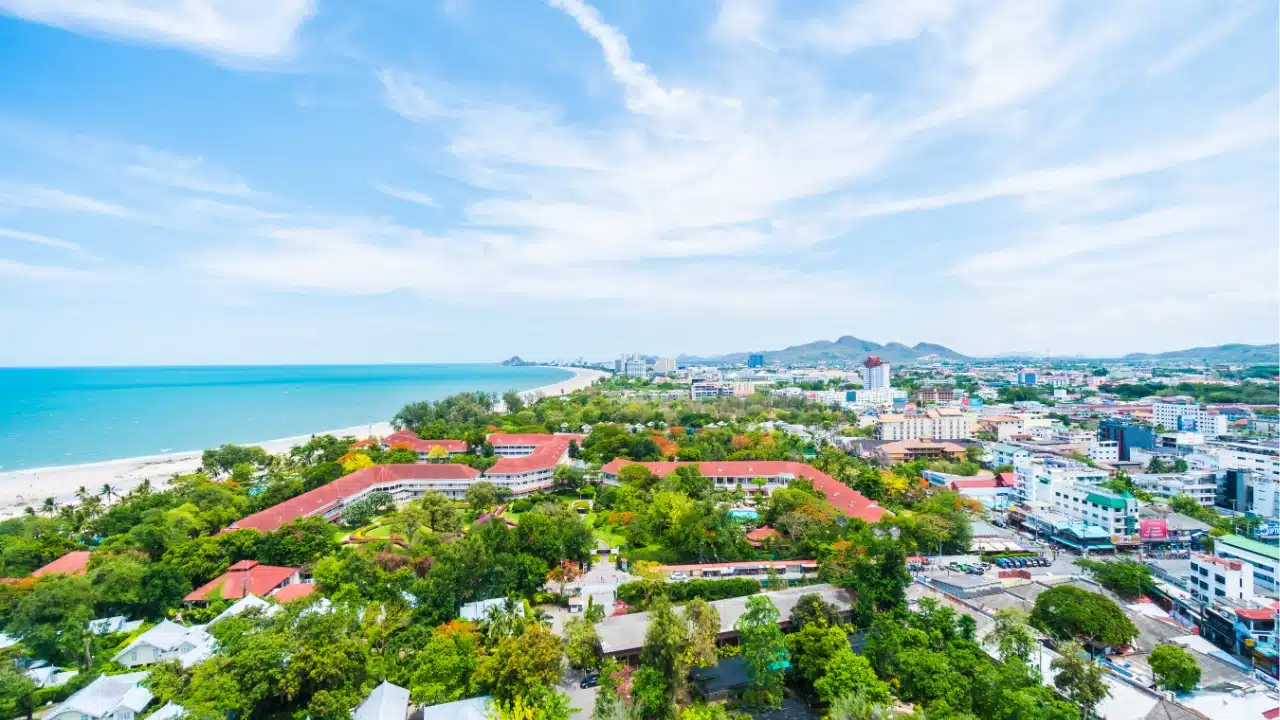
With its royal heritage and peaceful atmosphere, Hua Hin offers a more refined version of coastal living. It’s a favourite among retirees, thanks to excellent healthcare and a strong expat network.
Bangkok Hospital Hua Hin offers 24/7 emergency care and international-standard services. Be Well Medical Center and Hua Hin Health Park provide wellness and preventative care options.
The social scene here is lively in its own way. Clubs like the Hua Hin International Expat Club and Hua Hin Ladies offer plenty of ways to meet people. The region also benefits from the “rain shadow” effect, meaning less rainfall year-round.
Hua Hin suits those who:
- Prioritise stable healthcare access
- Want a calm lifestyle with good infrastructure
- Appreciate a community feel with clubs and events
- Prefer less dramatic weather
Weather: Dry and mild most of the year
Best for budget beach living: Krabi and Ao Nang
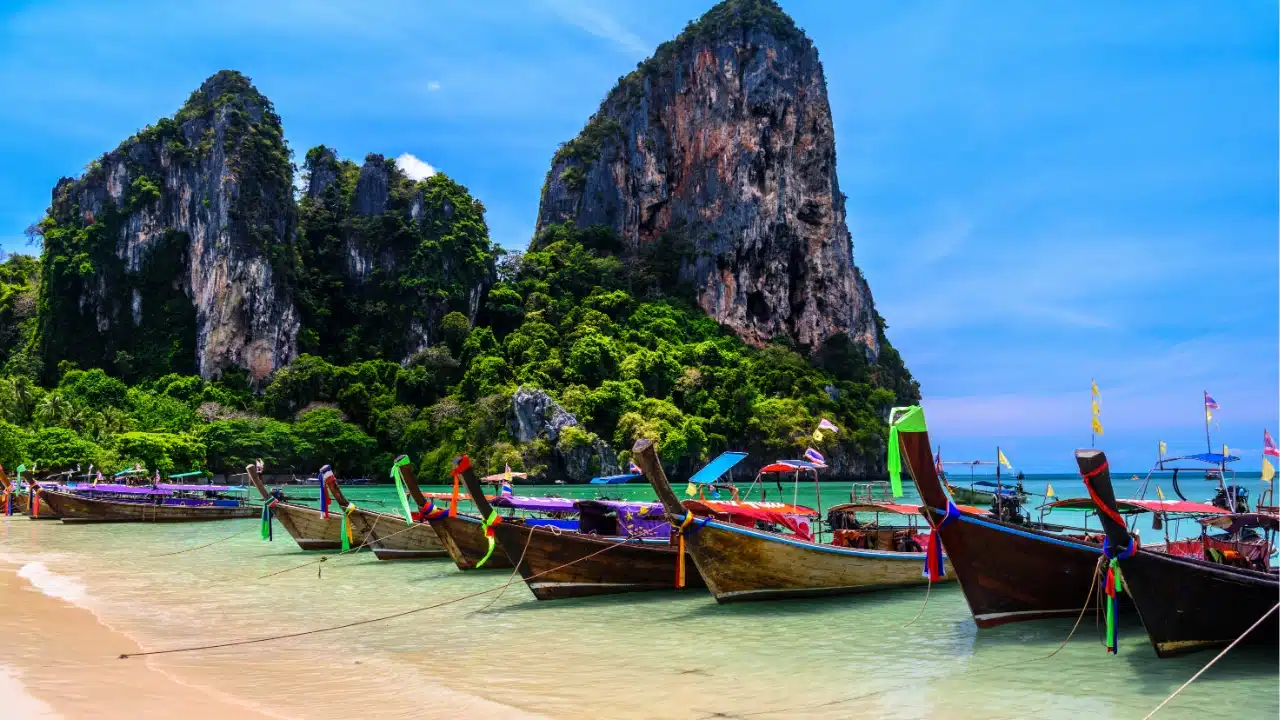
Krabi is the place to be for budget-conscious expats who love nature. Known for its limestone cliffs, coral reefs, marine life, wildlife sanctuaries, and national parks, the southern Thailand province is among the most beautiful in the region.
Simple beach bungalows can go for as little as 7,000 baht per month, while Western-style homes typically cost around 25,000 baht. The expanded Krabi airport has made it easier to reach, with direct flights from Paris, Abu Dhabi, and Mumbai.
Healthcare is decent for everyday needs, with Krabi Nakarin International and Wattanapat hospitals handling general care. For more complex treatments, most people travel to Phuket. So, solid health insurance is a must.
Krabi works well for:
- Digital nomads and creatives on a tighter budget
- Eco-minded expats who love being close to nature
- Beach lovers who don’t need city-style nightlife
- Those okay with travelling for specialised healthcare
Weather: Monsoons from September to October (Andaman pattern)
Understanding Thailand’s coastal weather patterns
The Andaman coast (Phuket, Krabi) sees dry weather from November to April, with monsoons in September and October. The Gulf coast (Samui, Hua Hin, Pattaya) stays drier for longer, January to August, with brief monsoons late in the year. Hua Hin’s unique geography even means less rainfall than most Gulf towns.
If you’re working remotely, you might consider switching regions with the seasons to enjoy year-round good weather.
Healthcare tips for beach town living
Private healthcare in Thailand is affordable compared to the West, but costs can still add up. That’s where international providers like Cigna Global come in.
With Cigna’s direct billing network, you can walk into hospitals, get treated, and leave without paying upfront. Coverage tiers include:
- Close Care℠: US$500,000 per year for Thailand + your home country, ideal if you’re not travelling internationally often
- Silver: US$1 million with diagnostics and hospitalisation
- Gold: US$2 million with added maternity, screenings, and more
- Platinum: Unlimited coverage, perfect for those using premium providers
All plans offer mental health support, telehealth, wellness checkups, and meet Thai visa insurance requirements (LTR, O-A, O-X). Close Care℠ is a good middle ground for most beach town residents.
Example: An ER visit at a coastal hospital can cost 50,000 to 100,000 baht. With insurance, you just flash your card and go home. No drama.
So, which town is right for you?
There’s no one-size-fits-all answer. Each beach town offers a different vibe and set of trade-offs:
- Phuket: Best infrastructure, but pricy
- Krabi: Budget-friendly and beautiful, but limited in healthcare
- Pattaya: Urban beach with digital nomad perks
- Hua Hin: Refined and reliable for retirees
- Samui: Wellness paradise with extended dry seasons
No matter where you settle, good healthcare should be part of the plan. Cigna Global makes it easy to stay protected without stress.
Looking to live by the beach in Thailand? Get a quote from Cigna Global and choose a plan that fits your lifestyle.
*Prices and details reflect conditions in 2025-2026 and may vary based on location and individual circumstances.
Choosing the right place depends on how you live and what you need day to day. For a broader picture of expat life, read What expats in Thailand wish they knew before moving here to understand what living in Thailand is really like.
Sponsored
Latest Thailand News






















Follow The Thaiger on Google News: