In-flight credit card theft hits 80 cases as losses pass 8 million baht

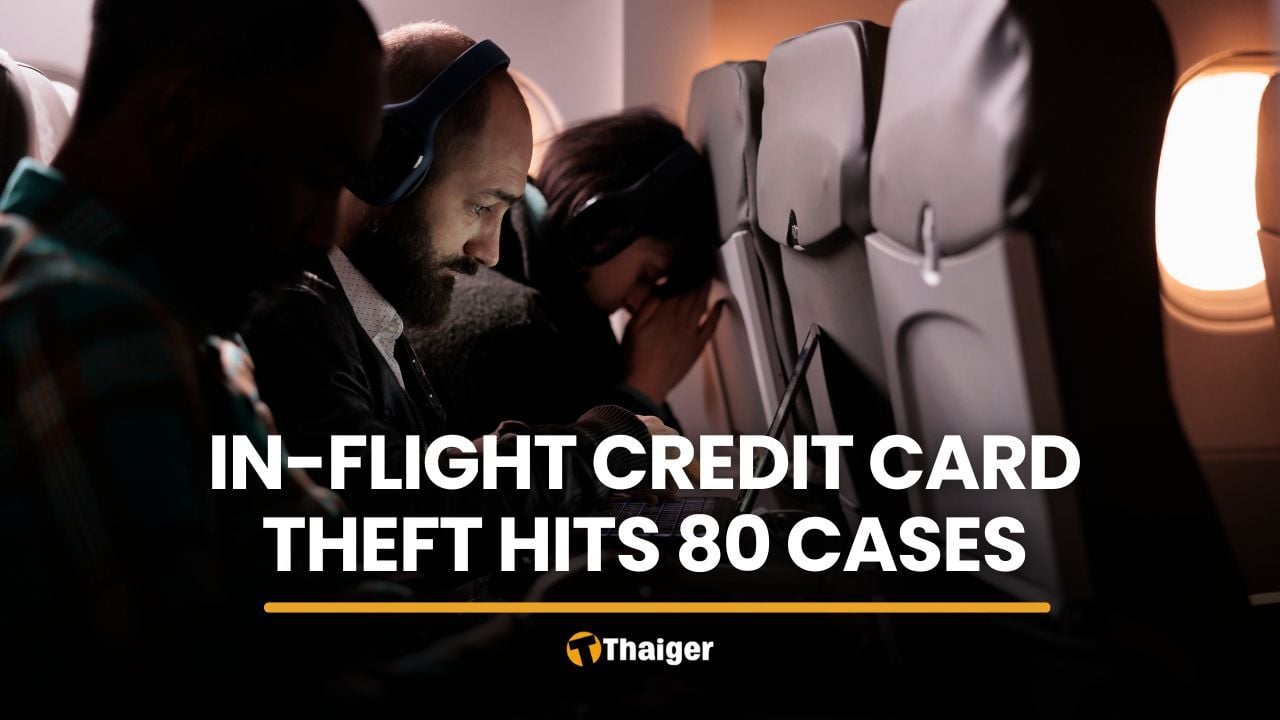
Immigration police have warned travellers about in-flight credit card theft after reporting a significant rise in cases on short international flights, with more than 80 incidents and losses exceeding 8 million baht.
Yesterday, March 30, Pol Col Phongthorn Phongrattanant, deputy commander and spokesperson of Immigration Division 2, said the Immigration Bureau issued the alert after detecting a notable increase in credit card theft on aircraft. He said most cases were found on international routes lasting no more than three hours.
Phongthorn said reported data from 18 financial institutions showed more than 80 cases, with total losses of more than 8 million baht.
Immigration Division 2 is reportedly preparing measures based on the “crime triangle” concept of victim, opportunity and offender, with a focus on reducing opportunity. This will include proactive public information online and at airports.
Immigration police will also coordinate with the Civil Aviation Authority of Thailand and airlines to strengthen the role of cabin crew in warning passengers and monitoring suspicious behaviour during flights.
Passengers were urged to take extra care with their valuables and to check their belongings regularly while travelling.

Raiwin Worawongsathit, president of the Credit Card Fraud Prevention Club and a top KTC executive, said the most common method involves criminals taking advantage when passengers are distracted or asleep.


Thai PBS reported that offenders typically open bags stored in overhead compartments, which are often not directly above the owner’s seat, then use the stolen card to make transactions via mobile banking immediately after landing.
According to him, such incidents are often classified as “lost card” cases because the card is not in the customer’s possession during the transaction period.

Raiwin added that while fast payment technology increases convenience for consumers, it can also create opportunities for criminals, meaning risk management must involve both user behaviour and financial tools.
He said the trend reflects the growth of a cashless society, which makes spending faster and easier. However, risks increase when cardholders are not careful, especially while travelling.
Raiwin outlined four ways to reduce the risk of card theft while travelling. He advised keeping cards on your person at all times and avoiding leaving them in bags stored in overhead compartments that are out of sight.
He also recommended using card-control features in mobile applications, such as temporary card blocking (Temporary Block) and spending limits (Spending Control), and enabling real-time transaction alerts.
He added that notifying travel plans in advance can help systems detect unusual transactions faster and more accurately.
The most effective prevention, he said, combines user caution with appropriate use of financial tools to help ensure travel is safer and more secure.
In a separate development, police arrested a Thai woman at her condominium for conspiring with Chinese suspects to commit credit card theft at several onsen establishments in Bangkok. The stolen cards were used by the thieves, resulting in losses exceeding 200,000 baht for the victims.
Latest Thailand News






















Follow The Thaiger on Google News: