Here is why Thai locals are fed up with Visa-free Tourists
The real reason behind the growing local resentment toward Visa-free Tourists

Sitting in a Nimman cafe in Chiang Mai, a Thai local notices a good-looking foreigner working on a laptop next to them for hours. Having ordered just one cup of coffee, this person is clearly not a tourist, nor are they here to relax. They sit quietly, working as if the cafe were their own personal office.
You might start wondering how they entered the country. If they hold a work visa, or if they pay taxes to Thailand. The sad answer is they entered for free, hold no work visa, paying absolutely no taxes.
Where did the 60-day visa-free come from?
In 2023, while Thailand was recovering from Covid, the government tried bringing tourists back as quickly as possible. One key strategy was extending the Visa Exemption period from 30 days to 60 days for tourists from dozens of countries.
The reasoning at the time sounded very logical. European or American tourists flying tens of thousands of kilometers should be able to stay long enough to spend money worthwhile in the country. Thirty days might be too short for those wanting to travel across the North, Central, South completely, so it was expanded to 60 days.
Initially, it seemed like a smart policy. It worked in terms of numbers, tourists actually returned, with the money circulating in the tourism industry recovering in a short time. However, the reality on the flip side also created social or economic problems for locals in the area.
Who benefits from the visa-free? Some get it when they shouldn’t
For actual tourists flying in for a normal vacation, 60 days is hardly different from 30 days. Most stay for less than two weeks anyway. Statistics from the Tourism Authority of Thailand show most tourists stay an average of about 9 to 10 days per trip. Therefore, reducing it back to 30 days would barely affect real tourists at all.
The problem lies with the group fully exploiting the 60 days in a way the government did not intend.

The group causing the most trouble recently is online scam gangs. Reports indicate they use tourist visas as a channel to enter the country before moving on to their operational areas. Some are trafficked labor, some are coordinators, but they all use the same visa category as general tourists to enter the country.
But that is not even the biggest group giving the government a headache.
Digital Nomads: The problem people rarely discuss openly
There is a very trendy term these days called Digital Nomad, referring to online workers not tying themselves to any single country. They travel the world with a laptop, earn a salary from abroad, then live in countries with a lower cost of living.
Thailand has become a top destination for this group for several years. The reasons sound logical: delicious food, cheap prices, faster internet than in the West, low rent, friendly people. Most importantly, they can enter for free without needing a work visa because Thailand is lax regarding inspection or law enforcement.
This is exactly where the problem begins.
According to Thai law, working in Thailand without a Work Permit is considered illegal. Whether you receive money from a company in another country or not, as long as you sit working in Thailand, you are considered to be working in Thailand.
But this dividing line is so blurry it is almost invisible. Many people willfully choose to ignore it.
The consequence is that part of the money flowing into the country as tourist expenses is actually the income of people living or working full-time in Thailand. They do not pay a single baht of income tax to Thailand, do not hold a valid visa, lacking clear legal status in the country.
Visa Run: The loophole everyone knows but is just starting to be seriously managed
If a visa-free only lasts 60 days, what do people do if they want to stay longer?. The trick used for decades is called a Visa Run, involving traveling out of the country then re-entering to reset the visa clock back to day one.
It sounds easy, truly being easy for a very long time. There are several border checkpoints handling this directly. Some places have minivans running from Bangkok to the Cambodian or Myanmar borders just to get stamped out then back in. Some people have done this for years, even decades, without ever holding a proper visa.
For those living long-term in Thailand this way, the visa run has become part of their monthly routine. There are online groups teaching how to do it, blogs recommending which borders are easy to pass or which ones ask too many questions. The Thai government is well aware of this.
November 2024: Starting to enforce the rules
Since November 2024, the Ministry of Interior has issued guidelines granting immigration officers the authority to deny entry to those using the Visa Exemption privilege more than twice without a sufficiently valid reason.
Simply put, if you repeatedly enter or exit Thailand on a tourist visa without proof that you are actually a tourist, officials have the right to send you back immediately. There is no ban or blocklisting involved. You simply do not pass this time, being able to try coming back later.
Tourist denied entry at Don Mueang Airport over minimum cash rule
So why reduce it back to 30 days?
Recently, reports state the government is considering reducing the Visa Exemption period back to 30 days, being the standard before the post-Covid recovery expansion.
The most solid reason is national security. This covers both online scam gangs using tourist visas as an entry channel or foreigners living working in the country without proper legal status.
If asked how much this really affects actual tourists, the answer is barely at all.
People flying in to visit Thailand for one or two weeks do not need 60 days. Those planning a three to four-week trip across multiple provinces still fit comfortably within the 30-day window. The group truly affected is the one using the visa-free as a means for long-term residency, being exactly the group the government intends managing.
How do Thais view foreigners on visa-free?
Frankly speaking, the feelings of locals in tourist areas toward the quality of tourists entering on visa-free lean more negative than positive.
It is true Thais welcome genuine tourists, knowing well that tourism is the lifeblood of the economy. On the other hand, there is a growing unease accumulated over the years regarding foreigners living long-term in Thailand. They use resources or infrastructure but do not participate in the tax system nor hold any clear legal status. Furthermore, they create nuisances for locals, including theft, noise, or reckless driving ignoring traffic laws.
A commonly heard phrase in the Thai online world is asking if Thais could go live abroad like this. The answer is absolutely not. Many countries have strict visa regulations, where overstaying or living without proper status carries clear penalties.
This sentiment is not xenophobia but a reasonable question about screening tourist quality rather than just focusing on quantity.

What problems do visa-free foreigners cause?
1. Taking jobs legally reserved for Thais
Thailand has a clear list of occupations strictly reserved for Thai nationals. Under the Emergency Decree on Managing the Work of Aliens, there are up to 27 professions that foreigners are forbidden to engage in, regardless of their visa type. These include tour guiding, traditional Thai massage, hairdressing, beauty salon work, street vending, driving, along with several other trades related to manual labor or public services.
In reality, data from the Department of Employment for the 2024 fiscal year showed inspections of over 25,000 establishments or 306,000 foreigners nationwide found over 721 individuals guilty of taking Thai jobs. The professions most commonly usurped by foreigners were street vending, hairdressing, driving, massage, respectively.
The latest figures have not improved. In the 2025 fiscal year, between October 2024 to April 2025, inspections of over 523,000 foreigners found 883 individuals taking Thai jobs. They came from various nations ranging from Myanmar, Cambodia, Laos to India, Vietnam, or other nationalities.
These numbers only represent those getting caught. No one knows how many are doing it without being caught.
The Ministry of Labor clearly emphasizes hiring foreign guides is not only illegal but also takes jobs away from Thais, impacting the domestic economy. Tour guiding is directly listed as a prohibited occupation for aliens.
This problem occurs very easily in tourist areas. A foreigner enters the country on a tourist visa, gradually starting to take on small jobs, acting as a guide for friends, helping book tours, selling things online. The dividing line is so thin many cross it without realizing they are doing anything wrong.
Japanese man arrested after viral reviews on his illegal matcha stall
2. Nominees: Thai businesses whose real owners live on another continent
Thai law forbids foreigners from holding more than a 49 percent stake in many types of businesses. The reason is to protect local entrepreneurs, maintain investment balance, preventing domestic economic resources from being completely dominated by foreign capital.
However, there is a loophole called a nominee.
A nominee situation occurs when a foreigner, unable to legally own property or certain businesses under Thai law, uses a Thai citizen as a representative holding shares or assets on their behalf. The nominee has no actual power controlling or running the business, merely existing as a name on paper.
A former president of the Lawyers Council stated nominees exist in every profession, having been around for over 50 years. Today, you still see foreign investors walking in with a single briefcase, having a Thai person hold 51 percent of the shares without investing any money. It is a structure so commonly practiced people are used to it, being difficult to investigate because no one complains.
The nominee problem appears in almost every major tourist area. The Department of Business Development has up to 46,918 juristic persons nationwide under scrutiny. The primary target businesses include tourism, restaurants, land, real estate trading, hotels, resorts, e-commerce.
The clearest example is a case in Phuket. Police discovered a company where a foreigner presented themselves as the sole business owner, with a Thai national acting as a director on paper. Financial investigations revealed over 80 million baht in cash flow transferred directly to the accounts of the true foreign owner.
The impact of nominees on local Thais is that shops appearing to belong to Thais actually have all their profits siphoned out of the country. Occupations reserved for Thais are pushed out, with the tax system leaking simultaneously.
Recently, the Criminal Court penalized 23 individuals or juristic persons in Phuket found engaging in nominee behavior. The maximum penalty includes up to 3 years in prison, fines ranging from 100,000 to 1,000,000 baht, potential asset seizure.
3. US Dollars driving up rent beyond what Thais can afford
This is a problem people in Chiang Mai, Phuket, various islands feel tangibly in their daily lives.
When digital nomads receive salaries from abroad amounting to hundreds of thousands of baht per month, they come living in cities where average Thais earn twenty to thirty thousand baht. What happens as a natural market consequence is rent prices skyrocket.
There are clear signs rent in Thailand is starting to increase due to pressure from the digital nomad group, especially in popular tourist areas. Analysts point out the influx of foreigners with high purchasing power is putting pressure on the local cost of living.
This phenomenon is known as gentrification. When wealthier people move into an area, rent goes up, meaning traditional local shops can no longer survive. They are replaced by Western-style coffee shops, chic cafes, healthy food restaurants local Thais cannot afford.
4. Content Creators or Influencers
This is a modern problem outdated laws cannot keep up with. Foreigners enter on tourist visas making YouTube, Instagram, TikTok content about Thailand, earning money from AdSense or foreign sponsorships.
In practice, these foreign content creators have no work permits paying no taxes to Thailand, yet they generate income from presenting images of the country. Some even create content distorting facts, using sarcasm, reinforcing stereotypes not matching reality, all without facing any accountability.
The tax that will never be collected
This might be the quietest problem but the one with the most long-term impact.
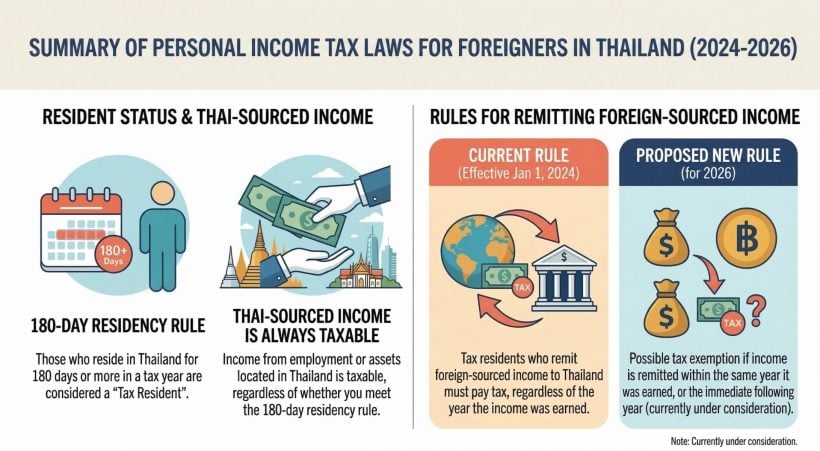
Every Thai citizen with an income must pay taxes, employers withholding tax at the source. The system exists functioning properly. However, foreigners living in Thailand on tourist visas receiving money from abroad practically never get taxed on their income by Thailand.
The Ministry of Foreign Affairs reported to the Cabinet following the enforcement of the 60-day visa exemption measure, a large number of foreigners were found misusing the privilege. They enter disguised as tourists illegally working or using Thailand as a transit point committing crimes in neighboring countries, directly impacting the economy or national security.
Legal solutions exist being not as complicated as they seem
For foreigners wanting to stay in Thailand legally long-term, several clear options exist.
The most attractive option for the digital nomad group right now is the Destination Thailand Visa (DTV), launched in 2024. This visa category is specifically designed for online workers or freelancers. It allows stays of 180 days at a time, can be renewed within the country, is valid for 5 years, having a starting fee of 10,000 baht.
It does not sound expensive at all when compared to the cost of plane tickets for visa runs.
Additionally, there is the Thailand Elite Visa for those seeking maximum convenience, or various types of Non-Immigrant Visas for people working for Thai companies owning businesses in the country.
The point is options are available, the government not having closed the door on those wanting to live in Thailand legally long-term. However, they are sending an increasingly clear signal using a tourist visa as a long-term residency visa is no longer acceptable.
A clear summary
Thailand granted a 60-day free visa drawing in tourists after Covid, it worked. At the same time, it opened a loophole for non-tourists, including illegal laborers, digital nomads working domestically without permits, in some cases criminal gangs, to use the same entry channel without a strict enough screening system.
Reducing the stay back to 30 days is not closing the door on tourists. Rather, it closes a loophole opened too wide forcing those wanting to stay longer entering the proper legal system instead.
For someone coming to visit Thailand for two weeks returning home, this issue does not affect you in the slightest.
But for those who have lived in Thailand for years relying primarily on visa runs or free visas, the signal being broadcasted gets clearer every month. It is likely time to decide whether staying legally or accepting increasingly larger risks.
Thailand remains always open, but please enter the way you are supposed to.
Latest Thailand News






















Follow The Thaiger on Google News: