Election Commission to summon Fastwork CEO over vote-buying claim


The Election Commission of Thailand (ECT) planned to summon the CEO of freelance marketplace Fastwork for questioning after he publicly claimed that a political party bought a vote from his grandmother for 2,000 baht.
The Thai-Chinese CEO of the Fastwork, Chikit “CK” Cheong, is not only well-known as a businessman but also as a content creator who regularly discusses business, investment, and social issues.
In recent weeks, he posted frequently about the upcoming General Election, including interviews with leading figures from several political parties.
Controversy erupted on Monday, February 2, after CK shared a Facebook post describing a phone conversation with his grandmother about the election. In the post, he wrote:
“I just made a call to my grandma and asked…
CK: ‘Grandma, who will you vote for in this upcoming election?’
Grandmother: ‘I already take their money 2,000 baht, so I will vote for them.’
CK: ‘Grandma, don’t you see that brand-new OLED TV that I just bought for you? I will get it back tomorrow.'”

The post quickly went viral, sparking widespread debate online. Some netizens questioned whether the conversation was genuine or exaggerated, while others urged CK to formally report the alleged vote-buying to the ECT.
CK later deleted the post, but did not issue any clarification or additional explanation.


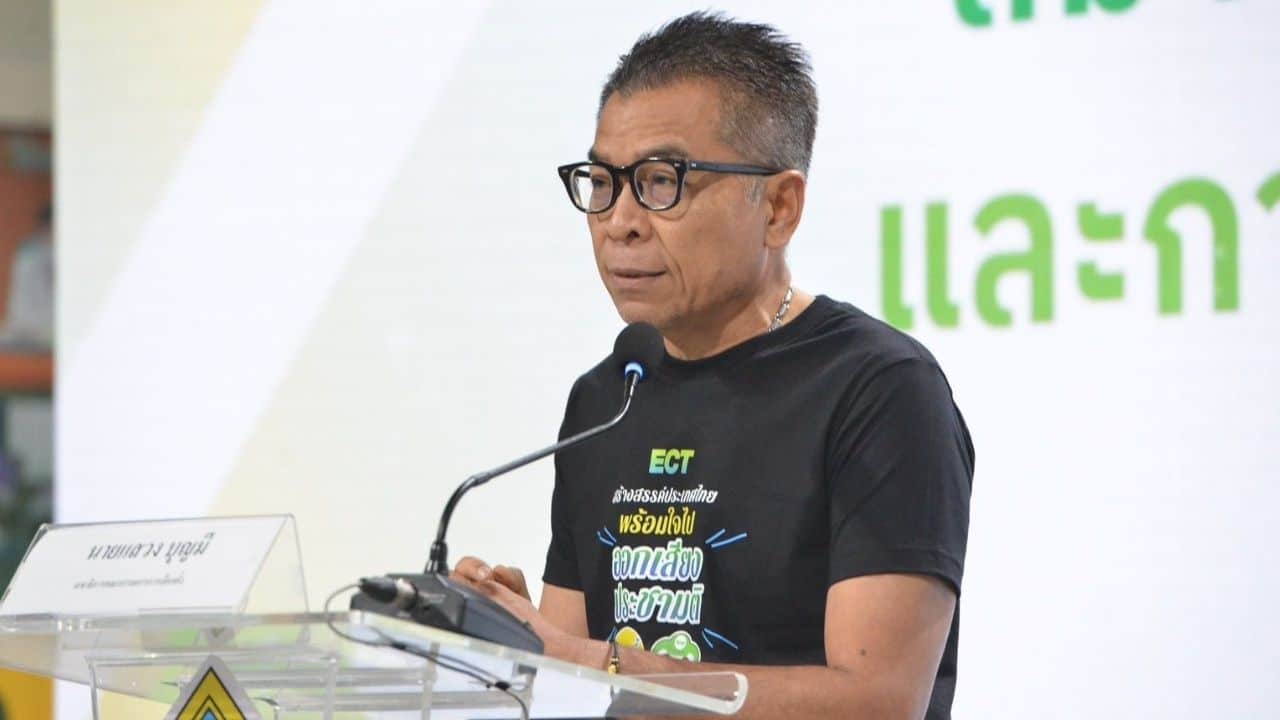
Following the incident, Sawaeng Boonmee, Secretary-General of the ECT, told ThaiRath that the commission would summon CK for questioning regarding the alleged vote-buying mentioned in his post.
However, Sawaeng did not disclose when the questioning would take place or whether any formal investigation had already been launched.
The case is the latest in a series of alleged election-related irregularities circulating on Thai social media ahead of the General Election.
In a separate incident, a member of a political party was seen in a viral video handing out free lottery tickets to vendors inside a market, prompting debate over whether the act constituted vote-buying.
In another case in mid-January, a Thai woman posted a photo showing an election campaign leaflet and a 1,000-baht banknote allegedly left at the door of her home. The leaflet was orange in colour, leading to online accusations against the People’s Party, which uses orange as its party colour.
The woman later admitted that she fabricated the story to gain online attention and confirmed that no party had offered her money in exchange for votes. The People’s Party subsequently filed a legal complaint against her for spreading false information and causing public alarm.
Latest Thailand News

























Follow The Thaiger on Google News: