10 Thailand’s traffic offences that could cost you fines or jail
Strict traffic enforcement begins 1st of April. Police to crack down on 10 major offenses

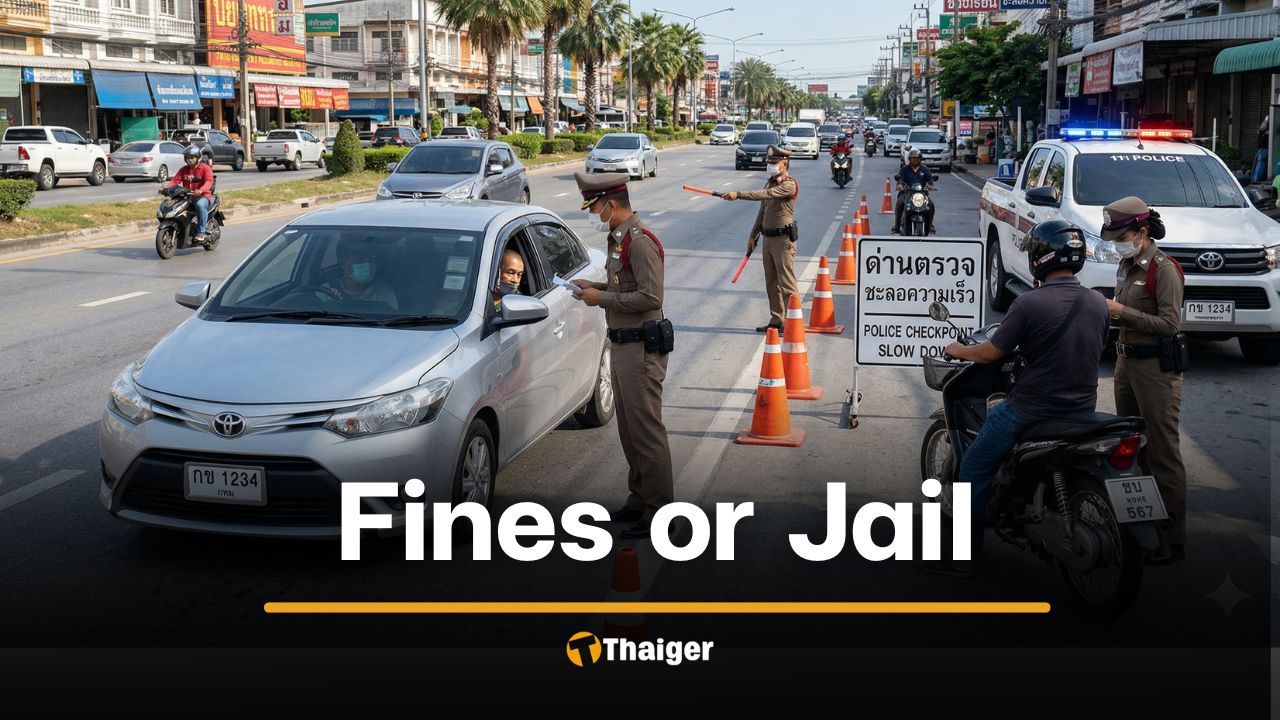
Traffic police are launching a strict legal enforcement campaign starting April 1, 2026, targeting 10 primary traffic violations identified as the leading causes of road accidents in Thailand.
The initiative aims to improve road safety by ensuring motorists adhere strictly to the law. Authorities have warned that officers will be monitoring roads closely, with fines and potential jail time for those found in violation.

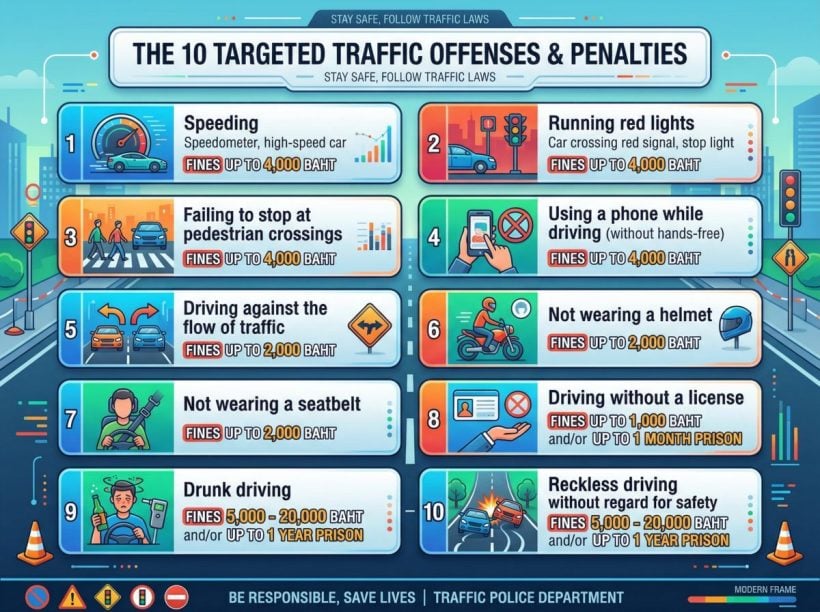
The 10 targeted traffic offenses and penalties
The following list outlines the specific violations and their respective maximum penalties
-
Speeding: Fines up to 4,000 baht.
-
Running red lights: Fines up to 4,000 baht.
-
Failing to stop at pedestrian crossings: Fines up to 4,000 baht.
-
-
Using a phone while driving (without hands-free devices): Fines up to 4,000 baht.
-
Driving against the flow of traffic: Fines up to 2,000 baht.
-
Not wearing a helmet (for motorcyclists and passengers): Fines up to 2,000 baht.
-
Not wearing a seatbelt: Fines up to 2,000 baht.
-
Driving without a license: Fines up to 1,000 baht and/or up to one month in prison.
-
Drunk driving: Fines ranging from 5,000 to 20,000 baht and/or up to one year in prison.
-
Reckless driving without regard for safety: Fines ranging from 5,000 to 20,000 baht and/or up to one year in prison.


Expatriates and residents are urged to carry their driving licenses at all times and ensure all safety equipment, such as helmets and seatbelts, is used correctly to avoid these significant penalties.
How expats can legally drive in Thailand
Foreigners living in Thailand must hold a valid driving license to avoid these penalties.
Short-term visitors can legally drive using an International Driving Permit alongside their home country license. Long-term residents need to obtain a Thai driving license from the Department of Land Transport.
Applicants must prepare specific documents. These include a passport with a valid non-immigrant visa, a medical certificate issued within the last 30 days, and a certificate of residence from their embassy or Thai immigration.
Expats holding a valid license from their home country can usually skip the written and practical driving tests. They still must pass physical tests assessing color vision, depth perception, and reflexes.
Watching a mandatory traffic safety video is also required. Individuals without a valid home country license must complete a training course and pass both the written and practical exams to receive their Thai license.
A foreigner’s guide to getting a Thai driver’s license in Thailand
Latest Thailand News
























Follow The Thaiger on Google News: