Car and house loans surged in 2018

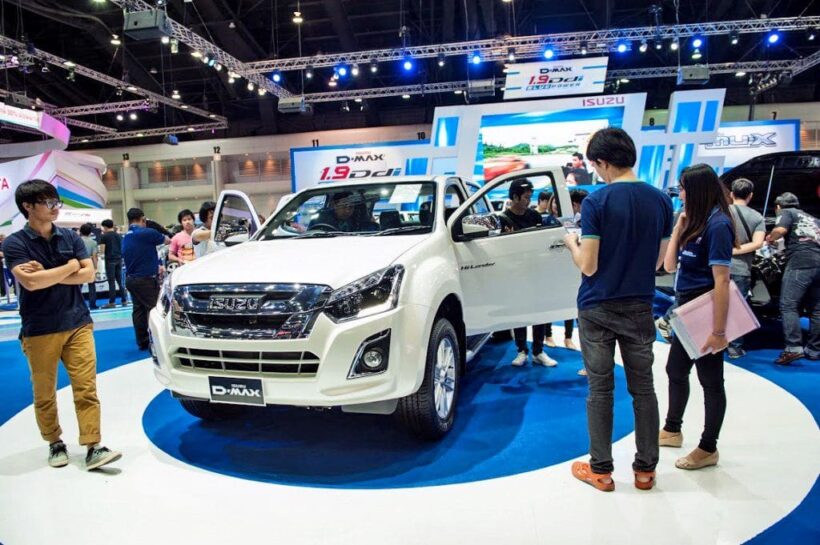
The Bank of Thailand says they’re concerned about the double-digit growth in loans for cars last year. The central bank is now monitoring the trend and will keep track of statistics for the rest of 2019. Their concerns about the Thai mortgage market the year before resulted in new regulations coming into effect this April.

Loans for cars were up nearly 13% in 2019, up from 8% growth in 2017 and much smaller growths in the years before.

They reported that commercial bank auto loans rose to 1.07 trillion baht last year, a rise of 12.6% from the previous 12 months. Defaults on loans has also risen during 2018 but the BoT says the rate is still “manageable” at 1.66%.

The BoT says they will need to continually monitor the business of loans for cars for at least the rest of 2019.

Last year they put the spotlight on property mortgages. The study resulted in more stringent conditions for the loan-to-value ratio, especially for second or subsequent housing loans.

Mortgage lending expanded nearly 8% in 2018, compared to 5.5% in 2017. The more stringent requirements for housing mortgages comes into force on April 1 this year.

Generally, the loan sector for commercial banks rose by 6% last year, again a rise from the previous year where the rise was 4.4%.


But the BoT reports that the profitability of the banking sector remains in positive territory. Interest income is now the main source after the fee-based income of some banks, particularly fund transfer fees, declined.

Thailand Property FAQ

Can foreigners buy property in Thailand?

Yes. Foreigners can own condominium units freehold, as long as foreign buyers hold no more than 49% of the building's saleable area. Land cannot be owned directly by foreigners; houses are usually held through a 30-year lease — and since a March 2025 Supreme Court ruling, automatic “30+30+30” renewal structures are not enforceable beyond the first 30 years. Read the full foreign-ownership guide.

What is Thailand's 49% foreign quota?

In any condominium project, no more than 49% of the total saleable floor area can be foreign-owned. The quota applies only to condos — not houses, land or leaseholds — and popular buildings in Bangkok, Phuket and Pattaya can hit the cap. How the quota works in practice.

How much are property transfer fees in 2026?

The transfer registration fee is cut to 0.01% (from the standard 2%) and the mortgage registration fee to 0.01% (from 1%) for purchases where both the price and assessed value are 7 million baht or less — extended by the Cabinet on June 30, 2026. On a 6-million-baht home that saves around 120,000 baht. Who qualifies for the cut · Standard fees & who pays what.

Is it better to rent or buy in Thailand as an expat?

It mostly depends on your time horizon: for stays under roughly five years renting usually wins once transfer costs and resale friction are counted, while longer stays can favour buying — especially with 2026's reduced fees. The rent-vs-buy maths for expats.

How much does property cost in Thailand?

A little over 2 million baht buys a freehold one-bedroom condo in central Chiang Mai — the same budget covers only a studio in Bangkok's CBD. Prices vary sharply by region and city. Average prices by region, and what they buy you.

What taxes do property owners pay in Thailand?

Owners pay the annual land and building tax, and rental income is taxable; buyers and sellers split one-off costs like transfer fees, stamp duty or specific business tax depending on the deal. The go-to guide to Thai property taxes.

PropertyThailand News

Follow The Thaiger on Google News:

Thaiger

If you have story ideas, a restaurant to review, an event to cover or an issue to discuss, contact The Thaiger editorial staff.