Thai economy braces for stagflation amid Iran war: How real estate must pivot to survive

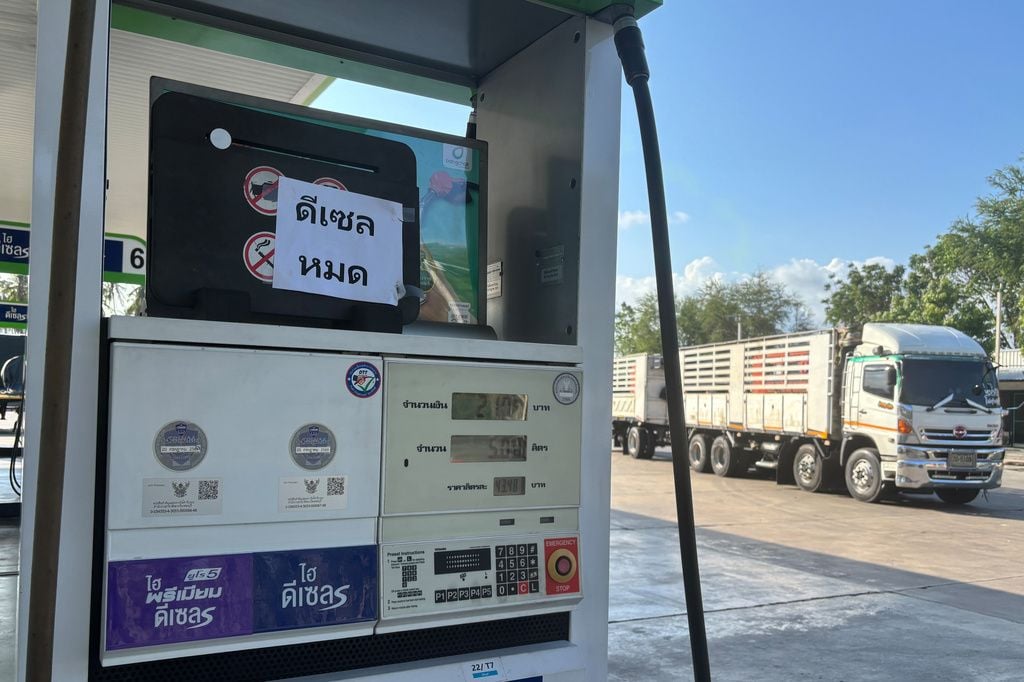
The secretary-general of the National Economic and Social Development Council (NESDC), Danucha Pichayanan, said that the prolonged conflict and the closure of the Strait of Hormuz for over a month had significantly impacted global energy market confidence.
Iran has proposed negotiation conditions, such as the withdrawal of US military bases from the Middle East. This marks an initial stance for talks with the US and Israel. Whether an agreement will be reached remains unclear.
Global crude and refined oil prices remain highly volatile as prices surged initially, but eased upon signs of a slowdown in attacks or news about reopening the strait. Any relief is likely to be temporary unless the conflict is permanently resolved.
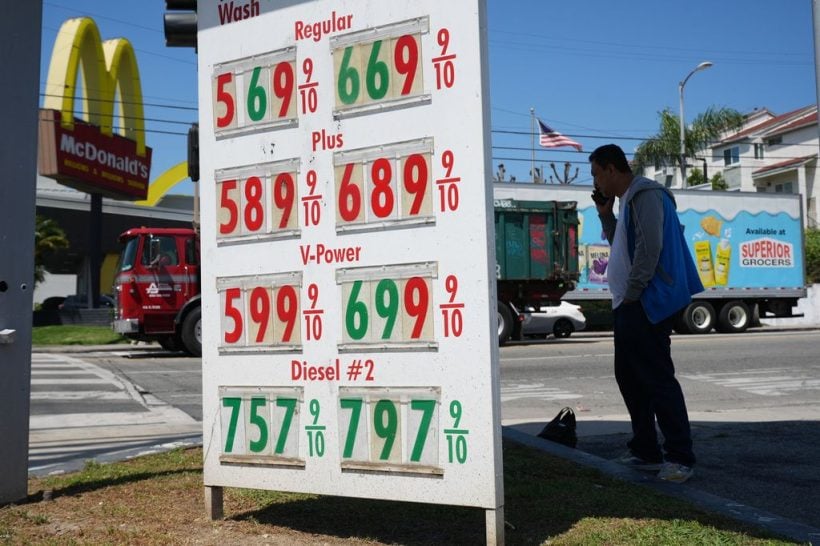
The NESDC has revised its 2026 economic scenarios for Thailand. Before the Middle East crisis, the economy was projected to grow by 2%, with average crude oil prices at US$58 to 68 per barrel and inflation at 0.2%.
The revised assessment outlines four scenarios.
Under the first, a significant drop in global energy supply will drive up prices, accelerate global inflation, and disrupt industrial supply chains. Financial markets will turn volatile, and the Thai baht will depreciate significantly.

The second scenario highlights that many countries, including Thailand, will enter stagflation, characterised by economic recession and high inflation. Under this scenario, the Thai economy will grow by 0.9% in 2026, with inflation reaching 4.4%.
Severe GDP contraction from a 6-9 month conflict
The third scenario projects a full-scale war between Iran and its allies against the US, Israel, and their allies, lasting six to nine months and potentially extending to November 2026. The conflict is predicted to expand to cover multiple countries across the region.
This situation will prevent crude oil and natural gas supplies from the Middle East from recovering after the war ends. The average crude oil price will surge to US$135 to 145 per barrel for the year. The global economy will enter a severe depression amid energy and food shortages.
Supply chain disruptions will become widespread. Trade and investment protectionism between the two major power blocs will cause a massive economic slowdown. In this scenario, the Thai economy in 2026 will grow by 0.2%, with inflation hitting 5.8%.
Superpower involvement
The fourth scenario involves a full-scale war with allied countries participating, led by other major powers including Europe, China, and Russia. This will prolong the war and push the global economy into a severe depression amid food and energy shortages, where the global economy will face a continuous risk of recession.
The scenario also raises the risk of military clashes in areas already affected by regional conflicts. If this full-scale war scenario occurs, forecasting oil prices, inflation, and the economy becomes impossible.
Danucha noted that the NESDC assesses that the Middle East war affects more than just oil prices. It drives up consumer goods prices, causing inflation to spike and consumer demand to shrink. Together, these factors raise the likelihood of stagflation.
A prolonged conflict will also disrupt supply chains, leading to raw material shortages, such as plastic pellets, that are expected to become more apparent in the coming months.
Government urged to prepare public
Danucha said current conditions make broad economic stimulus difficult to implement. New measures should focus on alleviating the cost of living rather than stimulating the economy. This would preserve enough purchasing power to keep the economy functioning through the downturn.
The government must begin communicating with the public to help them adapt and prepare for potential situations. The Middle East war creates a chain reaction of economic impacts throughout the year. The government must find supportive measures, while the public must also adapt to the unfolding events.
Finance Ministry acknowledges stagflation risks
Lavaron Sangsnit, permanent secretary of the Ministry of Finance, said the Fiscal Policy Office aligns with the NESDC assessment that Thailand risks facing stagflation. This involves rising inflation contrasting with a slowing economy, marked by rising inflation alongside a slowing economy.
Thailand has an advantage over many countries because its baseline inflation rate is quite low, having dipped into negative territory at times. This low baseline provides a buffer to absorb the impact when inflation starts to rise.
This means Thailand is less exposed to a severe inflation crisis than countries that already carry high baseline inflation rates. The Finance Ministry and relevant agencies must monitor the Middle East situation closely, particularly the tension between Iran and the US. Any de-escalation or positive news will immediately bring down crude oil prices, reducing energy cost pressures.
Lavaron said the Finance Ministry is preparing fiscal measures to help those affected by the energy crisis. These targeted assistance programmes will be presented to the Cabinet on April 11. The key agenda will detail seven measures previously approved in principle by the Cabinet, including setting the duration for each project and clarifying the timeline for transferring relief funds to the public.
For state welfare cardholders, the primary group the government aims to assist directly, increasing the assistance amount is possible, subject to the Bureau of the Budget allocating remaining funds. The details will be clarified to the public after the Cabinet meeting concludes.
Conflict expected to last under three months
Thanavath Phonvichai, President and Chief Advisor to the Centre for Economic and Business Forecasting at the University of the Thai Chamber of Commerce, previously evaluated three scenarios with a median GDP forecast of 2%.
If the conflict lasts one month, the economy is projected to grow by 1.6%. The current fighting has already exceeded one month. If the war lasts between one and three months, the economy is expected to grow by 1.0 to 1.5%. Should the war escalate and extend beyond six months, the economic growth estimate drops to zero or below zero.
Thanavath said the centre is initially assessing the impact within a one to three-month timeframe while closely monitoring the situation. The inflation trend for 2026 is expected to be around 3%.
If the war does not extend significantly beyond three months and the global economy begins to ease by mid 2026, the situation may improve, provided the government implements the Half-Half Plus co-payment policy using a budget close to the previous 40 billion baht, along with another 20 billion baht for state welfare cards. Under these conditions, the Thai economy in 2026 is estimated to grow by 1.0 to 1.5%.
Real estate sector must pivot amid stagflation threats
Michael Kenner, co-founder of FazWaz and Managing Director of LIFULL Connect, analysed the impact of the prolonged Middle East war on the Thai property market, outlining survival strategies for developers.
“The immediate impact of this geopolitical crisis is a rapid surge in construction costs,” Kenner explained. “High oil prices drive up the costs of production and transportation for raw materials like steel and cement. Developers face shrinking profit margins as they cannot pass these costs onto consumers.”

He added that stagflation severely reduces domestic purchasing power. Banks will tighten their lending criteria. This will lead to higher mortgage rejection rates for local buyers.
“We need to adjust our target audience… As domestic demand shrinks, entrepreneurs should focus on foreign buyers. Thailand remains a safe haven for investors looking to escape economic instability and energy crises in their home countries.”
Kenner advised developers to prioritise clearing their ready-to-move-in inventory over launching new off-plan projects. Unpredictable material costs make long-term pricing highly risky. Utilising property technology to efficiently reach foreign investors is crucial.
“Survival requires extreme agility… Companies that use data to target markets with purchasing power while maintaining strict financial discipline will get through this. Businesses must build flexible operational models.”
Latest Thailand News






















Follow The Thaiger on Google News: