By The Book: Pricing your property accurately

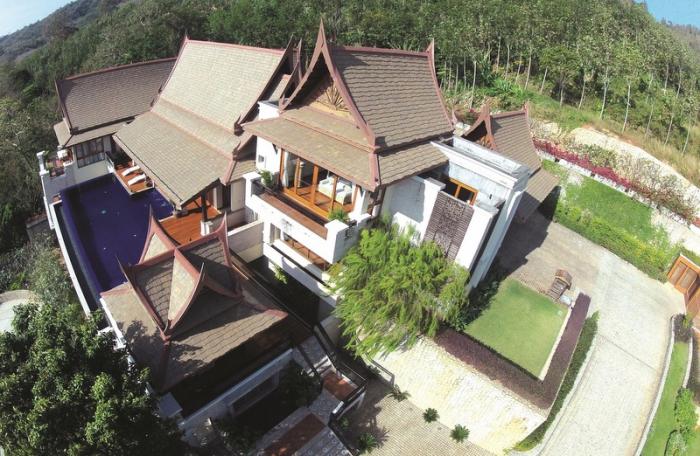
PHUKET: When listing your property for sale, one of the most important things to do is establish an asking price. As the seller, you don’t want to set the price too low and miss out. Equally, you must not price too high as you can put off potential buyers.
The first step to correctly pricing a property is to have an industry professional value it for you.
Valuation is the process of estimating the most probable price that would be paid under typical market conditions at the date of valuation.
A sale at ‘fair market value’ is by definition the amount of money a well-informed buyer would pay and a well-informed seller would accept for the property that has been on the open market for a reasonable amount of time, assuming neither buyer nor seller is acting under pressure.
When a sale is deemed valid, it can be used to help determine fair market value for other, similar properties. The goal is to value all properties fairly and equally, while being as close to fair market value as possible.
There are three methods for valuing a property, outlined below.
The ‘market approach’ involves comparing a property with characteristics of similar properties that have recently been sold.
The ‘cost approach’ involves estimating the replacement cost of a structure, and adjusting that estimate to account for depreciation.


The ‘income approach’ is an analysis of a property’s value based on its capacity to generate revenue for the owner.
Due to the embryonic nature of the Phuket property market, the ‘market approach’ is most commonly used – valuating homes based on what an average person would be willing to pay for a similar property in the province.
This data is derived by looking at current sales in Phuket. Every attempt is made to use sales that have the same characteristics as the property to be valued – the ‘subject property’. These would include, but are not limited, to the total area and the number of bedrooms and bathrooms, for instance.
If a subject property doesn’t have enough matching sales, adjustments are made to the sale properties most closely resembling that one to create a more equitable value.
Consider what you paid for the property, how long you have lived there, local comparable property prices, any improvements added, present condition of the property, ask about the current property climate, and arm yourself with the facts. By not establishing a realistic price from the beginning, many home sellers end up costing themselves hundreds of thousands of baht.
Do not over price the property and think you can wait, because you are not in a hurry to sell. This in fact has the opposite effect. The buyer sees that the property has been on the market for a year or more and asks ‘what’s wrong with it?’.
It’s a mistake to be greedy and ask for an unrealistic selling price. Buyers have a wide selection to choose from and will simply go elsewhere.
Supply and demand is also a factor in determining the value of your property. If there are a lot of sellers and few buyers, prices tend to go down, and homes take longer to sell in a ‘buyer’s market’.
When the opposite is true and there are many buyers but few homes for sale, prices rise and homes sell very quickly in a ‘seller’s market’.
A common mistake made by Phuket property owners is to over price their property when they initially list it. This is not necessarily due to the owner being greedy, but simply because they did not have access to the correct information to make a proper valuation in current market conditions.
Sellers often tell brokers that they want to price their house at X, because their neighbor’s house is on the market for a higher price. Or they heard a house down the road from them just sold for X price.
Unfortunately, their neighbor’s house is probably overpriced too and won’t ever sell at that asking price. With re-sales, it’s difficult to find information widely available on the actual selling price so when a neighbor tells you they got a great price for their house, take it with a pinch of salt. And ask your broker for an accurate valuation.
For more information about this article contact Kevin Hodges, Siam Real Estate (SRE) at 076-324 042 or email: kevin@siamrealestate.com; www.siamrealestate.com
— Kevin Hodges
Latest Thailand News

























Follow The Thaiger on Google News: