Thailand sees influx of foreign investment as baht strengthens

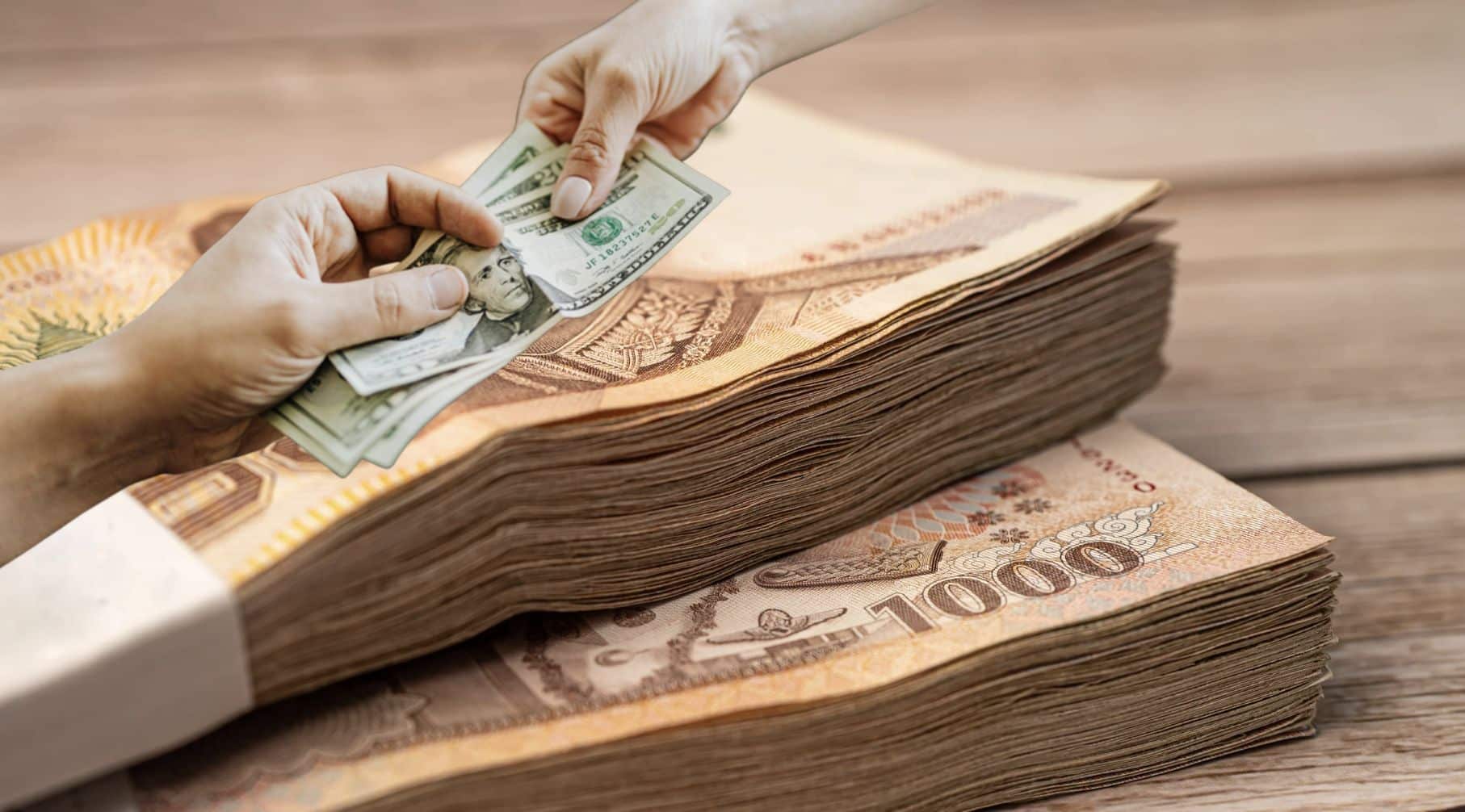
Foreign investments are anticipated to continue flowing into Thailand’s equity market. This is driven by a significant appreciation of the baht since the beginning of December.
Asia Plus Securities (ASPS) observed that the baht’s 3.26% increase month-to-date seems “disproportionate to some underlying fundamentals.” During this timeframe, the dollar index only weakened by 1.20%. This is interesting given that foreign investors pulled out over 15 billion baht from the Thai bond market. Meanwhile, equity inflows have shown a gradual return.
The baht has outperformed other currencies in Asia, establishing itself as the region’s strongest currency. In comparison, the Malaysian ringgit, the second strongest, has seen a modest 1.14% increase month-to-date, according to the brokerage.
Paradorn Tiaranapramote, first vice-president of research at ASPS, stated, “Foreign investors allocating funds to Thai equities are currently benefiting from a dual gain. This consists of both equity market performance and currency appreciation.”
Investors converting returns back to US Dollars are gaining approximately 4.2% month-to-date. This happens even though the Stock Exchange of Thailand (SET) has only increased by 1%. Thus, currency fluctuations are important for investing in both Thai and US equity markets.
ASPS advises focusing on stocks that directly benefit from a stronger baht. This is particularly relevant for those with substantial foreign-currency debts, as appreciating baht reduces debt servicing costs. Sectors such as power generation, airlines, and import-oriented companies with lower raw material costs are highlighted.
The brokerage identifies potential beneficiaries of fund flows among large-capitalisation stocks, which tend to attract foreign investors during baht strength. Companies such as Kasikornbank, SCB X, Siam Cement, CP All, and Advanced Info Service are noted.


On the other hand, a stronger baht presents challenges for export-oriented companies by decreasing their competitiveness. Sectors like electronics and food exports face pressure.
The tourism sector may feel the impact of a strong baht as well. This affects companies like Airports of Thailand, Minor International, Central Plaza Hotel, and The Erawan Group. Hospital stocks with significant foreign patient exposure, including Bumrungrad Hospital, Bangkok Dusit Medical Services, and Praram 9 Hospital, could encounter currency-related challenges.
Latest Thailand News
























Follow The Thaiger on Google News: